The photovoltaic industry stands at a critical juncture where sustainability meets economic viability through module refurbishment. Second life specifications define the precise technical parameters and performance criteria that determine whether decommissioned solar panels qualify for second-life applications rather than premature disposal. These specifications encompass electrical performance thresholds, physical integrity standards, safety compliance requirements, and projected remaining operational lifespan metrics.
Understanding these specifications requires examining multiple evaluation dimensions. Electrical testing protocols measure power output degradation, current-voltage characteristics, insulation resistance, and ground continuity to verify modules retain sufficient generation capacity. Physical inspection standards assess frame integrity, glass condition, backsheet adhesion, junction box functionality, and connector quality to ensure structural reliability. Performance benchmarking typically establishes minimum thresholds at 80 percent of nameplate capacity, though specific requirements vary based on intended secondary applications.
The refurbishment sector has developed standardized testing methodologies combining electroluminescence imaging, thermal imaging, and IV curve tracing to identify recoverable modules systematically. Industry organizations and certification bodies increasingly recognize that panels falling below primary market standards often retain substantial value for applications with lower performance requirements or reduced space constraints.
This comprehensive framework transforms potential waste streams into viable energy assets while extending the productive lifespan of photovoltaic technology. Second life specifications serve as the technical foundation enabling this circular economy approach, providing quantifiable criteria that balance performance requirements with resource conservation imperatives. For industry professionals and stakeholders, mastering these specifications represents essential knowledge for participating in the evolving solar refurbishment ecosystem.
Understanding End-of-Life PV Modules: When Solar Panels Retire
Photovoltaic modules, commonly referred to as solar panels, typically carry manufacturer warranties of 25 to 30 years, yet their functional life often extends beyond these guarantees. Understanding what constitutes an end-of-life solar panels requires examining multiple factors that determine when modules are decommissioned from their original installations.
A PV module reaches end-of-life status when it no longer meets the performance requirements of its current application, though this designation doesn’t necessarily mean the panel has ceased functioning entirely. Industry standards generally define end-of-life as the point when a module’s power output degrades below 80 percent of its original rated capacity, though actual decommissioning decisions depend on specific project economics and performance thresholds.
Several factors contribute to module retirement. Performance degradation occurs gradually through normal aging processes, including encapsulant yellowing, cell microcracks, and potential-induced degradation. Physical damage from extreme weather events, such as hail or wind-borne debris, can compromise module integrity even when electrical performance remains acceptable. Additionally, technology advancement drives premature replacement, as operators upgrade to higher-efficiency panels that maximize energy generation per unit area.
The global solar industry now faces an unprecedented wave of retiring modules. Early installations from the 2000s are reaching their expected lifespan, while rapid capacity expansion over the past decade means millions of panels will require disposition within the next 5 to 15 years. The International Renewable Energy Agency projects that cumulative end-of-life PV panel waste could reach 78 million metric tons by 2050, presenting both environmental challenges and significant opportunities for the circular economy.
Understanding the complete solar panel lifecycle becomes essential as the industry matures. Rather than viewing retired modules solely as waste, forward-thinking stakeholders recognize their potential for second-life applications, where panels with diminished but still substantial capacity can serve less demanding applications before eventual recycling.
What Are Second-Life Specifications for PV Modules?
Performance Criteria and Power Output Requirements
Second life photovoltaic modules operate under different performance expectations than their first-life counterparts, with acceptance criteria reflecting realistic degradation while ensuring continued viability. Industry standards typically recognize modules retaining 80-90% of their original nameplate capacity as suitable candidates for second life applications. This threshold acknowledges natural degradation while maintaining sufficient power output for less demanding installations such as off-grid systems, remote telecommunications infrastructure, or backup power solutions.
The 80% threshold represents a critical benchmark where modules transition from utility-scale suitability to secondary market opportunities. At this degradation level, a module originally rated at 300 watts would deliver approximately 240 watts under standard test conditions. While this reduction impacts energy density, the module remains economically and functionally valuable for applications where space constraints are less critical than cost considerations.
Efficiency thresholds in second life specifications differ substantially from original equipment standards. Where new modules might achieve 18-22% conversion efficiency, refurbished modules operating at 80-85% capacity effectively deliver 14-19% efficiency. This performance level remains adequate for numerous applications, particularly when balanced against the significantly reduced acquisition costs.
Testing protocols verify that modules meet minimum current output, voltage parameters, and fill factor requirements. Additionally, second life specifications incorporate stricter visual inspection criteria, recognizing that cosmetic imperfections may indicate underlying degradation. Insulation resistance testing, wet leakage current verification, and thermal imaging assessments ensure modules maintain safety standards despite age-related performance decline. These comprehensive evaluations distinguish legitimate second life products from potentially hazardous substandard equipment, protecting end users while extending the circular economy for photovoltaic technology.
Safety and Structural Integrity Standards
Ensuring safety and structural integrity represents the most critical aspect of second-life PV module specifications, as repurposed panels must meet rigorous standards to protect end-users and maintain system reliability. Comprehensive electrical safety testing forms the foundation of this evaluation process, examining potential hazards such as ground faults, current leakage, and hot spot formation that could compromise performance or create fire risks.
Insulation resistance testing stands as a primary requirement, typically mandating minimum resistance values of 40 megohms per module under standardized test conditions. This measurement assesses the integrity of insulation between the module’s electrical circuits and its frame, preventing dangerous current leakage. Modules failing to meet these thresholds cannot receive certification for second-life applications, regardless of their power output capabilities.
Structural soundness assessments evaluate the physical integrity of frame connections, junction box adhesion, and laminate delamination. Inspectors check for frame corrosion, cell microcracks, and backsheet deterioration that might worsen during extended service. Visual inspection protocols aligned with IEC 61215 standards help identify potential mechanical failures before modules enter secondary markets.
Compliance with relevant safety certifications varies by region and application. In North America, modules typically require UL 1703 equivalency, while European markets demand IEC 61730 compliance for electrical safety. Third-party testing laboratories conduct verification procedures, issuing certificates that authorize second-life installations. Many universities collaborate with testing facilities to develop improved assessment methodologies, advancing industry knowledge through educational programs that train professionals in emerging safety evaluation techniques. This certification framework ensures that repurposed modules deliver reliable, safe performance throughout their extended operational lifetime.
Visual and Physical Inspection Parameters
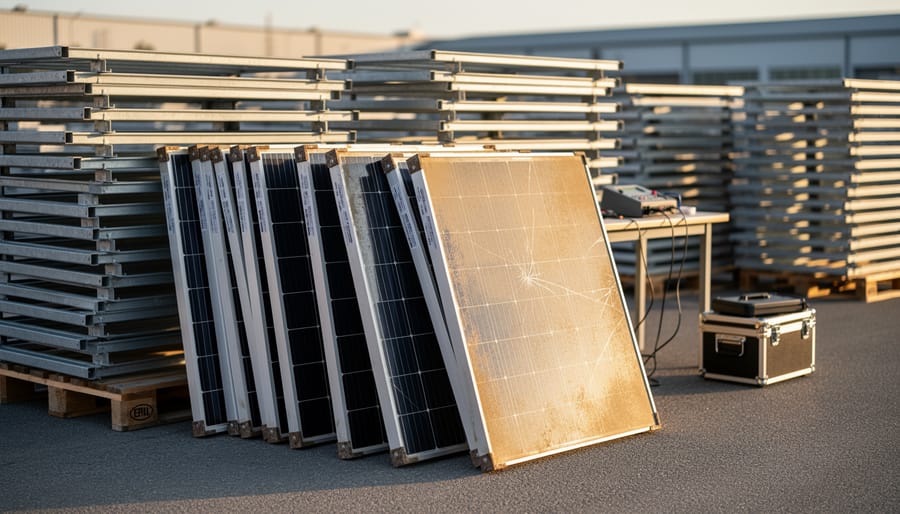
Visual inspection forms the critical first line of assessment in determining a photovoltaic module’s eligibility for second life applications. Frame integrity represents a fundamental requirement, with modules displaying severe corrosion, structural deformation, or compromised mounting holes typically disqualified from refurbishment. The aluminum frame must maintain sufficient structural soundness to ensure safe installation and long-term mechanical stability.
Backsheet condition receives careful scrutiny, as this protective layer safeguards internal components from environmental exposure. Acceptable modules may exhibit minor discoloration or slight chalking, but significant cracking, delamination, or material degradation exceeding 10% of the surface area generally renders modules unsuitable for second life use. These defects compromise moisture barriers and accelerate performance degradation.
Cell cracking assessment requires specialized inspection techniques, including electroluminescence imaging, to identify both visible and microscopic fractures. Industry standards typically permit modules with microcracks affecting less than 5% of total cell area, provided these defects don’t propagate across multiple bus bars or create isolated cell segments that reduce power output.
Junction box functionality verification ensures electrical connections remain intact, with terminals free from significant corrosion and bypass diodes operating correctly. The enclosure must maintain proper sealing to prevent moisture ingress, protecting critical electrical components throughout the module’s extended operational life.
The Refurbishment Process: From Retired to Redeployed
Initial Assessment and Testing Protocols
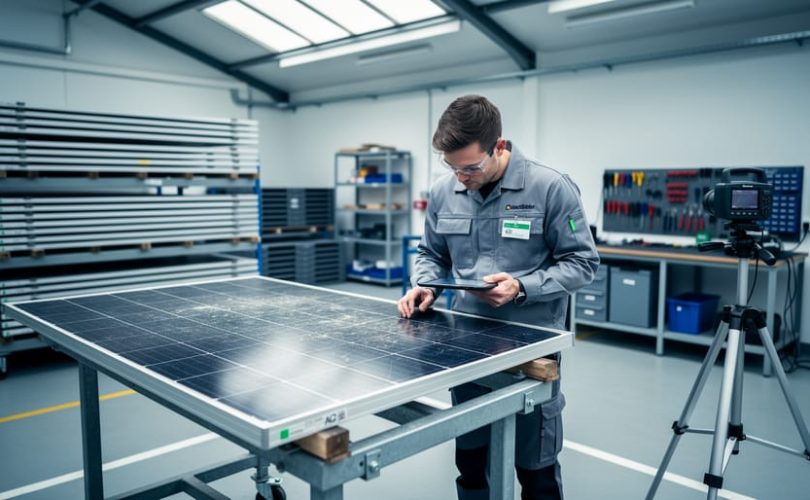
The journey toward second life certification begins with rigorous incoming inspection procedures that establish baseline conditions for each photovoltaic module. Upon arrival at refurbishment facilities, modules undergo comprehensive visual assessments to identify physical damage, discoloration, delamination, or cell cracking that might compromise future performance. These preliminary evaluations determine whether modules qualify for refurbishment or require different disposal pathways.
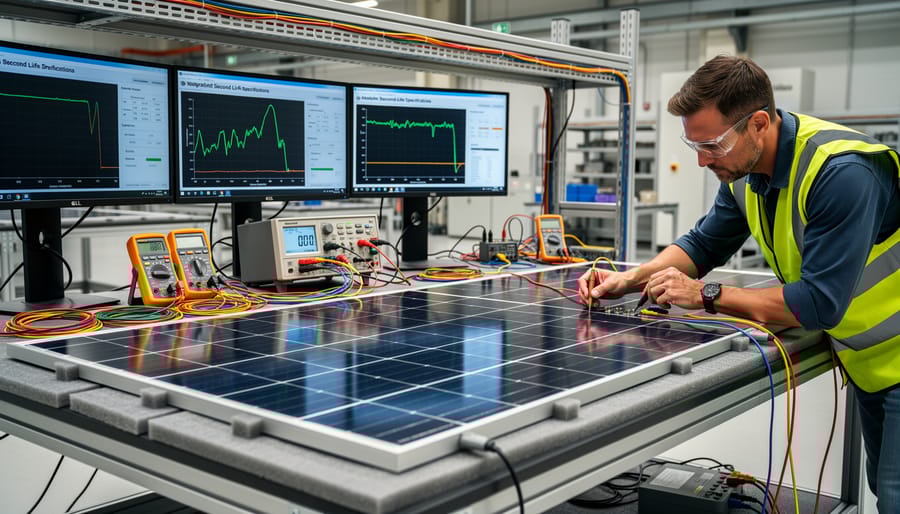
Electrical performance testing forms the cornerstone of second life specifications. Current-voltage curve analysis measures how modules perform under standardized test conditions, comparing actual output against original manufacturer specifications. This testing reveals critical parameters including maximum power output, short-circuit current, open-circuit voltage, and fill factor. Modules typically must retain at least 80 percent of their original nameplate capacity to qualify for second life applications, though specific thresholds vary by intended use case.
Advanced diagnostic techniques provide deeper insights into module condition. Electroluminescence imaging employs infrared cameras to detect microscopic cracks, broken interconnects, and cell defects invisible to standard inspection methods. This non-destructive testing technology identifies potential failure points before modules enter service, ensuring reliability in second life installations.
Following comprehensive evaluation, sophisticated sorting and grading systems categorize modules according to performance metrics, physical condition, and remaining useful life projections. Modules meeting stringent criteria receive certification for premium applications, while those with reduced performance specifications suit less demanding installations. This tiered approach maximizes resource utilization while maintaining quality standards across diverse second life applications, supporting both economic viability and environmental sustainability goals.
Repair and Restoration Techniques
Successful refurbishment of photovoltaic modules relies on a systematic approach to repair and restoration, ensuring that reclaimed panels meet rigorous second life specifications. The refurbishment process typically begins with comprehensive cleaning to remove accumulated dirt, debris, and environmental contaminants that can impede light transmission and reduce efficiency. Industrial-grade cleaning solutions and soft-bristle techniques preserve the integrity of the protective glass layer while restoring optimal transparency.
Junction box replacement represents one of the most common and critical interventions. Damaged or corroded junction boxes compromise electrical safety and performance, making their replacement essential for reliable operation. Technicians remove deteriorated units and install new, weatherproof junction boxes with proper IP ratings, ensuring secure connections and long-term durability. Similarly, cable repairs address frayed, damaged, or degraded wiring that could present safety hazards or connectivity issues. This includes replacing damaged connectors, repairing insulation breaches, and ensuring all electrical pathways meet current safety standards.
Frame restoration extends the structural lifespan of modules through targeted interventions. This may involve cleaning corrosion from aluminum frames, reinforcing mounting points, or applying protective coatings to prevent future degradation. When economically viable, minor cell repairs can address localized damage such as micro-cracks or soldering issues. However, these interventions require specialized equipment and expertise, making them feasible primarily for high-value modules.
Through collaboration with universities and educational programs, the refurbishment industry continues developing innovative restoration techniques that balance cost-effectiveness with quality assurance, ensuring refurbished modules deliver reliable performance throughout their second operational life.
Ideal Second-Life Applications for Refurbished PV Modules
Off-Grid and Rural Electrification Projects
Second-life photovoltaic modules have become instrumental in expanding electricity access to underserved communities worldwide. In developing regions and remote locations where grid infrastructure remains absent or unreliable, these refurbished panels offer a practical solution that balances affordability with adequate performance. Humanitarian organizations and rural electrification initiatives increasingly specify second-life modules for projects where initial investment constraints are paramount, yet reliable power generation remains essential for schools, health clinics, and community centers.
These applications typically prioritize cost-effectiveness over maximum efficiency. A second-life module operating at 85-90% of original capacity still provides sufficient energy output for basic lighting, water pumping, telecommunications equipment, and small appliances. University research collaborations have documented successful implementations across sub-Saharan Africa, Southeast Asia, and Latin America, where second-life solar installations have achieved 15-20 year operational lifespans with proper maintenance protocols.
The specifications for rural electrification projects often accommodate slightly relaxed performance parameters compared to commercial installations. Modules with minor cosmetic defects or marginally reduced power output—conditions that would disqualify them from premium markets—prove entirely adequate for off-grid applications. This creates a beneficial circular economy where panels unsuitable for one market segment find purposeful application in contexts where they deliver meaningful social and economic impact while reducing electronic waste.
Agricultural and Industrial Applications
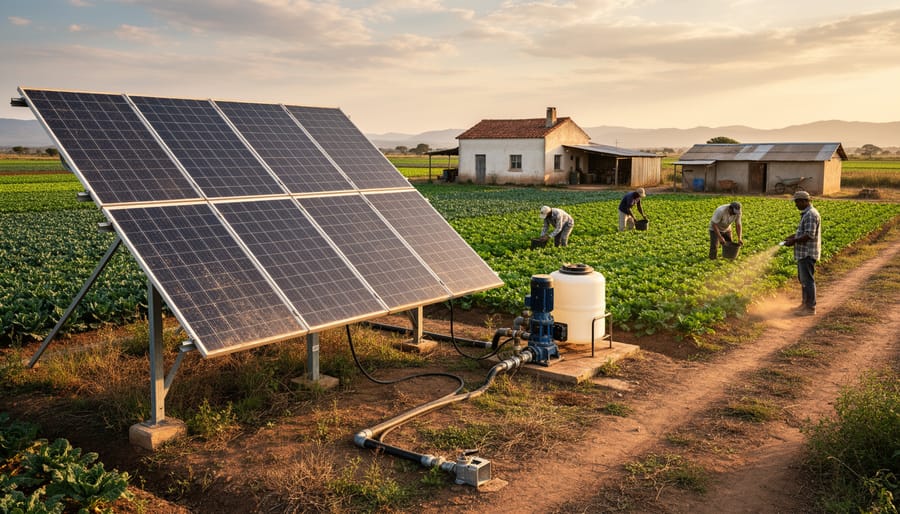
Refurbished photovoltaic modules meeting established second life specifications have proven particularly valuable in agricultural and industrial environments where energy demands are substantial but budgetary constraints often limit investment in new equipment. Irrigation systems represent one of the most promising applications, as solar-powered pumps operating on reconditioned panels can deliver reliable water distribution during peak sunlight hours when crops require maximum hydration. The cost savings—typically 40-60% compared to new modules—make rural electrification projects more economically feasible for farming cooperatives and agricultural businesses.
Livestock facilities benefit significantly from second life modules powering ventilation systems, automated feeding equipment, and water circulation pumps. These operations typically have flexible energy requirements where slight performance variations remain acceptable, making them ideal candidates for refurbished installations. Similarly, warehouse and light manufacturing facilities utilize second life arrays for supplemental power, offsetting grid consumption during daylight operations while reducing overall energy costs.
Research collaborations between refurbishment specialists and agricultural universities have documented performance reliability exceeding 85% over five-year periods in these applications. The key advantage lies in matching degraded but functional module output to non-critical loads where intermittent generation patterns pose minimal operational disruption, extending the productive lifespan of photovoltaic equipment while advancing sustainability objectives across diverse industrial sectors.
Educational and Demonstration Installations
Refurbished photovoltaic modules serve an invaluable role in educational and demonstration installations, where the dual objectives of knowledge transfer and renewable energy generation converge. Training programs benefit significantly from second-life panels, as students and aspiring professionals gain hands-on experience with real-world equipment at reduced cost. Universities and research facilities increasingly incorporate these modules into experimental arrays, allowing researchers to study long-term degradation patterns, performance optimization, and refurbishment effectiveness while generating power for campus operations. Public awareness installations at museums, science centers, and community buildings utilize second-life panels to demonstrate solar technology accessibility and sustainability principles. These educational applications require transparent specification disclosure, ensuring learners understand the performance characteristics, efficiency ratings, and output expectations of refurbished systems. By establishing clear quality standards and certification processes, the refurbishment industry enables educational institutions to confidently integrate second-life modules into curricula and demonstration projects, fostering workforce development while advancing the circular economy model within the photovoltaic sector.
Environmental and Economic Benefits of Second-Life PV Systems
Circular Economy Impact and Resource Conservation
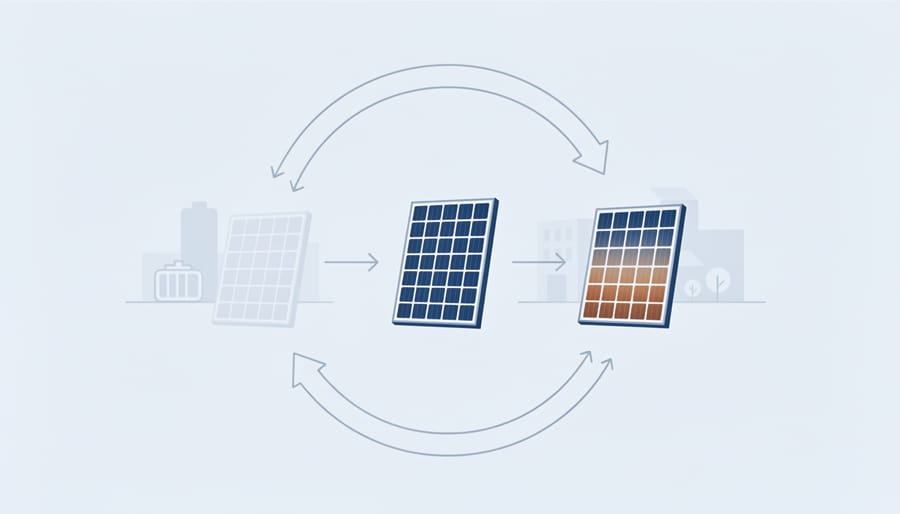
Second life photovoltaic modules deliver quantifiable environmental benefits through circular economy approaches that extend product lifecycles and conserve valuable resources. By diverting modules from premature disposal, refurbishment reduces manufacturing demand by an estimated 70-80% per unit compared to new panel production. This translates to significant material conservation, preserving approximately 18-20 kilograms of aluminum, glass, silicon, and other raw materials per module while reducing associated extraction impacts.
Carbon footprint reduction represents another critical benefit. Manufacturing new PV modules generates approximately 50-70 grams of CO2 equivalent per watt, whereas refurbishment processes typically account for only 5-10 grams per watt—an 85-90% reduction. Over a second operational lifespan of 15-20 years, refurbished modules prevent an estimated 2-3 tons of CO2 emissions per kilowatt installed when displacing fossil fuel generation.
Waste diversion proves equally substantial, with the refurbishment industry currently preventing approximately 10,000-15,000 metric tons of solar panel waste from entering landfills annually in developed markets. As decommissioning volumes increase, this waste stream management becomes increasingly critical for sustainable industry growth and regulatory compliance.
Cost Advantages for End Users
The economic appeal of second-life solar modules centers on significantly reduced upfront costs, typically ranging from 40-70% below new panel prices. This cost differential makes renewable energy accessible to budget-constrained projects including small-scale commercial installations, agricultural operations, educational facilities, and off-grid applications in developing regions. For projects where capital availability limits solar adoption, refurbished modules meeting verified second-life specifications provide a viable entry point into photovoltaic systems.
Total cost of ownership considerations extend beyond initial purchase price. While refurbished panels may have shorter remaining operational lifespans compared to new modules, the lower acquisition cost often results in faster return on investment timelines. Organizations can deploy larger system capacities within fixed budgets, potentially offsetting reduced efficiency through increased panel quantity. However, buyers must evaluate warranty coverage, which typically spans 5-10 years for second-life products versus 25 years for new modules, and factor potential replacement costs into long-term financial planning.
For academic institutions and research programs, the affordability of certified refurbished modules enables expanded practical training opportunities and experimental installations without depleting limited funding resources. This cost advantage democratizes access to solar technology, supporting workforce development and innovation while maintaining acceptable performance standards through rigorous specification compliance.
Challenges and Limitations in Second-Life PV Markets
Despite the promising potential of second-life photovoltaic markets, several significant obstacles currently hinder widespread adoption and standardization. Understanding these challenges is essential for industry professionals and stakeholders working toward viable circular economy solutions in the solar sector.
The most pressing challenge remains the absence of universally accepted standardized specifications for refurbished modules. While various testing protocols exist, inconsistencies across testing facilities and certification bodies create confusion for buyers and complicate market transactions. This fragmentation makes it difficult to establish transparent pricing mechanisms and reliable quality benchmarks that would facilitate broader market acceptance.
Regulatory gaps present another substantial barrier. Many jurisdictions lack clear legal frameworks distinguishing refurbished modules from waste materials, creating uncertainty about import-export regulations, liability standards, and compliance requirements. This ambiguity often forces potentially viable panels toward recycling or disposal rather than productive reuse.
Warranty concerns significantly impact market confidence. Original manufacturer warranties typically become void when modules enter secondary markets, leaving end-users without traditional protections. Developing credible warranty structures for refurbished products requires establishing reliable performance prediction models and financial mechanisms to back guarantees, which remain underdeveloped in most markets.
Market perception issues further complicate adoption. Many potential customers associate refurbished modules with inferior quality or unreliable performance, despite evidence that properly tested second-life panels can deliver substantial value. This perception challenge requires extensive education efforts and demonstration projects to build trust.
Logistical challenges in collection, transportation, and redistribution add complexity and costs. Establishing efficient reverse supply chains for decommissioned modules requires coordination among multiple stakeholders, including original installers, asset owners, testing facilities, and end-users. The geographic dispersion of decommissioned modules and the relatively low value-to-weight ratio of solar panels make collection economics particularly challenging.
Finally, the technical expertise required for proper testing and refurbishment remains concentrated among relatively few specialized facilities, limiting market scalability and geographic reach. Addressing these interconnected challenges requires coordinated efforts across industry, regulatory bodies, and research institutions.
Industry Standards and Certification Frameworks
The photovoltaic industry has recognized the critical need for standardized frameworks to govern second-life module specifications, leading to collaborative efforts among international organizations, certification bodies, and regulatory agencies. The International Electrotechnical Commission (IEC) has initiated working groups focused on developing comprehensive standards for repurposed solar panels, building upon existing IEC 61215 and IEC 61730 frameworks while addressing the unique characteristics of refurbished modules.
CENELEC, the European Committee for Electrotechnical Standardization, is advancing certification programs that establish minimum performance thresholds, testing protocols, and labeling requirements for second-life photovoltaic products. These programs aim to provide transparent quality assurance mechanisms that protect end-users while enabling legitimate market growth. Key certification criteria include power output verification, electrical safety compliance, mechanical integrity assessment, and detailed documentation of the module’s operational history.
The Solar Energy Industries Association (SEIA) and similar trade organizations worldwide are developing voluntary quality standards that complement regulatory frameworks. These industry-led initiatives emphasize traceability, establishing protocols for documenting manufacturing data, original warranties, field performance records, and refurbishment procedures. Such comprehensive documentation enables stakeholders to make informed decisions about second-life module deployment.
Universities partnering with industry leaders are conducting research to validate testing methodologies and establish scientifically-backed performance benchmarks. These academic-industry collaborations generate peer-reviewed data supporting evidence-based standards development. Additionally, educational programs are emerging to train technicians and engineers in proper assessment techniques, ensuring consistent application of certification criteria across the supply chain.
Third-party testing laboratories are obtaining accreditation to perform standardized evaluations, creating an ecosystem of trusted verification services. As these frameworks mature, they will facilitate market transparency, reduce transaction costs, and accelerate second-life module adoption by providing stakeholders with reliable quality indicators comparable to those available for new photovoltaic products.
Future Outlook: Growing Role of Second-Life PV in Sustainable Energy
The second-life photovoltaic market stands at a pivotal juncture, with projections indicating substantial growth over the coming decade. Industry analysts estimate that the volume of decommissioned solar panels will reach 8 million metric tons by 2030, creating unprecedented opportunities for refurbishment and redeployment. This expanding material stream, combined with advancing assessment technologies and strengthening policy frameworks, positions second-life PV as an increasingly vital component of the circular economy.
Technological innovations are rapidly improving the efficiency and reliability of refurbishment processes. Automated electroluminescence imaging, artificial intelligence-powered defect detection, and advanced diagnostic tools enable faster, more accurate module assessment while reducing costs. These developments make second-life PV increasingly competitive with new panels for specific applications, particularly in off-grid installations, agricultural operations, and developing markets where cost considerations are paramount.
Policy developments worldwide are reinforcing the viability of second-life markets. The European Union’s Circular Economy Action Plan and Extended Producer Responsibility directives mandate end-of-life management strategies that prioritize reuse over recycling. Similar regulatory frameworks emerging in North America and Asia are establishing the necessary infrastructure and incentive structures to support refurbishment industries.
Academic institutions and industry leaders are collaborating to establish standardized certification programs and professional training pathways, ensuring quality assurance as the sector matures. Universities are incorporating circular economy principles and refurbishment methodologies into photovoltaic engineering curricula, preparing the next generation of professionals for this evolving landscape.
As the photovoltaic industry embraces sustainability beyond energy generation, second-life specifications will become increasingly sophisticated and universally recognized. This evolution transforms decommissioned panels from waste products into valuable resources, extending the environmental and economic benefits of solar technology while contributing meaningfully to global renewable energy capacity and waste reduction objectives.
The establishment of comprehensive second-life specifications represents a fundamental pillar in building a truly circular solar economy. As the photovoltaic industry matures and the first generation of solar panels approaches end-of-life, rigorous technical standards for refurbished modules become essential infrastructure rather than optional enhancements. These specifications serve dual purposes: protecting downstream users through transparent quality assurance while simultaneously unlocking significant environmental and economic value embedded in retired panels.
From an environmental perspective, extending module operational lifespans through properly specified refurbishment programs directly reduces manufacturing demand, mining activities, and associated carbon emissions. The economic value proposition proves equally compelling, as refurbished panels meeting established performance criteria enable cost-effective solar deployment in price-sensitive markets, off-grid applications, and developing regions where energy access remains limited.
Achieving the full potential of second-life solar markets requires coordinated stakeholder engagement. Manufacturers, testing laboratories, certification bodies, policymakers, and end-users must collaborate to develop harmonized frameworks that balance stringent quality requirements with practical implementation realities. Industry-wide adoption of standardized testing protocols, transparent grading systems, and warranty structures will build market confidence and accelerate adoption.
Educational institutions play a vital role in this transition. Organizations like Mose Solar demonstrate commitment to preparing the next generation of photovoltaic professionals through specialized training programs addressing refurbishment technologies, quality assessment methodologies, and circular economy principles. As second-life specifications evolve from emerging concepts to established industry standards, properly trained professionals will drive innovation, ensure compliance, and ultimately deliver sustainable energy solutions that maximize both environmental stewardship and economic viability across the solar value chain.