The photovoltaic industry stands at a critical juncture where the promise of clean energy must extend beyond operational efficiency to encompass complete environmental stewardship. As the first generation of solar installations approaches end-of-life, with an estimated 78 million metric tons of solar panels expected to reach disposal age by 2050, the question of what happens after decades of service has transformed from theoretical concern to urgent operational reality.
Lifecycle battery recycling represents the photovoltaic sector’s commitment to circular economy principles, ensuring that energy storage systems that power our transition to renewable energy don’t become tomorrow’s environmental burden. Unlike conventional waste streams, battery recycling in solar applications involves recovering valuable materials including lithium, cobalt, nickel, and rare earth elements that can re-enter manufacturing supply chains, reducing dependency on virgin resource extraction while minimizing environmental impact.
The technical complexity of battery recycling extends beyond simple material recovery. Modern approaches integrate hydrometallurgical and pyrometallurgical processes that can reclaim up to 95% of battery components, transforming end-of-life products into feedstock for new manufacturing cycles. This closed-loop system addresses both resource scarcity and environmental regulations that increasingly mandate extended producer responsibility.
For aspiring photovoltaic professionals, understanding lifecycle battery recycling is no longer optional knowledge but essential competency. The integration of recycling considerations into system design, financial modeling, and operational planning directly impacts project viability and long-term sustainability credentials. As regulatory frameworks tighten and corporate sustainability commitments intensify, professionals equipped with comprehensive recycling knowledge will drive innovation in an industry where environmental integrity and economic performance must converge seamlessly.
The Growing Mountain of Solar Waste
The photovoltaic industry faces a mounting challenge that threatens to undermine its environmental credentials: an exponential increase in solar panel waste. According to the International Renewable Energy Agency (IRENA), global solar panel waste could reach 78 million tonnes by 2050, with cumulative waste potentially exceeding 60 million tonnes by 2030. This projection reflects the mathematical inevitability of the industry’s own success, as the solar installations boom of the early 2000s approaches its twilight years.
Most solar panels carry a functional lifespan of 25-30 years, though performance degradation typically begins around the 20-year mark. The first wave of large-scale commercial installations, deployed between 1995 and 2005, is now entering retirement, creating an urgent need for comprehensive solar panel waste disposal systems. The compounding effect becomes clear when considering that current annual installations far exceed those early adoption rates, meaning tomorrow’s waste streams will dwarf today’s challenges.
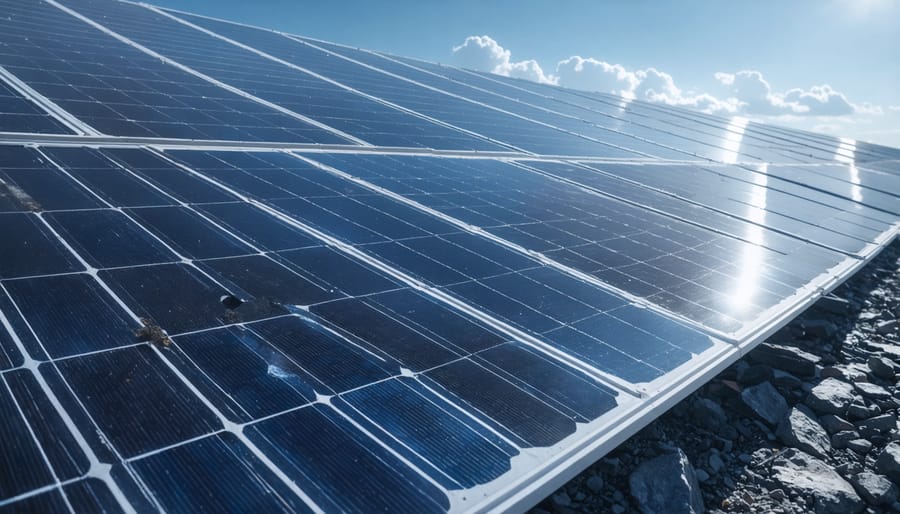
The material composition of photovoltaic panels underscores why landfill disposal represents both environmental negligence and economic folly. A standard crystalline silicon panel contains approximately 76% glass, 10% polymer materials, 8% aluminum, 5% silicon, 1% copper, and trace amounts of silver, tin, and lead. While these percentages seem modest, the sheer volume translates to significant resources. Each tonne of solar panels contains roughly 130 grams of silver and 20 kilograms of copper, metals whose market value alone justifies recovery efforts.
Beyond precious metals, semiconductor-grade silicon requires extraordinarily energy-intensive manufacturing processes, with production temperatures exceeding 1,400 degrees Celsius. Recovering this material reduces the carbon footprint of future panel production substantially. Additionally, certain panel types contain cadmium telluride or other hazardous substances requiring specialized handling, making proper recycling not just economically prudent but environmentally imperative.
The convergence of expanding waste volumes and valuable material content creates a compelling business case for circular economy approaches. Universities and research institutions now collaborate extensively with industry partners to develop advanced separation and recovery technologies, recognizing that effective lifecycle management will determine whether solar energy truly delivers on its sustainability promise. Educational programs increasingly emphasize these circular economy principles, preparing the next generation of professionals to transform this challenge into opportunity.
What’s Actually Inside Your Solar Panels and Batteries
High-Value Materials Worth Recovering
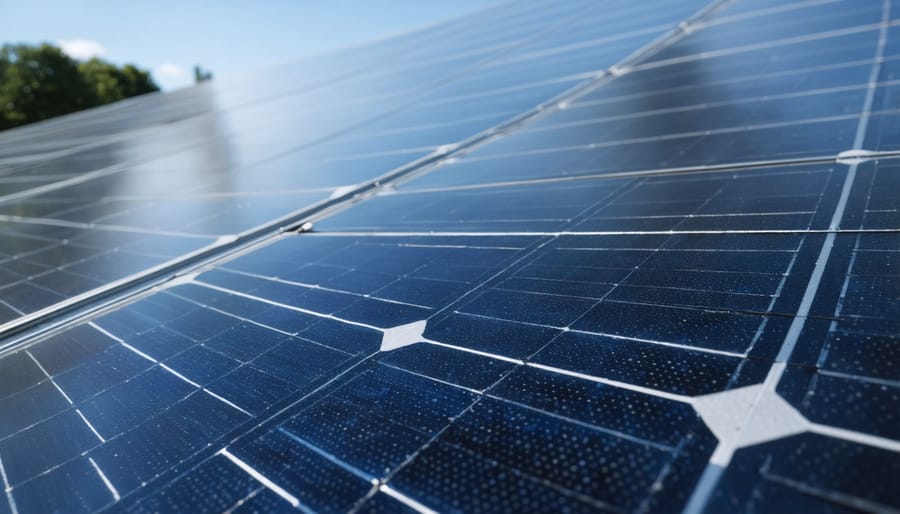
Photovoltaic systems contain several high-value materials that justify comprehensive recycling efforts from both economic and environmental perspectives. Silicon, the primary semiconductor material in most solar panels, represents approximately 3-5% of panel weight and maintains significant market value. While silicon itself is abundant, the energy-intensive purification process required to produce solar-grade silicon makes recovered material economically attractive.
Silver constitutes the most valuable component by weight, used in electrical contacts and conductors within solar cells. Modern panels contain roughly 15-20 grams of silver per unit, and with silver prices consistently elevated, this precious metal alone can offset substantial recycling costs. Recovering silver from end-of-life panels reduces pressure on mining operations and decreases the industry’s exposure to commodity price volatility.
Aluminum frames, representing 10-15% of total panel weight, offer excellent recyclability with minimal quality degradation. Recycling aluminum requires 95% less energy than primary production, delivering clear environmental benefits while maintaining material performance standards.
Copper wiring and junction boxes contain this critical conductor material, which faces increasing global demand across electrification sectors. Current projections indicate potential copper supply constraints by 2030, making recovery from existing products strategically important for energy transition goals.
Glass, comprising 60-70% of panel weight, provides bulk material for various applications after processing. While less valuable per kilogram, the sheer volume makes glass recovery economically significant at scale.
Additionally, rare materials like tellurium and indium found in thin-film technologies warrant recovery due to their scarcity and limited global reserves. Universities collaborating with industry are developing increasingly efficient extraction techniques to maximize material recovery rates while minimizing processing costs.
Hazardous Components That Need Careful Handling
Battery recycling systems in photovoltaic installations must address several hazardous components that pose significant environmental and health risks if improperly handled. Lead-acid batteries, commonly used in off-grid solar applications, contain lead plates and sulfuric acid electrolyte, both requiring specialized containment and processing protocols. When exposed to soil or groundwater, lead causes neurological damage and persists in ecosystems for decades.
Lithium-ion batteries, increasingly prevalent in modern energy storage systems, contain electrolyte solutions with lithium salts, organic solvents, and cobalt compounds that are toxic and flammable. The electrolyte can react violently with water, producing corrosive hydrofluoric acid. Cadmium telluride in certain thin-film solar panels presents additional concerns, as cadmium is a known carcinogen requiring carefully controlled thermal treatment during recycling.
Professional recycling facilities employ multiple safeguards for these materials. Sealed collection containers prevent leakage during transport, while dedicated processing lines with air filtration systems capture toxic emissions. Acid neutralization tanks, cryogenic cooling for lithium-ion cells, and hydrometallurgical separation processes enable safe material recovery. Universities partnering with recycling facilities contribute to developing enhanced extraction techniques that minimize worker exposure and environmental release. Educational programs emphasize proper identification, classification, and handling procedures essential for protecting both personnel and surrounding communities throughout the recycling process.
How Lifecycle Battery Recycling Actually Works
Collection and Transportation Networks
Effective collection and transportation networks form the backbone of successful battery and photovoltaic recycling programs. These systems must balance logistical efficiency with environmental responsibility while ensuring cost-effectiveness for all stakeholders.
Take-back programs represent a primary collection mechanism, with many manufacturers and distributors establishing voluntary or mandated schemes. These programs allow consumers and commercial operators to return end-of-life batteries and solar panels to designated facilities, often at no cost. Extended Producer Responsibility legislation in various jurisdictions requires manufacturers to finance and manage collection infrastructure, creating accountability throughout the product lifecycle.
Collection points typically include authorized recycling centers, retail locations, installer networks, and utility company facilities. Strategic placement of these sites minimizes transportation distances and associated emissions, while maximizing accessibility for diverse user groups. Universities partnering with recycling initiatives often serve as educational collection hubs, combining practical waste management with research opportunities.
Transportation considerations involve specialized handling protocols to prevent hazardous material releases, particularly for damaged lithium-ion batteries requiring segregated containers and temperature controls. Consolidation centers aggregate smaller shipments before transport to recycling facilities, optimizing fuel consumption and reducing carbon footprints. GPS tracking and chain-of-custody documentation ensure regulatory compliance and material accountability throughout the logistics chain, supporting the circular economy framework essential for sustainable renewable energy deployment.
Disassembly and Sorting Technologies
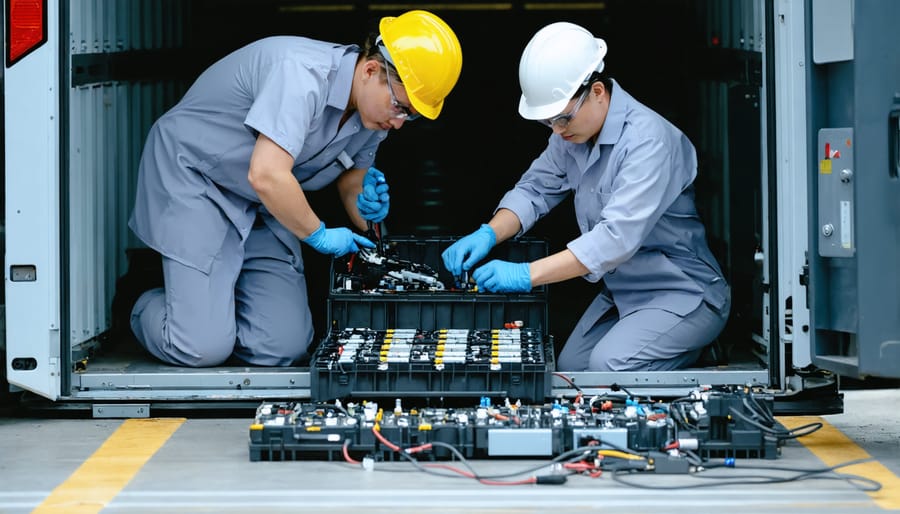
Effective battery recycling begins with systematic disassembly and sorting, a critical phase that determines downstream material recovery efficiency. This process employs both manual and automated approaches, depending on facility capabilities and battery chemistry.
Manual disassembly remains prevalent, particularly for battery modules containing hazardous materials. Trained technicians carefully remove protective frames, disconnect junction boxes, and separate electronic components under controlled conditions. This hands-on approach allows for immediate identification of damaged cells or thermal events that require specialized handling. Safety protocols during manual operations include personal protective equipment, fire suppression systems, and proper ventilation to mitigate exposure to electrolyte vapors or particulate matter.
Automated systems increasingly complement manual processes, especially at high-volume facilities. Robotic disassembly lines use computer vision and specialized tooling to remove fasteners, separate module layers, and sort components by material type. These systems achieve consistent results while reducing worker exposure to potentially hazardous substances.
The sorting phase categorizes materials into distinct streams: aluminum and steel frames, copper wiring, plastic housings, and battery cells grouped by chemistry. Advanced sorting technologies employ X-ray fluorescence and infrared spectroscopy to identify material composition rapidly. Academic institutions collaborate with recycling facilities to optimize these processes, developing innovative techniques that improve recovery rates while reducing energy consumption. Educational programs now incorporate disassembly protocols, preparing the next generation of professionals for this expanding sector.
Material Recovery Techniques
Battery recycling employs three primary material recovery approaches, each targeting different components and recovery efficiencies. Mechanical processing serves as the initial step, where batteries undergo dismantling, shredding, and sorting. This method separates housing materials, copper wiring, and other metallic components through density-based separation and magnetic techniques. The process yields relatively pure material streams while consuming minimal energy, making it cost-effective for preliminary separation.
Thermal treatment, or pyrometallurgical processing, utilizes high-temperature furnaces to recover valuable metals. Batteries are heated to extreme temperatures, causing organic materials to combust and metals to segregate based on melting points. This method excels at recovering cobalt, nickel, and copper, though it typically requires significant energy input and may produce emissions requiring careful management. The resulting alloys require further refining to achieve battery-grade purity.
Hydrometallurgical processes employ chemical solutions to selectively dissolve and extract specific materials. Through controlled leaching with acids or bases, operators can target individual metals with precision, achieving recovery rates exceeding 95% for lithium, cobalt, and nickel. Similar principles apply to PV panel recycling, where specialized techniques recover silicon and rare materials. Advanced facilities often combine multiple methods sequentially, optimizing both recovery rates and economic viability while minimizing environmental impact.
The Business Case for Material Recovery
The economic landscape of photovoltaic recycling is rapidly evolving as the industry confronts an unprecedented wave of end-of-life solar panels. Understanding the business case for material recovery requires examining both the inherent value of recovered materials and the regulatory frameworks shaping market dynamics.
Solar panels contain valuable materials that justify recovery efforts. Silicon, silver, copper, and aluminum represent the primary economic drivers, with silver being particularly significant given its current market value and limited global supply. A standard crystalline silicon panel contains approximately 20 grams of silver, while aluminum frames account for roughly 10 kilograms per panel. When processed at scale, these materials generate substantial revenue streams that increasingly offset recycling costs.
The economics of photovoltaic recycling have historically presented challenges due to collection logistics, transportation expenses, and processing complexity. However, technological advances in automated disassembly and chemical separation are dramatically improving cost efficiency. European facilities now achieve recovery rates exceeding 95 percent for glass and metals, with processing costs declining as throughput volumes increase.
Extended Producer Responsibility programs represent a cornerstone of recycling economics in mature markets. The European Union’s WEEE Directive mandates manufacturer-funded collection and recycling systems, effectively internalizing end-of-life costs into product pricing. This regulatory framework ensures reliable funding streams for recycling infrastructure while incentivizing manufacturers to design products for easier material recovery. Similar programs are emerging in jurisdictions including California, Washington, and several Asian markets.
Regulatory incentives further strengthen the business case through various mechanisms. Tax credits, landfill restrictions, and renewable energy certificates create additional value propositions for proper recycling. Some regions now require recycling plans as conditions for project permitting, transforming what was once voluntary into essential business practice.
Scale remains the decisive factor in recycling profitability. Individual panel recovery proves economically unviable, but industrial-scale operations processing thousands of panels monthly achieve positive margins. Universities collaborating with industry partners are developing innovative approaches to optimize material separation and expand markets for recovered materials. Educational programs increasingly emphasize circular economy principles, preparing the next generation of professionals to implement profitable recycling systems.
As installation volumes from the early 2000s reach end-of-life simultaneously, the industry approaches a tipping point where recycling transitions from cost center to profit opportunity, particularly when supported by appropriate policy frameworks and technological innovation.
Current Regulations and Industry Standards
The regulatory landscape for battery recycling is rapidly evolving as governments recognize the environmental imperative and economic opportunities within the circular economy. The European Union leads global efforts through its Waste Electrical and Electronic Equipment (WEEE) Directive, which mandates collection, treatment, and recovery targets for batteries and electronic components. Updated in 2012 and continuously refined, the WEEE Directive requires manufacturers to finance collection and recycling operations, establishing producer responsibility as a cornerstone principle. The EU’s Battery Directive further stipulates that producers must achieve collection rates of 45% by 2023, with ambitious targets increasing to 65% by 2025.
Beyond Europe, regulatory frameworks are emerging across multiple jurisdictions. In the United States, individual states like California have enacted legislation requiring battery recycling programs, though no comprehensive federal mandate currently exists. China implemented its New Energy Vehicle Battery Recycling regulations in 2018, creating traceability systems that track batteries throughout their operational life. These regulations parallel solar panel recycling laws that are similarly transforming the photovoltaic sector.
Industry voluntary standards complement governmental regulations, with organizations like the Battery Stewardship Council and Responsible Battery Coalition establishing best practices for collection, transportation, and processing. These standards emphasize safety protocols, environmental protection, and material recovery efficiency. Many manufacturers participate in certification programs that demonstrate commitment to sustainable practices, recognizing that compliance provides competitive advantages in increasingly environmentally conscious markets.
Compliance requirements directly influence recycling infrastructure development. Regulations drive investment in specialized facilities capable of safely handling lithium-ion, lead-acid, and other battery chemistries. Academic partnerships between recycling facilities and universities advance research into more efficient recovery techniques while training the next generation of recycling professionals. As regulatory frameworks mature and harmonize internationally, the photovoltaic industry benefits from improved infrastructure that supports comprehensive lifecycle management of both batteries and solar components, strengthening the sustainability credentials of renewable energy systems.
Design for Recyclability: Building Better Panels from the Start
The most effective recycling strategy begins long before a solar panel reaches its end-of-life phase. By integrating circular economy principles into initial design processes, manufacturers like Mose Solar can dramatically reduce recycling complexity and increase material recovery rates.
Modular construction represents a fundamental shift in panel architecture. Rather than permanently bonding components together, modular designs allow for straightforward disassembly using common tools. This approach enables recyclers to efficiently separate valuable materials like silicon wafers, glass, and aluminum frames without resorting to energy-intensive shredding processes. Research from leading universities demonstrates that modular panels can increase recovery rates by up to 30 percent compared to traditional designs.
Material selection plays an equally critical role. Choosing recyclable encapsulants over conventional EVA materials simplifies the separation process between glass and silicon cells. Thermoplastic alternatives, for instance, can be removed through controlled heating, preserving the integrity of underlying materials. Similarly, selecting aluminum over composite materials for frames ensures nearly 100 percent recyclability at end-of-life.
Adhesive technology deserves particular attention. Traditional silicone adhesives create permanent bonds that require mechanical grinding to separate. Modern reversible adhesives activated by specific temperatures or wavelengths allow clean separation without material degradation. These innovations reduce processing costs while maintaining panel performance throughout their operational lifetime.
Comprehensive labeling systems provide the final piece of the design puzzle. Digital product passports containing detailed material composition, manufacturing date, and disassembly instructions enable recyclers to optimize processing parameters. QR codes embedded in junction boxes can link to online databases maintained by manufacturers, ensuring information accessibility decades after production.
Through educational programs developed in collaboration with universities, Mose Solar shares these design principles with emerging photovoltaic professionals, ensuring future generations of panels prioritize recyclability without compromising performance or affordability.

What This Means for PV Professionals
The evolution toward circular economy principles in photovoltaic systems is creating substantial career opportunities for professionals equipped with specialized knowledge in battery lifecycle management. As the first generation of large-scale energy storage installations approaches end-of-life, the industry faces an urgent need for skilled workers who understand both technical recycling processes and the logistics of material recovery.
Reverse logistics represents one of the fastest-growing career paths in renewable energy. This field encompasses the planning, implementation, and control of efficient material flows from collection points through processing facilities. Professionals in this sector need competencies spanning supply chain management, regulatory compliance, and materials science. Companies are actively recruiting specialists who can optimize collection networks, coordinate transportation of spent batteries, and manage relationships with certified recycling facilities.
The workforce requirements extend beyond traditional engineering roles. Environmental compliance specialists ensure adherence to increasingly stringent regulations, while materials analysts identify opportunities for recovered component reintegration into manufacturing streams. Data scientists are developing predictive models to forecast battery degradation and optimize collection timing, maximizing recovered material value.
Educational institutions are responding to these workforce demands by integrating circular economy concepts throughout their curricula. Universities partnering with industry leaders now offer specialized courses covering battery chemistry, disassembly protocols, and lifecycle assessment methodologies. Some programs feature hands-on laboratory experiences where students work with actual decommissioned systems, providing practical skills employers value.
For aspiring professionals, developing cross-disciplinary expertise proves essential. Understanding metallurgy, electrochemistry, environmental policy, and business economics positions individuals advantageously in this emerging sector. Professional certifications in hazardous materials handling, safety protocols, and recycling technologies enhance career prospects. As the photovoltaic industry matures, those who master these interconnected competencies will find themselves at the forefront of sustainable energy system development, contributing directly to resource conservation and environmental stewardship.
The transition to renewable energy through photovoltaic deployment represents one of humanity’s most significant steps toward environmental sustainability, yet this transformation remains incomplete without comprehensive end-of-life planning. As we’ve explored throughout this analysis, lifecycle thinking must become embedded in every stage of solar technology deployment—from initial design and material selection through decades of operation to eventual decommissioning and resource recovery.
The maturation of recycling technologies offers genuine cause for optimism. Advanced mechanical separation, hydrometallurgical processes, and emerging thermal treatment methods now enable recovery rates exceeding 95% for many panel components. Similarly, battery recycling techniques continue evolving, with direct cathode recycling and improved extraction methods promising both environmental benefits and economic viability. These technological advances, combined with strengthening regulatory frameworks in Europe, Asia, and increasingly North America, create the foundation for a truly circular solar economy.
However, technology and regulation alone cannot ensure sustainable outcomes. Education remains the critical catalyst for industry transformation. Universities collaborating with industry partners are developing specialized curricula that prepare the next generation of professionals to integrate circular economy principles into their daily practice. Educational programs that emphasize lifecycle assessment, material flow analysis, and end-of-life planning equip professionals with essential competencies for responsible solar deployment.
The call to action is clear: every photovoltaic professional must consider end-of-life implications in every installation decision. Whether specifying equipment, designing systems, or advising clients, incorporating recyclability, material transparency, and decommissioning plans should become standard practice—not optional considerations. Building a sustainable solar industry requires commitment from each professional to view installations not as finite products but as temporary custodianship of valuable resources awaiting their next lifecycle.