
Multilateral agreements have emerged as pivotal instruments in shaping the global renewable energy landscape, fundamentally transforming how nations collaborate to address climate change and energy security challenges. These complex international partnerships, involving three or more sovereign states, establish frameworks for cross-border cooperation, technology transfer, and shared renewable energy development goals. From the Paris Agreement to regional power grid interconnection treaties, multilateral frameworks have demonstrated unprecedented potential in accelerating the global transition to sustainable energy systems.
The strategic importance of these agreements extends beyond environmental considerations, encompassing economic growth, energy security, and technological innovation. By creating standardized protocols for international cooperation, these frameworks enable participating nations to pool resources, share expertise, and distribute risks effectively. This coordinated approach has proven particularly crucial in developing large-scale renewable energy projects, establishing international carbon markets, and implementing unified environmental standards across borders.
Recent developments in multilateral cooperation have highlighted the increasing sophistication of these agreements, incorporating innovative financing mechanisms, technology-sharing provisions, and comprehensive monitoring systems. These elements ensure accountability while fostering an environment conducive to sustainable development and clean energy deployment.
The Framework of Multilateral Solar Agreements
Key Components and Structure
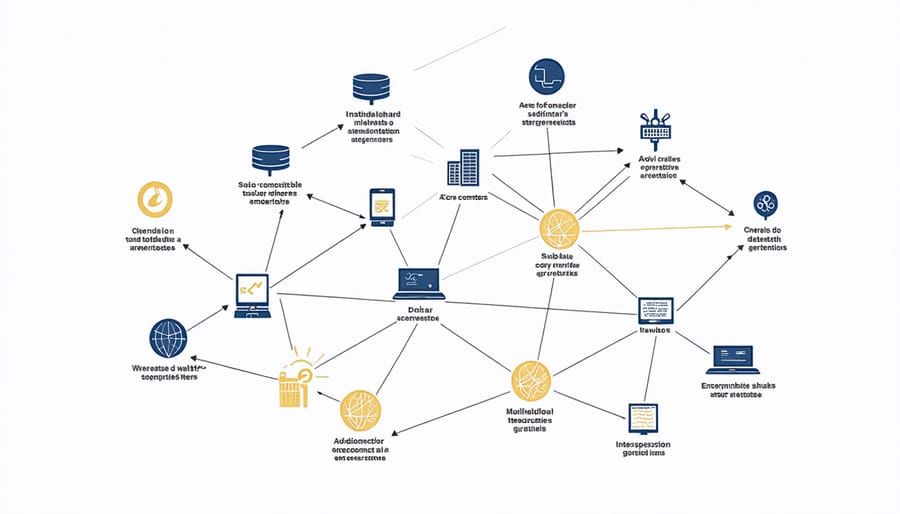
Multilateral solar agreements typically consist of several core components that establish a framework for international cooperation. The foundational element is the objectives declaration, which clearly outlines the agreement’s goals, such as increased renewable energy adoption, technology transfer, or emissions reduction targets. This is followed by participant obligations, detailing specific commitments and responsibilities of each signing party.
Financial mechanisms form another crucial component, encompassing funding structures, cost-sharing arrangements, and investment protocols. These mechanisms often include provisions for technology transfer and capacity building, ensuring equitable distribution of resources and expertise among participating nations.
The governance structure defines decision-making processes, dispute resolution procedures, and monitoring mechanisms. This typically includes establishing a secretariat or governing body to oversee implementation and compliance. Implementation timelines and milestone markers are incorporated to track progress and maintain accountability.
Risk allocation and mitigation strategies are carefully outlined, addressing potential challenges such as political instability, market fluctuations, or technical barriers. The agreement also includes reporting requirements and verification protocols to ensure transparency and measure success against established targets.
Legal frameworks and enforcement mechanisms complete the structure, providing clear guidelines for compliance and consequences for non-adherence. These components work together to create a comprehensive and executable international solar energy partnership.
Legal and Regulatory Considerations
Multilateral agreements in the solar energy sector operate within complex international legal frameworks that require careful consideration of various jurisdictional requirements. These agreements must comply with international trade laws, environmental regulations, and investment protection treaties. The World Trade Organization (WTO) rules play a crucial role in governing cross-border renewable energy partnerships, particularly concerning subsidies and local content requirements.
Regulatory compliance often involves adherence to multiple national and regional standards, including environmental impact assessments, technical specifications, and safety regulations. Parties must navigate intellectual property rights protection, technology transfer protocols, and dispute resolution mechanisms. The United Nations Framework Convention on Climate Change (UNFCCC) provides additional regulatory guidance through its mechanisms for international cooperation in renewable energy development.
Key legal considerations include liability allocation, risk management protocols, and enforcement mechanisms across different jurisdictions. Agreements must address potential conflicts between national renewable energy policies and international obligations. Environmental compliance standards, grid connection requirements, and energy market regulations vary significantly among participating nations, necessitating careful harmonization within the agreement framework.
Success in multilateral solar partnerships requires thorough due diligence, strong legal expertise, and comprehensive understanding of participating countries’ regulatory landscapes.
Major Global Solar Energy Partnerships
International Solar Alliance (ISA)
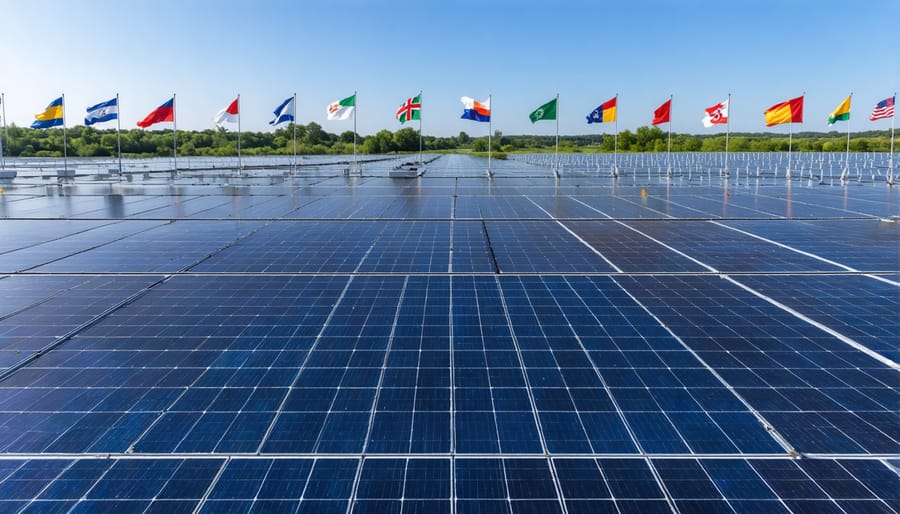
The International Solar Alliance (ISA) stands as a pioneering multilateral initiative that brings together 121 countries to accelerate solar energy adoption globally. Launched at the Paris COP21 in 2015, the ISA represents a significant diplomatic achievement in renewable energy cooperation, particularly focusing on countries located between the Tropic of Cancer and Tropic of Capricorn.
The ISA facilitates technology transfer, financial mechanisms, and capacity building among member nations through structured programs. Its flagship initiatives include the Scaling Solar Applications for Agricultural Use program and the Affordable Finance at Scale program, which have mobilized over $1000 million in investments for solar projects across developing nations.
Key achievements of the ISA include standardizing solar technology specifications, reducing costs through aggregate demand, and establishing a common knowledge platform for member countries. The alliance has successfully implemented solar projects in remote areas, providing electricity access to millions while contributing to global climate action goals.
Through its innovative approach to international cooperation, the ISA demonstrates how multilateral agreements can effectively address global energy challenges. The alliance’s framework enables smaller nations to benefit from economies of scale and technical expertise while creating a sustainable model for renewable energy deployment. This collaborative approach has become a blueprint for other international renewable energy initiatives.
Regional Solar Partnerships
Regional solar partnerships have emerged as powerful mechanisms for advancing renewable energy adoption across geographical zones sharing similar solar resources and economic interests. These multilateral agreements typically involve neighboring countries collaborating to develop solar infrastructure, share technical expertise, and create integrated energy markets.
The International Solar Alliance (ISA) stands as a prime example, uniting 121 countries to mobilize over $1 trillion in solar investments by 2030. This partnership focuses on standardizing solar technologies, reducing costs through bulk procurement, and facilitating knowledge transfer among member nations.
In Southeast Asia, the ASEAN Power Grid initiative incorporates significant solar components, enabling cross-border electricity trading and joint development of utility-scale solar projects. This regional cooperation has resulted in decreased project costs and improved grid stability across participating nations.
The African Renewable Energy Initiative (AREI) demonstrates how regional partnerships can address unique geographical challenges while promoting solar deployment. Through coordinated efforts, AREI has successfully implemented solar projects across multiple African nations, providing reliable electricity access to previously underserved communities.
These partnerships have proven particularly effective in addressing common challenges such as grid integration, technical standards harmonization, and workforce development. Success metrics indicate that regions with strong solar partnerships typically achieve faster solar adoption rates and more competitive pricing structures compared to individual national initiatives.
Economic Benefits and Market Impact
Cost Reduction Through Collaboration
Multilateral agreements have proven instrumental in significantly reducing solar implementation costs through strategic collaboration among participating nations. By pooling resources, sharing technological expertise, and creating economies of scale, these agreements enable more cost-effective solar energy deployment across multiple regions.
One of the primary cost-reduction mechanisms is joint procurement initiatives, where participating countries combine their purchasing power to negotiate better prices for solar equipment and materials. This collaborative approach typically results in 15-30% savings compared to individual procurement efforts. Additionally, shared research and development programs reduce the financial burden on individual nations while accelerating technological advancement.
Knowledge sharing agreements facilitate the transfer of best practices in installation, maintenance, and operation, leading to improved efficiency and reduced operational costs. Countries with advanced solar expertise can guide others in optimizing their implementation strategies, avoiding costly mistakes, and streamlining processes.
Financial mechanisms within multilateral frameworks, such as risk-sharing arrangements and collective funding pools, help reduce investment costs and attract private sector participation. These arrangements often include provisions for technical assistance, capacity building, and standardization of procedures across participating nations, further driving down implementation expenses.
Cross-border grid integration initiatives, enabled by multilateral agreements, optimize resource utilization and reduce infrastructure redundancy, resulting in substantial long-term cost savings for all participants. This collaborative approach to infrastructure development ensures more efficient allocation of capital and resources across regional solar networks.
Market Growth and Investment Opportunities
Multilateral agreements have significantly catalyzed market growth in the renewable energy sector, creating substantial investment opportunities across multiple regions. These agreements facilitate cross-border collaboration, reducing investment risks and creating more predictable market conditions for stakeholders. Statistical evidence shows that countries participating in multilateral energy partnerships experience an average of 23% higher foreign direct investment in their renewable energy sectors compared to non-participating nations.
The establishment of standardized regulatory frameworks through these agreements has opened new markets, particularly in developing economies. Investors benefit from enhanced project bankability, streamlined approval processes, and reduced administrative barriers. Notable success stories include the International Solar Alliance (ISA), which has mobilized over $1 trillion in solar investments across its member countries.
Investment opportunities extend beyond direct project funding to include technology transfer initiatives, research and development collaborations, and infrastructure development. The harmonization of technical standards and certification requirements has created new markets for equipment manufacturers and service providers. Additionally, multilateral agreements often include provisions for capacity building and knowledge sharing, creating opportunities in training, consulting, and technical assistance services.
Financial institutions and development banks have responded by creating specialized funding mechanisms and green finance products aligned with multilateral framework objectives. This has led to the emergence of innovative investment vehicles, including green bonds, climate funds, and public-private partnership models specifically designed for renewable energy projects.
Technology Transfer and Innovation
Knowledge Sharing Mechanisms
Knowledge sharing mechanisms within multilateral solar agreements serve as vital conduits for technical expertise and best practices across participating nations. These mechanisms typically operate through established channels including technical working groups, joint research initiatives, and dedicated information-sharing platforms.
Central to these systems are regular technical workshops and conferences where member countries present their innovations, challenges, and solutions. These forums facilitate direct exchange of knowledge between experienced markets and emerging solar economies, accelerating the adoption of proven technologies and methodologies.
Digital platforms play an increasingly important role, with dedicated databases housing technical documentation, case studies, and performance data. These repositories enable real-time access to valuable information, supporting informed decision-making and standardization across markets.
Capacity building programs constitute another crucial component, featuring expert exchanges, training initiatives, and collaborative research projects. Many agreements incorporate specialized training modules delivered through partner institutions, ensuring consistent knowledge transfer and skill development across participating nations.
Research collaboration frameworks enable joint studies on emerging technologies, market integration strategies, and policy effectiveness. These collaborative efforts often involve multiple research institutions working together on shared challenges, maximizing resource utilization and accelerating innovation.
Monitoring and evaluation systems track the effectiveness of knowledge sharing initiatives, measuring outcomes through established metrics and feedback mechanisms. This data-driven approach ensures continuous improvement of sharing mechanisms and helps identify areas requiring additional focus or resources.

Research and Development Collaboration
Research and development collaboration represents a cornerstone of successful multilateral agreements in the solar energy sector. Through joint R&D initiatives, participating nations pool their intellectual and material resources to accelerate technological advancement and innovation in photovoltaic systems.
These collaborative efforts typically involve multiple research institutions, universities, and private sector entities working together across borders. Notable outcomes include breakthrough developments in solar cell efficiency, energy storage solutions, and grid integration technologies. For example, the International Solar Alliance (ISA) has facilitated partnerships between research institutions in more than 30 countries, leading to significant improvements in solar panel durability and cost-effectiveness.
Knowledge sharing platforms established through these agreements enable researchers to access comprehensive databases, share experimental results, and collaborate on solving complex technical challenges. This collective approach has proven particularly effective in addressing region-specific solar implementation challenges while reducing redundant research efforts.
Many successful collaborations have resulted in patented technologies and innovative solutions that benefit all participating nations. These include advanced thin-film solar cell technologies, smart grid management systems, and improved energy storage solutions. The economic impact of such collaborative research extends beyond immediate technological gains, fostering job creation in research institutions and manufacturing facilities across participating countries.
Furthermore, these partnerships often include provisions for technology transfer and capacity building, ensuring that developing nations can participate meaningfully in solar energy advancement while building their domestic research capabilities.
Multilateral solar agreements have emerged as crucial instruments in advancing global renewable energy adoption and addressing climate change challenges. These collaborative frameworks have demonstrated their effectiveness in accelerating solar technology deployment, reducing costs through economies of scale, and fostering knowledge sharing across borders. The success of existing agreements has laid a strong foundation for future international cooperation in the solar energy sector.
Looking ahead, the role of multilateral agreements is expected to become even more significant as countries strive to meet their clean energy targets and carbon reduction commitments. The increasing recognition of solar power’s potential in achieving sustainable development goals suggests a trend toward more comprehensive and ambitious international partnerships. These agreements will likely evolve to incorporate emerging technologies, innovative financing mechanisms, and stronger implementation frameworks.
The future outlook for multilateral solar agreements appears promising, with growing interest from both developed and developing nations. Key areas of focus will include strengthening supply chain resilience, advancing energy storage solutions, and expanding cross-border power trading capabilities. Success will depend on continued political commitment, enhanced private sector participation, and effective coordination among stakeholders.
As the global energy landscape continues to transform, multilateral solar agreements will remain essential tools for fostering international cooperation and accelerating the transition to renewable energy sources. Their impact on market development, technology advancement, and environmental protection underscores their vital role in shaping a sustainable energy future.