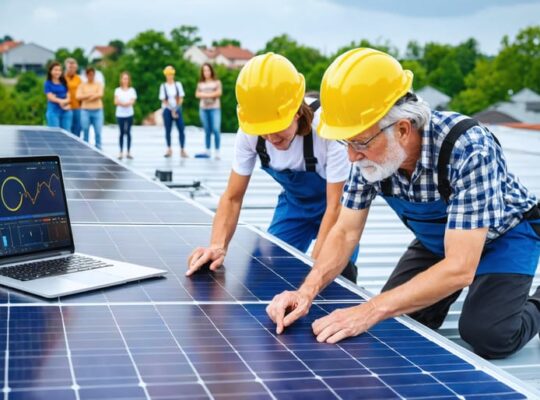
Grassroots volunteers represent the driving force behind successful community solar initiatives, transforming local energy landscapes through dedicated advocacy and hands-on engagement. These passionate individuals bridge the critical gap between sophisticated solar technology and neighborhood-level implementation, making renewable energy accessible to communities that might otherwise lack resources or technical expertise.
Operating at the intersection of environmental stewardship and social impact, grassroots volunteers contribute essential skills ranging from technical assessment and project planning to community outreach and educational programming. Their efforts have catalyzed numerous successful solar installations across schools, community centers, and residential neighborhoods, demonstrating the profound impact of organized volunteer networks on renewable energy adoption.
The exponential growth of community solar projects over the past decade directly correlates with the expansion of grassroots volunteer networks. These dedicated individuals not only facilitate practical implementation but also foster lasting relationships between stakeholders, creating sustainable frameworks for future renewable energy initiatives. Their work exemplifies how local action can drive global environmental change, making solar energy adoption more equitable and achievable for diverse communities nationwide.
The Power of Local Solar Advocacy
Building Community Support
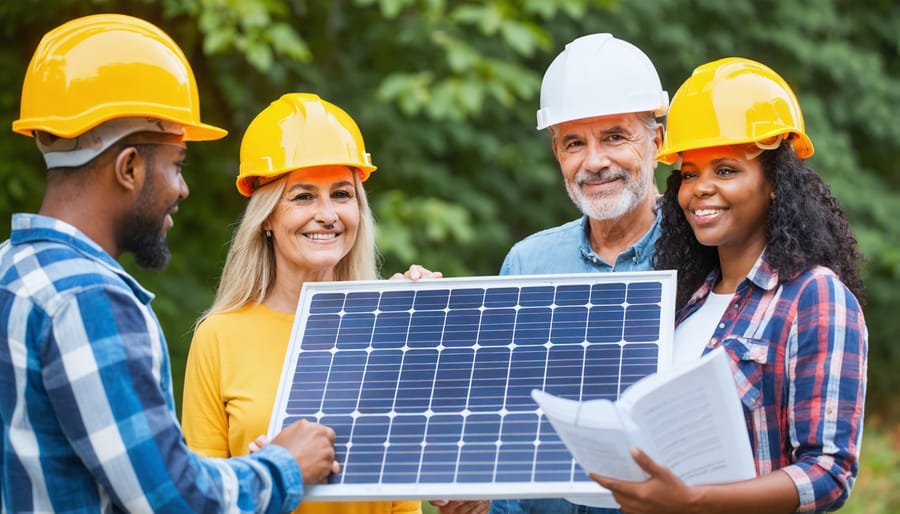
Grassroots volunteers employ various strategies to build community support for solar energy adoption. Through organized workshops and information sessions, volunteers educate neighbors about the environmental and economic benefits of solar PV systems. These sessions often include presentations on successful solar purchasing initiatives and real-world examples of energy cost savings.
Volunteers create educational materials tailored to different audience segments, from homeowners to business owners, addressing specific concerns and opportunities. They utilize social media platforms and local community boards to share success stories and upcoming events. Door-to-door outreach campaigns help volunteers connect personally with residents, answering questions and addressing misconceptions about solar technology.
Many volunteer groups partner with local schools and community centers to organize hands-on demonstrations and youth education programs. These partnerships often lead to broader community engagement and heightened awareness of renewable energy benefits. Volunteers also collaborate with local government officials to advocate for solar-friendly policies and organize community solar fairs where residents can meet installers and learn about financing options.
Influencing Local Policy
Grassroots volunteers play a crucial role in shaping local solar policies through strategic engagement with municipal governments and regulatory bodies. These advocates participate in city council meetings, planning commission sessions, and public hearings to voice support for solar-friendly initiatives and provide evidence-based recommendations for policy improvements.
Successful volunteer groups often form coalitions with local environmental organizations, business associations, and neighborhood groups to amplify their message. They conduct research on successful solar policies from other jurisdictions, prepare detailed policy briefs, and present compelling data on the economic and environmental benefits of solar adoption to decision-makers.
Key activities include advocating for streamlined permitting processes, supporting solar access rights, and promoting fair interconnection standards. Volunteers also work to eliminate restrictive homeowners’ association regulations and push for the adoption of solar-ready building codes in new construction projects.
Through persistent engagement and professional presentation of well-researched proposals, grassroots volunteers have helped numerous communities implement progressive solar policies, including solar permit fee reductions, expedited review processes, and improved grid interconnection procedures.
Essential Skills for Solar PV Advocates
Technical Understanding
To effectively advocate for solar energy at the grassroots level, volunteers need a foundational understanding of photovoltaic technology and its applications. This technical knowledge helps volunteers communicate credibly with stakeholders and address common questions from community members.
Key technical concepts that volunteers should master include the basic principles of solar energy conversion, types of solar panels and their efficiency ratings, and fundamental components of a solar PV system. Understanding concepts like direct current (DC) versus alternating current (AC), inverter functionality, and basic electrical safety principles is essential for meaningful discussions with potential adopters.
Volunteers should also be familiar with solar installation requirements, including roof structural considerations, optimal panel orientation, and shading analysis. Knowledge of local utility interconnection requirements and basic financial concepts like net metering helps volunteers explain the practical aspects of solar adoption to community members.
Environmental benefits knowledge is crucial, including carbon emissions reduction calculations and lifecycle analysis of solar equipment. Volunteers should understand regional solar potential, seasonal variations in energy production, and how weather patterns affect system performance.
While deep technical expertise isn’t required, volunteers must be able to explain these concepts in simple terms and know when to refer complex technical questions to qualified professionals. Regular participation in solar training workshops and staying current with industry developments ensures volunteers maintain their technical competency.

Communication and Outreach
Effective communication lies at the heart of successful grassroots volunteer initiatives in the solar sector. Volunteers must master both traditional and digital outreach methods to amplify their message and engage diverse community segments. Understanding and implementing proven community engagement strategies is essential for building lasting relationships with stakeholders.
Key communication skills include active listening, clear articulation of solar benefits, and the ability to address concerns constructively. Volunteers should develop proficiency in creating compelling presentations, writing informative newsletters, and managing social media campaigns that educate the public about solar energy opportunities.
Successful outreach requires tailoring messages to different audiences while maintaining consistency in core information. Volunteers should focus on highlighting tangible benefits such as energy cost savings, environmental impact, and community economic development. Using relatable examples and local success stories helps make complex solar concepts accessible to diverse community members.
Digital tools like email marketing platforms, social media management systems, and virtual meeting software have become increasingly important for coordinating volunteer efforts and maintaining community connections. Regular training in these tools ensures volunteers can effectively reach their target audiences and track engagement metrics.
Documentation of outreach efforts, including participation rates, feedback collection, and success stories, helps refine future communication strategies and demonstrates program impact to stakeholders.
Successful Grassroots Solar Campaigns
Neighborhood Solar Co-ops
Neighborhood solar co-ops represent one of the most effective grassroots approaches to expanding solar adoption within communities. These volunteer-driven initiatives bring together local residents to leverage collective purchasing power, making solar installations more affordable and accessible. Through community solar programs, participants typically save 15-30% on installation costs while benefiting from shared expertise and resources.
Successful co-ops often begin with a core group of dedicated volunteers who organize informational sessions, coordinate site assessments, and negotiate with installers. For example, the Solar United Neighbors network has facilitated over 250 solar co-ops across multiple states, resulting in more than 6,000 residential installations. These groups typically follow a structured timeline, beginning with member recruitment and culminating in coordinated installations within 6-12 months.
Key elements of successful neighborhood solar co-ops include transparent governance structures, clear communication channels, and partnerships with local organizations. Volunteer coordinators often work with municipal governments, environmental nonprofits, and technical experts to ensure program success. Many co-ops also incorporate educational components, offering workshops on solar technology, financing options, and energy efficiency strategies to help members make informed decisions about their solar investments.
The co-op model has proven particularly effective in addressing common barriers to solar adoption, such as technical complexity, contractor selection, and initial cost concerns. By pooling resources and knowledge, these grassroots initiatives create sustainable pathways for community-wide solar implementation.
School Solar Projects
School solar projects represent a significant intersection of educational opportunity and renewable energy advancement, where dedicated volunteers play a crucial role in implementation. These initiatives, often starting as community-led solar projects, combine technical expertise with educational objectives to create sustainable learning environments.
Volunteers typically assist in various capacities, from initial feasibility studies and grant writing to system design consultation and installation oversight. Their efforts often include organizing workshops for students, coordinating with school administrators, and facilitating partnerships between educational institutions and solar providers.
Notable achievements include the development of hands-on STEM curricula that integrate solar technology, creation of monitoring systems that allow students to track energy production, and establishment of scholarship programs focused on renewable energy education. These projects frequently result in significant cost savings for schools while providing valuable learning opportunities.
Successful school solar initiatives often feature volunteer teams comprising solar professionals, educators, parents, and community members. Their collaborative efforts typically involve:
– Conducting energy audits and site assessments
– Securing funding through grants and donations
– Developing educational programs around installed systems
– Creating maintenance and monitoring protocols
– Establishing student-led sustainability committees
These projects serve as powerful demonstrations of renewable energy’s potential while inspiring the next generation of solar energy professionals.
Resources and Support Networks
Educational Programs
Grassroots volunteers can access a variety of structured educational programs designed to enhance their effectiveness in solar advocacy and community engagement. Many organizations offer comprehensive training modules that cover essential topics such as solar technology basics, community outreach strategies, and project management fundamentals.
The Solar Energy International (SEI) provides specialized volunteer training programs that combine online learning with hands-on experience. Participants learn about solar PV systems, installation basics, and community project coordination. These programs typically span 4-8 weeks and culminate in a certificate of completion.
Several universities partner with solar advocacy groups to offer formal certification programs. These academic collaborations provide volunteers with deeper insights into renewable energy policy, environmental impact assessment, and sustainable development principles. Notable programs include the Solar Ambassador Program and the Community Solar Leadership Initiative.
Regional solar organizations frequently conduct workshops and boot camps focused on practical skills development. These intensive training sessions cover topics such as fundraising techniques, volunteer coordination, and effective communication strategies for community engagement. Participants gain valuable networking opportunities while developing essential leadership capabilities.
Online learning platforms offer flexible, self-paced courses specifically designed for grassroots volunteers. These programs often include modules on solar policy advocacy, grant writing, and social media management for environmental campaigns. Many platforms provide mentorship opportunities, connecting new volunteers with experienced solar advocates.
Professional development opportunities are also available through industry associations and non-profit organizations. These programs often focus on specialized areas such as solar policy analysis, community solar project development, and environmental justice advocacy, helping volunteers develop expertise in their areas of interest.
Advocacy Organizations
Numerous advocacy organizations provide essential support and resources for grassroots volunteers in the solar energy sector. The Solar Energy Industries Association (SEIA) maintains an extensive network of state and regional affiliates, offering volunteers access to policy updates, training materials, and networking opportunities. Similarly, the American Solar Energy Society (ASES) connects volunteers with local chapters and provides educational resources for community outreach initiatives.
Environmental organizations like the Sierra Club and Environment America have dedicated solar programs that equip volunteers with advocacy toolkits, campaign materials, and mentorship opportunities. These organizations frequently coordinate with local groups to organize solar workshops, policy advocacy events, and community education programs.
The Solar United Neighbors (SUN) organization specializes in forming solar co-ops and provides volunteers with comprehensive resources for community organizing. Their platform includes detailed guides for conducting site assessments, organizing bulk purchases, and navigating local regulations. Vote Solar offers volunteers training in policy advocacy and connects them with state-level campaigns.
Technical support organizations like Grid Alternatives and Solar Energy International provide hands-on installation training and safety certification programs for volunteers interested in the practical aspects of solar deployment. These organizations often partner with low-income communities to implement solar projects while training local volunteers.
Resource databases maintained by organizations such as the Interstate Renewable Energy Council (IREC) and the Clean Energy States Alliance offer volunteers access to case studies, best practices, and policy frameworks. These resources help volunteers understand regulatory landscapes and develop effective strategies for local solar initiatives.
Grassroots volunteers have emerged as crucial catalysts in advancing solar PV adoption across communities worldwide. Their tireless efforts in education, advocacy, and project implementation have demonstrated that local action can drive significant environmental change. Through community workshops, solar installation projects, and policy advocacy initiatives, these dedicated individuals have helped thousands of households transition to clean energy while building more resilient and sustainable communities.
The impact of grassroots volunteers extends beyond immediate solar installations. They create lasting networks of informed citizens, establish valuable partnerships between communities and solar professionals, and develop replicable models for sustainable energy transitions. Their work has proven particularly effective in breaking down barriers to solar adoption, especially in underserved communities where access to renewable energy information and resources may be limited.
As the urgency of climate action intensifies, the role of grassroots volunteers becomes increasingly vital. Whether you’re a solar professional, student, or community member passionate about renewable energy, there are numerous ways to contribute to this movement. Consider joining local solar advocacy groups, participating in community solar projects, or organizing educational workshops in your area. Your involvement, no matter how small, can help accelerate the transition to clean energy and create lasting positive change in your community.
The future of solar energy depends not just on technological advancement, but on the dedicated individuals who champion its adoption at the grassroots level. Your participation can make a difference.