
Breaking into solar installation requires no prior experience—just commitment to learning fundamental electrical concepts, willingness to start in apprenticeship or helper roles, and completion of entry-level photovoltaic training programs. The solar industry faces a critical workforce shortage, with the U.S. Bureau of Labor Statistics projecting 27% employment growth through 2031, creating unprecedented opportunities for career changers and new graduates to enter this high-demand skilled trade.
Entry-level positions typically begin with basic tasks: mounting rack assembly, module handling, and job site preparation under experienced technicians’ supervision. These roles provide paid, hands-on learning while building toward installer certifications. Most employers prioritize safety consciousness, physical capability, and eagerness to learn over formal credentials, making solar installation uniquely accessible compared to other electrical trades.
Structured educational pathways accelerate career advancement significantly. Community college programs, vocational schools, and specialized training providers offer courses ranging from weekend workshops to comprehensive certification programs covering electrical fundamentals, National Electrical Code requirements, system design principles, and safety protocols. These credentials distinguish candidates in competitive job markets and position them for faster progression to lead installer or system designer roles.
The transition from helper to certified professional installer typically spans 6-18 months with dedicated effort. This timeline includes completing OSHA safety certifications, accumulating supervised installation hours, and pursuing North American Board of Certified Energy Practitioners (NABCEP) entry-level credentials. Success requires technical aptitude, comfort working at heights, and commitment to continuous learning as photovoltaic technology evolves rapidly within the renewable energy sector.
Why Solar Installation Is Perfect for Career Starters
Industry Growth Creating Unprecedented Opportunities
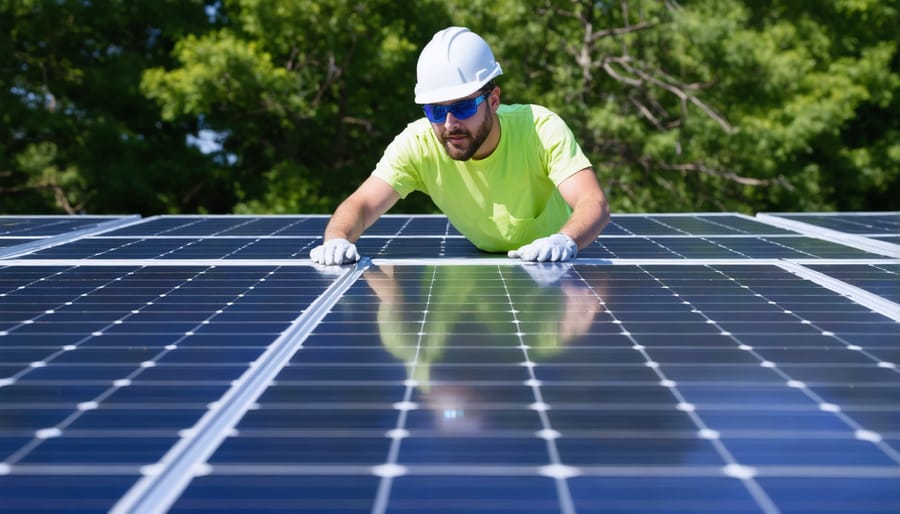
The solar industry represents one of the fastest-growing employment sectors in the United States, creating exceptional entry points for individuals without prior experience. According to the U.S. Bureau of Labor Statistics, solar photovoltaic installer positions are projected to grow 22% from 2022 to 2032—significantly outpacing the average for all occupations. This expansion translates to approximately 2,500 new positions annually, driven by declining installation costs, favorable policy incentives, and increasing consumer adoption of renewable energy systems.
The Interstate Renewable Energy Council reports that the solar workforce exceeded 250,000 professionals in 2023, with installation technicians comprising the largest occupational category. Industry analysts attribute this growth to utility-scale project development, residential market expansion, and corporate sustainability commitments. Critically, this rapid expansion has created a talent gap that employers increasingly fill through apprenticeships and on-the-job training programs rather than requiring extensive credentials. The demand for installers particularly benefits newcomers, as companies prioritize aptitude, safety consciousness, and willingness to learn over previous trade experience. This market dynamic positions solar installation as an accessible career pathway with sustained long-term opportunities.
The Training-While-You-Earn Advantage
One of the most compelling aspects of solar installation careers is the comprehensive paid training programs offered by leading photovoltaic companies. Unlike traditional industries requiring extensive prerequisites, most solar employers invest significantly in developing their workforce from the ground up. New hires typically begin with classroom-based instruction covering electrical fundamentals, safety protocols, and system components before transitioning to supervised fieldwork alongside seasoned professionals.
This apprenticeship model allows entry-level workers to earn competitive wages—often $15-$20 per hour—while acquiring specialized skills that would otherwise require costly independent certification programs. Training curricula generally span 3-6 months, during which apprentices progress from basic system assembly to more complex tasks like electrical connections and troubleshooting. Many organizations partner with technical institutions and industry associations to provide structured learning pathways that combine practical experience with theoretical knowledge.
The hands-on approach accelerates skill development considerably faster than classroom-only education. Trainees gain immediate exposure to real installation scenarios, learning what experienced installers know through direct mentorship. This earn-while-you-learn advantage eliminates financial barriers to entry while ensuring newcomers develop competencies aligned with current industry standards and emerging technologies.
Essential Skills That Matter More Than Experience
Physical Fitness and Comfort With Heights
Solar installation work demands considerable physical stamina and the ability to work safely at elevated heights. Installers routinely carry equipment weighing 40-50 pounds up ladders, maneuver solar panels across rooftops, and maintain balance on sloped surfaces throughout extended shifts. Those uncomfortable with heights or unable to perform repetitive bending, lifting, and kneeling should carefully consider whether this career path aligns with their capabilities. While no prior solar experience is required for entry-level positions, candidates must demonstrate basic physical fitness and acrophobia-free confidence. Many employers assess these fundamental requirements during initial interviews or trial periods. Prospective installers can prepare by improving cardiovascular endurance, strengthening core muscles, and honestly evaluating their comfort level working on residential and commercial rooftops where most photovoltaic systems are mounted.
Problem-Solving and Attention to Detail
Solar installation demands meticulous attention to detail and effective problem-solving abilities, even at entry levels. Installation teams regularly encounter unexpected challenges—roof irregularities, electrical panel complications, or shading obstacles—that require immediate analytical thinking to maintain project timelines and safety standards.
Precision directly impacts system performance and longevity. A misaligned panel array can reduce energy production by 15-25%, while improperly torqued connections create fire hazards. Entry-level installers learn to identify potential issues before they escalate: recognizing corroded roof penetrations, verifying proper wire gauge for amperage loads, and ensuring waterproof sealing integrity.
Real-world scenarios illustrate this importance. During installations, technicians must calculate optimal panel positioning while accounting for local building codes, structural load limits, and seasonal sun angles. They troubleshoot inverter error codes, diagnose underperforming strings, and adapt mounting strategies to unconventional roof geometries. These challenges require systematic approaches rather than shortcuts, making critical thinking and precision fundamental competencies that distinguish professional installers from inadequately trained workers in this safety-critical field.
Communication and Customer Service
Effective communication serves as a cornerstone skill in solar installation, particularly for entry-level technicians who interact daily with homeowners, project managers, and team members. Installers must explain system functionality, address safety concerns, and provide realistic timelines to clients while maintaining professionalism throughout the project lifecycle. Strong customer service abilities distinguish competent technicians from exceptional ones, as residential installations require navigating homeowner anxieties about roof integrity, system performance, and investment returns.
Team coordination equally demands clear communication protocols. Installation crews rely on precise information exchange regarding equipment specifications, electrical configurations, and structural considerations to ensure safe, efficient workflows. Entry-level professionals who demonstrate active listening, ask clarifying questions, and document concerns systematically position themselves for advancement. Many employers prioritize candidates with retail, hospitality, or service industry backgrounds specifically because these experiences develop the interpersonal competencies essential for client-facing technical work in the renewable energy sector.
Educational Pathways That Fast-Track Your Entry
Online Certificate Programs for PV Professionals
Mose Solar has partnered with accredited universities to develop comprehensive online certificate programs specifically designed for individuals entering the photovoltaic industry without prior experience. These programs offer flexible, self-paced learning that accommodates working professionals and career changers seeking to transition into solar installation roles.
The curriculum encompasses fundamental electrical theory, photovoltaic system design principles, National Electrical Code (NEC) requirements for solar installations, safety protocols, and hands-on installation techniques. Participants gain proficiency in site assessment, system sizing calculations, equipment selection, and troubleshooting methodologies. The program integrates innovative solar training tools that allow learners to visualize complex system configurations and practice installation sequences before entering the field.
Most certificate programs require 80-120 hours of coursework, typically completed within three to six months depending on individual pace. The modular structure enables students to progress through foundational concepts before advancing to specialized topics such as battery storage integration and advanced troubleshooting techniques.
What distinguishes these programs is their emphasis on practical application. Virtual simulations replicate real-world installation scenarios, while video demonstrations from experienced installers provide insights into industry best practices. Graduates receive recognized credentials that demonstrate competency to potential employers, significantly improving employment prospects. Many program completers successfully transition into entry-level installation positions or apprenticeships, armed with theoretical knowledge and virtual hands-on experience that accelerates their on-site training progression.
Community College and Technical Training Options
Community colleges and technical schools offer cost-effective pathways into solar installation, with programs typically ranging from $2,000 to $8,000 for certificate programs. These institutions provide hands-on training courses lasting six months to two years, combining classroom instruction with practical laboratory work. Students learn electrical theory, photovoltaic system design, National Electrical Code requirements, and safety protocols specific to rooftop installations. Many programs include NABCEP exam preparation and partnerships with local solar companies for job placement assistance. Evening and weekend classes accommodate working adults, while financial aid options make training accessible regardless of prior experience. Graduates emerge with both technical competencies and nationally recognized credentials that employers actively seek when hiring entry-level installers.
Industry Certifications Worth Pursuing
Industry certifications significantly enhance employability for entry-level solar installation positions, even without prior field experience. The North American Board of Certified Energy Practitioners (NABCEP) offers an Entry Level Program that provides foundational knowledge in photovoltaic systems through a competency-based exam. This certification demonstrates commitment to the industry and validates understanding of solar terminology, basic electrical concepts, and safety protocols—making candidates more attractive to employers.
Beyond NABCEP, the OSHA 10 or OSHA 30 construction safety certifications are highly valued, as they address workplace hazards common in solar installation environments. Additional credentials worth pursuing include manufacturer-specific training programs from companies like SolarEdge or Enphase, which familiarize candidates with equipment they’ll encounter on job sites. Many community colleges and renewable energy training centers offer certificate programs combining classroom instruction with hands-on practice, bridging the gap between theoretical knowledge and practical application. These certifications collectively signal professionalism and readiness to contribute safely and effectively from day one.
What Your First Solar Installation Job Actually Looks Like
Entry-Level Roles and Responsibilities
Entry-level positions in solar installation provide accessible pathways for individuals without prior experience to enter the renewable energy sector. The most common starting role is the **installer helper** or **apprentice**, which requires minimal technical knowledge but emphasizes physical capability and willingness to learn.
In these positions, newcomers typically handle **material handling and logistics**, including transporting solar panels, racking systems, and mounting hardware to installation sites. Site preparation represents another fundamental responsibility—clearing work areas, setting up safety equipment, and organizing tools for experienced installers.
Daily tasks involve assisting journeyman installers with panel positioning, holding equipment during mounting procedures, and passing tools as needed. Entry-level workers also learn to measure and mark installation points, run conduit for electrical wiring under supervision, and maintain organized work sites throughout projects.
These roles serve as practical training grounds where apprentices observe proper installation techniques, safety protocols, and quality standards. Most employers provide on-the-job training complemented by structured educational programs through partnerships with technical institutions and industry organizations. Physical stamina, attention to detail, and strong communication skills prove essential, as does commitment to workplace safety in elevated and outdoor environments.
Understanding the Installation Process
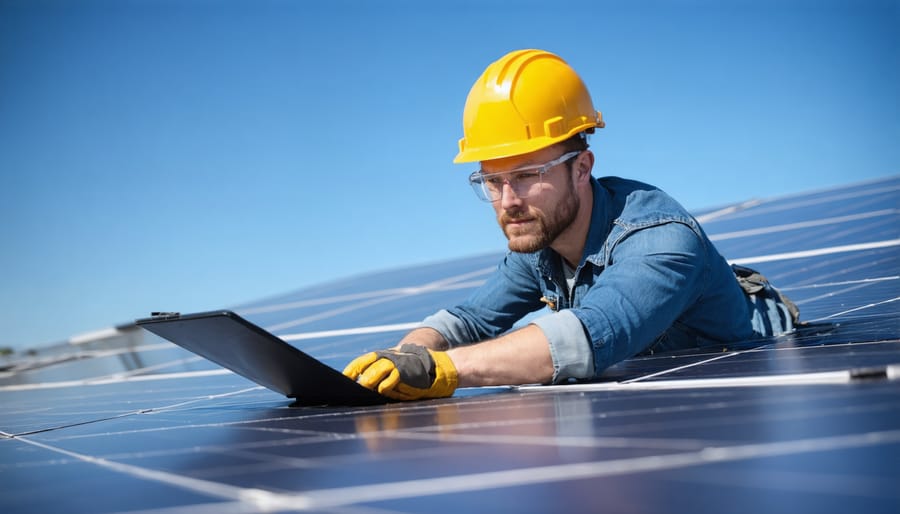
The residential solar installation process typically follows six distinct phases, each offering opportunities for entry-level professionals. Initially, site assessment teams evaluate roof condition, shading patterns, and electrical infrastructure—a phase where beginners often assist with measurements and documentation. Next, system design specialists create customized layouts, while permitting coordinators handle regulatory compliance requirements.
The physical installation phase represents the most accessible entry point for newcomers. Under experienced supervision, entry-level installers help position mounting hardware, secure racking systems, and assist with panel placement. This hands-on phase typically spans two to four days for residential projects. Following panel installation, electrical technicians—often requiring specific certifications—connect the photovoltaic array to inverters and the main electrical panel.
System commissioning involves testing performance metrics and verifying safety protocols, where beginners gain exposure to quality assurance procedures. Finally, utility interconnection and system activation complete the process. Throughout these phases, newcomers work alongside certified professionals who share installation best practices, ensuring both safety compliance and skill development. Most entry-level positions focus on the preparation and installation phases, gradually expanding responsibilities as competency increases through structured training programs and field experience.
Strategies to Stand Out as a No-Experience Candidate
Building a Solar-Ready Resume
Even without direct solar experience, your resume can demonstrate relevant capabilities that employers value. Individuals with backgrounds in construction, electrical work, roofing, or carpentry possess highly transferable skills—familiarity with power tools, understanding of structural integrity, comfort working at heights, and experience reading technical diagrams all translate directly to solar installation work.
For those from unrelated fields, emphasize soft skills that matter: reliability, physical stamina, attention to detail, and problem-solving abilities. Highlight any safety certifications (OSHA training, fall protection, first aid) prominently, as safety awareness is paramount in photovoltaic installation. Include volunteer work, DIY projects, or educational pursuits that demonstrate technical aptitude and environmental commitment.
Most importantly, convey your willingness to learn through specific actions: list any solar-related webinars attended, mention relevant coursework you’re pursuing, or reference industry publications you follow. Employers seeking entry-level installers prioritize teachability and motivation over extensive credentials. Frame your resume to showcase not just what you’ve done, but your proven capacity to acquire new technical competencies rapidly and safely.
Demonstrating Your Commitment to the Industry
Employers value candidates who demonstrate proactive engagement with the solar industry before formal employment. Completing online courses through platforms offering photovoltaic fundamentals, electrical safety, or renewable energy certificates signals serious commitment. Organizations like the Solar Energy Industries Association (SEIA) and North American Board of Certified Energy Practitioners (NABCEP) provide accessible educational resources that strengthen your foundational knowledge.
Staying current with industry developments distinguishes motivated candidates. Subscribe to solar trade publications, follow manufacturers’ technological innovations, and monitor policy changes affecting renewable energy adoption. Understanding basic solar concepts—including photovoltaic cell function, inverter types, system sizing principles, and net metering—enables more informed conversations during interviews and demonstrates technical aptitude.
Networking proves equally valuable. Attend local renewable energy conferences, join professional associations, and connect with solar professionals through LinkedIn. Many universities collaborate with industry partners to offer certificate programs and workshops that provide both knowledge and networking opportunities. These efforts collectively demonstrate your dedication beyond simply seeking employment, positioning you as a candidate genuinely invested in advancing clean energy solutions.
Acing the Interview With the Right Questions
Arriving prepared with thoughtful questions demonstrates genuine interest and professionalism to potential employers. Inquire specifically about on-the-job training programs, asking how long onboarding typically lasts and what certifications the company supports employees in obtaining. Questions about safety protocols show maturity—ask about fall protection training, electrical safety procedures, and how the company maintains its safety record. Explore career advancement opportunities by requesting clarity on typical progression timelines from installer assistant to lead installer or project manager roles. Understanding company culture is equally important; ask about team structure, mentorship availability, and how the organization supports professional development. Questions regarding equipment familiarity, daily project expectations, and performance evaluation criteria provide practical insights while signaling your commitment to excelling in the role. Avoid questions easily answered through basic website research, and instead focus on specifics that reveal the company’s investment in employee growth and workplace quality.
Career Progression From Installer to Beyond

Advancement Opportunities in Solar Installation
Entry-level solar installers who demonstrate competency and commitment can advance rapidly within this growing field. Most professionals progress from helper or junior installer positions to certified installer roles within 12-18 months. From there, the career ladder extends to lead installer positions, where experienced technicians supervise installation crews and ensure quality standards.
Beyond field installation, numerous specialization opportunities emerge. Crew supervisors and project managers coordinate multiple installation teams, handle logistics, and interface with clients. Technical professionals may transition into system design roles, utilizing system design tools to engineer customized photovoltaic solutions. Others leverage their field experience to excel in technical sales, customer education, or quality assurance positions.
Many solar companies offer structured advancement programs, partnering with technical colleges and universities to provide continuing education. Additional certifications in areas like energy storage, electrical systems, or project management further enhance career mobility. With the renewable energy sector’s sustained growth, motivated professionals without initial experience can realistically build rewarding, well-compensated careers spanning installation, engineering, management, and specialized technical roles.
Expanding Your PV Technology Expertise
Professional growth in photovoltaic technology requires ongoing education as the industry rapidly evolves. Programs like Mose Solar’s university-backed curriculum provide structured pathways to master emerging technologies including Passivated Emitter and Rear Cell (PERC) panels, which offer improved efficiency over traditional modules, and integrated solar tiles that combine aesthetics with power generation. These educational frameworks also cover battery energy storage systems—critical for solar system integration and grid independence. By engaging with accredited continuing education, entry-level installers develop specialized knowledge that differentiates them in the competitive renewable energy marketplace. This expertise enables professionals to handle complex residential and commercial projects, positioning them for advancement into design, project management, or technical consulting roles while contributing to the clean energy transition.
The solar installation industry presents a genuine opportunity for motivated individuals to build rewarding careers without prior experience. As this analysis demonstrates, the combination of robust industry demand, comprehensive on-the-job training programs, and accessible educational resources creates multiple viable entry points for aspiring professionals. The sector’s projected growth—with employment opportunities expected to increase substantially through 2032—ensures that newcomers can establish themselves in a field with long-term stability and advancement potential.
Success in solar installation careers hinges not on previous experience, but on willingness to learn, commitment to safety protocols, and dedication to developing technical competencies. Entry-level positions such as installer helpers, warehouse associates, and administrative roles provide practical pathways that allow individuals to gain industry exposure while earning. Meanwhile, apprenticeships and certificate programs accelerate skill development for those seeking faster progression.
Taking the first step requires action: research available training programs, pursue relevant certifications like OSHA 10 or NABCEP Associate credentials, and begin applying to entry-level positions with reputable installers. Educational institutions and industry-focused organizations offer structured learning opportunities that bridge knowledge gaps effectively. For those seeking comprehensive understanding of photovoltaic systems, exploring educational resources and professional development programs establishes a strong foundation for career growth. The solar industry welcomes newcomers who demonstrate initiative, safety awareness, and genuine interest in renewable energy—making now an opportune time to begin your journey toward a sustainable career.