
Revolutionizing global energy infrastructure, innovative solar systems are reshaping how we harness and distribute clean power across international boundaries. Through groundbreaking advances in photovoltaic technology and smart grid integration, these systems are achieving unprecedented efficiency levels while dramatically reducing implementation costs. The emergence of trans-national solar hubs represents a paradigm shift in renewable energy deployment, combining cutting-edge research facilities, advanced manufacturing capabilities, and comprehensive training centers into unified ecosystems of innovation.
Recent breakthroughs in perovskite solar cells, bifacial modules, and artificial intelligence-driven optimization have pushed solar technology beyond traditional limitations, achieving conversion efficiencies exceeding 45% in laboratory settings. These developments, coupled with robust international collaboration frameworks, are accelerating the transition toward a sustainable energy future. As research institutions and industry leaders forge strategic partnerships across continents, these innovation hubs are becoming catalysts for technological advancement, knowledge transfer, and workforce development in the renewable energy sector.
This comprehensive overview explores how these collaborative ecosystems are driving solar innovation, examining their structure, technological contributions, and lasting impact on global energy transformation.
The Architecture of Modern Solar Innovation Networks
Cross-Border Collaboration Models
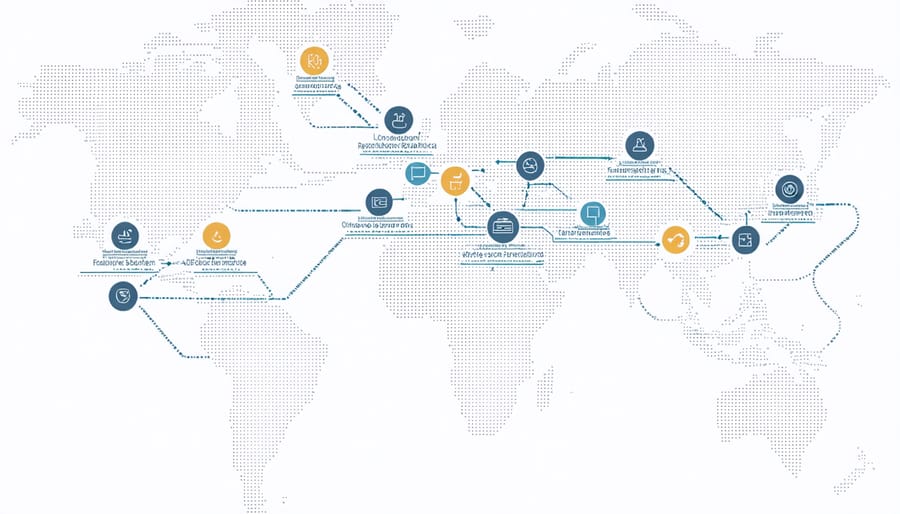
The evolution of solar technology innovation increasingly relies on sophisticated cross-border collaboration models that unite diverse stakeholders across the global value chain. Research institutions, manufacturers, and technology developers are forming strategic alliances through multilateral solar agreements that optimize resource allocation and accelerate technological advancement.
Three primary partnership structures have emerged as particularly effective: the Hub-and-Spoke model, where a central research facility coordinates with satellite development centers; the Consortium approach, which distributes research responsibilities among equal partners; and the Innovation Pipeline framework, connecting academic research directly with manufacturing capabilities.
These collaborations typically involve shared intellectual property arrangements, joint research facilities, and coordinated funding mechanisms. Notable examples include the International Solar Innovation Network (ISIN), which connects 12 research institutions across four continents, and the Solar Manufacturing Alliance (SMA), integrating production expertise from leading Asian manufacturers with European design innovations.
Success factors include clear governance structures, standardized quality control protocols, and transparent communication channels. These partnerships have demonstrably reduced development cycles while improving technology transfer efficiency between participating organizations.
Digital Integration Systems
Digital integration systems form the technological backbone of modern solar innovation hubs, enabling seamless collaboration across geographical boundaries. These systems incorporate advanced cloud computing platforms, real-time data sharing networks, and sophisticated project management tools that facilitate concurrent research and development activities across multiple locations.
Central to these systems is a unified digital infrastructure that connects research laboratories, manufacturing facilities, and testing centers worldwide. This integration allows for instantaneous sharing of experimental results, performance metrics, and technical specifications among team members and partner institutions.
The technological framework includes specialized software for solar panel design optimization, performance simulation, and predictive maintenance. Remote monitoring capabilities enable researchers to track and analyze solar installations across different climate zones, while machine learning algorithms process vast amounts of operational data to identify patterns and improvement opportunities.
These systems also integrate secure documentation platforms and standardized protocols for intellectual property management, ensuring proper attribution and protection of innovations. Virtual collaboration tools support regular knowledge exchange through video conferences, virtual workshops, and shared digital workspaces, fostering a truly global approach to solar technology advancement.
Breakthrough Technologies Emerging from Global Hubs
Next-Generation PV Materials
The landscape of photovoltaic materials is rapidly evolving, with researchers developing innovative compounds and manufacturing processes that promise higher efficiency and lower production costs. Perovskite solar cells have emerged as a groundbreaking advancement, demonstrating remarkable potential with efficiency rates exceeding 25% in laboratory conditions. These materials offer exceptional light absorption properties and can be manufactured using solution-based processes, significantly reducing production expenses.
Tandem solar cells, which combine multiple light-absorbing layers, represent another significant breakthrough. By integrating traditional silicon cells with perovskite or other advanced materials, these hybrid systems can capture a broader spectrum of solar energy, pushing theoretical efficiency limits beyond 30%.
Quantum dot solar cells are showing promise in next-generation applications, offering tunable bandgaps that can be optimized for specific wavelengths of light. Their potential for low-cost, solution-processed manufacturing makes them particularly attractive for large-scale deployment.
Organic photovoltaic materials continue to advance, with new polymer combinations achieving improved stability and efficiency. These materials offer unique advantages in flexibility and transparency, opening possibilities for building-integrated photovoltaics and consumer electronics applications.
Recent developments in manufacturing processes, including roll-to-roll printing and vapor deposition techniques, are making these advanced materials more commercially viable. These innovations are supported by sophisticated quality control methods and automated production systems, ensuring consistency and reliability in mass production.

Smart Integration Solutions
Smart grid integration has revolutionized the way solar systems interact with existing power infrastructure. Modern solar installations now incorporate advanced monitoring systems and intelligent controllers that enable seamless communication between photovoltaic arrays and the broader electrical grid. These solutions optimize energy distribution, storage, and consumption in real-time.
At the heart of these integrations are sophisticated energy management systems (EMS) that utilize artificial intelligence and machine learning algorithms to predict energy generation patterns and adjust consumption accordingly. These systems analyze weather forecasts, historical usage data, and grid demands to maximize efficiency and minimize waste.
Bidirectional inverter technology plays a crucial role in smart integration, allowing solar systems to both feed excess power back to the grid and draw from it when necessary. This functionality is enhanced by automated load management systems that prioritize critical operations during peak demand periods while shifting non-essential power usage to optimal times.
Modern smart integration solutions also incorporate advanced battery storage systems with intelligent charging algorithms. These systems determine the most efficient times to store excess solar energy and when to utilize stored power, based on factors such as electricity rates, grid demand, and predicted solar generation.
Grid stability features are another key component, with rapid response capabilities that help maintain power quality and frequency regulation. These systems can automatically adjust their output to support grid stability during unexpected fluctuations or disruptions, ensuring reliable power delivery while maximizing renewable energy utilization.
Knowledge Transfer and Educational Initiatives

International Research Programs
International collaboration drives innovation in solar technology through structured research programs and exchange initiatives. Leading institutions worldwide participate in multi-year projects focusing on breakthrough solar technologies, efficiency improvements, and sustainable implementation strategies.
The Solar Energy Research Institute (SERI) coordinates joint ventures between universities and research facilities across North America, Europe, and Asia. These partnerships facilitate knowledge sharing, resource optimization, and accelerated development of next-generation solar solutions. Notable programs include the Global Solar Innovation Network (GSIN), which connects researchers from 15 countries, and the Advanced Photovoltaic Research Alliance (APRA), focusing on emerging materials and manufacturing techniques.
Exchange programs enable scientists and engineers to work in specialized facilities abroad, fostering cross-cultural innovation and expertise sharing. The International Solar Fellows Program supports early-career researchers with six-month placements at premier research centers. Additionally, the Solar Technology Transfer Initiative helps disseminate advanced solar technologies to developing regions through collaborative research and training programs.
Virtual collaboration platforms and annual international conferences ensure continuous knowledge exchange, while shared databases and research repositories maintain transparency and accelerate scientific progress. These programs consistently produce breakthrough technologies and methodologies that advance the global solar energy sector.
Industry-Academia Partnerships
The synergy between academic institutions and solar industry pioneers has become a cornerstone of technological advancement in photovoltaic systems. Leading universities worldwide are partnering with solar companies to create comprehensive educational programs that bridge the gap between theoretical research and practical implementation. These partnerships operate through collaborative innovation frameworks that facilitate knowledge exchange and accelerate technological breakthroughs.
Notable initiatives include specialized master’s programs in solar engineering, industry-sponsored research laboratories, and internship opportunities that provide hands-on experience with cutting-edge solar technologies. These programs typically combine classroom learning with practical field work, enabling students to develop expertise in both theoretical principles and real-world applications.
Research institutions benefit from industry expertise and access to commercial-scale facilities, while companies gain fresh perspectives and innovative solutions from academic research. This symbiotic relationship has led to significant improvements in solar cell efficiency, storage solutions, and system integration methodologies.
The success of these partnerships is evident in the increasing number of patents, published research papers, and commercially viable innovations emerging from joint university-industry projects. These collaborations are essential for developing the next generation of solar energy professionals and advancing sustainable energy solutions.
Future Impact on Solar Industry
Innovation hubs are poised to revolutionize the solar industry through multiple transformative pathways. By fostering collaborative research and development, these centers will accelerate technological breakthroughs in photovoltaic efficiency, energy storage solutions, and smart grid integration. Industry projections suggest that hub-driven innovations could reduce solar panel production costs by up to 40% within the next decade, while simultaneously increasing energy conversion efficiency by 25-30%.
The integration of artificial intelligence and machine learning within these hubs will enable more sophisticated solar system designs, predictive maintenance protocols, and optimized energy distribution networks. This technological convergence is expected to contribute significantly to global energy market transformation, particularly in emerging economies.
Educational initiatives within these hubs will create a new generation of solar technology experts, addressing the industry’s growing demand for skilled professionals. By 2030, estimates suggest that innovation hubs could generate over 500,000 new jobs in the solar sector worldwide, ranging from research positions to specialized technical roles.
Furthermore, these hubs will accelerate the commercialization of breakthrough technologies through streamlined testing and validation processes. This will reduce the time-to-market for new solar solutions, enabling faster adoption of improved technologies across the industry. The resulting ecosystem of innovation is expected to attract increased private investment, with projections indicating a potential threefold increase in venture capital funding for solar technologies by 2025.
Standardization efforts led by these hubs will also facilitate better international cooperation and technology transfer, ensuring that advancements in solar technology can be effectively implemented across different regions and markets.
Trans-national solar innovation hubs represent a pivotal shift in how we approach renewable energy development and implementation. By fostering collaboration across borders, these centers of excellence are accelerating the pace of technological advancement while simultaneously reducing costs and improving efficiency. The synthesis of diverse expertise, resources, and perspectives has proven instrumental in overcoming traditional barriers to solar energy adoption.
The emergence of these collaborative ecosystems has demonstrated that the future of solar innovation lies not in isolated efforts, but in the power of unified global action. Through shared research facilities, knowledge exchange programs, and coordinated development initiatives, these hubs are creating a multiplier effect that benefits all participating nations and organizations.
Looking ahead, these innovation centers will continue to play a crucial role in shaping the renewable energy landscape. Their impact extends beyond technological advancement to include workforce development, policy harmonization, and economic growth. As we face increasing pressure to transition to sustainable energy sources, these hubs serve as beacons of progress, demonstrating how international cooperation can accelerate the global shift toward a solar-powered future.