
In today’s data-intensive solar energy landscape, hybrid cloud storage solutions emerge as the cornerstone of efficient, scalable operations for photovoltaic installations. By combining on-premises infrastructure with cloud-based storage capabilities, organizations can optimize their data management strategies while maintaining critical system performance. This innovative approach enables real-time monitoring of solar arrays, secure storage of performance metrics, and seamless integration with smart grid systems—all while ensuring data sovereignty and regulatory compliance.
As solar installations grow in scale and complexity, the demand for robust storage solutions that can handle massive volumes of performance data, weather metrics, and maintenance records becomes paramount. Hybrid cloud architectures offer the perfect balance, providing the speed and security of local storage with the scalability and accessibility of cloud platforms. This dual approach proves particularly valuable for solar facilities operating across multiple sites or requiring sophisticated data analytics capabilities.
Industry leaders increasingly recognize that successful solar energy management requires more than just hardware solutions—it demands an intelligent, adaptable storage infrastructure that can evolve with technological advancements and changing regulatory requirements. The hybrid cloud model delivers this flexibility while offering cost-effective scalability and enhanced disaster recovery capabilities.
Understanding Solar PV Data Management Challenges
Data Volume and Variety in Solar Operations
Solar PV systems generate diverse data types that require sophisticated storage solutions. Performance metrics include real-time power output, voltage levels, and current measurements, typically collected at intervals ranging from seconds to minutes. Environmental data encompasses solar irradiance, ambient temperature, and weather conditions that directly impact system efficiency.
Equipment health indicators such as inverter status, component temperatures, and maintenance alerts generate continuous streams of operational data. String-level and module-level monitoring systems produce granular performance data, while smart meters capture detailed energy production and consumption patterns.
Historical performance data, maintenance records, and warranty information constitute essential documentation that requires secure, long-term storage. Financial data, including revenue generation, incentive programs, and billing information, adds another layer of data complexity.
The data formats vary significantly, from structured time-series data to unstructured maintenance logs and image files from thermal imaging inspections. This diversity in data types and volumes necessitates a flexible storage architecture that can efficiently handle both real-time operational data and historical archives while maintaining accessibility and security.
Real-time Monitoring Requirements
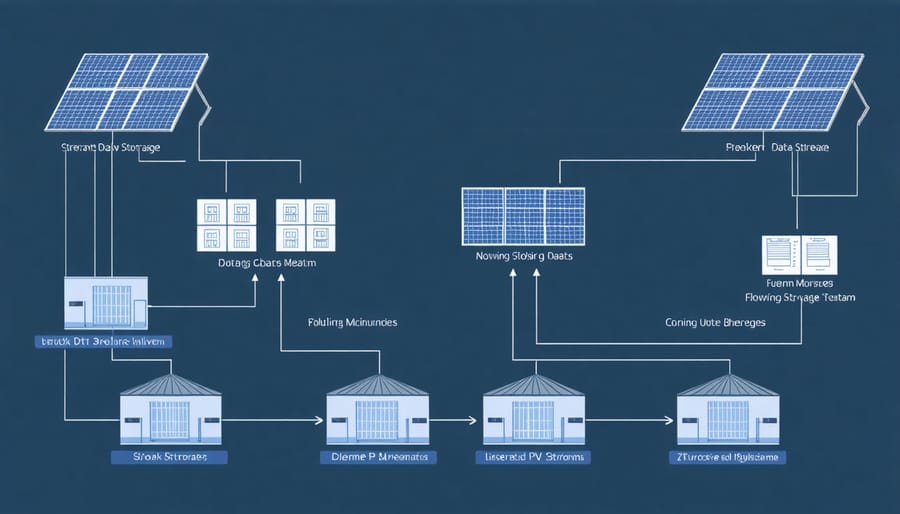
Effective hybrid cloud storage solutions require robust real-time data monitoring capabilities to ensure optimal performance and data accessibility. Storage systems must maintain low-latency access to frequently used data while efficiently managing historical information across distributed locations. Key monitoring requirements include automated performance tracking of read/write speeds, storage utilization metrics, and data transfer rates between on-premises and cloud environments.
Systems should implement automated alerts for capacity thresholds, performance bottlenecks, and potential storage failures. Monitoring tools must provide comprehensive visibility into data migration patterns, helping organizations optimize storage allocation and reduce costs. Regular performance benchmarking against established KPIs ensures storage resources are properly utilized across hybrid environments.
Integration with existing solar PV monitoring systems is essential for seamless operation. This includes real-time analytics capabilities for processing sensor data, weather information, and production metrics while maintaining data integrity and accessibility across storage tiers. Organizations should implement monitoring solutions that support predictive maintenance and capacity planning to prevent storage-related disruptions.
Hybrid Cloud Architecture for Solar PV Systems
On-premises Components
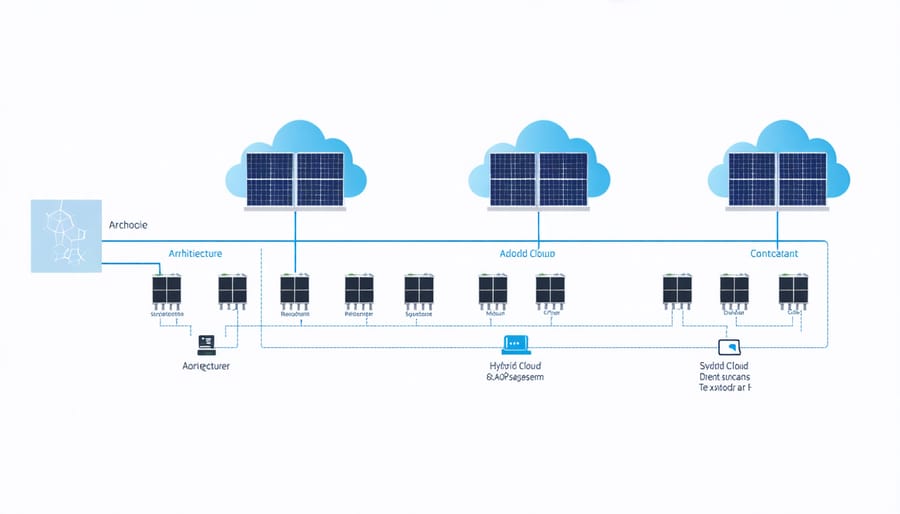
On-premises components form the foundation of hybrid cloud storage solutions in solar PV installations, providing crucial local infrastructure for immediate data processing and storage needs. These systems typically include high-performance storage arrays, dedicated servers, and networking equipment that enable rapid access to critical operational data. The local infrastructure is essential for edge computing optimization and real-time monitoring of solar PV systems.
Primary storage components usually consist of enterprise-grade SSDs and HDDs configured in RAID arrays, ensuring both performance and reliability. These arrays are strategically sized to accommodate short-term data retention needs while maintaining optimal performance for daily operations. Local servers handle immediate data processing tasks, including performance monitoring, inverter communications, and preliminary analytics.
Network infrastructure includes redundant switches, routers, and security appliances that facilitate secure data transfer between local storage and cloud services. This setup ensures uninterrupted operations even during internet connectivity issues. Additionally, local backup systems provide an extra layer of data protection through regular snapshots and incremental backups.
The on-premises infrastructure also includes hardware management tools, monitoring systems, and security measures that protect both physical and digital assets. These components work in concert to provide the immediate response times and processing capabilities required for efficient solar PV operations while preparing data for cloud synchronization.
Cloud Integration Strategies
Successful cloud integration in hybrid storage solutions requires careful consideration of multiple factors, including data classification, security requirements, and performance needs. Organizations should begin by categorizing their data based on criticality, access frequency, and compliance requirements. This classification helps determine which workloads remain on-premises and which migrate to cloud storage.
When selecting cloud storage providers, evaluate their service level agreements (SLAs), geographic redundancy options, and integration capabilities with existing infrastructure. Major providers offer various storage tiers optimized for different use cases, from frequently accessed hot storage to archival cold storage. The choice between these tiers significantly impacts both cost and performance.
Integration methods typically follow one of three approaches: gateway-based, API-driven, or hybrid connectivity solutions. Gateway appliances provide seamless integration between on-premises and cloud storage, appearing as local storage while managing data movement behind the scenes. API-driven integration offers more flexibility but requires development resources and expertise. Hybrid connectivity combines both approaches, providing automated data movement while maintaining programmatic control.
Data synchronization strategies are crucial for maintaining consistency across storage locations. Implementation options include real-time replication, scheduled synchronization, or policy-based data movement. Organizations should also implement robust monitoring tools to track data movement, storage utilization, and performance metrics across their hybrid environment.
Data Synchronization and Security
Data synchronization in hybrid cloud storage solutions for solar PV systems requires robust mechanisms to maintain consistency across on-premises and cloud environments. Real-time synchronization protocols ensure that critical solar production data, monitoring metrics, and system parameters remain current across all storage locations.
Key synchronization strategies include differential sync algorithms that only transfer modified data blocks, reducing bandwidth consumption and optimizing performance. Version control systems track changes and maintain data integrity, while conflict resolution protocols automatically handle simultaneous updates from multiple sources.
Security implementation follows a multi-layered approach, combining encryption at rest and in transit, access control mechanisms, and advanced blockchain security measures to protect sensitive solar installation data. End-to-end encryption ensures data privacy during synchronization processes, while role-based access control (RBAC) manages user permissions across hybrid environments.
Regular integrity checks and automated backup procedures safeguard against data loss or corruption. Compliance monitoring tools ensure adherence to industry regulations and data protection standards, while audit trails maintain detailed records of all data access and modifications. These comprehensive security measures create a resilient framework that supports seamless data flow while maintaining the highest levels of protection for solar PV operations.
Implementation Benefits and Best Practices
Cost Optimization Strategies
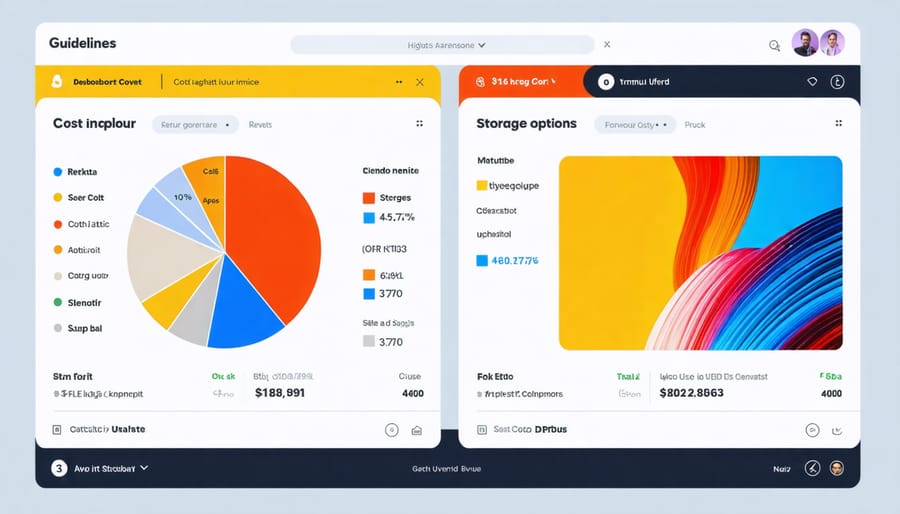
Optimizing costs in hybrid cloud storage solutions requires a strategic approach that balances performance requirements with budget constraints. Organizations can implement tiered storage architectures, where frequently accessed data remains in on-premises storage for quick retrieval, while less critical data moves to more cost-effective cloud storage options.
Data lifecycle management plays a crucial role in cost optimization. By implementing automated policies for data classification and movement, organizations can ensure that information is stored in the most cost-appropriate location based on its access patterns and business value. This approach typically reduces storage costs by 20-30% while maintaining required performance levels.
Storage compression and deduplication technologies further enhance cost efficiency by reducing the total data footprint. These technologies are particularly effective in hybrid environments, where they can be applied across both on-premises and cloud storage to maximize storage utilization.
Organizations should also consider implementing usage-based pricing models and automated scaling capabilities. This ensures that storage resources align with actual demand, preventing over-provisioning while maintaining system performance. Regular monitoring and analysis of storage patterns help identify opportunities for optimization and cost reduction.
Disaster recovery and backup strategies can be optimized by leveraging cloud storage for secondary copies, reducing the need for expensive on-premises backup infrastructure. However, organizations must carefully calculate data transfer costs and establish clear retention policies to prevent unexpected expenses.
By implementing these strategies alongside regular cost audits and performance monitoring, organizations can achieve an optimal balance between storage costs and system performance. This approach typically results in 15-25% cost savings while maintaining or improving storage performance metrics.
Scalability and Performance
Scaling hybrid cloud storage solutions effectively requires careful consideration of both immediate operational needs and future growth potential. These systems must maintain optimal performance while accommodating increasing data volumes from solar PV installations, monitoring systems, and operational analytics.
Key to successful scalability is the implementation of dynamic resource allocation, where storage capacity automatically adjusts based on real-time demands. This elasticity ensures cost-effective operations while maintaining system responsiveness during peak periods. Load balancing mechanisms distribute data processing and storage tasks across multiple nodes, preventing bottlenecks and ensuring consistent performance.
Performance optimization in hybrid cloud storage relies on sophisticated caching strategies and data tiering mechanisms. Frequently accessed data remains in high-performance local storage, while less critical information moves to cloud-based archives. This approach, combined with AI-powered predictive maintenance, ensures optimal resource utilization and system longevity.
Organizations must also implement robust monitoring systems to track performance metrics, including response times, throughput, and storage utilization. These insights enable proactive capacity planning and help identify potential performance bottlenecks before they impact operations.
To maintain scalability while ensuring data security, organizations should employ automated data classification systems that determine optimal storage locations based on data sensitivity and access patterns. This approach enables seamless expansion while adhering to compliance requirements and maintaining system performance across the entire storage infrastructure.
Compliance and Data Governance
Maintaining compliance and data governance in hybrid cloud storage environments requires a comprehensive approach to meet regulatory requirements while ensuring data integrity across distributed systems. Organizations must implement robust frameworks that address both industry-specific regulations and general data protection standards such as GDPR, HIPAA, or regional data sovereignty laws.
For solar PV applications, special attention must be given to critical operational data, performance metrics, and customer information. This includes implementing role-based access controls (RBAC), data encryption both at rest and in transit, and maintaining detailed audit trails of all data access and modifications.
Regular compliance audits should be conducted to ensure adherence to regulatory requirements and internal policies. This includes monitoring data classification, retention policies, and geographic data storage restrictions. Organizations must maintain clear documentation of their compliance measures and be prepared for regulatory inspections.
Data governance policies should address key aspects such as data quality, lifecycle management, and security protocols across both on-premises and cloud environments. This includes establishing clear procedures for data backup, recovery, and archival, while ensuring consistent metadata management across all storage locations.
To maintain data integrity, organizations should implement automated validation checks, checksums, and version control systems. Regular testing of disaster recovery procedures and data restoration capabilities helps ensure business continuity while maintaining compliance with regulatory requirements.
Hybrid cloud storage solutions have emerged as a cornerstone technology in modern solar PV operations, offering unprecedented flexibility, scalability, and security for data management. The integration of public and private cloud infrastructures provides organizations with the optimal balance between cost-effectiveness and control over sensitive operational data.
As the solar industry continues to evolve, hybrid cloud storage solutions will play an increasingly vital role in managing the growing volumes of data generated by smart inverters, monitoring systems, and IoT devices. The future outlook suggests a trend toward more sophisticated automation, enhanced AI-driven analytics, and improved integration capabilities with emerging technologies.
Key considerations for successful implementation include careful planning of data governance strategies, ensuring robust security protocols, and maintaining compliance with evolving regulatory requirements. Organizations must also focus on developing comprehensive disaster recovery plans and establishing clear data migration pathways.
Looking ahead, we can expect to see continued innovation in hybrid cloud architectures, with particular emphasis on edge computing integration, real-time data processing, and advanced cybersecurity measures. The development of industry-specific cloud solutions tailored to solar PV operations will further streamline data management processes and enhance operational efficiency.
For organizations considering hybrid cloud adoption, the key to success lies in selecting the right combination of technologies and partners while maintaining a clear focus on long-term scalability and sustainability goals.