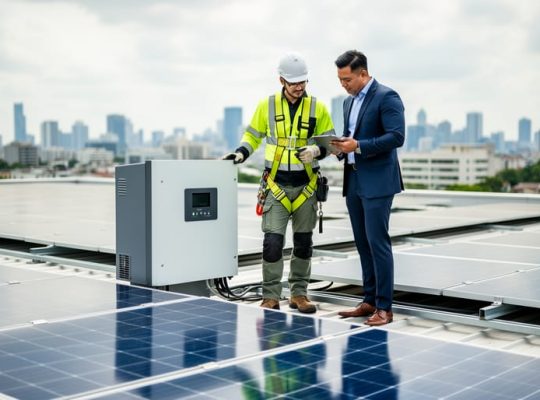
Pay-as-you-go solar systems are revolutionizing energy access across developing markets, enabling millions of households to embrace clean energy without substantial upfront costs. Unlike traditional solar financing options, this innovative model allows customers to make incremental payments through mobile money platforms, unlocking solar power consumption in direct proportion to their payments.
The transformation is particularly significant in Sub-Saharan Africa and South Asia, where conventional grid infrastructure often fails to reach remote communities. By combining solar technology with digital payment systems, pay-as-you-go solutions create a sustainable pathway to energy independence while ensuring financial flexibility for consumers. This approach has proven instrumental in bridging the energy access gap, with market penetration growing exponentially as technology costs continue to decline and mobile payment infrastructure expands.
For investors and energy providers, this model represents a scalable opportunity to participate in the renewable energy transition while addressing critical social challenges. The integration of remote monitoring capabilities and predictive analytics further enhances system reliability and customer service delivery, making pay-as-you-go solar an increasingly attractive proposition for both providers and end-users.
How Pay-As-You-Go Solar Actually Works
The Technology Behind PAYG Systems
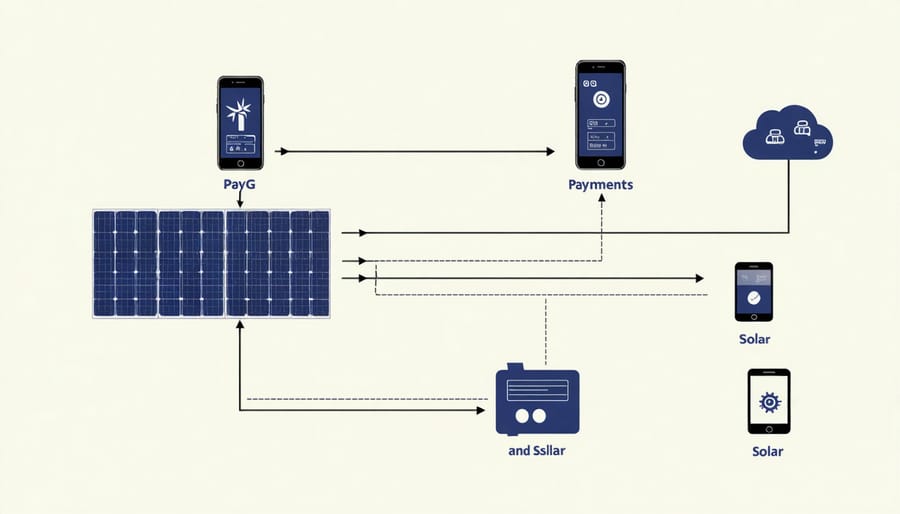
PAYG solar systems rely on sophisticated technology integrating hardware and software components to enable seamless operation and payment processing. At the core of these systems are GSM-enabled monitoring devices that track energy consumption and system performance in real-time. These devices communicate with central servers through mobile networks, transmitting crucial data about usage patterns, battery status, and system health.
The payment infrastructure leverages existing mobile money platforms and digital payment systems, allowing customers to purchase energy credits through their phones. When a payment is received, the system automatically generates an activation code or directly enables the solar unit through remote commands. This process typically occurs within seconds, ensuring continuous power supply for paying customers.
Remote activation technology employs encrypted communications protocols to maintain system security while enabling or disabling units based on payment status. Smart meters installed within the solar units regulate power output according to purchased credits, implementing automated shutoffs when credits are depleted. Many systems also incorporate predictive analytics to alert customers about low credit balances and potential service interruptions.
Advanced monitoring capabilities enable service providers to detect technical issues promptly and dispatch maintenance teams when necessary. This proactive approach to system management helps maintain high service reliability while reducing operational costs. The technology platform also generates valuable data insights about energy consumption patterns, helping providers optimize their service offerings and improve system efficiency.
Payment Models and Flexibility
Pay-as-you-go solar systems offer multiple payment structures designed to accommodate diverse financial circumstances and energy requirements. The primary model involves incremental payments based on actual energy consumption, typically calculated through smart meters that monitor usage in real-time. This arrangement allows customers to maintain system access while paying only for the electricity they consume.
Alternative payment structures include hybrid models that combine fixed monthly payments with variable usage charges. Some providers offer escalating payment plans, where initial costs are lower and gradually increase as customers establish payment history and energy consumption patterns. These flexible arrangements often include options for system ownership after a predetermined period, usually ranging from 5 to 10 years.
Terms and conditions vary among service providers, but standard agreements typically include maintenance coverage, performance guarantees, and transfer options. Many programs feature early purchase options, allowing customers to transition to full ownership when financially feasible. Payment frequencies can be adjusted to align with income patterns, particularly beneficial for agricultural communities with seasonal revenues.
Ownership pathways generally follow three trajectories: perpetual lease arrangements, lease-to-own agreements, and immediate purchase options with financing. Each pathway offers distinct advantages, from minimal upfront costs in lease arrangements to accelerated equity building in purchase options. Some providers also offer community-based models, enabling shared ownership and distributed cost structures among multiple households or businesses.
Financial Benefits and Cost Analysis
Initial Cost Comparison
The initial cost comparison between traditional solar installations and pay-as-you-go (PAYG) solar systems reveals significant differences in upfront financial requirements. Traditional solar installations typically demand substantial initial investments, ranging from $15,000 to $25,000 for residential systems, which can present a barrier for many potential adopters despite the long-term cost-saving benefits of solar.
In contrast, PAYG solar systems dramatically reduce or eliminate upfront costs, with initial payments often ranging from $50 to $500, depending on system size and provider terms. This substantial reduction in initial investment makes solar energy accessible to a broader demographic, particularly in developing markets and regions where traditional financing options are limited.
The cost structure typically includes:
Traditional Solar:
– Full system cost paid upfront or financed
– Installation fees
– Permitting and inspection costs
– Additional electrical work if required
– Monitoring system expenses
PAYG Solar:
– Minimal installation fee or deposit
– Regular payment based on energy consumption
– Maintenance included in monthly fees
– No separate permitting costs
– Built-in monitoring capabilities
While PAYG systems may result in higher cumulative costs over time, the reduced barrier to entry enables immediate access to clean energy solutions. This trade-off between initial accessibility and long-term investment continues to shape the evolution of solar financing models, particularly in emerging markets where traditional financing mechanisms may be insufficient or unavailable.
Long-term Financial Impact
The long-term financial implications of pay-as-you-go solar systems extend well beyond the initial installation period. Understanding key return on investment metrics is crucial for evaluating the system’s overall economic viability. While traditional solar installations require substantial upfront capital, pay-as-you-go models distribute costs over time, typically resulting in positive cash flow within the first few years of operation.
Analysis shows that most pay-as-you-go solar customers experience a 20-30% reduction in their energy expenses compared to conventional grid electricity. This saving potential increases as utility rates rise, providing a natural hedge against future energy cost inflation. The total cost of ownership (TCO) calculations must consider several factors: monthly payments, maintenance costs, potential component replacements, and system efficiency degradation over time.
A typical pay-as-you-go solar agreement spans 7-10 years, after which customers often have the option to purchase the system at a significantly reduced price or continue with the service agreement. The long-term value proposition becomes particularly attractive when factoring in the avoided costs of grid electricity over the system’s 25-30 year lifespan.
For commercial installations, the financial benefits are amplified through tax incentives, depreciation allowances, and reduced peak demand charges. Organizations can redirect capital to core business operations while still capturing the benefits of solar energy. The flexibility of pay-as-you-go models also allows for system expansion as energy needs grow, providing scalability without requiring large capital outlays.
When properly structured, these agreements can deliver positive returns from day one, with cumulative savings often exceeding traditional financing options over the system’s lifetime.
Market Impact and Success Stories
Global Adoption Trends
Pay-as-you-go (PAYG) solar systems have experienced remarkable global adoption, with particularly strong growth in emerging markets. Recent solar market trends indicate that the PAYG solar sector has grown from $773 million in 2019 to an estimated $1.75 billion in 2023, representing a compound annual growth rate of 22.7%.
Sub-Saharan Africa leads adoption rates, accounting for approximately 63% of global PAYG solar installations. Kenya, Tanzania, and Uganda have emerged as primary markets, collectively serving over 4 million households. Southeast Asia follows as the second-largest market, with significant penetration in India, Bangladesh, and Indonesia.
Market projections suggest the PAYG solar sector will reach $4.2 billion by 2028, driven by increasing energy demand in developing regions, declining solar technology costs, and improved mobile payment infrastructure. The integration of Internet of Things (IoT) technology and smart metering systems has enhanced payment collection efficiency, with successful payment rates exceeding 90% across major markets.
Corporate investment in PAYG solar solutions has surged, with venture capital and impact investors committing over $500 million in funding during 2022. This investment surge reflects growing confidence in the sector’s commercial viability and its potential to address energy access challenges while generating sustainable returns.

Case Studies
The implementation of pay-as-you-go solar systems has demonstrated remarkable success across various communities worldwide. In rural Kenya, M-KOPA Solar has connected over 750,000 homes to affordable solar power since 2011, enabling households to save approximately 45% on their energy expenses compared to traditional kerosene lighting.
In Bangladesh, Grameen Shakti’s solar program has installed more than 1.5 million systems through innovative payment plans, transforming the lives of approximately 7.5 million rural residents. The project has created employment opportunities for local technicians and improved educational outcomes by providing reliable lighting for students.
A notable implementation in Tanzania by Off-Grid Electric (now ZOLA Electric) serves as a model for successful scalability. Their pay-as-you-go platform has enabled over 200,000 households to access clean energy, with payment plans starting from as little as $0.20 per day. The program has reduced carbon emissions by an estimated 40,000 tons annually while creating sustainable employment for local communities.
In India, Simpa Networks’ progressive ownership model has helped over 50,000 households transition to solar power. Their success lies in combining mobile payment technology with remote monitoring systems, achieving a 95% payment compliance rate and demonstrating the financial viability of pay-as-you-go solar solutions.
These case studies highlight how pay-as-you-go solar systems effectively address energy poverty while creating sustainable business models that benefit both providers and consumers.
Implementation Challenges and Solutions
Despite the growing popularity of pay-as-you-go solar solutions, several significant challenges persist in their implementation. Understanding these obstacles and their corresponding solutions is crucial for successful deployment.
One primary challenge is the initial infrastructure investment required by service providers. While end-users benefit from minimal upfront costs, companies must finance the hardware, installation, and monitoring systems. This challenge can be addressed through strategic partnerships with financial institutions and international development organizations that provide specialized funding mechanisms for renewable energy projects.
Technical reliability presents another significant hurdle. Remote monitoring systems and payment platforms must function consistently to maintain service delivery. Companies are addressing this through redundant communication systems and offline payment options. Additionally, implementing robust maintenance protocols and training local technicians ensures swift resolution of technical issues.
Cultural and educational barriers often impact adoption rates. Many potential users may be unfamiliar with solar technology or skeptical of new payment models. Successful providers overcome this through comprehensive community engagement programs, demonstrating system benefits through pilot projects, and providing clear, culturally appropriate educational materials.
Payment collection and default risk management remain ongoing concerns. Solutions include implementing flexible payment schedules aligned with customers’ income patterns, utilizing mobile money platforms for convenient transactions, and incorporating safeguards such as remote system deactivation capabilities while maintaining ethical service practices.
Regulatory frameworks in many regions haven’t kept pace with this innovative business model. Companies are actively engaging with policymakers to develop appropriate regulations while establishing industry associations to promote standardization and best practices.
Geographic challenges in remote areas can complicate installation and maintenance. Providers are developing modular systems for easier transport and establishing decentralized service networks through local partnerships. This approach not only improves service delivery but also creates employment opportunities within communities.
By systematically addressing these challenges through technological innovation, strategic partnerships, and adaptive business models, pay-as-you-go solar providers continue to expand access to clean energy solutions while building sustainable operations.
Pay-as-you-go solar financing has emerged as a transformative solution in the renewable energy landscape, democratizing access to clean energy while fostering sustainable development. The model’s success lies in its ability to overcome traditional barriers to solar adoption, particularly in developing regions and underserved communities.
The key benefits of PAYG solar systems have been clearly demonstrated through increased energy access, improved financial inclusion, and reduced environmental impact. By eliminating substantial upfront costs and offering flexible payment options, this financing mechanism has enabled millions of households to transition from unreliable and harmful energy sources to clean, sustainable solar power.
Looking ahead, the PAYG solar sector shows tremendous potential for growth and innovation. Technological advancements in mobile payment systems, remote monitoring capabilities, and energy storage solutions continue to enhance the efficiency and reliability of PAYG implementations. The integration of artificial intelligence and machine learning is expected to further optimize payment plans and system performance, making solar energy increasingly accessible and affordable.
Industry projections indicate substantial market expansion in the coming years, driven by decreasing technology costs, supportive policy frameworks, and growing environmental awareness. The model’s adaptability to various market conditions and consumer needs positions it as a crucial tool in achieving global sustainable development goals and advancing the renewable energy transition.
As the sector matures, continued collaboration between financial institutions, technology providers, and policy makers will be essential to unlock the full potential of PAYG solar solutions and ensure their sustained impact on global energy access.