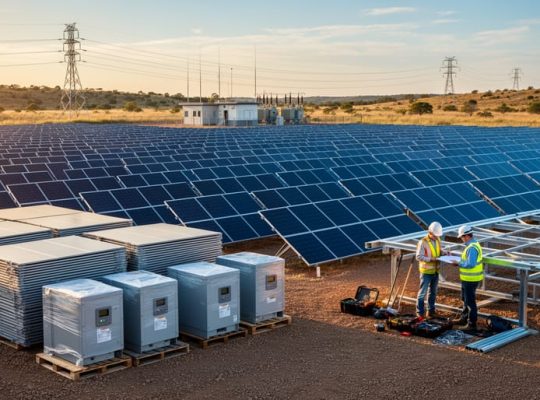
Power Purchase Agreements (PPAs) revolutionize solar project financing options, enabling organizations to implement solar energy systems with zero upfront capital investment. This innovative financing mechanism transfers the technical and financial risks of solar installation to experienced developers while guaranteeing predictable electricity rates for 15-25 years. Unlike traditional financing methods, PPAs provide immediate cost savings through lower electricity rates, professional system maintenance, and performance guarantees—all without affecting the organization’s debt capacity or balance sheet. Recent market analysis shows PPA-financed solar installations achieving 20-30% reduction in electricity costs while providing a clear path to eventual system ownership. For facility managers and financial executives exploring renewable energy adoption, PPAs represent a sophisticated, low-risk approach to sustainable energy transformation that aligns operational efficiency with environmental responsibility.
Understanding Power Purchase Agreements (PPAs) in Solar
Key Elements of Solar PPAs
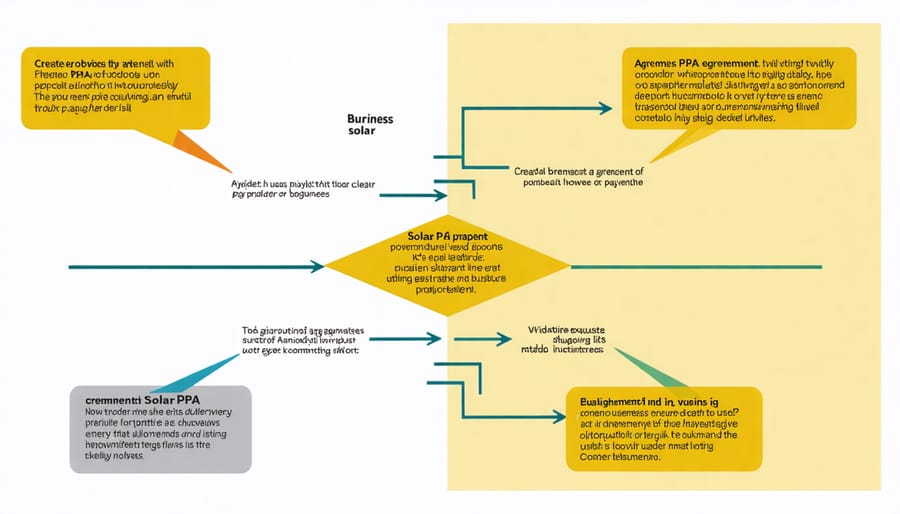
Solar Power Purchase Agreements (PPAs) comprise several critical components that define the relationship between the solar provider and the energy consumer. The contract typically spans 15-25 years and outlines specific rate structures, including fixed rates, escalator clauses, or performance-based pricing mechanisms. Energy production guarantees are fundamental elements, ensuring minimum generation levels and establishing compensation protocols if targets aren’t met.
Performance specifications detail maintenance responsibilities, system monitoring requirements, and operational standards. These agreements may also include virtual power purchase agreements for organizations seeking renewable energy credits without direct power consumption.
Insurance requirements and liability allocations protect both parties throughout the contract duration. End-of-term options typically include system purchase at fair market value, contract extension, or system removal. Additional provisions address site access rights, interconnection requirements, and regulatory compliance obligations. Property ownership transfers and force majeure events are also carefully defined to ensure comprehensive risk management and operational clarity throughout the agreement’s lifecycle.
Risk Allocation and Responsibilities
In a solar PPA arrangement, risk allocation and responsibilities are strategically distributed between the key stakeholders to ensure project viability and optimal performance. The PPA provider typically assumes responsibility for system design, installation, maintenance, and performance monitoring, effectively managing technical and operational risks. They also bear the equipment degradation risk and guarantee a minimum energy output level.
The property owner or host customer primarily takes on site-related risks, including maintaining suitable roof conditions or ground space for the solar installation. They must also ensure unobstructed access to sunlight and provide necessary site access for maintenance activities. However, they are generally protected from performance risks and equipment failures.
Financial risks are carefully structured, with the PPA provider bearing most of the capital investment risk and uncertainty around renewable energy incentives. The host customer assumes the long-term contract commitment risk and potential credit risks. Insurance requirements are typically split between parties, with the provider covering equipment and operational liability, while the host maintains standard property insurance.
Regulatory compliance responsibilities are shared, though the PPA provider usually manages most permitting and interconnection requirements. This balanced risk allocation framework makes PPAs an attractive financing option for both parties.
Financial Benefits and Cost Analysis
Zero Upfront Costs
Power Purchase Agreements (PPAs) stand out as an attractive solar financing option by eliminating the substantial upfront capital investment typically required for solar installations. Under a PPA structure, the solar developer assumes all costs associated with system design, equipment procurement, installation, and ongoing maintenance. This arrangement allows organizations to implement solar energy solutions without depleting their capital reserves or taking on debt.
The host facility benefits from immediate energy cost savings without any initial investment, as they only pay for the electricity generated by the solar system at a predetermined rate. This rate is typically lower than conventional utility prices and remains predictable throughout the agreement term, usually 15-25 years. The developer recovers their investment through these energy payments while managing all operational risks and responsibilities.
This zero-upfront cost model particularly appeals to educational institutions, municipalities, and businesses that want to transition to renewable energy but face budget constraints or prefer to allocate their capital to core operations. The arrangement also simplifies accounting processes, as the solar installation appears as an operating expense rather than a capital expenditure on financial statements.
Long-term Savings Potential
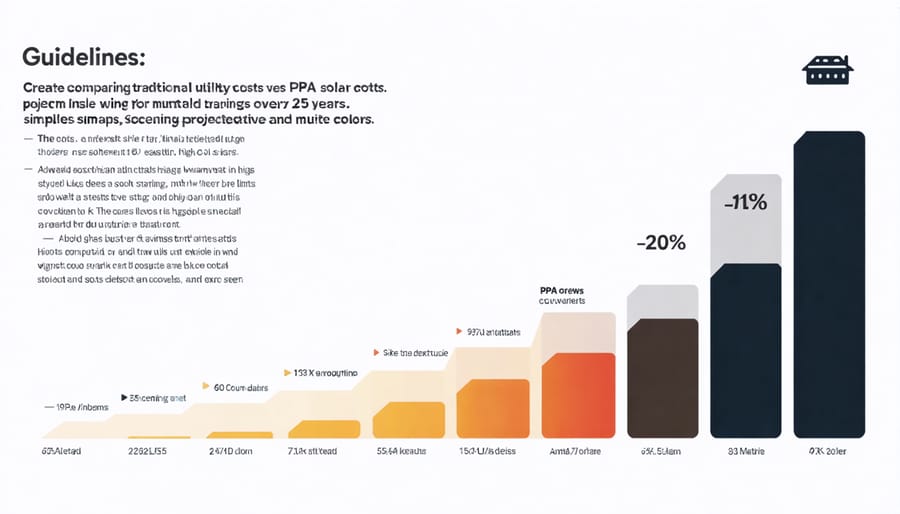
Power Purchase Agreements (PPAs) offer substantial long-term savings potential compared to traditional utility power sources. Analysis of historical data demonstrates that PPA customers typically save between 20-30% on their electricity costs immediately upon system activation, with cumulative savings increasing over the agreement’s duration. These savings are particularly significant when considering the rising costs of grid electricity, which historically increases by 2-3% annually.
When evaluating solar investment metrics, PPAs demonstrate compelling advantages through predictable energy rates and protection against utility price volatility. A typical 20-year PPA can generate cumulative savings of $500,000 to $2 million for medium-sized commercial installations, depending on factors such as system size, location, and initial electricity costs.
The savings potential is further enhanced by the PPA provider’s responsibility for system maintenance and performance optimization. This eliminates unexpected maintenance costs while ensuring maximum system efficiency throughout the agreement term. Organizations can redirect these saved resources toward core business operations or other sustainability initiatives.
Additionally, PPAs often include annual price escalators ranging from 1-3%, which are typically lower than traditional utility rate increases. This structured pricing model enables accurate long-term financial planning and budget forecasting. Some PPAs also offer purchase options after specific periods, allowing organizations to capitalize on even greater savings by acquiring the system at a reduced fair market value.
The combination of immediate cost reduction, predictable energy expenses, and protection against market volatility makes PPA financing an economically advantageous solution for organizations seeking to optimize their energy expenditure while transitioning to renewable energy sources.
Implementation Strategies and Best Practices
Site Assessment and System Design
The success of a PPA-financed solar installation begins with a comprehensive site assessment and system design phase. This critical stage involves evaluating multiple technical factors to ensure optimal system performance and maximum return on investment. Engineers conduct detailed shade analysis using advanced solar pathfinder tools and 3D modeling software to identify potential obstructions and determine ideal panel placement.
Structural engineers assess roof integrity, load-bearing capacity, and mounting requirements. For ground-mounted installations, soil composition and topography studies are essential. The team also analyzes historical weather data, solar irradiance levels, and seasonal variations to accurately predict energy generation potential.
System designers then develop detailed plans incorporating appropriate inverter specifications, panel configurations, and electrical integration requirements. They consider factors such as available roof or ground space, orientation angles, and local building codes. Advanced monitoring systems are integrated into the design to track performance metrics and ensure compliance with PPA terms.
The design phase also includes detailed energy consumption analysis, examining historical usage patterns and future demand projections. This data helps determine optimal system size and configuration to meet the host facility’s energy needs while maximizing financial benefits under the PPA structure.
Contract Negotiation Tips
When negotiating Power Purchase Agreement terms, focus first on establishing a competitive price per kilowatt-hour that ensures long-term value while providing fair returns for both parties. Review escalator rates carefully, as these annual price increases significantly impact the agreement’s overall economics. Aim for escalator rates between 1-3%, considering local utility rate trends and inflation projections.
Pay particular attention to performance guarantees and system maintenance responsibilities. Ensure the contract clearly defines minimum production requirements, compensation for underperformance, and detailed maintenance schedules. Negotiate comprehensive operations and maintenance provisions that protect your interests while maintaining system efficiency.
Consider contract duration flexibility, with typical terms ranging from 15 to 25 years. Include clear end-of-term options, such as system purchase, contract extension, or removal provisions. Negotiate transfer of ownership terms if applicable, including fair market value calculations and purchase option windows.
Address site access requirements, insurance obligations, and liability allocations explicitly. Include provisions for system upgrades or expansions, and establish clear protocols for dispute resolution. Remember to review termination clauses carefully, ensuring they protect both parties while providing reasonable exit options under specific circumstances.
Always engage qualified legal counsel with renewable energy expertise to review agreement terms before signing.
Policy Framework and Market Trends
Current Regulations and Incentives
The regulatory landscape for solar PPAs continues to evolve, with federal and state governments implementing various policies to encourage renewable energy adoption. The Investment Tax Credit (ITC) remains a cornerstone incentive, offering a 30% tax credit for solar installations through 2032. State-level renewable portfolio standards (RPS) further drive PPA market growth by requiring utilities to source increasing percentages of their power from renewable sources.
Net metering policies, which allow excess solar generation to offset future electricity costs, enhance PPA economics in participating states. Many jurisdictions have also streamlined permitting processes specifically for PPA-funded installations, reducing soft costs and implementation timelines.
Additional incentives include accelerated depreciation benefits, property tax exemptions, and performance-based incentives that vary by location. Some states offer specific PPA-enabling legislation that clarifies the legal framework for these agreements, providing certainty for both developers and customers. Understanding these regulations and incentives is crucial for maximizing the financial benefits of solar PPAs while ensuring compliance with local requirements.
Future Market Outlook
The solar PPA financing market is projected to experience substantial growth through 2030, driven by increasing corporate sustainability commitments and favorable policy environments. Industry analysts forecast a compound annual growth rate of 15-20% in PPA installations, with particularly strong momentum in emerging markets across Asia and Latin America.
Virtual PPAs are expected to gain prominence, offering corporations more flexibility in renewable energy procurement. This trend is complemented by the rise of aggregated PPAs, where multiple smaller organizations pool their energy demands to access more competitive rates.
Technological advancements in solar efficiency and energy storage solutions are anticipated to further enhance PPA attractiveness by improving project economics. The integration of artificial intelligence for performance optimization and blockchain for contract management will likely streamline PPA operations.
However, market participants should monitor potential challenges, including grid infrastructure limitations and policy changes affecting incentive structures. The standardization of PPA contracts and risk assessment frameworks is expected to facilitate broader market adoption, particularly among medium-sized enterprises previously hesitant to enter long-term agreements.
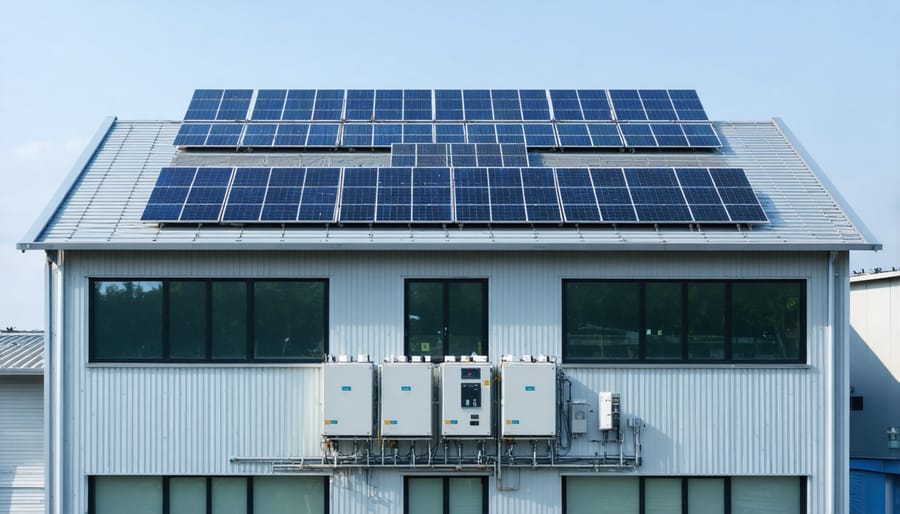
Case Studies and Success Stories
Several notable PPA-financed solar projects demonstrate the effectiveness of this financing model across different sectors. Stanford University’s 67-megawatt installation stands as a prime example, reducing the institution’s carbon emissions by 68% while saving an estimated $420 million in energy costs over 25 years.
Walmart’s ambitious solar initiative, encompassing multiple commercial solar installations across their facilities, showcases how PPAs enable large-scale renewable energy adoption. Through their PPA arrangements, Walmart achieved significant cost savings while moving closer to their 100% renewable energy goal.
The City of Lancaster, California, implemented a successful municipal solar program through PPAs, installing solar systems on government buildings, schools, and community centers. This initiative resulted in 10% reduced energy costs and created local jobs while establishing the city as a renewable energy leader.
Kaiser Permanente’s healthcare facilities demonstrate how PPAs can work in sensitive environments. Their 70MW solar project spans 42 sites, providing clean energy without upfront costs while maintaining critical operations. The healthcare provider expects to reduce electricity expenses by $65 million over the 20-year PPA term.
MGM Resorts’ 100MW solar array in Nevada illustrates how PPAs can power energy-intensive operations. The project supplies up to 90% of daytime power needs for 13 Las Vegas properties, demonstrating how large commercial enterprises can transition to renewable energy while maintaining financial stability through predictable energy costs.
Power Purchase Agreements have revolutionized solar energy adoption by providing a flexible, low-risk financing solution for organizations seeking to transition to renewable energy. As demonstrated throughout this analysis, PPAs offer numerous advantages, including zero upfront costs, predictable energy rates, and simplified maintenance responsibilities. The model has proven particularly successful across commercial, industrial, and institutional sectors, enabling entities to achieve their sustainability goals while maintaining financial prudence.
Looking ahead, the solar PPA market shows promising growth potential, driven by decreasing solar technology costs, increasing environmental awareness, and supportive regulatory frameworks. Emerging trends suggest that PPAs will continue to evolve, incorporating advanced energy storage solutions and smart grid integration capabilities. The development of virtual PPAs and community solar projects is expanding access to solar financing options for a broader range of organizations.
However, successful PPA implementation requires careful consideration of various factors, including site suitability, long-term financial projections, and regulatory compliance. Organizations considering solar PPAs should conduct thorough due diligence, engage experienced partners, and maintain clear communication channels throughout the project lifecycle.
As the renewable energy sector continues to mature, PPAs will likely remain a cornerstone of solar project financing, facilitating the transition to a more sustainable energy future while providing economic benefits to both developers and energy consumers. The ongoing innovation in PPA structures and terms will further enhance their appeal and accessibility to diverse market segments.