
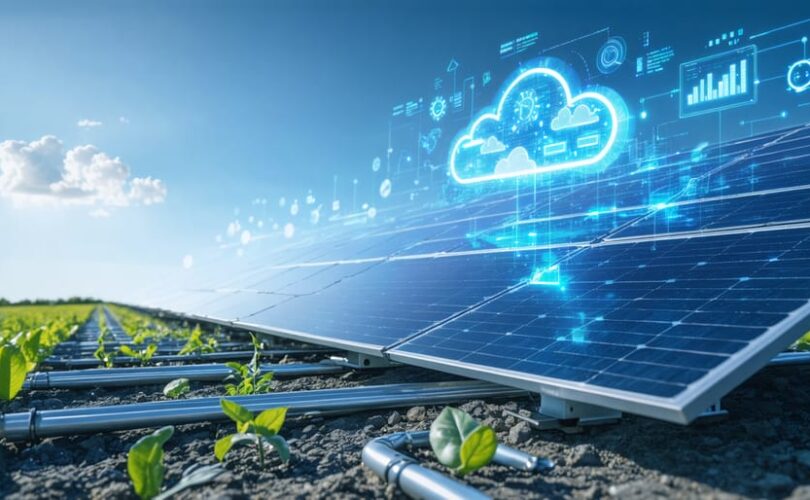
Remote monitoring solutions have revolutionized how organizations manage and maintain critical systems across vast distances, enabling real-time visibility and control of infrastructure without physical presence. As businesses increasingly rely on distributed assets and remote operations, these sophisticated monitoring platforms have become essential tools for ensuring operational efficiency, reducing downtime, and optimizing performance.
Modern remote monitoring systems leverage advanced sensors, secure cloud connectivity, and intelligent analytics to provide unprecedented insight into equipment health, environmental conditions, and system performance metrics. By continuously collecting and analyzing data from connected devices, these solutions enable predictive maintenance, automated alerts, and data-driven decision-making that can significantly reduce operational costs while improving reliability.
For technical professionals and facility managers, implementing robust remote monitoring capabilities has become a strategic imperative rather than a luxury. The ability to detect potential issues before they become critical failures, optimize resource allocation, and maintain compliance with regulatory requirements makes these systems indispensable in today’s interconnected industrial landscape. As we explore the key components and capabilities of remote monitoring solutions, we’ll examine how organizations can leverage these technologies to transform their operations and achieve new levels of efficiency and control.
Core Components of Remote Solar Monitoring Systems
Data Collection Hardware
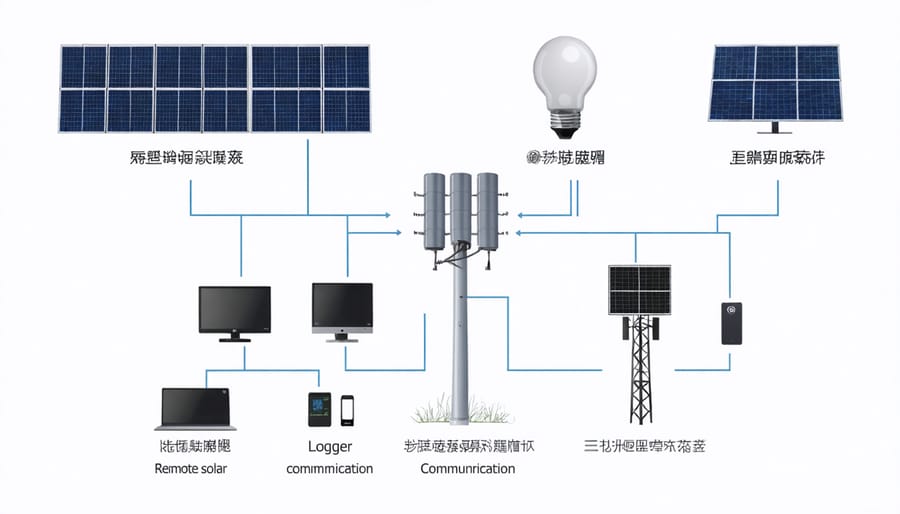
Remote monitoring solutions rely on a sophisticated network of data collection hardware to gather real-time information from solar PV systems. At the core of these systems are specialized sensors that measure crucial parameters including voltage, current, power output, and temperature. These high-precision devices are strategically placed throughout the solar installation to provide comprehensive coverage.
Environmental sensors play a vital role by monitoring ambient conditions such as solar irradiance, temperature, humidity, and wind speed. Pyranometers measure solar radiation levels, while anemometers track wind conditions that might affect panel performance. Temperature sensors are installed on both panels and inverters to detect potential overheating issues.
Power meters and current transformers (CTs) monitor electrical parameters at various points in the system. String monitoring devices track the performance of individual panel groups, while smart inverters incorporate built-in monitoring capabilities that measure DC and AC power characteristics.
Communication hardware forms the critical link between these sensors and monitoring platforms. Data loggers collect and temporarily store measurements before transmission, while gateway devices enable secure data transfer through various protocols. Modern systems typically employ cellular modems, ethernet connections, or Wi-Fi adapters to ensure reliable data transmission to central monitoring servers.
Weather-resistant enclosures protect these sensitive components from environmental factors, ensuring consistent operation in diverse conditions. The hardware’s modular design allows for easy maintenance and upgrades as monitoring requirements evolve.
Monitoring Software Platforms
Modern monitoring software platforms serve as the central nervous system of remote solar PV monitoring solutions, offering sophisticated interfaces and analytical capabilities. These platforms integrate data collection, visualization, and reporting functions into unified dashboards that enable comprehensive system oversight. AI-powered monitoring systems enhance these platforms by providing predictive analytics and automated fault detection.
Key features typically include real-time performance metrics, historical data analysis, and customizable alert systems. Advanced visualization tools present complex data through intuitive graphs, heat maps, and interactive charts, making it easier for operators to identify trends and anomalies. These platforms often incorporate weather data integration, allowing for more accurate performance analysis and forecasting.
The reporting systems within these platforms generate automated performance reports, maintenance schedules, and compliance documentation. Many solutions offer multi-site management capabilities, enabling operators to monitor numerous installations from a single interface. Mobile applications extend platform accessibility, allowing technicians and managers to access critical system data from any location.
Data security features, including encryption and role-based access control, ensure sensitive system information remains protected. Integration capabilities with third-party software and hardware systems enhance platform versatility, while regular software updates maintain system reliability and introduce new monitoring capabilities.
Real-Time Performance Tracking Capabilities
Energy Production Analytics
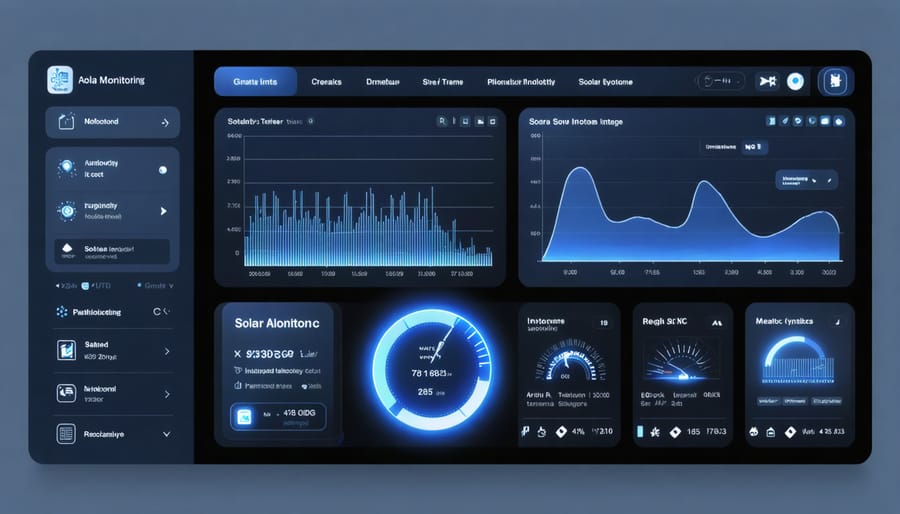
Energy production analytics forms a crucial component of modern solar PV monitoring systems, enabling operators to track and optimize power generation efficiency. Through real-time analytics, system operators can monitor instantaneous power output, daily yield patterns, and cumulative energy production across multiple installations.
Advanced monitoring platforms integrate weather data and historical performance metrics to generate accurate production forecasts. These predictive capabilities allow facility managers to anticipate energy yields, optimize grid integration, and identify potential performance issues before they impact generation capacity.
The analytics system processes data from various sensors and inverters to calculate key performance indicators (KPIs) such as specific yield, performance ratio, and capacity utilization factor. By analyzing these metrics against expected values, operators can quickly identify underperforming arrays and implement corrective measures.
Production forecasting algorithms consider factors like solar irradiance patterns, weather predictions, and system degradation rates to provide both short-term and long-term generation estimates. This information proves invaluable for grid operators, energy traders, and facility managers in planning operations and maintaining optimal system performance.
System Health Indicators
System health indicators play a crucial role in remote monitoring solutions by providing real-time insights into equipment performance and potential issues. These indicators continuously track vital parameters such as inverter efficiency, string current variations, and module temperature patterns to detect anomalies before they escalate into serious problems.
Modern monitoring systems employ sophisticated algorithms to analyze performance metrics and compare them against established benchmarks. This enables automatic fault detection for common issues like module degradation, connection failures, and inverter malfunctions. When deviations occur, the system generates alerts and diagnostic reports, allowing maintenance teams to respond promptly.
Equipment status monitoring extends beyond basic performance metrics to include component-specific parameters. This encompasses DC/AC conversion efficiency, thermal characteristics, and grid interaction metrics. The monitoring system maintains detailed logs of operational parameters, creating a comprehensive history that facilitates predictive maintenance and system optimization.
Advanced monitoring solutions also incorporate self-diagnostic capabilities, regularly performing system health checks and validating sensor data to ensure monitoring accuracy. This multi-layered approach to system health monitoring helps maximize solar installation uptime and longevity while minimizing maintenance costs.
Environmental Impact Metrics
Remote monitoring solutions play a crucial role in tracking and quantifying the environmental benefits of solar PV systems. These systems accurately measure and report CO2 emissions offset through renewable energy generation, providing valuable data for environmental impact assessment and sustainability reporting.
Modern monitoring platforms typically calculate emissions reduction by converting solar energy production into equivalent CO2 savings, based on regional grid emission factors. This data helps organizations demonstrate their contribution to climate change mitigation and verify compliance with environmental regulations.
The environmental metrics commonly tracked include total CO2 emissions avoided, equivalent trees planted, and carbon footprint reduction. Advanced monitoring systems can also measure water savings from solar power generation compared to conventional energy sources, offering a comprehensive view of environmental benefits.
Many platforms now feature customizable environmental impact dashboards that generate detailed reports for stakeholders, regulatory bodies, and sustainability certifications. These metrics prove particularly valuable for organizations pursuing environmental, social, and governance (ESG) goals, enabling them to quantify and communicate their sustainability achievements effectively.
The accuracy of these environmental calculations continues to improve with enhanced monitoring technologies and more precise conversion factors, ensuring reliable sustainability reporting and impact assessment.
Preventive Maintenance Through Remote Monitoring
Automated Alert Systems
Automated alert systems represent a critical component of modern remote monitoring solutions, providing real-time notification capabilities that enable swift response to system irregularities. These systems employ sophisticated algorithms to detect performance anomalies and potential equipment failures before they escalate into major issues.
The early warning functionality operates through continuous analysis of performance metrics, comparing real-time data against predetermined thresholds and historical performance patterns. When deviations occur, the system automatically generates alerts through multiple channels, including email notifications, SMS messages, and dashboard notifications, ensuring that maintenance teams can respond promptly to emerging issues.
Performance anomaly detection systems utilize machine learning algorithms to establish baseline performance metrics for individual components and the overall system. These algorithms can identify subtle variations in power output, voltage levels, and equipment behavior that might indicate developing problems. The system learns from historical data to improve its accuracy over time, reducing false positives while ensuring critical issues aren’t overlooked.
Alert prioritization is another key feature, categorizing notifications based on severity and potential impact. High-priority alerts for critical system failures receive immediate attention, while less urgent notifications are queued for routine maintenance. This systematic approach to alert management helps maintenance teams optimize their response strategies and resource allocation.
Modern automated alert systems also integrate with maintenance management platforms, automatically generating work orders and scheduling maintenance tasks based on alert triggers. This integration streamlines the maintenance workflow and ensures proper documentation of all system issues and resolutions.
Predictive Maintenance Strategies
Modern remote monitoring solutions have revolutionized maintenance practices in solar PV systems through the implementation of sophisticated predictive maintenance technology. By analyzing real-time performance data, these systems can accurately forecast potential equipment failures and optimize maintenance schedules, significantly reducing downtime and operational costs.
The data-driven approach utilizes advanced algorithms to process multiple parameters, including voltage fluctuations, temperature variations, and power output patterns. This comprehensive analysis enables system operators to identify degradation trends and emerging issues before they escalate into critical failures. The maintenance scheduling system then prioritizes interventions based on equipment condition, environmental factors, and historical performance data.
Key benefits of this strategic approach include:
– Reduction in unexpected system failures
– Optimization of maintenance resource allocation
– Extended equipment lifespan through timely interventions
– Decreased maintenance costs through targeted servicing
– Improved system reliability and performance consistency
Implementation typically involves establishing baseline performance metrics, setting appropriate threshold values, and developing response protocols for various alert levels. The system continuously refines its predictive models through machine learning, improving accuracy over time and adapting to specific site conditions and operational patterns.
For maximum effectiveness, maintenance teams receive automated notifications and detailed diagnostic reports, enabling them to prepare appropriate resources and expertise for each maintenance task. This proactive approach ensures optimal system performance while minimizing unnecessary maintenance activities.
Remote Troubleshooting and Resolution
Remote Diagnostic Tools
Remote diagnostic tools form the backbone of modern solar PV monitoring systems, enabling technicians to analyze and evaluate system performance without physical site visits. These sophisticated tools integrate various software applications and hardware components to provide comprehensive system analysis capabilities. Advanced data analytics platforms process real-time performance metrics, while intelligent fault detection algorithms identify potential issues before they escalate into major problems.
Key diagnostic capabilities include string-level monitoring, inverter performance analysis, and environmental sensor data interpretation. Modern remote troubleshooting solutions utilize artificial intelligence and machine learning algorithms to predict maintenance needs and optimize system performance. These tools can analyze historical performance data, weather patterns, and equipment specifications to generate actionable insights.
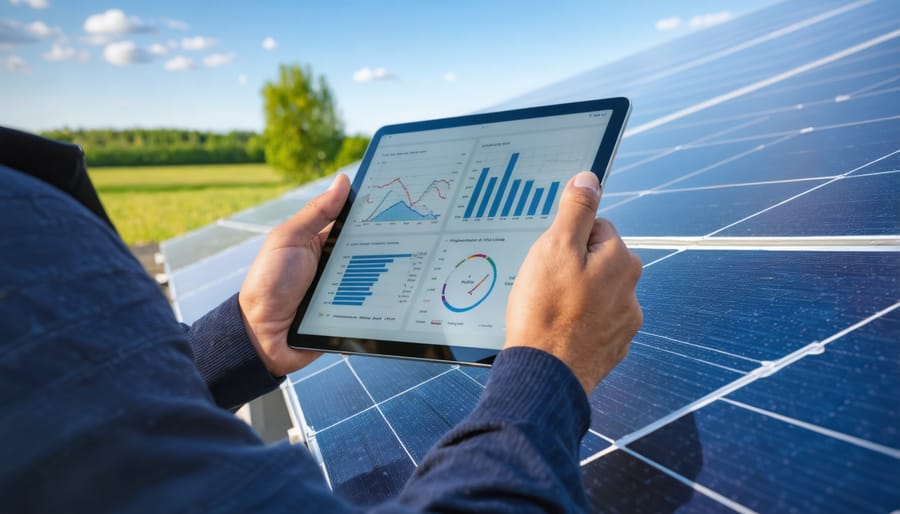
Remote diagnostic platforms typically feature user-friendly dashboards that display critical system parameters, performance metrics, and alert notifications. Advanced visualization tools help technicians identify performance trends and anomalies through detailed graphs and charts. Additionally, these systems often include mobile applications that enable technicians to access diagnostic information and perform basic troubleshooting tasks from anywhere with internet connectivity.
Remote System Adjustments
Remote monitoring solutions offer sophisticated capabilities for system configuration and optimization without requiring on-site presence. Operators can remotely adjust inverter settings, modify power output parameters, and fine-tune system performance through secure web-based interfaces. These adjustments can be implemented in real-time or scheduled for optimal timing based on energy demand patterns and environmental conditions.
Advanced platforms enable remote firmware updates, ensuring that system components maintain peak efficiency and security without the need for field visits. System administrators can modify alarm thresholds, adjust reporting frequencies, and reconfigure communication protocols to optimize data collection and system responsiveness.
Performance optimization tools allow for remote adjustment of maximum power point tracking (MPPT) settings, grid interaction parameters, and power factor correction values. This capability is particularly valuable for large-scale installations where minor adjustments can significantly impact overall system efficiency.
Remote configuration also extends to energy storage systems, allowing operators to modify charging and discharging patterns based on real-time grid conditions and energy prices. The ability to remotely adjust system parameters ensures quick response to changing environmental conditions, grid requirements, or operational needs while minimizing maintenance costs and system downtime.
Remote monitoring solutions have revolutionized the management and maintenance of solar PV systems, offering unprecedented levels of control, efficiency, and performance optimization. These systems have proven invaluable in reducing operational costs, minimizing downtime, and maximizing energy yield through real-time data analysis and predictive maintenance capabilities.
As technology continues to evolve, we can expect to see further advancements in remote monitoring capabilities. The integration of artificial intelligence and machine learning algorithms will enable more sophisticated predictive analytics and automated decision-making processes. Cloud-based platforms will become increasingly sophisticated, offering enhanced data storage, processing capabilities, and improved user interfaces.
The future of remote monitoring solutions points toward greater integration with smart grid technologies, enhanced cybersecurity measures, and improved interoperability between different manufacturers’ systems. The adoption of Internet of Things (IoT) sensors and advanced communication protocols will facilitate more comprehensive system monitoring and control.
For solar PV stakeholders, investing in remote monitoring solutions is no longer optional but essential for maintaining competitive advantage and ensuring optimal system performance. As the renewable energy sector continues to grow, these systems will play an increasingly crucial role in managing larger and more complex solar installations, supporting the global transition to sustainable energy sources.
The combination of enhanced monitoring capabilities, predictive maintenance, and automated reporting will continue to drive operational excellence in solar PV installations, making these systems an indispensable tool for the future of renewable energy management.


