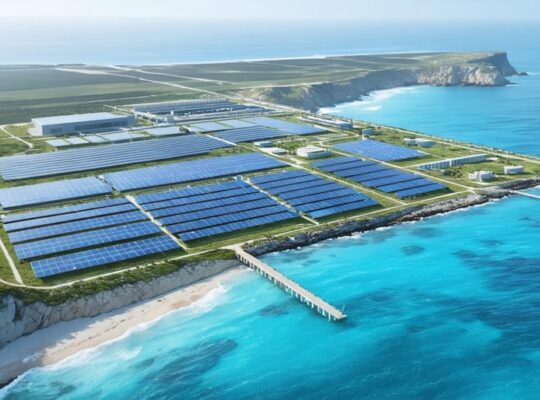
Solar-powered desalination emerges as a transformative solution to global water scarcity, combining renewable energy with advanced water treatment technologies to produce fresh water from seawater. This innovative approach, particularly valuable for off-grid living solutions, represents a sustainable intersection of renewable energy and water security. Recent technological breakthroughs have reduced operational costs by 60% compared to traditional desalination methods, while eliminating the carbon footprint associated with conventional energy-intensive processes.
Modern solar desalination systems leverage photovoltaic arrays to power reverse osmosis or membrane distillation technologies, achieving production capacities of up to 50,000 cubic meters per day in large-scale installations. This integration addresses two critical global challenges simultaneously: access to clean water and the transition to renewable energy sources. As regions worldwide face increasing water stress, solar-powered desalination offers a scalable, environmentally conscious solution that can be implemented in both coastal communities and inland areas with brackish water resources.
The deployment of these systems shows particular promise in developing regions, where conventional power infrastructure may be limited but solar resources are abundant. This technology’s potential to revolutionize water access while maintaining environmental sustainability makes it a cornerstone of future water security strategies.
The Solar PV-Desalination Connection
Direct vs. Indirect Solar PV Integration
Solar PV integration in desalination systems can be implemented through either direct or indirect configurations, each offering distinct advantages for achieving sustainable energy independence. Direct integration involves connecting the PV system directly to the desalination unit, typically utilizing DC-powered pumps and specialized equipment designed for variable power input. This approach minimizes conversion losses and reduces system complexity, though it requires careful matching of PV output with desalination load requirements.
Indirect integration, conversely, incorporates grid-connection or battery storage systems between the PV array and desalination unit. This configuration offers greater operational flexibility and consistent power supply, enabling continuous desalination processes regardless of solar availability. While this method involves additional components and potential energy losses through conversion, it provides more reliable operation and better load management capabilities.
The choice between direct and indirect integration depends on factors including location, grid accessibility, water demand patterns, and economic considerations. Modern systems increasingly employ hybrid approaches, combining both methods to optimize efficiency and reliability.

Energy Requirements and System Sizing
The energy requirements for solar-powered desalination systems vary significantly based on the chosen desalination technology and desired water output capacity. Reverse osmosis (RO) systems typically require 3-4 kWh of energy per cubic meter of freshwater produced, while thermal desalination methods may consume 7-12 kWh per cubic meter. When sizing a solar power system, engineers must account for peak demand periods and maintain consistent operation throughout varying solar conditions.
A properly sized solar array should include a 20-30% capacity buffer to compensate for efficiency losses and ensure reliable operation. For a standard RO system producing 100 cubic meters per day, this translates to approximately 400-500 kWp of installed solar capacity. Energy storage solutions, such as batteries or thermal storage systems, are essential components that enable continuous operation during non-sunlight hours.
System designers must also consider geographical factors, including solar irradiance levels, seasonal variations, and ambient temperature effects on both solar panel efficiency and desalination performance. Advanced monitoring systems and smart controllers help optimize energy distribution and maintain optimal operating conditions throughout the desalination process.
Solar Desalination Technologies
Reverse Osmosis with Solar PV
Reverse osmosis (RO) systems integrated with solar photovoltaic technology represent one of the most efficient approaches to sustainable desalination. The process utilizes high-pressure pumps powered by solar PV arrays to force seawater through semi-permeable membranes, effectively separating pure water from dissolved salts and impurities.
A typical solar-powered RO system consists of several key components: PV modules, power conditioning equipment, energy storage systems, high-pressure pumps, and the RO membrane assembly. The PV array generates DC electricity, which is then converted to AC power through inverters to operate the system’s pumps and controls.
The energy requirements for RO desalination typically range from 3-4 kWh per cubic meter of freshwater produced. Solar PV arrays must be sized appropriately to meet these demands, accounting for daily solar radiation patterns and system efficiency factors. Modern systems often incorporate energy recovery devices (ERDs) that can reduce energy consumption by up to 60% by capturing and reusing pressure from the concentrated brine stream.
To ensure consistent operation during periods of low solar irradiance, these systems commonly employ battery storage or hybrid power solutions. Advanced control systems optimize the operation by adjusting pressure and flow rates based on available solar power, maximizing water production during peak sunlight hours while maintaining membrane integrity and system efficiency.
Solar Thermal Desalination
Solar thermal desalination represents a significant advancement in sustainable water purification technologies, leveraging direct solar heat to drive the separation of salt from seawater. This process, distinct from other solar energy applications, utilizes concentrated solar collectors to heat seawater, causing evaporation and subsequent condensation of pure water.
The most common configuration employs solar stills, where seawater is contained in a shallow, black-lined basin covered by transparent glass. Solar radiation heats the water, creating vapor that condenses on the glass surface and is collected as freshwater. More advanced systems incorporate multiple-effect distillation (MED) or solar collectors with heat exchangers to improve efficiency.
Recent innovations include solar pond technology, where salinity gradients create natural heat traps, and concentrated solar power (CSP) systems that generate high temperatures for large-scale desalination operations. These methods can achieve thermal efficiencies of 30-40% under optimal conditions, making them particularly viable for remote coastal regions with abundant sunshine.
The integration of thermal storage systems allows for continuous operation beyond daylight hours, addressing one of the traditional limitations of solar-powered processes. This approach proves especially cost-effective in regions where conventional energy sources are expensive or unavailable.

Emerging Hybrid Technologies
Recent advancements in solar-powered desalination have led to innovative hybrid technologies that combine multiple solar approaches to maximize efficiency and output. A notable development is the integration of photovoltaic-thermal (PVT) systems with membrane distillation units, which simultaneously generates electricity and thermal energy for the desalination process.
Multi-effect solar stills paired with concentrated solar power (CSP) systems have shown promising results, achieving higher freshwater production rates while maintaining energy efficiency. These systems utilize both direct solar radiation for distillation and concentrated heat for enhanced evaporation, significantly improving overall system performance.
Another emerging approach combines solar pond technology with reverse osmosis systems, where the solar pond serves as both an energy collector and storage medium. This integration provides more consistent operation by reducing the impact of solar intermittency on the desalination process.
Hybrid photovoltaic-membrane systems represent another breakthrough, utilizing specialized selective membranes that respond to light energy while simultaneously filtering saltwater. These systems demonstrate improved energy efficiency compared to traditional methods, with some pilot projects reporting up to 30% reduction in energy consumption.
Research institutions are also exploring the potential of solar-biological hybrid systems, which integrate photosynthetic microorganisms to assist in the desalination process while generating valuable biomass as a by-product. These innovative combinations showcase the versatility of solar-powered desalination and its potential for continued advancement in sustainable water treatment solutions.
Economic and Environmental Benefits

Cost Analysis and ROI
The economic viability of solar-powered desalination systems depends on several key factors, including initial capital investment, operational costs, and long-term maintenance expenses. Current estimates indicate that the levelized cost of water (LCOW) for solar desalination ranges from $0.90 to $2.50 per cubic meter, depending on system capacity and location-specific conditions.
Initial investment costs typically fall between $1,000 and $2,500 per cubic meter of daily capacity, with solar infrastructure accounting for approximately 40% of total capital expenditure. However, these costs continue to decline as solar technology becomes more efficient and widely adopted. Operating expenses are significantly lower compared to conventional desalination systems, primarily due to reduced energy costs.
Return on investment (ROI) calculations demonstrate promising results, with most systems achieving payback periods of 5-8 years in regions with high solar irradiance. Factors enhancing ROI include government incentives, carbon credits, and rising conventional energy costs. The long-term economic benefits become particularly apparent when considering the 20-25 year lifespan of solar installations.
Cost-effectiveness improves with scale, as larger installations benefit from economies of scale in both equipment and operational expenses. Additionally, hybrid systems that combine solar power with conventional energy sources can optimize operational costs while ensuring consistent water production. When factoring in environmental benefits and reduced carbon emissions, the total value proposition becomes even more compelling for both public and private sector investments.
Environmental Impact Assessment
Solar-powered desalination represents a significant advancement in reducing the environmental impact of water treatment processes. By replacing conventional energy sources with solar power, these systems substantially decrease greenhouse gas emissions associated with water desalination. Studies indicate that solar-powered desalination can reduce carbon emissions by up to 90% compared to traditional fossil fuel-powered plants.
The sustainability benefits extend beyond carbon footprint reduction. Solar-powered systems minimize dependence on grid electricity, reducing stress on local power infrastructure and eliminating the need for fuel transportation. This approach also addresses concerns about air quality and water pollution typically associated with conventional desalination methods.
Environmental impact assessments have shown that solar desalination plants have minimal effects on local ecosystems when properly designed. The primary environmental considerations include land use for solar installations and the management of concentrated brine discharge. Modern systems incorporate environmentally conscious brine management techniques, such as zero-liquid discharge systems or controlled disposal methods that protect marine ecosystems.
Furthermore, the integration of solar power in desalination contributes to circular economy principles. The systems can operate in remote locations without established power infrastructure, making fresh water accessible while maintaining environmental integrity. This approach aligns with global sustainability goals and demonstrates how renewable energy can address critical water security challenges while preserving natural resources for future generations.
Implementation Challenges and Solutions
Technical Challenges
Solar-powered desalination faces several significant technical challenges that require careful consideration and innovative solutions. The primary hurdle lies in managing energy consumption efficiently, as conventional desalination processes demand substantial power input. Integration with grid-independent systems requires sophisticated energy storage solutions to maintain consistent operation during periods of limited sunlight.
Membrane fouling presents another critical challenge, where accumulated particles and biological growth reduce system efficiency and increase maintenance requirements. Advanced pretreatment systems and self-cleaning membrane technologies help mitigate this issue, though they add complexity to the overall system design.
Temperature management poses a significant concern, as solar panels’ efficiency decreases with rising temperatures, while desalination processes often generate excess heat. Implementing effective cooling systems and thermal management strategies becomes essential for maintaining optimal performance.
Brine disposal represents an environmental challenge, requiring careful consideration of discharge methods and potential environmental impacts. Modern systems incorporate brine management technologies, such as zero-liquid discharge systems or mineral recovery processes, to address this concern.
Scale formation on heat exchange surfaces and membranes can significantly reduce system efficiency. Implementation of anti-scaling treatments and regular maintenance protocols helps maintain system performance, though this increases operational complexity and costs.
Maintenance and Operations
Regular maintenance and proper operation are crucial for ensuring the optimal performance and longevity of solar-powered desalination systems. Daily monitoring of key performance indicators, including solar panel output, water quality metrics, and system pressure, helps operators identify and address potential issues promptly.
Essential maintenance tasks include cleaning solar panels every 2-4 weeks to remove dust and salt deposits that can reduce efficiency. The frequency may increase in coastal areas where salt accumulation is more pronounced. Membrane cleaning and replacement should follow manufacturer specifications, typically occurring every 3-5 years depending on water quality and system usage.
Operators must maintain proper pretreatment systems to prevent membrane fouling and scaling. This includes regular inspection and cleaning of filters, checking chemical dosing systems, and monitoring feed water quality. Storage tank maintenance involves periodic cleaning and sanitization to prevent biological growth.
Performance optimization requires careful attention to operating parameters such as recovery rates, feed pressure, and temperature. Advanced monitoring systems with remote capabilities allow for real-time adjustments and early problem detection. Maintaining detailed operation logs and implementing preventive maintenance schedules helps extend system life and reduce downtime.
Staff training is essential for proper system operation. Operators should be well-versed in safety protocols, emergency procedures, and troubleshooting techniques. Regular performance audits and efficiency assessments help identify opportunities for system optimization and energy savings.
Solar-powered desalination represents a promising solution to address global water scarcity while minimizing environmental impact. The integration of photovoltaic technology with various desalination methods has demonstrated significant potential for sustainable water production. As efficiency improvements continue and costs decrease, these systems become increasingly viable for both large-scale operations and remote communities. Research indicates that advancing storage solutions and hybrid systems will further enhance reliability and performance. Looking ahead, the combination of technological innovations, declining solar panel costs, and growing water demands positions solar desalination as a key player in future water security strategies. Continued investment in research and development, along with supportive policies, will be crucial for widespread adoption and optimization of these systems.