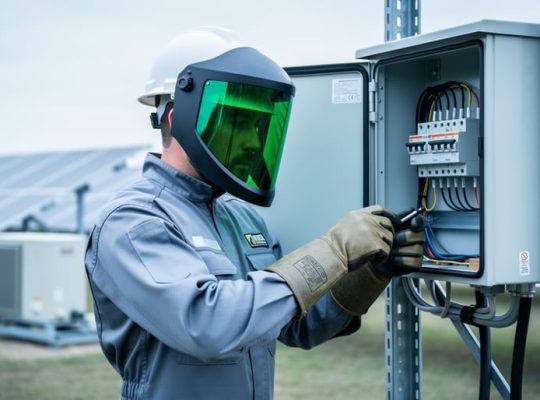
Solar PV systems equipped with rapid shutdown capabilities represent a critical advancement in photovoltaic safety technology, delivering essential protection for emergency responders and maintenance personnel. This sophisticated safety mechanism, mandated by National Electrical Code (NEC) requirements since 2014, enables swift de-energization of solar arrays during emergencies, significantly reducing electrical hazards. When integrated with comprehensive emergency response protocols, rapid shutdown systems ensure that voltage levels drop to safe thresholds within seconds of activation, protecting first responders during fire emergencies and allowing maintenance teams to perform their duties safely.
Modern rapid shutdown solutions combine advanced power electronics, reliable communication protocols, and fail-safe mechanisms to create a robust safety infrastructure that meets both regulatory requirements and practical safety needs. As solar installations continue to proliferate across residential and commercial sectors, understanding these systems becomes increasingly vital for industry professionals, building owners, and safety personnel alike.
Understanding Solar PV Rapid Shutdown Systems
Key Components and Functionality
A solar PV system with rapid shutdown capability comprises several essential components working in synergy to ensure both optimal performance and safety. At the core of the system are the module-level power electronics (MLPEs), which include rapid shutdown devices installed on each solar panel. These devices communicate with a central shutdown initiator and can quickly de-energize the system when activated.
The central shutdown initiator serves as the system’s control hub, monitoring operating conditions and triggering the shutdown sequence when necessary. This component typically interfaces with the building’s fire alarm system and can be manually activated through easily accessible switches.
String inverters or microinverters equipped with rapid shutdown functionality work alongside these components, managing power conversion while maintaining shutdown capabilities. Advanced systems incorporate automated monitoring solutions that provide real-time status updates and instant notification of shutdown events.
Communication pathways between components utilize either power line communication (PLC) or wireless protocols, ensuring reliable signal transmission throughout the system. The shutdown mechanism includes disconnect switches, both automatic and manual, strategically placed for emergency responders.
Safety components such as arc-fault detection, ground-fault protection, and surge protection devices complement the rapid shutdown system, creating a comprehensive safety infrastructure. All these elements are integrated through sophisticated control logic that ensures rapid response while preventing false triggers.

NEC Requirements and Compliance
The National Electrical Code (NEC) has established stringent requirements for rapid shutdown systems in solar PV installations, primarily through Article 690.12. As of the 2017 NEC update, all PV system conductors within 1 foot of the array must be reduced to 80 volts or less within 30 seconds of rapid shutdown initiation.
These requirements apply to both residential and commercial installations, with specific focus on rooftop systems where emergency responder safety is paramount. The code mandates that rapid shutdown initiation methods must be clearly labeled and accessible from the building’s exterior. Systems must include a minimum of one initiation device located at a readily accessible location.
Compliance verification requires thorough documentation and testing procedures. Installers must ensure their systems meet UL 1741 certification standards for rapid shutdown equipment. Additionally, systems need proper labeling that includes a permanent plaque or directory indicating the location of the rapid shutdown initiator and detailed system information.
Recent code updates have emphasized the importance of module-level shutdown capabilities, requiring control of PV modules within array boundaries. This ensures more granular safety control and better protection for emergency responders. Installers must maintain detailed records of compliance testing and system certification to meet local authority having jurisdiction (AHJ) requirements.
Emergency Response Protocols
First Responder Safety Procedures
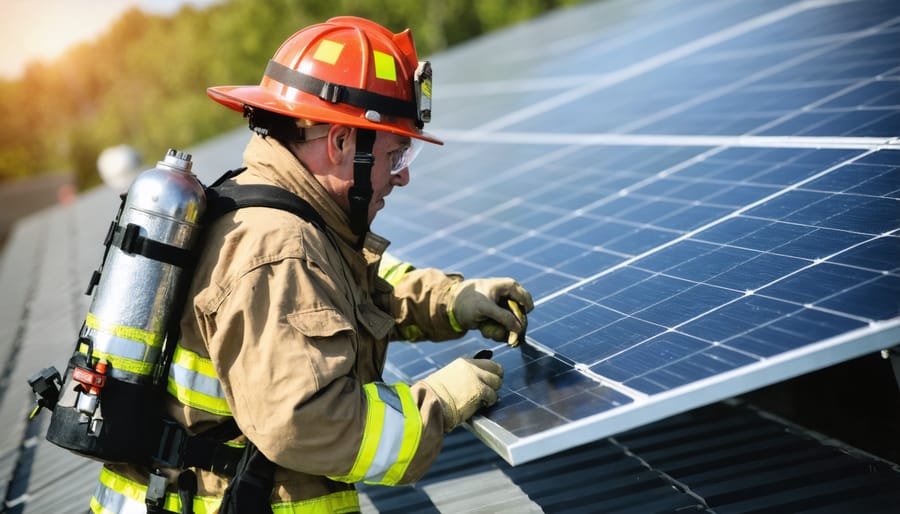
When responding to incidents involving solar PV installations, first responders must follow established firefighter safety procedures to ensure their protection while managing emergency situations. Upon arrival at a solar-equipped building, emergency personnel should first identify the presence of PV systems through visible panels, signage, or building documentation.
Responders must locate and verify the rapid shutdown initiation point, typically marked with clear identification near the service disconnect or meter. This allows for quick de-energization of the PV system above the array level. Even after shutdown activation, personnel should maintain safe distances from solar equipment, as modules may still retain some voltage.
Key safety protocols include:
– Treating all solar components as energized until verified otherwise
– Maintaining minimum approach distances from array edges
– Using appropriate personal protective equipment (PPE)
– Following established electrical isolation procedures
– Documenting system shutdown confirmation
The rapid shutdown system’s status indicators should be checked to confirm successful de-energization. Emergency responders should also be aware of system placard locations, which provide critical information about disconnect points and system specifications. During nighttime operations, artificial lighting should be used cautiously to prevent inadvertent system energization from powerful emergency scene illumination.
These procedures ensure both effective emergency response and personnel safety when dealing with PV-equipped structures.
Activation Methods and Response Times
Rapid shutdown systems in solar PV installations can be activated through multiple methods, each designed to ensure swift and reliable response during emergency situations. The primary activation methods include manual switches, typically located near the service entrance or main electrical panel, and automatic triggers integrated into the system’s monitoring capabilities.
Manual activation is accomplished through clearly marked shutdown switches that first responders or authorized personnel can easily locate and operate. These switches, when engaged, initiate the shutdown sequence within 30 seconds, as mandated by NEC requirements. Some advanced systems feature remote shutdown capabilities through wireless controllers or smart device applications, providing additional flexibility for system operators.
Automatic activation occurs in response to specific trigger events, such as grid power loss, arc fault detection, or emergency signals from building management systems. Modern rapid shutdown devices typically respond within 10 seconds of receiving the shutdown signal, though response times may vary based on system architecture and environmental conditions.
The shutdown sequence proceeds in a controlled manner, first reducing voltage at the module level to safe thresholds (generally below 30V), then completely disconnecting the array. Status indicators provide visual confirmation of successful shutdown, enabling emergency responders to verify system safety before intervention. This multi-layered approach ensures reliable system deactivation while maintaining equipment integrity.
Post-Shutdown Safety Verification
After initiating a rapid shutdown sequence, proper verification is essential to ensure complete system deactivation and maintain safety. Begin by confirming that all solar array voltage readings are below 30V DC within the required 30-second shutdown period. Use a properly calibrated multimeter to measure voltage at designated test points, including module leads and conductor connections.
Perform a visual inspection of the array and equipment to verify that indicator lights on rapid shutdown devices display the correct shutdown status. Check that all disconnect switches are in their proper positions and that communication systems indicate successful shutdown completion.
Document all verification steps, including voltage readings and time stamps, in the system maintenance log. This documentation serves as a crucial record for compliance and safety audits. Wait at least 5 minutes after shutdown initiation before approaching any equipment to allow for complete discharge of any residual voltage in the system.
For systems with multiple array sections, verify each section independently to ensure comprehensive shutdown. Test both automated and manual shutdown triggers to confirm proper functionality of all safety mechanisms. If any irregularities are detected during verification, maintain the shutdown state and contact qualified personnel for inspection before reactivation.
After verification, secure the area and place appropriate warning signs to prevent unauthorized system reactivation until safety clearance is confirmed by certified personnel.
Installation and Maintenance Best Practices
System Integration Requirements
Integrating rapid shutdown capabilities into existing PV systems requires careful planning and adherence to safe installation practices. The process begins with a thorough assessment of the current system configuration and identification of compatible rapid shutdown components.
For string inverter systems, integration typically involves installing module-level rapid shutdown devices (MLRSDs) on each panel and a transmitter near the inverter. These devices must be properly grounded and connected to ensure reliable communication. In microinverter or power optimizer systems, rapid shutdown functionality may already be built-in, requiring only verification and possible firmware updates.
The integration process must include:
– Installation of rapid shutdown initiators at service entrances and readily accessible locations
– Proper labeling of all rapid shutdown components and activation points
– Configuration of communication protocols between devices
– Testing of shutdown functionality under various scenarios
– Documentation of system modifications and updated single-line diagrams
System owners should work with certified installers who understand both NEC requirements and manufacturer specifications. Regular maintenance checks should verify the continued functionality of rapid shutdown features, ensuring long-term compliance and safety. Integration must also account for future system expansions and potential technology updates to maintain system effectiveness.
Regular Testing Protocols
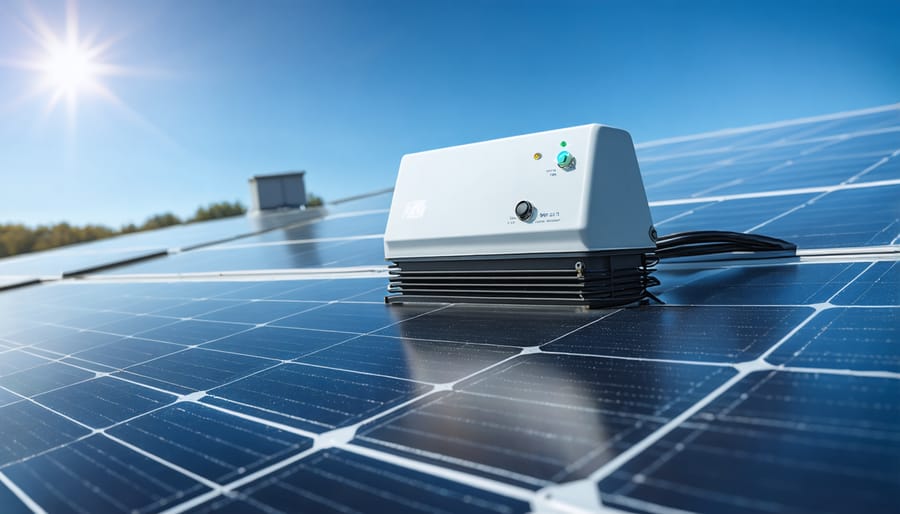
Regular testing of rapid shutdown systems is essential to ensure reliable operation during emergencies. A comprehensive testing protocol should be implemented quarterly, with more detailed annual inspections. During quarterly checks, technicians should verify the functionality of all initiators, including manual switches and automatic triggers, while monitoring response times and shutdown sequences.
Annual maintenance should include thorough testing of all system components, including conductors, module-level electronics, and communication pathways. Technicians must document voltage measurements before and after shutdown activation to confirm proper voltage reduction within the required timeframe. This data should be recorded and maintained for compliance purposes.
Key testing procedures include:
– Verification of manual shutdown switch operation
– Testing of automatic shutdown triggers
– Inspection of marking and labeling integrity
– Assessment of communication system reliability
– Validation of module-level electronics functionality
– Confirmation of proper voltage reduction levels
– Documentation of system response times
Testing should be conducted under various conditions to ensure consistent performance. Any anomalies or delayed responses must be investigated and addressed immediately. Maintain detailed records of all tests, including date, time, conditions, results, and any corrective actions taken. These records are crucial for demonstrating ongoing compliance with safety regulations and identifying potential system degradation over time.
Training personnel responsible for testing should receive regular updates on procedures and safety protocols to ensure testing accuracy and maintain system reliability.
Troubleshooting Common Issues
When troubleshooting rapid shutdown systems, professionals should first verify communication between the initiator and individual devices. Common issues often stem from interrupted signal paths or damaged wiring. If the system fails to initiate shutdown, check the power supply to the rapid shutdown controller and ensure all connections are secure.
For communication-based systems, interference can cause operational problems. Verify that no new equipment installations or structural changes have created signal barriers. In cases where wireless systems are employed, check for potential sources of RF interference and consider repositioning components if necessary.
Module-level rapid shutdown devices occasionally report false failures. This typically results from loose connections or environmental factors affecting sensors. Inspect mounting hardware and weather sealing to prevent moisture ingress, which can trigger false alarms or system malfunctions.
Regular monitoring of potential PV system hazards helps prevent shutdown system failures. If multiple devices fail simultaneously, investigate the central control unit and associated wiring. For systems using power line communication, verify line impedance and check for any new sources of electrical noise.
Document all troubleshooting steps and outcomes for future reference. If problems persist after basic troubleshooting, consult the manufacturer’s technical support or engage a certified professional. Always maintain compliance with NEC requirements while performing diagnostic procedures.
The integration of rapid shutdown systems in solar PV installations represents a critical advancement in photovoltaic safety technology, serving as an essential safeguard for both emergency responders and maintenance personnel. These systems have become increasingly important as solar installations continue to proliferate across residential, commercial, and industrial sectors.
The ability to quickly de-energize solar arrays during emergencies not only complies with regulatory requirements but also demonstrates the industry’s commitment to public safety and professional responsibility. Emergency response preparedness, supported by proper rapid shutdown implementation, ensures that first responders can perform their duties without the added risk of electrical hazards from solar installations.
As the solar industry continues to evolve, the importance of standardized rapid shutdown protocols and proper training cannot be overstated. Facility managers, system owners, and emergency response teams must maintain clear communication channels and regular safety drills to ensure optimal response during critical situations. This collaborative approach to safety management helps maximize the effectiveness of rapid shutdown systems while minimizing potential risks.
Moving forward, ongoing education and awareness about rapid shutdown capabilities will remain crucial for all stakeholders involved in solar PV systems. The continued development of more sophisticated and reliable rapid shutdown technologies, coupled with comprehensive emergency response protocols, will further enhance the safety and reliability of solar installations worldwide.