**Understand the three-tier warranty structure before signing any solar contract.** Product warranties cover manufacturing defects in panels themselves (typically 10-25 years), performance warranties guarantee minimum power output levels (usually 25-30 years at 80-90% capacity), and workmanship warranties protect installation quality (commonly 1-10 years). Each operates independently, meaning a panel producing adequate power under warranty may still have unaddressed physical defects if the product warranty has expired.
**Examine exclusion clauses that void coverage despite valid warranty periods.** Most manufacturers deny claims for panels damaged by improper installation, unauthorized modifications, extreme weather events classified as “acts of God,” or failure to follow maintenance schedules. These exclusions often appear in fine print and can leave you financially exposed even with “comprehensive” warranty documents.
**Verify the financial stability of warranty providers through independent rating agencies.** A 25-year performance guarantee means nothing if the manufacturer declares bankruptcy in year eight. Review Dun & Bradstreet ratings, check for third-party insurance backing, and investigate whether warranties transfer if the company merges or dissolves.
**Document your system’s condition and performance metrics from installation day forward.** Warranty claims require proof that degradation exceeds guaranteed thresholds or that defects existed within coverage periods. Maintain detailed records of output data, professional inspections, and maintenance activities—this evidence determines whether claims succeed or face rejection.
The Two Critical Types of Solar Panel Warranties
Product Warranties: Protection Against Manufacturing Defects
Product warranties serve as your primary safeguard against manufacturing deficiencies in solar panel systems, protecting your investment from inherent flaws in materials and construction. These warranties specifically cover defects that originate during the manufacturing process, including faulty components, substandard materials, and workmanship errors that compromise panel performance or structural integrity.
Standard product warranties typically extend between 10 to 15 years, though some premium manufacturers now offer coverage periods up to 25 years. This protection encompasses several critical elements: the solar cells themselves, the glass or polymer front sheet, the backsheet that seals the rear surface, junction boxes, and frame materials. The warranty guarantees that these components will remain free from defects that could impair the panel’s ability to generate electricity safely and effectively.
Valid warranty claims generally arise from observable issues such as delamination (separation of panel layers), cell discoloration, moisture intrusion, junction box failures, or frame corrosion. However, specific conditions must be met for manufacturers to honor these claims. The panels must have been installed according to manufacturer specifications, operated within recommended environmental parameters, and maintained without unauthorized modifications. Documentation proving proper installation by certified professionals strengthens claim validity significantly.
Manufacturing defect coverage explicitly excludes damage from external factors including severe weather events, improper handling, chemical exposure, or physical impact. Normal wear and discoloration that doesn’t affect performance typically falls outside product warranty scope. Understanding these boundaries helps solar system owners maintain realistic expectations while ensuring they receive the protection these warranties genuinely provide against factory-originated deficiencies.
Performance Warranties: Guaranteeing Energy Production
Performance warranties represent manufacturers’ commitment to maintaining minimum energy production levels throughout the solar panel system’s operational lifetime. Unlike product warranties that cover physical defects, performance warranties guarantee that panels will continue generating electricity at specified efficiency levels, typically for 25 to 30 years.
Solar panels naturally experience performance degradation over time due to exposure to ultraviolet radiation, thermal cycling, and environmental factors. Industry-standard degradation curves show annual efficiency losses ranging from 0.5% to 1%, though premium manufacturers often guarantee rates below 0.7% annually. This means a panel producing 300 watts initially might guarantee at least 252 watts after 25 years at a 0.7% degradation rate.
Manufacturers calculate guaranteed output using tiered performance benchmarks. A typical warranty structure guarantees 97-98% of nameplate capacity during the first year, then establishes a linear or stepped degradation schedule. For example, a warranty might guarantee 90% output at year 10, 85% at year 15, and 80% at year 25. These thresholds incorporate safety margins beyond expected degradation, providing customers reasonable protection while limiting manufacturer liability.
Testing actual performance against warranty specifications requires professional measurement under standard test conditions (STC): 1000 W/m² irradiance, 25°C cell temperature, and air mass 1.5 spectrum. Real-world output varies with weather, installation angle, and shading, complicating warranty claims. Manufacturers typically require independent verification by certified technicians using calibrated equipment before honoring performance warranty claims, ensuring legitimate issues receive attention while preventing frivolous claims based on normal operational variations or improper system design.
What Solar Panel Warranties Don’t Cover
Installation and Workmanship Exclusions
Improper installation represents one of the most significant warranty invalidation risks in photovoltaic systems. Manufacturers explicitly exclude coverage for defects or damage resulting from faulty installation practices, as the integrity of solar panels depends heavily on proper mounting, electrical connections, and system integration. When panels are installed incorrectly—whether through inadequate mounting systems, improper electrical configurations, or failure to follow manufacturer specifications—subsequent failures are considered the installer’s responsibility rather than manufacturing defects.
Certification requirements have become standard across the industry to protect both manufacturers and consumers. Most tier-one manufacturers stipulate that installations must be completed by certified professionals holding credentials from recognized organizations such as the North American Board of Certified Energy Practitioners (NABCEP) or equivalent regional bodies. These certifications verify that installers possess the technical knowledge to execute installations according to industry best practices and specific product requirements. Universities partnering with solar industry leaders now offer comprehensive educational programs that prepare professionals for these certification pathways, ensuring a skilled workforce capable of maintaining warranty validity.
Documentation proves critical for warranty claims. Certified installers provide installation certificates, electrical inspection reports, and compliance documentation that manufacturers require when processing warranty claims. Without these credentials, homeowners may face complete warranty denial regardless of the actual defect cause.
Environmental and External Damage Limitations
Solar panel warranties typically exclude damage from environmental extremes and external forces beyond the manufacturer’s control. While product warranties cover manufacturing defects and performance guarantees address power output degradation, both contain significant coverage gaps that photovoltaic system owners must understand.
Extreme weather events represent a primary exclusion category. Most warranties do not cover damage from hurricanes, tornadoes, hail exceeding specified sizes (typically 1 inch diameter), lightning strikes, flooding, or wildfires. Though solar panels undergo rigorous testing to withstand severe conditions, catastrophic weather damage falls outside standard warranty protection. Property insurance, rather than manufacturer warranties, becomes the appropriate coverage mechanism for these scenarios.
Debris impact damage from falling tree branches, airborne objects during storms, or deliberate vandalism similarly remains excluded. Physical damage from external sources requires separate insurance coverage, as warranties address only internal component failures and gradual performance degradation within normal operating parameters.
Unauthorized modifications, improper installations by non-certified technicians, or system alterations void most warranty protections entirely. Manufacturers stipulate that only qualified professionals following installation guidelines can perform system work while preserving warranty validity. This requirement protects manufacturers from liability related to improper handling but places responsibility on system owners to verify installer credentials.
Normal wear exceeding specified degradation rates—typically 0.5-0.7% annually for tier-one panels—may not trigger warranty claims if degradation remains within technical specifications. Understanding these precise thresholds prevents unrealistic expectations regarding warranty coverage scope.
Maintenance Requirements and Documentation
Solar panel warranties typically require minimal maintenance, but specific documentation obligations exist that warrant holders must fulfill to preserve coverage. Most manufacturers mandate annual inspections and cleaning performed according to specified protocols. These requirements generally include visual inspections for physical damage, electrical performance monitoring through inverter data, and removal of debris or accumulated soiling that reduces output efficiency. Documentation must include dated photographs, performance metrics, and detailed records of any cleaning or maintenance activities performed.
Failure to maintain proper documentation represents one of the most common reasons for warranty claim denials. Manufacturers require proof that systems have been maintained according to their guidelines throughout the warranty period. This documentation should include professional inspection reports, maintenance logs with specific dates and activities, and performance data demonstrating consistent monitoring. Some manufacturers provide online portals or mobile applications to streamline documentation processes, making it easier for system owners to maintain compliant records.
Improper maintenance practices can immediately void warranty coverage. Using abrasive cleaning materials, high-pressure washing equipment, or unauthorized chemical solutions may damage protective coatings and anti-reflective surfaces. Similarly, allowing unauthorized personnel to perform maintenance or repairs typically nullifies warranty protection. Always verify that maintenance providers carry appropriate certifications and insurance coverage. Universities partnering with solar industry programs often emphasize proper maintenance documentation protocols in their educational curricula, preparing future professionals to guide clients through these critical obligations effectively.
How Different Solar Technologies Impact Warranty Terms
Traditional Panel Warranties vs. Integrated Solar Roofing
Traditional solar panels and building-integrated photovoltaic (BIPV) systems like solar tiles and shingles feature notably different warranty structures that reflect their distinct installation contexts and performance expectations.
Standard photovoltaic modules typically carry separate product and performance warranties, with product coverage lasting 10-15 years and power output guarantees extending 25-30 years. These warranties focus exclusively on the panel’s electrical generation capacity and physical integrity.
BIPV systems introduce additional complexity by serving dual functions as both energy generators and structural roofing components. Consequently, their warranties must address weatherproofing, structural integration, and aesthetic durability alongside electrical performance. Solar shingle manufacturers often provide combined warranties covering both roofing function and power generation, typically ranging from 20-25 years. However, the distinction between roofing failure and electrical failure can complicate claims processes.
Critical considerations for BIPV warranties include installation requirements—often mandating certified installers familiar with both roofing and electrical systems—and potential interactions with traditional roofing warranties on remaining roof sections. Performance guarantees for integrated systems may differ from standard panels due to installation angles and thermal characteristics inherent to roof-mounted applications.
Prospective buyers should carefully examine whether BIPV warranties comprehensively cover all system functions or require separate coverage for different failure modes, as gaps between roofing and electrical warranties can create coverage ambiguities.
Premium Technology Warranties
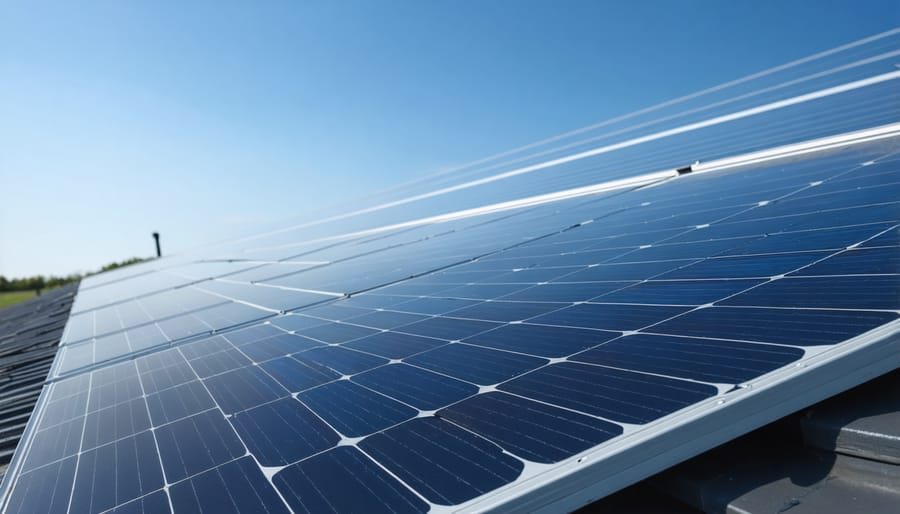
Advanced solar panel technologies command premium prices but typically justify this investment through superior warranty protection and performance guarantees. Monocrystalline PERC (Passivated Emitter and Rear Cell) panels exemplify this category, often featuring 25-year product warranties compared to the industry standard 10-12 years for conventional modules. These enhanced warranties reflect manufacturers’ confidence in their engineering and materials quality.
Premium modules frequently include performance guarantees extending beyond typical coverage. While standard panels guarantee approximately 80% output after 25 years, high-efficiency technologies often promise 84-88% retention over the same period. This difference translates to significant energy generation advantages throughout the system’s operational lifetime.
Bifacial modules and panels incorporating half-cut cell technology similarly command extended warranty terms. Manufacturers recognize that advanced cell architectures reduce thermal stress and current losses, resulting in improved long-term reliability. Research collaboration between manufacturers and universities continues validating these enhanced durability claims through accelerated testing protocols.
The warranty premium serves multiple purposes beyond risk mitigation. It signals quality differentiation in competitive markets and provides installers with stronger value propositions for clients. For renewable energy professionals, understanding these warranty distinctions enables more nuanced system design recommendations aligned with client budgets and performance expectations. Educational programs increasingly emphasize warranty analysis as essential competency for photovoltaic consultants guiding investment decisions.
The Warranty Claim Process: What to Expect
Documentation Requirements for Valid Claims
Maintaining comprehensive documentation stands as the cornerstone of successful warranty claims for photovoltaic systems. Solar panel manufacturers and installers require specific records to validate claims and verify compliance with warranty terms, making organized record-keeping essential from installation day forward.
**Proof of Purchase and Installation Certificates** form the foundational documentation for any warranty claim. Original invoices demonstrating the purchase date, system specifications, panel serial numbers, and inverter details establish warranty coverage periods. Installation certificates signed by certified installers provide critical evidence that the system was deployed according to manufacturer specifications and local electrical codes. These documents prove professional installation—a common prerequisite for warranty validity that protects manufacturers from liability associated with improper system configuration.
**Maintenance Logs** document ongoing system care and demonstrate compliance with manufacturer-specified maintenance requirements. Detailed records should include dates of cleaning, inspection findings, component replacements, and any professional servicing performed. Many warranties explicitly require annual maintenance, and failure to produce these records can void coverage entirely. Photovoltaic professionals recommend digital logging systems that timestamp activities and store photographs of system conditions.
**Performance Monitoring Data** provides quantitative evidence supporting degradation or efficiency claims under performance warranties. Modern monitoring systems track daily energy production, allowing comparison against guaranteed output levels. When filing performance-related claims, manufacturers typically request months of production data, weather conditions, and system operational parameters to verify legitimate underperformance versus temporary environmental factors.
Remedies and Replacements
When warranty claims receive approval, manufacturers typically provide remedies through several distinct channels, each with varying implications for system owners and installers. The most straightforward resolution involves **complete panel replacement**, where defective modules are swapped with new or refurbished units of equivalent specifications. This approach is common during the initial warranty period when manufacturing defects become apparent, though logistics and installation costs may fall to the consumer depending on contract terms.
**Prorated refunds** represent another prevalent remedy, particularly for performance warranty claims later in the product lifecycle. Under this structure, manufacturers calculate compensation based on the panel’s age and remaining warranty period. For instance, a panel failing in year fifteen of a twenty-five-year warranty might yield a refund reflecting sixty percent depreciation, potentially leaving owners with insufficient funds for full replacement at current market prices.
Some manufacturers offer **repair services** for specific defects like junction box failures or minor delamination issues, though this option has become less common as labor costs often exceed replacement expenses. Additionally, certain agreements provide **performance compensation**—monetary reimbursement calculated against the energy production shortfall rather than panel replacement itself.
Understanding these remedy structures proves essential for both consumers evaluating warranty value and professionals advising clients on long-term system economics. Academic research from collaborative university programs has documented significant variance in actual remedy costs versus stated warranty coverage, highlighting the importance of scrutinizing remedy clauses before purchase decisions.
Maintenance Plans That Protect Your Warranty
Preventive Maintenance Schedule
Maintaining a rigorous preventive maintenance schedule is essential for preserving solar panel warranty validity and ensuring optimal system performance. Most manufacturers require documented proof of regular maintenance to honor warranty claims, making adherence to recommended protocols a critical responsibility for system owners.
**Inspection Frequency Standards**
Professional inspections should occur at minimum annually, though semi-annual assessments are recommended for optimal system health. These inspections should document panel condition, mounting structure integrity, electrical connections, and inverter functionality. Quarterly visual inspections by trained personnel can identify early-stage issues before they escalate into warranty-voiding damage. Many manufacturers now require inspection records as part of their warranty claim verification process.
**Cleaning Protocols**
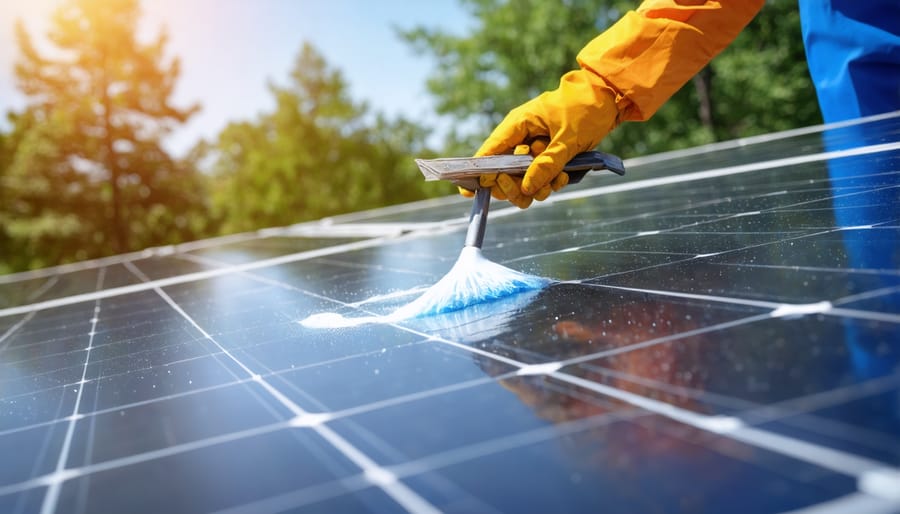
Panel cleaning frequency depends on environmental conditions, but quarterly cleaning typically maintains efficiency within acceptable parameters. Use deionized water and soft brushes designed specifically for photovoltaic surfaces to prevent micro-scratching that can void warranties. Avoid pressure washers, abrasive materials, and harsh chemicals that damage anti-reflective coatings. Document all cleaning activities with dated photographic evidence, as accumulated soiling that reduces output beyond manufacturer specifications may invalidate performance guarantees.
**Electrical Testing Requirements**
Annual electrical testing should include string voltage measurements, insulation resistance testing, and ground continuity verification. These tests identify degradation in electrical components before they cause system failures. Professional thermographic imaging can detect hot spots indicating cell damage or connection issues. Maintaining detailed testing records demonstrates compliance with maintenance practices required by warranty terms.
**Monitoring System Verification**
Continuous monitoring systems provide real-time performance data essential for warranty documentation. Verify monitoring accuracy monthly and maintain communication logs. Set alert thresholds to identify performance degradation immediately, as delayed response to system issues may compromise warranty coverage eligibility.
Professional vs. Owner Maintenance Responsibilities
Understanding the division between professional and owner maintenance responsibilities is crucial for preserving warranty coverage while ensuring optimal solar panel system performance. Most manufacturers explicitly outline these boundaries in warranty documentation, and violations can result in claim denials.
**Owner-Permissible Maintenance Activities**
Homeowners can typically perform basic visual inspections and cleaning tasks without risking warranty validity. Regular visual checks for physical damage, debris accumulation, or shading issues fall within acceptable owner responsibilities. Surface cleaning using water and soft brushes or sponges maintains panel efficiency and complies with warranty terms, provided owners avoid abrasive materials, harsh chemicals, or high-pressure washing equipment that could damage protective coatings.
Monitoring system performance through manufacturer-provided apps or inverter displays represents another safe owner activity. Documenting energy production patterns helps identify performance anomalies early, facilitating timely professional intervention when needed. Maintaining vegetation clearance around ground-mounted systems and removing leaves or snow buildup are generally acceptable preventive measures.
**Professional-Required Maintenance Tasks**
Any maintenance involving electrical connections, inverter adjustments, structural modifications, or component replacements must be performed by certified technicians. Warranty agreements typically mandate that professionals possess relevant certifications—such as NABCEP accreditation—and comply with local electrical codes. Opening junction boxes, testing voltage outputs, or reconfiguring system components without proper credentials automatically voids most warranties.
Annual professional inspections often constitute warranty requirements, documenting system condition and preemptively addressing degradation. These comprehensive evaluations examine electrical connections, mounting hardware integrity, and performance metrics beyond typical owner capabilities.
Many solar training programs through university partnerships now emphasize proper maintenance protocols, educating future professionals on warranty compliance requirements. This educational focus ensures industry practitioners understand the critical balance between necessary interventions and warranty preservation, ultimately protecting consumer investments while maintaining system longevity.
Evaluating Warranty Value: Beyond the Numbers
Manufacturer Longevity and Reputation
A solar panel warranty’s value fundamentally depends on the manufacturer’s ability to honor it decades into the future. While 25-year warranties have become industry standard, these guarantees offer no protection if the issuing company ceases operations before the warranty period expires. The solar industry has witnessed numerous manufacturer bankruptcies and consolidations, leaving customers with worthless warranty documents and no recourse for failing panels.
When evaluating manufacturer stability, examine several key indicators. Company age and market presence provide initial insight—manufacturers operating for 15+ years have demonstrated resilience through industry fluctuations. However, longevity alone doesn’t guarantee future viability. Investigate financial health through publicly available reports if the company is traded, or research their ownership structure and parent company backing. Tier 1 manufacturers, as classified by Bloomberg New Energy Finance based on bankability criteria, generally offer greater stability assurance.
Research the manufacturer’s warranty fulfillment history by consulting industry forums, solar installer networks, and academic studies on warranty claim experiences. Universities collaborating on renewable energy research often publish longitudinal studies tracking manufacturer performance and warranty satisfaction rates. The California Solar & Storage Association and similar organizations maintain databases documenting manufacturer responsiveness to warranty claims.
Consider purchasing from manufacturers offering warranty insurance or bonds through third-party underwriters. These financial instruments ensure warranty coverage continues regardless of the manufacturer’s operational status, providing crucial protection for your long-term investment in photovoltaic technology.
Warranty Transferability and Property Value
Transferable warranties significantly enhance property value by assuring prospective buyers that their solar investment remains protected under existing coverage terms. According to Lawrence Berkeley National Laboratory research, homes with solar installations sell for approximately 4.1% more than comparable properties, with warranty transferability contributing substantially to buyer confidence. Most manufacturers offer warranty transfer options, though policies vary considerably across providers.
The transfer process typically requires notifying the manufacturer within 30-90 days of property sale, submitting documentation including the deed transfer and system serial numbers. Some manufacturers charge administrative fees ranging from $150-$500, while premium brands include unlimited free transfers as a competitive advantage. Installers’ workmanship warranties generally transfer automatically with proper notification, though verification remains essential during real estate transactions.
Property sellers should maintain comprehensive warranty documentation including original certificates, proof of required maintenance, and manufacturer contact information to facilitate seamless transfers. Real estate professionals increasingly recognize warranty transferability as a negotiation point, with buyers often requesting warranty validation during due diligence periods. Academic research from renewable energy programs demonstrates that clearly documented, transferable warranties reduce perceived risk for homebuyers unfamiliar with photovoltaic technology, thereby accelerating solar adoption rates. Industry stakeholders recommend reviewing transfer provisions before system purchase, as this feature directly impacts long-term asset value and marketability of the property.
Understanding solar panel warranties represents a critical competency for anyone entering the photovoltaic industry or considering a solar investment. The distinctions between product, performance, and workmanship warranties create a protection framework that can safeguard significant financial investments—but only when properly understood and maintained. As this article has outlined, warranty coverage often contains limitations and exclusions that can void protection if maintenance requirements are neglected or improper procedures are followed during claims processes.
For aspiring PV professionals, mastery of warranty intricacies directly impacts client satisfaction and long-term project success. The ability to clearly communicate coverage limitations, maintenance obligations, and realistic performance expectations establishes credibility and prevents costly misunderstandings. Educational programs that incorporate warranty analysis, documentation protocols, and manufacturer relationship management prepare professionals to navigate these complex agreements effectively.
Solar system purchasers must approach warranty documents with the same scrutiny applied to the equipment itself. Requesting detailed warranty terms in writing, understanding specific maintenance requirements, and selecting manufacturers with established track records and financial stability are essential due diligence steps. The integration of professional installation and routine maintenance not only optimizes system performance but preserves warranty validity throughout the coverage period.
At Mose Solar, our commitment to comprehensive education extends beyond technical installation skills to encompass the business and contractual knowledge that distinguishes competent professionals from industry leaders. Through collaboration with universities and structured training programs, we equip renewable energy enthusiasts with the analytical frameworks necessary to evaluate warranty protection critically and advocate effectively for their clients’ interests in an evolving solar marketplace.