
Transform your home into a clean energy powerhouse without spending a dime through zero-cost solar programs – innovative financing solutions that eliminate upfront installation expenses while delivering immediate electricity savings. These programs combine federal tax incentives, state rebates, and power purchase agreements (PPAs) to make the solar PV installation process financially accessible to property owners across America.
Through carefully structured agreements with solar providers, homeowners can secure premium photovoltaic systems with zero down payment while locking in electricity rates significantly below utility costs. This revolutionary approach to renewable energy adoption has already enabled thousands of families to reduce their carbon footprint while saving an average of 20-30% on monthly energy bills.
The program’s sophisticated financing model leverages multiple funding sources, including the federal Investment Tax Credit (ITC), state-specific incentives, and private capital, creating a seamless pathway to solar adoption that eliminates traditional cost barriers. Property owners maintain full benefits of solar ownership while avoiding the substantial initial investment typically associated with renewable energy systems.
Understanding Zero Cost Solar Programs
Power Purchase Agreements (PPAs)
Power Purchase Agreements (PPAs) represent a innovative financing mechanism that enables property owners to adopt solar energy without bearing the actual costs of solar installation. Under a PPA structure, a third-party developer assumes responsibility for installing, owning, and maintaining the solar PV system on the customer’s property.
The agreement typically spans 15-25 years, during which the property owner purchases the generated electricity at a predetermined rate, often lower than conventional utility prices. This rate structure usually includes an annual escalator of 2-3%, which remains significantly below historical utility rate increases.
Key benefits of PPAs include:
– Zero upfront capital investment
– Immediate reduction in electricity costs
– Professional system maintenance and performance monitoring
– Transfer of performance risk to the developer
– Predictable energy costs for budget planning
The developer benefits from available tax incentives and renewable energy credits, while the property owner enjoys reduced electricity costs without technical or operational responsibilities. PPAs are particularly attractive for commercial, industrial, and institutional customers who seek to minimize capital expenditure while transitioning to renewable energy.
Performance guarantees typically accompany these agreements, ensuring the system generates the promised electricity output. If production falls below guaranteed levels, the developer must compensate the property owner accordingly, providing additional security for the investment.
Solar Leasing Options
Solar leasing programs represent a significant financing mechanism within zero-cost solar initiatives, offering property owners the opportunity to adopt solar technology without substantial initial investment. Under a typical solar lease arrangement, a third-party company maintains ownership of the photovoltaic system while the property owner pays a fixed monthly lease payment for using the equipment.
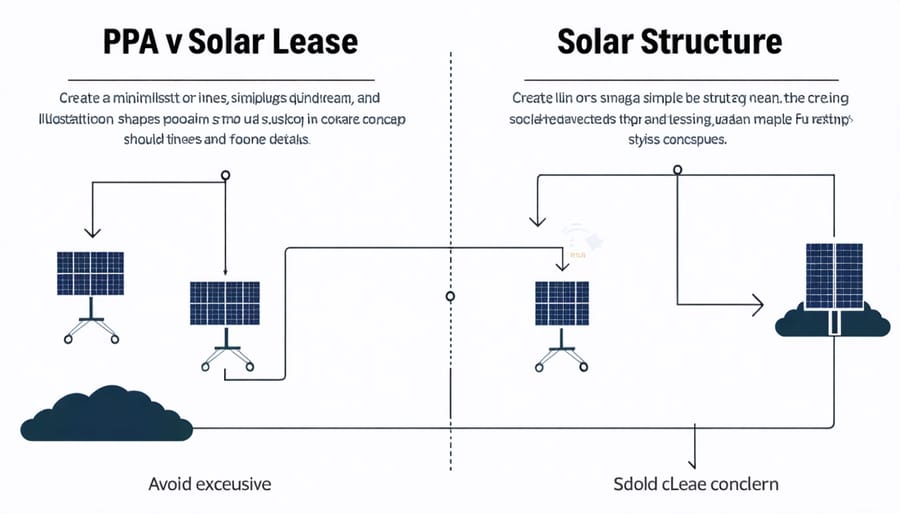
These leasing arrangements differ fundamentally from Power Purchase Agreements (PPAs) in several key aspects. While both options eliminate upfront costs, lease payments remain consistent regardless of system performance, whereas PPA payments fluctuate based on actual energy production. Leasing agreements typically span 20-25 years and include comprehensive maintenance services, ensuring optimal system performance throughout the contract period.
Property owners considering solar leases should evaluate several factors, including escalator clauses that may increase monthly payments over time, end-of-term options, and transfer provisions in case of property sale. Many leasing programs offer performance guarantees and maintain responsibility for system repairs and replacements, providing additional security for the lessee.
The financial benefits of solar leasing often include immediate utility bill reduction, predictable energy costs, and potential tax advantages. However, compared to PPAs, leases may offer less flexibility in terms of payment structure and system ownership options. Understanding these distinctions is crucial for making an informed decision about which zero-cost solar financing option best aligns with specific property and financial objectives.
Financial Benefits and Incentives
Federal Tax Credits
The federal solar Investment Tax Credit (ITC) significantly reduces the overall cost of photovoltaic system installation, offering property owners a substantial tax deduction of 30% through 2032. This incentive applies to both residential and commercial installations, covering equipment, labor, and permitting costs. For a typical residential solar installation valued at $20,000, property owners can claim up to $6,000 in federal tax credits.
The Inflation Reduction Act of 2022 extended and enhanced these benefits, ensuring long-term stability for solar investments. The credit will step down to 26% in 2033 and 22% in 2034, making immediate adoption more advantageous. Property owners must have sufficient tax liability to claim the full credit, though unused portions can be carried forward to subsequent tax years.
Additional incentives include bonus depreciation for commercial installations and potential increased credit amounts for projects meeting specific domestic content requirements or located in energy communities. These federal incentives, combined with state and local programs, can substantially reduce or eliminate upfront costs, making solar installation financially accessible to a broader range of property owners.
State and Local Incentives
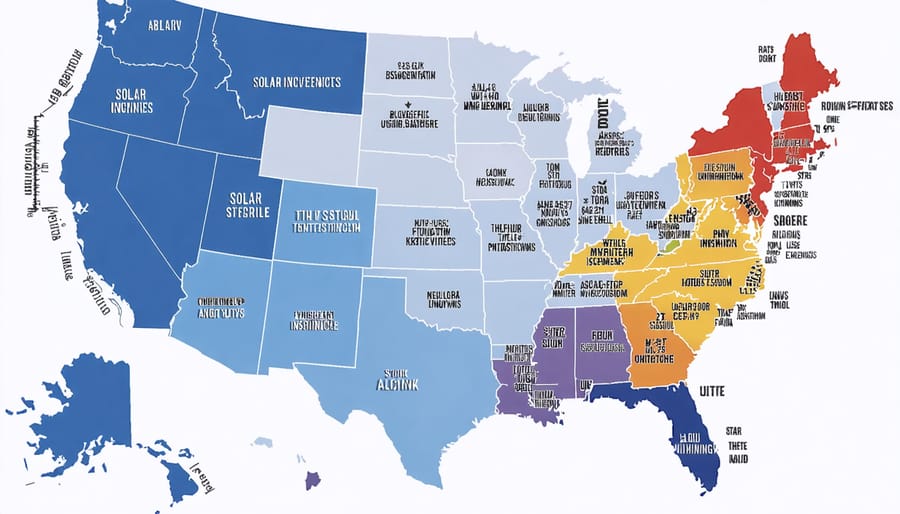
State and local governments across the United States offer diverse incentives to promote solar energy adoption, significantly enhancing the viability of zero-cost solar programs. Property tax exemptions, sales tax exemptions, and performance-based incentives vary by jurisdiction, creating opportunities for substantial cost reduction.
Many states implement Solar Renewable Energy Certificate (SREC) programs, allowing system owners to earn additional income by selling certificates representing the environmental benefits of their solar production. Some municipalities offer special assessment districts through Property Assessed Clean Energy (PACE) financing, enabling property owners to fund solar installations through property tax assessments.
Local utility companies frequently provide additional rebates and performance-based incentives that can be combined with state-level programs. These may include per-watt installation rebates, production-based incentives, or special solar-friendly rate structures. Some regions also offer expedited permitting processes and reduced fees for solar installations.
To maximize benefits, prospective solar adopters should consult their local energy office or utility provider, as incentive programs are regularly updated and may have limited funding windows.
Utility Company Programs
Utility companies across the nation offer various incentives and programs to support the adoption of solar energy systems. Net metering stands as one of the most significant utility-backed initiatives, allowing solar system owners to receive credits for excess electricity generated and fed back into the grid. These credits can substantially offset electricity costs during periods of lower solar production.
Many utilities provide performance-based incentives (PBIs), which offer payments based on the actual kilowatt-hours generated by your solar installation. Some companies also implement time-of-use (TOU) rate structures, enabling customers to maximize savings by aligning their energy consumption with peak solar production hours.
Rebate programs vary by region and utility provider, with some offering upfront incentives that can reduce installation costs. These may include equipment rebates, installation cost reductions, or direct cash incentives based on system capacity. Additionally, several utilities partner with approved solar installers to streamline the interconnection process and ensure quality installations.
To participate in utility programs, customers typically must meet specific eligibility requirements, including property ownership, credit standing, and system specifications. It’s essential to contact your local utility provider directly to understand available programs, as offerings can change periodically based on regulatory requirements and program funding levels. Many utilities also provide online tools and resources to help customers calculate potential savings and determine program qualification.
Qualification Requirements
To qualify for a zero-cost solar program, applicants must meet specific eligibility criteria established by program administrators and financing partners. Property ownership is a fundamental requirement, with applicants needing to demonstrate clear title to their property or written permission from the property owner for installation.
Credit requirements typically include a minimum FICO score of 650, though some programs may accept lower scores with additional documentation. Applicants must also show a consistent history of utility payments and sufficient income to cover potential program obligations.
The property itself must meet certain structural and solar viability standards. This includes having adequate roof space with proper orientation (typically south-facing), minimal shading, and appropriate structural integrity. Properties generally need at least 10-15 years of remaining roof life to qualify for most programs.
Energy consumption patterns play a crucial role in qualification. Most programs require applicants to demonstrate consistent electricity usage over the previous 12 months, with minimum consumption thresholds varying by region and program specifications. Properties must also be located within the service territory of participating utility companies.
The application process typically involves:
– Initial program qualification assessment
– Property evaluation and solar site survey
– Credit and income verification
– Utility bill analysis
– Home energy audit
– Contract review and signing
– Permitting and interconnection approval
Additional requirements may include:
– Current on property taxes
– No recent bankruptcy filings
– Homeowner’s insurance coverage
– HOA approval (where applicable)
– Local building code compliance
Program administrators conduct thorough evaluations to ensure applicants meet all criteria before proceeding with installation. This comprehensive screening process helps maintain program sustainability and ensures successful long-term solar adoption for qualifying participants.
Long-term Considerations
System Performance Guarantees
Zero-cost solar programs typically include comprehensive system performance guarantees to protect the property owner’s investment and ensure optimal energy generation. These guarantees encompass both equipment warranties and production guarantees, addressing crucial long-term performance considerations throughout the system’s operational lifetime.
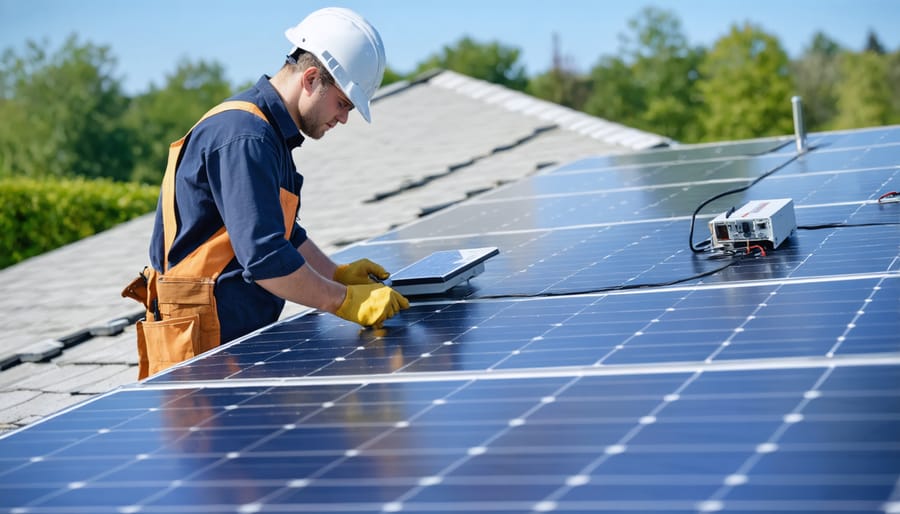
The performance monitoring system continuously tracks energy production, system efficiency, and component functionality through advanced monitoring technology. Property owners receive access to real-time monitoring platforms that display energy generation data, system health metrics, and potential maintenance alerts. This proactive approach enables swift identification and resolution of any performance issues.
Standard performance guarantees typically include:
– 25-year manufacturer warranty on solar panels
– 10-15 year warranty on inverters
– Minimum performance ratio guarantee of 80-85% over 25 years
– System uptime guarantee of 95% or higher
– Annual energy production guarantees based on site-specific conditions
If the system underperforms relative to guaranteed production levels, the program provider is typically obligated to compensate the property owner for the shortfall or implement necessary corrective measures. Regular maintenance inspections, typically conducted quarterly or bi-annually, ensure the system operates at peak efficiency and maintains compliance with warranty requirements.
The monitoring system also generates detailed performance reports, enabling property owners to verify energy savings and track their return on investment over time.
End-of-Term Options
At the conclusion of your zero-cost solar agreement, several options become available, each deserving careful consideration. The most common choice is purchasing the system outright at fair market value, allowing you to fully own and continue to maximize system performance while enjoying long-term energy savings.
Program renewal presents another viable option, enabling you to extend the agreement under updated terms that reflect current market conditions and technological advancements. This choice maintains the zero-upfront-cost structure while potentially incorporating newer efficiency improvements or maintenance provisions.
System removal is also available, though less commonly chosen due to its impact on sustained energy savings. If selected, the provider typically handles the removal process at no additional cost, restoring the property to its original condition. However, this option forfeits future energy savings and may require transitioning back to conventional utility services.
Some programs offer hybrid solutions, such as partial ownership or graduated purchase plans, which can provide more flexibility in transitioning from the initial agreement to full ownership. These arrangements often include provisions for technology upgrades and continued maintenance support, ensuring optimal system performance throughout the extended term.
Before making a decision, it’s advisable to evaluate your long-term energy needs, property plans, and financial objectives while consulting with your program provider to understand the detailed implications of each option.
Zero-cost solar programs represent a significant advancement in making renewable energy accessible to a broader segment of property owners and organizations. These initiatives effectively address the primary barrier to solar adoption – high upfront costs – while offering substantial long-term benefits. By eliminating initial investment requirements, these programs have demonstrated their capability to accelerate solar deployment across various sectors.
The success of these programs relies on carefully structured financing mechanisms, robust policy frameworks, and strategic partnerships between stakeholders. Property owners benefit from immediate energy cost reduction, protection against utility rate increases, and enhanced property values without capital expenditure. Additionally, these programs contribute significantly to environmental sustainability goals and carbon emission reduction targets.
However, prospective participants must carefully evaluate program terms, warranty provisions, and long-term obligations. Understanding maintenance responsibilities, performance guarantees, and contract duration is crucial for making informed decisions. The most successful implementations occur when participants thoroughly assess their energy needs, property specifications, and financial objectives before commitment.
Looking ahead, zero-cost solar programs will likely continue evolving with technological advancements and policy developments. Their role in democratizing access to solar energy while supporting grid resilience and environmental sustainability positions them as vital tools in the renewable energy transition. For qualified participants, these programs offer a practical pathway to adopt solar technology while maintaining financial prudence.