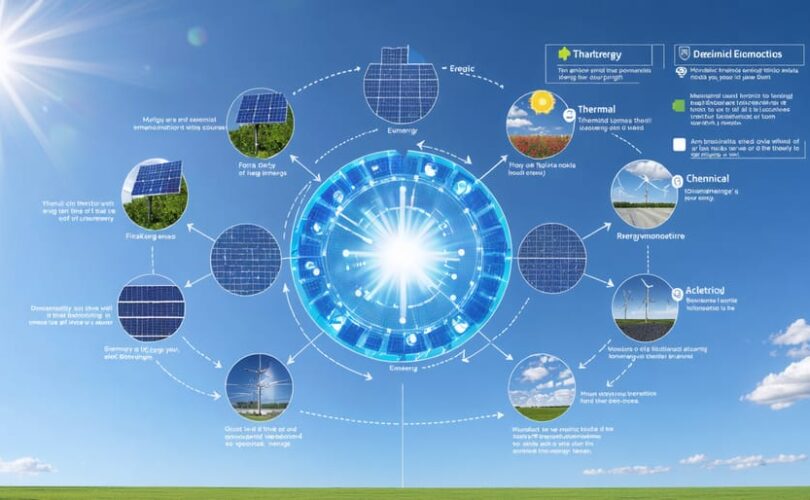
Energy forms drive our modern world, from the electricity powering seamless solar integration to the mechanical force behind industrial processes. Understanding the six fundamental forms of energy—kinetic, potential, thermal, chemical, electrical, and electromagnetic—is crucial for optimizing renewable energy systems and advancing sustainable technologies. These distinct yet interconnected energy types form the foundation of photovoltaic systems, where solar radiation transforms through multiple energy states before becoming usable electricity. Modern monitoring systems can now track these energy conversions in real-time, enabling unprecedented efficiency in solar power generation and storage. By mastering the principles of energy transformation and implementing sophisticated feedback mechanisms, engineers and system designers can create more efficient, reliable, and cost-effective renewable energy solutions that meet growing global demand while minimizing environmental impact.
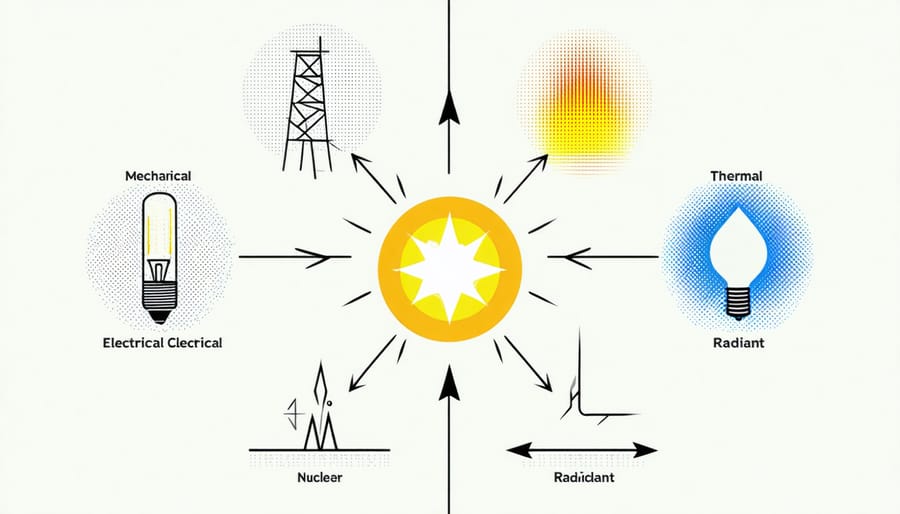
Understanding the Six Fundamental Energy Forms
Electrical Energy: The Solar PV Output
In photovoltaic systems, electrical energy represents the final output form that powers our homes and businesses. The conversion process begins when photons from sunlight strike the semiconductor material within solar cells, typically silicon-based, creating electron-hole pairs. This photovoltaic effect generates direct current (DC) electricity, which flows through the system’s circuitry.
The DC electricity produced by solar panels undergoes transformation through an inverter to become alternating current (AC), the standard form used in electrical grids and household applications. The efficiency of this conversion process typically ranges from 15% to 23% in commercial solar panels, though laboratory conditions have achieved higher rates.
Several factors influence the electrical output of PV systems, including solar irradiance levels, panel temperature, and system components’ efficiency. Modern monitoring systems track these parameters in real-time, enabling precise measurement of electrical energy production. This data helps optimize system performance and identify maintenance needs.
The electrical energy generated can be immediately consumed, stored in batteries for later use, or fed back into the power grid through net metering arrangements, making PV systems a versatile solution for sustainable energy production.
Thermal Energy: Heat Management in Solar Systems
Thermal energy plays a critical role in photovoltaic system performance, as temperature significantly impacts solar cell efficiency. As solar panels absorb sunlight, they generate both electrical and thermal energy, with excess heat potentially reducing conversion efficiency by 0.3% to 0.5% per degree Celsius above optimal operating temperatures. This temperature-dependent efficiency loss necessitates effective heat management strategies in solar installations.
Professional heat management solutions include passive cooling techniques such as proper panel spacing and natural ventilation, as well as active cooling systems like liquid cooling circuits or forced air ventilation. These methods help maintain optimal operating temperatures, typically between 25°C and 35°C, ensuring maximum energy conversion efficiency.
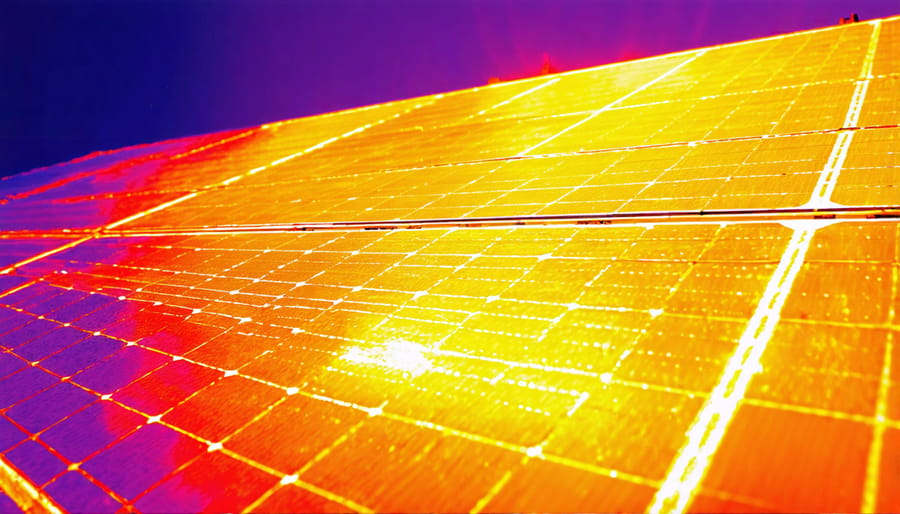
Monitoring thermal energy distribution across solar arrays enables system operators to identify hotspots, potential equipment failures, and opportunities for efficiency improvements. Advanced thermal imaging and temperature sensors provide real-time data for precise heat management, while innovative materials and coating technologies continue to enhance heat dissipation capabilities, ultimately optimizing system performance and extending equipment lifespan.
Energy Form Monitoring in Smart Solar Systems
Advanced Sensors and Measurement Tools
Modern energy monitoring systems employ sophisticated sensors and measurement tools to accurately track and analyze different forms of energy within solar PV installations. These advanced technologies enable precise monitoring of thermal, electrical, mechanical, chemical, radiant, and nuclear energy forms, facilitating optimal system performance through adaptive PV design solutions.
Thermal monitoring utilizes infrared sensors and thermocouples to measure temperature variations across solar panels and inverter systems. For electrical energy, digital power analyzers and smart meters provide real-time data on voltage, current, and power factor measurements. Mechanical energy monitoring incorporates accelerometers and strain gauges to assess structural integrity and mechanical stress on mounting systems.
Photosensors and spectroradiometers measure radiant energy from solar radiation, enabling precise tracking of available solar resources. Chemical energy monitoring systems employ specialized electrochemical sensors to evaluate battery storage performance and degradation rates. While nuclear energy monitoring isn’t typically required in solar PV applications, radiation detectors are sometimes used in hybrid energy research facilities.
These measurement tools integrate with advanced data acquisition systems, providing comprehensive energy flow analysis across the entire solar installation. The collected data enables system operators to optimize energy conversion efficiency, predict maintenance requirements, and implement preventive measures to maximize system longevity and performance.
Real-time Data Collection and Analysis
Real-time data collection and analysis plays a crucial role in understanding and optimizing the six energy forms within photovoltaic systems. Modern monitoring systems employ an array of sophisticated sensors and measurement devices to gather comprehensive data across multiple parameters simultaneously.
These systems typically utilize pyranometers for measuring solar irradiance, thermocouples for temperature monitoring, and power analyzers for electrical measurements. High-precision voltage and current sensors track electrical energy flow, while thermal imaging cameras detect heat distribution patterns. Advanced data loggers capture measurements at intervals ranging from milliseconds to hours, depending on the monitoring requirements.
The collected data undergoes rigorous processing through specialized software platforms that employ advanced algorithms for analysis. These platforms can identify patterns, detect anomalies, and calculate efficiency metrics across different energy conversion stages. Real-time monitoring systems typically achieve accuracy levels of ±0.5% for electrical measurements and ±2% for thermal measurements.
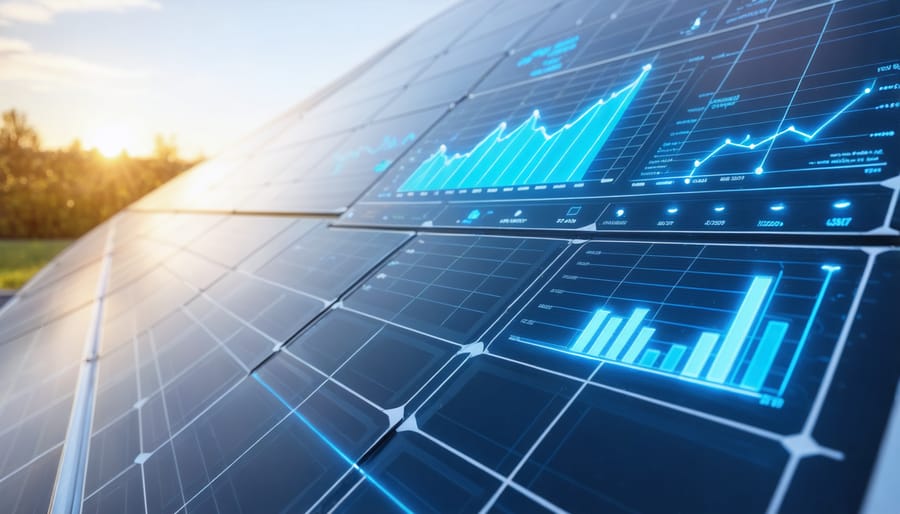
Data visualization tools transform complex measurements into comprehensible formats, enabling operators to make informed decisions quickly. Modern systems incorporate machine learning algorithms that can predict potential issues and suggest optimization strategies based on historical performance data.
Integration with weather monitoring stations provides contextual environmental data, allowing for correlation between external conditions and system performance. This comprehensive approach ensures optimal energy conversion efficiency while facilitating preventive maintenance and system optimization.
Optimizing Energy Form Conversion
Energy Loss Prevention
Energy loss during conversion processes is a significant concern in photovoltaic systems, requiring careful attention to solar installation best practices and system optimization. To minimize these losses, several key strategies must be implemented. First, proper insulation of electrical components and connections reduces resistance-based losses. Temperature management through adequate ventilation and cooling systems helps maintain optimal operating conditions, particularly for photovoltaic cells where efficiency decreases with rising temperatures.
Regular maintenance and monitoring of conversion equipment, including inverters and transformers, ensures they operate at peak efficiency. Implementing smart power electronics with maximum power point tracking (MPPT) technology optimizes the voltage and current levels during conversion processes. Short transmission distances between system components minimize line losses, while using appropriately sized conductors reduces resistance losses.
Advanced energy storage solutions with high round-trip efficiency help preserve converted energy. Regular calibration of monitoring equipment ensures accurate measurement and timely identification of efficiency drops. By implementing these preventive measures and maintaining rigorous quality control, system operators can significantly reduce energy losses and maximize overall system performance.
Efficiency Enhancement Techniques
Modern energy systems employ various sophisticated techniques to maximize conversion efficiency across different energy forms. Advanced monitoring systems utilize real-time data analytics to track energy flows and identify optimization opportunities. Multi-stage conversion processes incorporate regenerative systems that capture and repurpose waste energy, significantly improving overall system efficiency.
Heat exchangers and thermal management systems play crucial roles in maintaining optimal operating temperatures, particularly in combined heat and power applications. Smart grid integration enables dynamic load balancing and demand response, ensuring energy distribution aligns with consumption patterns.
In photovoltaic systems, maximum power point tracking (MPPT) technology continuously adjusts operating parameters to extract maximum available power. Enhanced inverter designs incorporate wide-bandgap semiconductors, reducing switching losses and improving conversion efficiency.
Energy storage solutions, including advanced battery systems and thermal storage, help bridge the gap between generation and demand. Phase change materials and compressed air energy storage provide additional options for efficient energy management.
Hybrid systems that combine multiple energy forms, such as solar-thermal-electric systems, leverage the strengths of each form while minimizing conversion losses. Regular maintenance protocols and performance monitoring ensure sustained efficiency improvements across all energy conversion stages.
Customized Feedback Systems Implementation
System Integration Guidelines
Implementing comprehensive energy monitoring systems requires a systematic approach to ensure accurate tracking of all six energy forms. Begin by conducting a thorough site assessment to identify existing energy conversion points and potential monitoring locations. Install calibrated sensors at strategic points to measure mechanical, electrical, thermal, chemical, nuclear, and electromagnetic energy flows.
For optimal integration, deploy a centralized data acquisition system that can handle multiple input types and sampling rates. Configure measurement devices to capture both instantaneous values and cumulative data over specified intervals. Ensure all sensors meet relevant industry standards and calibration requirements.
Establish a robust communication network using industrial protocols to connect sensors to the central monitoring platform. Implement data validation algorithms to identify anomalies and ensure measurement accuracy. Configure automated alerts for out-of-range values and system malfunctions.
Create a hierarchical dashboard system that displays real-time energy flows and historical trends. Include visualization tools that clearly represent energy conversions between different forms. Develop automated reporting capabilities to track efficiency metrics and identify optimization opportunities.
Maintain system accuracy through regular calibration checks and preventive maintenance schedules. Document all integration procedures and create detailed operational manuals for system users. Provide training for personnel responsible for system operation and maintenance to ensure proper utilization of monitoring capabilities.
Consider future scalability requirements during initial system design, allowing for easy integration of additional monitoring points as needs evolve. Implement appropriate cybersecurity measures to protect sensitive energy data and system controls.
Performance Optimization Protocols
To maximize the efficiency of energy conversion and utilization across all six energy forms, implementing robust performance optimization protocols is essential. Begin by establishing baseline measurements for each energy form using calibrated monitoring equipment and solar system optimization tools. Regular system audits should assess conversion efficiencies, identifying potential losses and areas for improvement.
Implement real-time monitoring systems that track energy flows between different forms, paying particular attention to transition points where energy conversion occurs. This enables swift identification of efficiency drops and system anomalies. Establish threshold parameters for each energy form and set up automated alerts when measurements deviate from optimal ranges.
Maintenance protocols should focus on components critical to energy conversion processes. This includes regular cleaning of solar panels, inspection of thermal exchange surfaces, and verification of electrical connection integrity. Document all maintenance activities and their impact on system performance to build a comprehensive optimization database.
Create a feedback loop between monitoring data and system controls to enable dynamic adjustments. This approach allows for automated responses to changing environmental conditions and varying energy demands, ensuring optimal performance across all energy forms while minimizing losses during conversion processes.
Understanding the six fundamental forms of energy – mechanical, thermal, chemical, electrical, radiant, and nuclear – is crucial for advancing renewable energy technologies and optimizing energy systems. Throughout this exploration, we’ve seen how these energy forms interact and transform within solar PV systems, creating opportunities for more efficient energy generation and storage solutions.
The ability to monitor and measure these energy forms has become increasingly sophisticated, enabling better system performance and maintenance protocols. Modern sensing technologies and data analytics now allow for precise tracking of energy conversions, helping professionals identify efficiency losses and optimize system configurations.
Looking ahead, the integration of artificial intelligence and machine learning promises to revolutionize how we manage these energy forms. Emerging technologies in energy storage, smart grid systems, and hybrid energy solutions will further enhance our capability to harness and utilize these different forms of energy more effectively.
For industry professionals and researchers, staying current with these developments is essential. Continued collaboration between academic institutions and industry partners will drive innovation in energy monitoring systems and conversion technologies. As we move toward a more sustainable future, understanding and optimizing these six energy forms will remain fundamental to advancing renewable energy solutions and meeting global energy demands efficiently.
The future of energy systems lies in our ability to master these interconversions while minimizing losses and maximizing efficiency across all forms of energy.