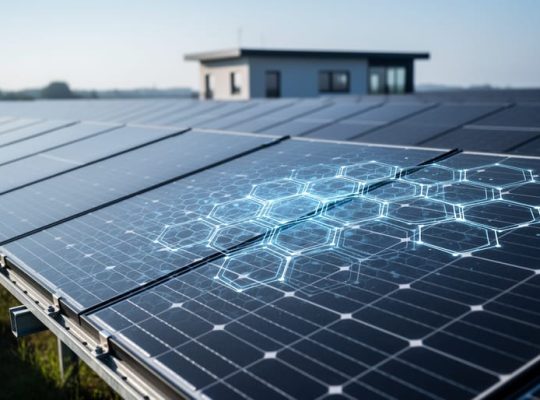
Blockchain technology is revolutionizing the energy industry by transforming how renewable energy is generated, traded, and managed across decentralized networks. This groundbreaking integration enables peer-to-peer energy trading, automated smart contracts, and transparent certification of renewable energy sources, fundamentally reshaping traditional power distribution models.
As distributed ledger technology converges with renewable energy systems, it creates unprecedented opportunities for democratizing energy markets and optimizing resource allocation. Smart contracts automatically execute energy trades between producers and consumers, while immutable records ensure the authenticity of renewable energy certificates. This technological synergy addresses critical challenges in renewable energy adoption, including grid integration, energy trading efficiency, and the validation of clean energy sources.
The marriage of blockchain and renewable energy represents a paradigm shift in how we approach sustainable power generation and distribution. By enabling secure, transparent, and automated energy transactions, this innovation promises to accelerate the global transition to renewable energy sources while empowering both producers and consumers in an increasingly decentralized energy landscape.
The Foundation of Blockchain in Solar Energy
Smart Contracts and Solar Energy Trading
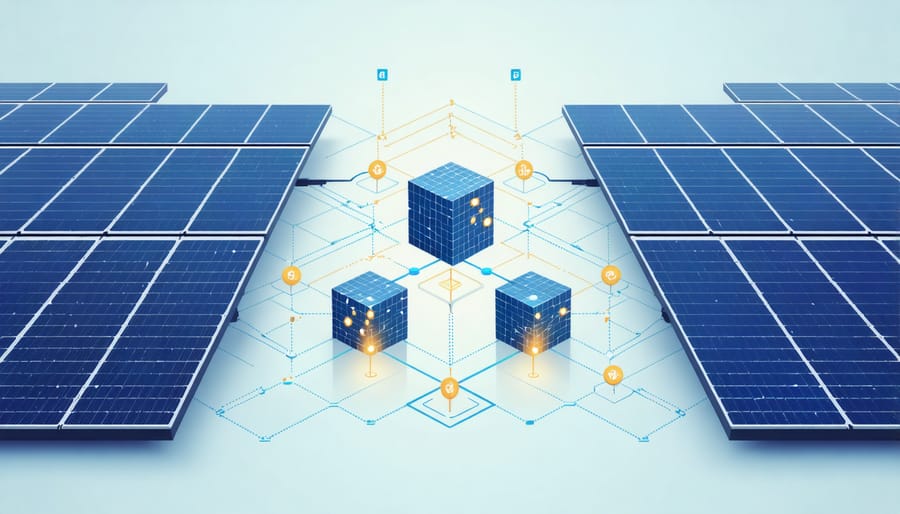
Smart contracts serve as self-executing digital agreements that automate and secure energy transactions within blockchain-based solar trading platforms. These programmable contracts contain predefined rules and conditions that automatically execute when met, eliminating the need for intermediaries and reducing transaction costs.
In solar energy trading, smart contracts facilitate peer-to-peer transactions by automatically matching energy producers with consumers based on preset parameters such as price, availability, and energy requirements. When a solar prosumer generates excess electricity, the smart contract automatically records the surplus on the blockchain and initiates a sale to interested buyers at predetermined rates.
The contracts also handle payment processing, ensuring instant settlement once energy delivery is verified through IoT devices and smart meters. This automation creates a trustless environment where participants can trade solar energy directly, with transparent pricing and verifiable transactions recorded immutably on the blockchain.
Security features within smart contracts include multi-signature requirements, automated compliance checks, and cryptographic verification of energy data, protecting all parties involved in the transaction. This technological framework enables a decentralized energy marketplace where solar producers can maximize their returns while consumers access clean energy at competitive prices.
Decentralized Energy Networks
Blockchain technology is revolutionizing the way solar energy communities operate by enabling peer-to-peer energy trading networks. These decentralized systems allow prosumers (both producers and consumers of energy) to directly trade excess solar power with neighbors, bypassing traditional utility intermediaries. Building upon the basic solar energy transformation process, smart contracts automatically execute trades based on predefined conditions and real-time energy production data.
The network operates through distributed ledger technology, where each energy transaction is recorded transparently and immutably. Smart meters integrated with blockchain platforms measure energy production and consumption, while automated systems match buyers with sellers based on factors such as proximity, price preferences, and available supply. This creates a more efficient marketplace where excess solar energy can be monetized effectively.
These networks particularly benefit residential solar communities by optimizing local energy distribution, reducing transmission losses, and providing financial incentives for solar adoption. The system’s transparency ensures fair pricing, while its automated nature minimizes administrative overhead. Recent pilot projects have demonstrated up to 30% cost savings for participants while increasing grid resilience through localized energy distribution.
Real-World Applications in Solar PV Systems
Peer-to-Peer Energy Trading Platforms
Several successful peer-to-peer energy trading platforms have emerged globally, demonstrating the practical viability of blockchain technology in renewable energy markets. Brooklyn Microgrid, launched in 2016, stands as one of the pioneering implementations, enabling residents to trade locally generated solar energy within their community using smart contracts and blockchain ledgers.
In Australia, Power Ledger has established itself as a leading platform, facilitating energy trading across multiple sites including apartment complexes and retirement villages. Their system allows prosumers to sell excess solar energy directly to neighbors, maximizing the value of their renewable energy investments while reducing grid dependency.
The Netherlands-based Vandebron platform demonstrates how blockchain can create transparent marketplaces where consumers can purchase renewable energy directly from independent producers. Their success has attracted over 200,000 customers, proving the scalability of blockchain-based energy trading solutions.
In Germany, the Enyway platform enables direct energy trading between renewable energy producers and consumers, eliminating traditional utility intermediaries. Their implementation showcases how blockchain technology can reduce transaction costs while ensuring secure and transparent energy trading.
These platforms typically utilize smart meters integrated with blockchain networks to track energy production and consumption in real-time, enabling automated settlements through smart contracts. The success of these implementations has sparked interest from utilities and energy regulators worldwide, leading to broader adoption of blockchain-based energy trading solutions.
Grid Management and Integration
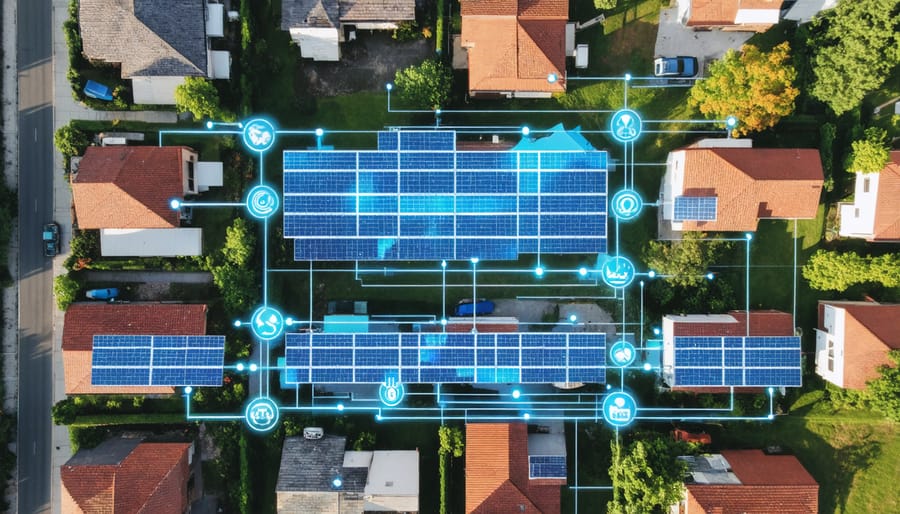
Blockchain technology is revolutionizing grid management in renewable energy systems by enabling more efficient, secure, and decentralized control of power distribution. Through smart contracts and distributed ledger technology, grid operators can now automatically balance supply and demand in real-time, reducing wastage and optimizing energy flow across the network.
The integration of blockchain with smart grids creates a robust framework for peer-to-peer energy trading, allowing prosumers to sell excess energy directly to neighbors or back to the grid. This democratization of energy distribution helps stabilize local grids and reduces transmission losses, particularly important as solar technology advancements continue to increase distributed generation capacity.
Advanced blockchain protocols enable automated grid management through sophisticated demand response systems. These systems can instantly adjust to fluctuations in renewable energy production, maintaining grid stability during periods of variable solar and wind generation. The technology also provides unprecedented transparency in energy transactions, helping utilities and consumers make more informed decisions about energy usage and distribution.
Grid operators benefit from enhanced cybersecurity features inherent in blockchain architecture, protecting critical infrastructure from potential threats while ensuring reliable power delivery. The immutable nature of blockchain records also facilitates better regulatory compliance and streamlined reporting processes for utilities and energy providers.
Benefits and Challenges
Economic and Environmental Impact
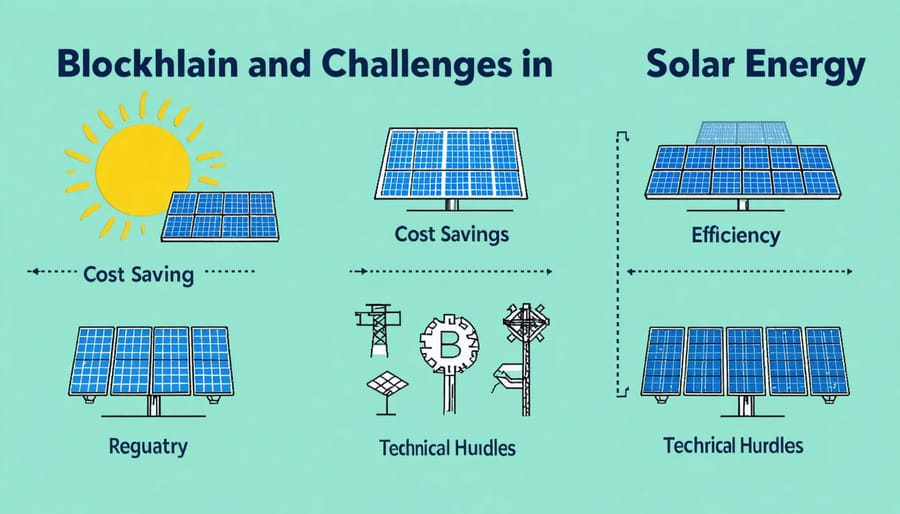
The integration of blockchain technology with renewable energy systems yields substantial economic and environmental benefits. Studies indicate that blockchain-enabled peer-to-peer energy trading can reduce electricity costs by 11-22% for consumers while increasing revenue for renewable energy producers by up to 37%. These cost savings stem from decreased intermediary fees, automated smart contracts, and optimized energy distribution.
From an environmental perspective, blockchain implementation in renewable energy systems contributes to carbon reduction through improved grid efficiency and increased renewable energy adoption. Smart contracts automatically match supply with demand, reducing energy waste and transmission losses by approximately 3-7%. Additionally, blockchain’s transparent tracking capabilities enable accurate measurement and verification of renewable energy certificates, enhancing accountability in carbon offset programs.
The technology’s impact extends to grid stability and energy democratization. Microgrids powered by blockchain have demonstrated a 15% improvement in energy reliability while reducing operational costs by up to 25%. This efficiency translates to decreased fossil fuel dependency and lower greenhouse gas emissions. Furthermore, blockchain-enabled renewable energy systems facilitate community solar projects, making clean energy more accessible to diverse socioeconomic groups.
Economic analyses project that blockchain integration in renewable energy markets could generate global cost savings of $4-6 billion annually by 2025, primarily through reduced transaction costs and improved operational efficiency. These savings can be reinvested in expanding renewable energy infrastructure, creating a positive feedback loop for sustainable development.
Technical and Regulatory Hurdles
The integration of blockchain technology with renewable energy systems faces several significant technical and regulatory challenges. Scalability remains a primary concern, as blockchain networks must process and validate numerous transactions from distributed energy resources in real-time. Current blockchain platforms often struggle with transaction speed and energy consumption, particularly when implementing smart contracts for complex energy trading operations.
Data security and privacy present another crucial hurdle. While blockchain inherently provides robust security features, the protection of sensitive consumer information and proprietary operational data requires additional safeguards. Energy companies must implement sophisticated encryption protocols while maintaining compliance with data protection regulations like GDPR.
Regulatory frameworks worldwide are still adapting to blockchain-based energy systems. Many jurisdictions lack clear guidelines for peer-to-peer energy trading, grid integration, and tokenization of energy assets. This regulatory uncertainty can deter investment and slow adoption rates. Additionally, existing utility regulations may need significant modification to accommodate decentralized energy trading platforms.
Technical standardization poses another challenge. The absence of universal protocols for blockchain implementation in renewable energy systems hampers interoperability between different platforms and grids. Industry stakeholders must collaborate to develop standardized protocols that ensure seamless integration across various blockchain networks and energy infrastructure components.
Infrastructure requirements, including smart meters and IoT devices, demand substantial investment. Organizations must carefully evaluate the cost-benefit ratio while ensuring their systems remain adaptable to evolving technology standards and regulatory requirements.
Future Prospects and Industry Developments
The convergence of blockchain technology and renewable energy is poised for significant growth and innovation in the coming years. Industry experts project that the integration of blockchain in solar energy systems will expand beyond basic energy trading platforms to encompass more sophisticated applications. This evolution is particularly evident in the development of advanced smart contracts that can automatically optimize energy distribution and storage based on real-time demand and supply data.
Emerging trends indicate a shift toward decentralized energy communities, where blockchain facilitates peer-to-peer energy trading with unprecedented transparency and efficiency. These microgrids are expected to become more prevalent, especially in regions with high solar potential and progressive energy policies. The integration of AI-powered solar solutions with blockchain technology is anticipated to enhance predictive maintenance, grid optimization, and energy forecasting capabilities.
Research institutions and industry leaders are actively developing blockchain protocols specifically designed for renewable energy applications. These protocols aim to address current limitations in transaction speed, energy consumption, and scalability. Innovative consensus mechanisms that prioritize energy efficiency while maintaining security and decentralization are under development.
The tokenization of renewable energy assets is expected to democratize investment in solar infrastructure. This approach will enable fractional ownership of solar installations, making renewable energy investment accessible to a broader range of stakeholders. Smart contracts will automate dividend distribution and maintenance payments, reducing administrative overhead and increasing operational efficiency.
Environmental certification and carbon credit trading through blockchain are projected to become more sophisticated and widely adopted. These systems will provide immutable records of renewable energy generation and consumption, supporting global efforts to combat climate change and meet sustainability goals.
Industry developments suggest that regulatory frameworks will evolve to accommodate blockchain-based energy trading systems. Several countries are already piloting regulatory sandboxes to test these innovations while ensuring consumer protection and grid stability. This regulatory evolution is crucial for widespread adoption of blockchain technology in the renewable energy sector.
The integration of Internet of Things (IoT) devices with blockchain networks is expected to create more responsive and efficient energy systems. These smart devices will automatically execute energy trades, adjust consumption patterns, and optimize storage based on predefined parameters and market conditions.
Looking ahead, blockchain technology is positioned to play a crucial role in achieving grid resilience and energy independence. As solar technology continues to advance and storage solutions become more cost-effective, blockchain will serve as the digital infrastructure enabling a truly decentralized, sustainable energy future.
The integration of blockchain technology with solar PV systems represents a transformative shift in how renewable energy is generated, distributed, and managed. Throughout this exploration, we have seen how blockchain’s decentralized architecture creates new opportunities for peer-to-peer energy trading, enhanced grid management, and improved renewable energy certificate tracking. The technology’s ability to provide transparent, immutable records while enabling smart contracts has proven particularly valuable in addressing traditional solar energy market inefficiencies.
The benefits of implementing blockchain in solar PV systems extend beyond operational improvements. The technology enables democratization of energy markets, promotes sustainable practices, and creates new revenue streams for solar prosumers. However, successful implementation requires careful consideration of challenges such as scalability, regulatory compliance, and technical infrastructure requirements.
Looking ahead, the convergence of blockchain and solar PV technology shows tremendous promise for accelerating renewable energy adoption. As the technology matures and regulatory frameworks evolve, we can expect to see more innovative applications emerging. The development of standardized protocols, improved energy storage solutions, and advanced grid management systems will further enhance the value proposition of blockchain in solar energy systems.
For the renewable energy sector to fully capitalize on blockchain’s potential, continued collaboration between technology providers, energy companies, regulatory bodies, and academic institutions remains crucial. This collaborative approach, combined with ongoing technological advancements, will help create a more sustainable, efficient, and accessible solar energy ecosystem for future generations.