Artificial intelligence is revolutionizing the solar energy sector, transforming how machine learning maximizes PV system performance through advanced analytics and predictive maintenance. By harnessing deep learning algorithms and neural networks, AI solutions are dramatically improving solar panel efficiency, reducing operational costs, and accelerating the global transition to renewable energy. From optimizing solar farm layouts through sophisticated modeling to enabling real-time power output forecasting, artificial intelligence has emerged as a cornerstone technology in modern solar energy systems. The integration of AI-driven monitoring systems has demonstrated up to 30% increases in energy yield while significantly reducing maintenance downtime across utility-scale installations. As climate change concerns intensify and renewable energy adoption accelerates, the convergence of artificial intelligence and solar technology represents a critical advancement in achieving sustainable energy independence. This technological synergy not only enhances current solar capabilities but also paves the way for innovative solutions in energy storage, grid integration, and automated maintenance protocols.
How AI Optimizes Solar Panel Design and Manufacturing
Machine Learning in Material Science
Machine learning is revolutionizing material science in photovoltaic technology, enabling researchers to accelerate the discovery and optimization of new solar materials. By analyzing vast databases of molecular structures and their properties, AI algorithms can predict promising candidates for solar panel tech breakthroughs without extensive laboratory testing.
These AI-driven approaches have significantly reduced the time and resources required for developing novel photovoltaic materials. Deep learning models can now simulate the behavior of different material combinations, predict their efficiency, and identify potential improvements in existing solar cell designs. This computational efficiency has led to the discovery of new perovskite compositions and enhanced silicon-based materials with improved light absorption properties.
Materials informatics, powered by machine learning, enables researchers to analyze the relationship between atomic structure and photovoltaic performance. This systematic approach has revealed patterns in material properties that were previously overlooked, leading to innovations in thin-film technology and multi-junction solar cells.
Recent advances include the development of AI models that can predict material stability and degradation patterns, crucial factors in extending solar panel lifespan. These models analyze how different environmental conditions affect material performance, helping engineers design more durable and efficient photovoltaic systems.
The integration of machine learning in material science has also enhanced quality control processes, enabling manufacturers to identify optimal processing conditions and reduce defects in production. This has resulted in higher-quality solar panels with improved conversion efficiencies and reduced manufacturing costs.
Automated Quality Control Systems
Artificial intelligence has revolutionized quality control in solar panel manufacturing by introducing automated inspection systems that significantly enhance production efficiency and reliability. These AI-powered systems utilize advanced computer vision and machine learning algorithms to detect defects and irregularities in solar cells and modules with unprecedented accuracy.
Modern manufacturing facilities employ high-resolution cameras and sensors that capture detailed images of solar panels during various production stages. AI algorithms analyze these images in real-time, identifying micro-cracks, contamination, misaligned components, and other defects that might escape human inspection. This automated approach ensures consistent quality standards while reducing labor costs and minimizing human error.
Deep learning models have proven particularly effective in classifying defect types and predicting potential failure points. These systems can analyze hundreds of panels per hour, creating detailed reports on manufacturing quality and identifying patterns that may indicate underlying production issues. The AI systems continuously learn from new data, improving their accuracy over time and adapting to new defect types or manufacturing variations.
Quality control automation extends beyond visual inspection to include electroluminescence testing and thermal imaging analysis. AI algorithms process these complex datasets to provide comprehensive quality assessments, ensuring that each panel meets performance specifications before leaving the factory. This multi-layered approach to quality control has significantly reduced defect rates in production while increasing overall manufacturing yield.
The implementation of AI-powered quality control systems has led to substantial improvements in product reliability and customer satisfaction. Manufacturers can now offer stronger quality guarantees, backed by detailed digital inspection records for each panel produced. This level of quality assurance has become increasingly important as the solar industry continues to expand and compete with traditional energy sources.
Smart Solar Energy Management Systems
Predictive Maintenance and Performance Optimization
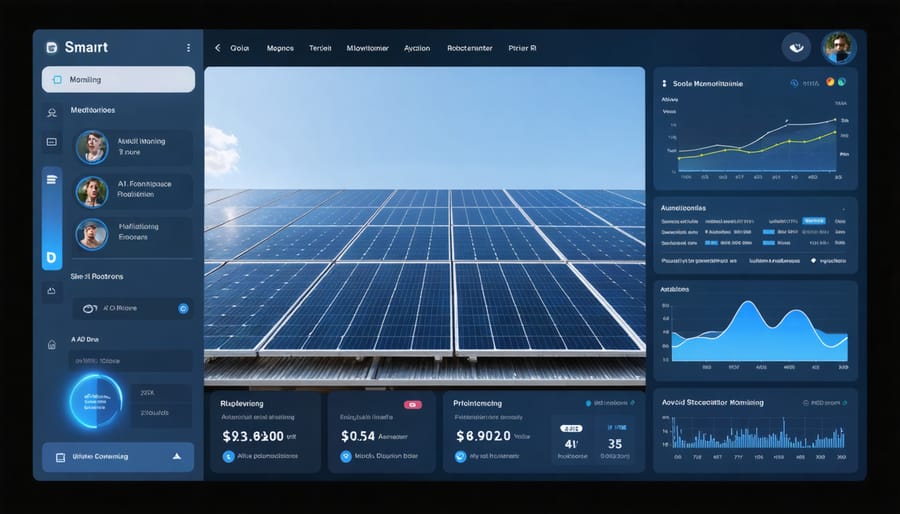
Artificial intelligence has revolutionized maintenance practices and performance optimization in solar energy systems through predictive analytics and machine learning algorithms. By analyzing vast amounts of operational data, AI systems can forecast potential equipment failures, optimize maintenance schedules, and maximize energy generation efficiency.
Advanced AI algorithms continuously monitor key performance indicators such as voltage, current, temperature, and environmental conditions. These systems utilize digital twins for performance monitoring, creating virtual replicas of physical solar installations to simulate and analyze system behavior in real-time.
The predictive maintenance capabilities of AI significantly reduce downtime and maintenance costs. By detecting subtle patterns and anomalies in performance data, AI systems can identify potential issues before they lead to system failures. This proactive approach enables maintenance teams to schedule interventions at optimal times, preventing unexpected breakdowns and extending equipment lifespan.
AI-driven performance optimization encompasses several key areas:
1. Panel cleaning scheduling based on soiling detection and weather forecasts
2. Inverter efficiency optimization through real-time parameter adjustments
3. Storage system management for optimal energy distribution
4. Grid integration optimization for maximum revenue generation
Machine learning algorithms also enhance system reliability by analyzing historical performance data alongside weather patterns, enabling more accurate energy production forecasts. This predictive capability helps operators maintain grid stability and optimize energy trading strategies.
The integration of AI in solar maintenance has demonstrated significant improvements in system efficiency, with some installations reporting up to 20% increases in energy yield through optimized operations. As AI technology continues to evolve, these systems become increasingly sophisticated in their ability to predict, prevent, and optimize solar energy production.
Grid Integration and Energy Storage
Artificial intelligence plays a crucial role in optimizing grid integration and energy storage solutions for solar power systems. As the penetration of solar energy increases, grid operators face complex challenges in maintaining stability and reliability. AI algorithms help address these challenges by providing sophisticated forecasting, real-time monitoring, and automated control capabilities.
Machine learning models analyze vast amounts of data from weather patterns, consumption trends, and grid conditions to predict solar power generation and demand. This predictive capability enables grid operators to better manage energy flow and maintain grid stability. When combined with IoT integration in energy management, AI systems can automatically adjust power distribution and storage parameters in response to changing conditions.
In energy storage applications, AI algorithms optimize charging and discharging cycles of battery systems, extending their operational life while maximizing efficiency. These systems learn from historical data to determine optimal storage capacity utilization and predict maintenance requirements. Advanced neural networks can also coordinate multiple storage systems across the grid, creating virtual power plants that enhance grid resilience.
Grid-edge computing enabled by AI allows for decentralized decision-making, reducing response times and improving system reliability. These edge devices process local data and make autonomous decisions while maintaining communication with central control systems. This distributed intelligence architecture helps prevent grid instability and enables faster response to sudden changes in supply or demand.
AI-driven microgrids are becoming increasingly important for integrating solar power into existing infrastructure. These systems use sophisticated algorithms to balance local generation, storage, and consumption while maintaining grid compatibility. The AI monitors power quality parameters and automatically implements corrective measures when necessary, ensuring seamless integration with the main grid while maximizing the use of solar resources.
AI-Powered Solar Forecasting
Weather Pattern Analysis
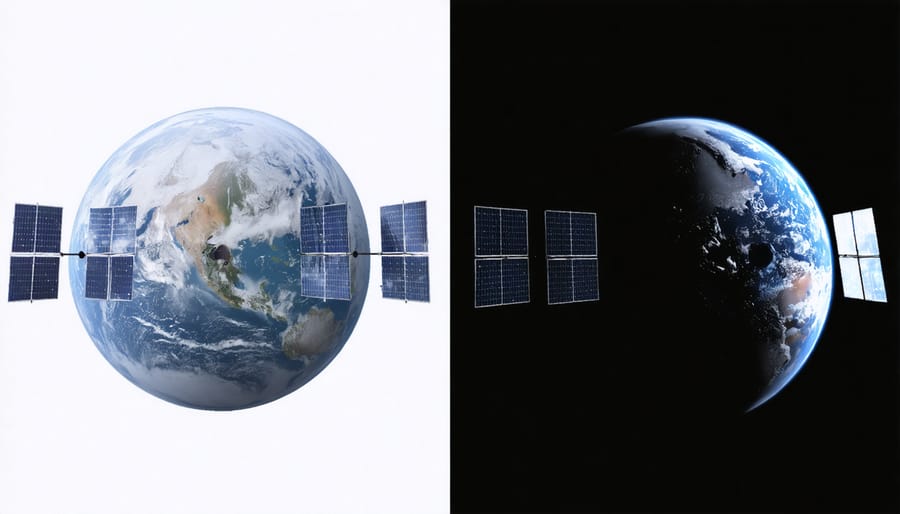
Artificial intelligence has revolutionized weather pattern analysis for solar energy systems, enabling unprecedented accuracy in predicting solar resource availability and optimizing energy collection. Advanced machine learning algorithms process vast amounts of meteorological data, including cloud cover, atmospheric conditions, and historical weather patterns, to generate precise forecasts for solar irradiance.
These AI systems integrate data from multiple sources, including satellite imagery, ground-based weather stations, and atmospheric sensors, to create comprehensive weather models. The neural networks analyze patterns in cloud formation and movement, allowing for minute-by-minute predictions of solar panel performance. This granular forecasting helps solar facility operators maximize energy production by adjusting panel orientation and planning maintenance schedules around optimal weather conditions.
Deep learning models have demonstrated remarkable accuracy in predicting short-term weather fluctuations that affect solar output. These systems can anticipate cloud coverage patterns up to 24 hours in advance with an accuracy rate exceeding 90%. This capability enables grid operators to better manage energy distribution and storage systems, reducing the impact of weather-related variations in solar power generation.
The AI-driven weather analysis also contributes to long-term planning and site selection for new solar installations. By analyzing years of historical weather data, these systems can identify locations with optimal solar resources and predict seasonal variations in energy production. This information proves invaluable for project developers and investors in determining the economic viability of potential solar installations.
Furthermore, machine learning algorithms continuously improve their predictive capabilities through iterative learning, incorporating new weather data and actual solar output measurements to refine their forecasting models. This self-improving aspect ensures increasingly accurate predictions over time, enhancing the overall efficiency of solar energy systems.
Energy Yield Prediction
Accurate prediction of solar energy yield is crucial for optimizing photovoltaic system performance and grid integration. Artificial intelligence has revolutionized this aspect by leveraging advanced machine learning algorithms to analyze multiple variables that influence solar power generation.
AI systems process vast amounts of historical and real-time data, including weather patterns, solar irradiance levels, temperature variations, and equipment performance metrics. These systems can predict energy output with accuracy rates exceeding 95% for short-term forecasts and 85-90% for medium-term projections.
Deep learning models, particularly those utilizing neural networks, have demonstrated exceptional capability in handling the complex, non-linear relationships between environmental factors and energy production. These models continuously learn from new data, improving their predictive accuracy over time and adapting to changing conditions.
The integration of satellite imagery analysis and advanced weather forecasting enables AI systems to anticipate cloud cover patterns and their impact on solar generation. This capability allows facility operators to optimize energy storage systems and maintain grid stability more effectively.
Modern AI-powered prediction systems also account for equipment degradation, dust accumulation, and maintenance schedules, providing comprehensive yield forecasts that consider both environmental and technical factors. This holistic approach enables better planning of maintenance activities and more accurate financial projections.
For utility-scale solar installations, these predictions are invaluable for power trading, grid balancing, and meeting regulatory requirements. The technology has become increasingly accessible to smaller installations as well, with user-friendly interfaces that provide actionable insights for system optimization and performance monitoring.
Future Prospects and Industry Impact
The future of AI in solar energy presents transformative opportunities that could revolutionize the renewable energy landscape. As artificial neural networks in solar energy continue to evolve, experts anticipate significant advancements in system efficiency, cost reduction, and grid integration capabilities.
Machine learning algorithms are expected to achieve unprecedented accuracy in solar forecasting, potentially reaching 99% accuracy within the next five years. This improvement will enable better grid management and storage optimization, addressing one of the primary challenges in solar energy adoption: intermittency.
Advanced AI systems are being developed to enhance predictive maintenance capabilities, utilizing real-time data analysis and pattern recognition to identify potential equipment failures before they occur. This proactive approach could reduce maintenance costs by up to 30% while increasing system reliability by 25%.
Integration of AI with Internet of Things (IoT) devices is expected to create fully autonomous solar farms that self-optimize based on environmental conditions, energy demand, and market prices. These smart facilities will require minimal human intervention while maximizing energy production and distribution efficiency.
Emerging research indicates that AI-driven design optimization could lead to new solar cell configurations that exceed current efficiency limitations. By analyzing millions of potential material combinations and structural arrangements, AI systems may discover breakthrough designs that significantly improve solar panel performance.
The economic impact of these developments is substantial, with industry analysts projecting that AI integration could reduce solar energy costs by an additional 20% by 2025. This cost reduction, combined with improved efficiency, is expected to accelerate solar adoption across both residential and commercial sectors.
Furthermore, AI technologies are poised to revolutionize grid integration strategies. Advanced algorithms will enable better demand response management and virtual power plant operations, facilitating the seamless integration of distributed solar resources into existing power infrastructure.
These technological advances are expected to create new job opportunities in the solar sector, particularly in data science, AI development, and smart grid management. Industry experts predict a 40% increase in specialized technical positions related to AI implementation in solar energy systems over the next decade.
The integration of artificial intelligence in solar energy represents a transformative force that continues to reshape the renewable energy landscape. Through advanced machine learning algorithms, predictive analytics, and automated systems, AI has significantly enhanced solar power generation efficiency, reduced operational costs, and improved maintenance protocols across the industry.
The implementation of AI-driven solutions has demonstrated remarkable success in multiple areas, from optimizing solar panel placement and tracking systems to revolutionizing grid management and energy storage solutions. These innovations have not only increased energy yield but also contributed to the overall reliability and sustainability of solar power systems.
Looking ahead, the confluence of AI and solar technology promises even greater advancements. Emerging trends suggest that AI will play a crucial role in developing more sophisticated forecasting models, enabling smarter grid integration, and creating more efficient energy distribution networks. The continued development of machine learning algorithms and big data analytics will further enhance our ability to harness solar energy effectively.
As research institutions and industry leaders continue to collaborate, we can expect to see new breakthroughs in AI applications for solar energy. These developments will likely focus on improving energy storage solutions, enhancing grid stability, and creating more intelligent energy management systems. The future of solar energy, powered by artificial intelligence, holds immense potential for achieving sustainable energy goals and accelerating the global transition to renewable energy sources.