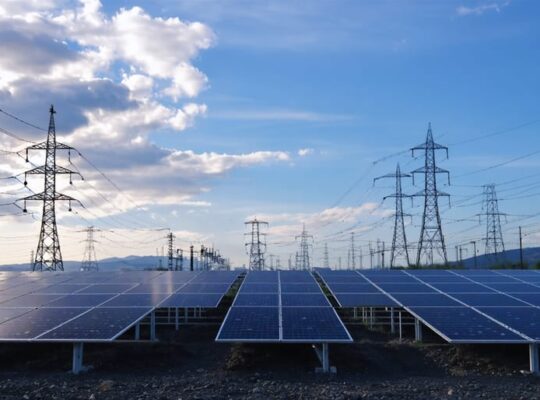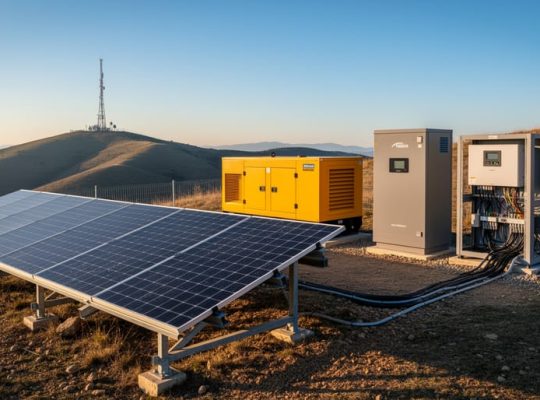
Solar panels’ integration with the electrical grid represents one of modern engineering’s most elegant solutions for sustainable energy distribution. Through sophisticated grid-tied solar systems, photovoltaic arrays transform sunlight into usable electricity that seamlessly flows into our existing power infrastructure. This bidirectional energy exchange not only powers individual properties but also contributes excess generation to the broader electrical network, creating a dynamic ecosystem of renewable energy distribution.
The process fundamentally relies on advanced inverter technology and smart metering systems that synchronize solar-generated power with grid specifications. When solar panels produce more electricity than a property consumes, this surplus energy automatically flows back into the utility grid, effectively running electrical meters backward and creating credit for the system owner. This integration represents a crucial stepping stone toward a more resilient and sustainable energy future, enabling communities to harness clean, renewable power while maintaining reliable electrical service.
Understanding this grid interaction becomes increasingly vital as solar adoption accelerates globally, presenting both opportunities and challenges for utility companies, homeowners, and energy professionals alike.
The Basics of Grid-Connected Solar Systems

Essential Components for Grid Connection
The successful integration of solar panels with the electrical grid requires several crucial components working in harmony. At the core of this system is the inverter, which converts the direct current (DC) produced by solar panels into alternating current (AC) compatible with the grid. Modern grid-tie inverters not only perform this conversion but also incorporate sophisticated monitoring systems to ensure power quality and safety.
A bi-directional meter is essential for measuring both the electricity consumed from the grid and the excess power fed back. These smart meters provide detailed data on energy flow patterns and enable accurate billing under net metering arrangements. The meter must comply with local utility specifications and be certified for bi-directional operation.
Additional required components include a grid disconnect switch, which allows for safe isolation of the solar installation during maintenance or emergencies, and overcurrent protection devices that safeguard the system from electrical faults. Many installations also incorporate power optimizers or microinverters to enhance system efficiency and performance monitoring capabilities.
The interconnection point, where solar power enters the grid, requires specialized equipment including transformers (for larger installations) and grid synchronization devices. These components ensure that the solar-generated power matches the grid’s voltage, frequency, and phase parameters precisely. Modern systems also feature anti-islanding protection, which automatically disconnects the solar installation if grid power fails, preventing hazardous backfeeding situations.
The Role of Grid-Tie Inverters
Grid-tie inverters serve as the crucial interface between solar panels and the electrical grid, performing the essential function of converting direct current (DC) generated by photovoltaic cells into alternating current (AC) suitable for grid distribution. These sophisticated utility interactive inverters must precisely match the grid’s voltage, frequency, and phase parameters to ensure seamless power integration.
Modern grid-tie inverters incorporate advanced power electronics that continuously monitor grid conditions and adjust their output accordingly. They employ Maximum Power Point Tracking (MPPT) technology to optimize energy harvest from the solar array while maintaining strict compliance with utility standards. The inverter’s synchronization capabilities ensure that the converted AC power aligns perfectly with the grid’s 60Hz frequency (in North America) or 50Hz (in many other regions).
These devices also include essential safety features, such as anti-islanding protection, which automatically disconnects the solar system from the grid during power outages to prevent backfeeding and protect utility workers. Additionally, they provide real-time monitoring and data collection capabilities, enabling system owners to track performance and energy production metrics.
The Grid Feed-in Process
Power Flow Management
Power flow management in grid-tied solar systems relies on sophisticated electronics and control systems to regulate bidirectional energy transfer. At the heart of this system are intelligent power meters and inverters that continuously monitor electricity flow between the solar installation and utility grid.
The system employs automated switching mechanisms that respond to real-time conditions. When solar production exceeds household consumption, excess power is automatically directed to the grid. Conversely, during periods of insufficient solar generation, the system seamlessly draws power from the grid to meet demand.
Smart inverter technology plays a crucial role by maintaining proper voltage and frequency synchronization with the grid. These devices incorporate anti-islanding protection, ensuring immediate disconnection during grid outages to prevent backfeeding and protect utility workers.
Modern power flow management systems also feature sophisticated monitoring capabilities that track energy production, consumption, and export patterns. This data helps optimize system performance and enables precise billing for net metering arrangements.
The integration of power flow control systems must comply with strict utility interconnection requirements and relevant IEEE standards. These regulations ensure safe, stable operation and maintain power quality across the distribution network while facilitating the seamless integration of distributed solar generation into the existing grid infrastructure.
Safety and Control Mechanisms
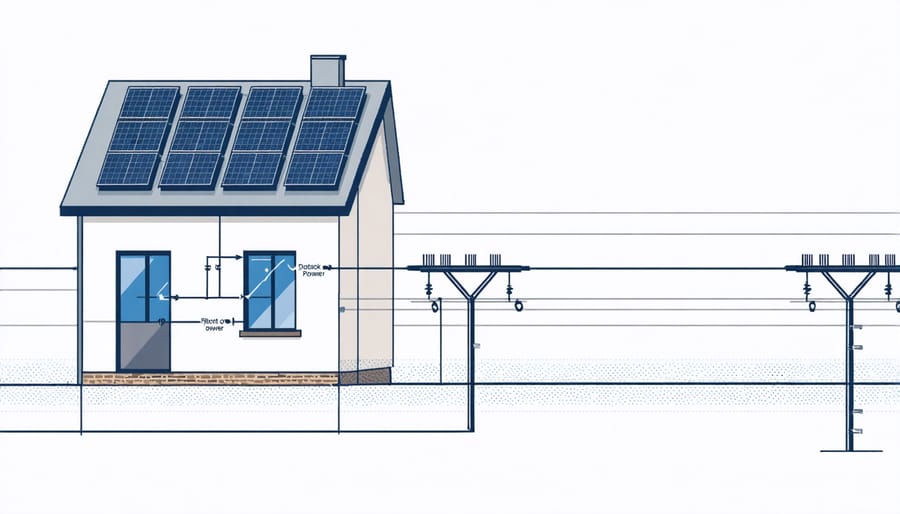
Grid-tied solar systems incorporate multiple layers of safety features and control mechanisms to ensure reliable and secure power feedback. The primary safety component is the anti-islanding protection, which automatically disconnects the solar system when grid power fails, preventing dangerous backfeeding that could harm utility workers during maintenance.
Inverters play a crucial role in safety control, continuously monitoring grid conditions and maintaining strict voltage and frequency synchronization. Modern grid-tied inverters are equipped with sophisticated monitoring systems that can detect anomalies within milliseconds and initiate immediate shutdown protocols when necessary.
Automatic disconnect switches serve as mechanical safeguards, providing both manual and automatic isolation capabilities. These switches are typically installed at the service panel and utility connection point, allowing for quick system disconnection during emergencies or maintenance.
Power quality control systems ensure that the electricity fed back meets utility standards, monitoring parameters such as total harmonic distortion, power factor, and voltage fluctuations. Smart meters with bidirectional capability precisely measure power flow in both directions, enabling accurate tracking of energy exchange between the solar system and grid.
Ground fault protection devices and surge protectors safeguard against electrical faults and lightning strikes. Regular system monitoring and maintenance, coupled with these safety mechanisms, ensure compliance with utility interconnection requirements while maintaining grid stability and protecting both equipment and personnel.
Technical Challenges and Solutions
Voltage Regulation
Voltage regulation plays a crucial role in maintaining grid stability when solar power systems feed electricity back into the network. As solar generation fluctuates throughout the day, sophisticated power electronics work to ensure that the voltage remains within acceptable ranges for safe power transmission and distribution.
Modern grid-tie inverters incorporate advanced voltage regulation features that continuously monitor and adjust output parameters. These systems use Maximum Power Point Tracking (MPPT) algorithms to optimize power output while maintaining voltage stability. When solar production exceeds local demand, the inverters must carefully regulate voltage to prevent grid instability or equipment damage.
Smart inverter technology enables real-time communication with utility systems, allowing for dynamic voltage adjustment based on grid conditions. This helps prevent issues like voltage sag or surge that could compromise grid reliability. Additionally, protective relays and automatic voltage regulators work in conjunction to maintain power quality standards and ensure seamless integration of solar-generated electricity with the existing grid infrastructure.
The voltage regulation process must comply with strict utility interconnection requirements and relevant IEEE standards to ensure safe and reliable grid operation.
Frequency Control
Grid frequency stability is a critical aspect of solar integration into the power network. The standard grid frequency (60 Hz in North America, 50 Hz in many other regions) must be maintained within strict tolerances to ensure reliable power delivery. Solar inverters play a crucial role in this process through sophisticated frequency monitoring and control mechanisms.
Modern grid-tied inverters incorporate advanced frequency response capabilities that automatically adjust power output based on grid conditions. When frequency deviations occur, these smart inverters can either increase or decrease their power contribution to help stabilize the grid. This is achieved through continuous monitoring of grid parameters and real-time adjustment of the inverter’s power electronics.
The challenge of maintaining frequency stability becomes more complex as solar penetration increases. To address this, grid operators implement various control strategies, including primary frequency response (PFR) and frequency droop control. These mechanisms ensure that solar installations respond appropriately to grid frequency variations, contributing to overall system stability rather than exacerbating frequency fluctuations.
Many utilities now require solar installations to have specific frequency ride-through capabilities, allowing systems to remain connected and supportive during minor frequency disturbances, thereby enhancing grid resilience.
Smart Grid Technologies
Smart grid technologies have revolutionized the integration of solar power into existing electrical infrastructure. Advanced metering infrastructure (AMI) enables bi-directional communication between utilities and solar installations, allowing real-time monitoring and management of power flow. These systems utilize sophisticated power electronics and control algorithms to maintain grid stability while accommodating variable solar generation.
Modern smart inverters play a crucial role by providing grid support functions such as voltage regulation, frequency response, and reactive power control. They can automatically adjust their output based on grid conditions and utility requirements, ensuring seamless integration of solar power into the network.
Grid management systems now incorporate predictive analytics and artificial intelligence to forecast solar production and optimize power distribution. Energy storage systems are increasingly being integrated with smart grid infrastructure to provide enhanced grid stability and power quality. These technologies work in concert with advanced distribution automation systems that can detect and respond to changes in power flow patterns.
The implementation of these smart grid solutions has significantly improved the grid’s capacity to accommodate higher penetrations of solar power while maintaining reliability and power quality standards.
Grid Connection Standards and Requirements
Technical Standards
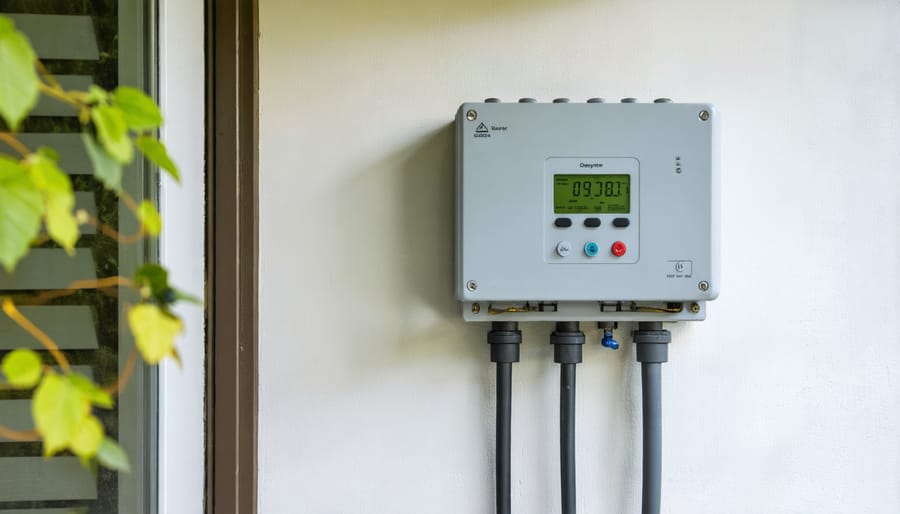
Solar panels feeding power back to the grid must comply with strict technical standards to ensure safety, reliability, and power quality. The IEEE 1547 standard serves as the primary technical framework in North America, establishing requirements for interconnection and interoperability between distributed energy resources and electric power systems.
Key specifications include voltage regulation requirements, which typically must remain within ±5% of nominal grid voltage. Frequency synchronization must maintain tight tolerances, usually within ±0.5 Hz of the grid frequency (60 Hz in North America, 50 Hz in many other regions). The power factor should remain between 0.85 leading and 0.85 lagging to maintain grid stability.
Grid-tied inverters must meet UL 1741 certification requirements, incorporating anti-islanding protection that automatically disconnects solar systems during power outages. Total harmonic distortion (THD) must remain below 5% to prevent power quality issues. Modern smart inverters must also comply with California Rule 21 or similar regional requirements, enabling advanced grid support functions like voltage ride-through and reactive power control.
System grounding must conform to National Electrical Code (NEC) Article 690, while surge protection devices (SPDs) should meet IEC 61643 standards. Monitoring and communication systems typically utilize either Modbus or SunSpec protocols to ensure compatibility with utility SCADA systems and enable remote management capabilities.
Regulatory Framework
The interconnection of solar power systems with the electrical grid is governed by a comprehensive framework of regulations and standards designed to ensure safety, reliability, and power quality. In the United States, the Federal Energy Regulatory Commission (FERC) establishes overarching guidelines, while state public utility commissions implement specific requirements for grid interconnection.
Key regulations include IEEE 1547, which sets technical specifications for interconnecting distributed generation resources with electric power systems. This standard addresses critical aspects such as voltage regulation, power quality, and protective functions that must be incorporated into grid-tied solar installations.
Net metering policies, which vary by state and utility, regulate how excess solar power is credited to system owners. These policies typically require utilities to purchase excess generation at retail or wholesale rates, though compensation structures continue to evolve as solar adoption increases.
Interconnection agreements between solar system owners and utilities outline technical requirements, operational procedures, and maintenance responsibilities. These agreements typically specify equipment standards, including the use of certified inverters that meet UL 1741 requirements for grid safety and power quality control.
Permission to operate (PTO) must be obtained from the local utility before a solar system can begin feeding power back to the grid. This process involves system inspection, testing, and verification of compliance with all applicable codes and standards.
The integration of solar panels into the electrical grid represents a significant advancement in renewable energy adoption, offering both opportunities and challenges for the future of sustainable power generation. As we’ve explored throughout this article, the process involves complex technical systems, from inverters and bi-directional meters to sophisticated grid management protocols, all working in harmony to enable efficient power feedback.
The successful implementation of solar grid integration depends heavily on continued technological innovation, particularly in energy storage solutions and smart grid technologies. These advancements will be crucial in addressing current challenges such as intermittency and grid stability. The development of more efficient inverters, enhanced energy management systems, and improved storage capabilities will further optimize the solar-to-grid feedback process.
Looking ahead, the increasing adoption of distributed energy resources and the evolution of regulatory frameworks will likely reshape how solar energy interacts with the grid. The trend toward virtual power plants and community solar projects suggests a future where grid integration becomes more sophisticated and democratized. Additionally, the emergence of artificial intelligence and machine learning applications in grid management promises to enhance the efficiency and reliability of solar feedback systems.
For industry professionals and stakeholders, staying informed about these developments while maintaining compliance with evolving standards will be essential. The continued collaboration between utilities, solar providers, and regulatory bodies will play a vital role in expanding and improving solar grid integration capabilities, ultimately contributing to a more sustainable and resilient energy infrastructure.