As the solar energy industry rapidly evolves, the development of non-toxic solar panels represents a crucial breakthrough in sustainable technology. Traditional photovoltaic cells, while effective at generating clean energy, often contain hazardous materials like lead, cadmium, and toxic semiconductor compounds that pose significant environmental and health risks throughout their lifecycle. Recent innovations in materials science have unveiled promising alternatives, including organic photovoltaics, perovskite cells with lead-free compositions, and bio-based semiconductors that maintain high efficiency while eliminating toxic components.
These next-generation solar technologies not only address environmental concerns but also offer enhanced recyclability and reduced manufacturing impacts. Research indicates that non-toxic alternatives can achieve comparable efficiency rates to conventional panels while significantly decreasing the carbon footprint and end-of-life disposal challenges. Industry leaders and research institutions are actively scaling up production of these sustainable alternatives, marking a transformative shift toward truly clean solar energy solutions.
As global renewable energy adoption accelerates, the transition to non-toxic solar panels represents more than an environmental imperative—it’s a strategic necessity for ensuring the long-term sustainability and social acceptance of solar technology. This evolution in photovoltaic design demonstrates how innovation can align environmental responsibility with technological advancement.
The Environmental Impact of Traditional Solar Panels
Toxic Materials in Conventional Solar Panels
Traditional solar panels, while contributing to clean energy production, contain several potentially hazardous materials that raise concerns about their environmental impact of solar manufacturing. The most significant toxic components include cadmium telluride (CdTe) in thin-film panels and lead in silicon-based panels’ solder connections. Crystalline silicon cells typically contain small amounts of toxic chemicals such as hydrofluoric acid and silver, while the aluminum frames are treated with potent industrial chemicals during manufacturing.
The production process also utilizes various harmful substances, including arsenic compounds, copper-indium-gallium-selenide (CIGS), and toxic solvents for cleaning and preparation. These materials pose potential risks during manufacturing, installation, and end-of-life disposal. Of particular concern is the presence of heavy metals, which can leach into soil and groundwater if panels are improperly disposed of or damaged.
Additionally, the protective backsheets of conventional panels often contain fluorinated compounds and plasticizers that can degrade over time, potentially releasing harmful substances into the environment. Understanding these toxicity concerns has driven the development of safer alternatives in modern solar technology.

End-of-Life Disposal Challenges
Despite advances in non-toxic solar panel materials, end-of-life disposal remains a significant challenge for the photovoltaic industry. Current estimates indicate that by 2050, solar panel waste could reach 78 million metric tons globally. Traditional recycling infrastructure is often inadequate for handling the complex composition of solar panels, even those manufactured with less toxic materials.
The primary disposal challenges stem from the layered construction of solar panels, which makes material separation labor-intensive and costly. While non-toxic panels reduce environmental risks during disposal, they still require specialized recycling processes to recover valuable materials effectively. Many recycling facilities lack the technical capabilities to process these components, resulting in panels being stockpiled or improperly disposed of in landfills.
Environmental implications include potential soil contamination from improper disposal and the loss of recoverable materials that could be repurposed for new panel production. The industry must develop more efficient recycling technologies and establish comprehensive take-back programs to address these challenges. Several countries have implemented extended producer responsibility policies, requiring manufacturers to manage their products’ entire lifecycle, including disposal, but global adoption remains inconsistent.
Non-Toxic Alternatives in Solar PV Technology
Emerging Non-Toxic Materials
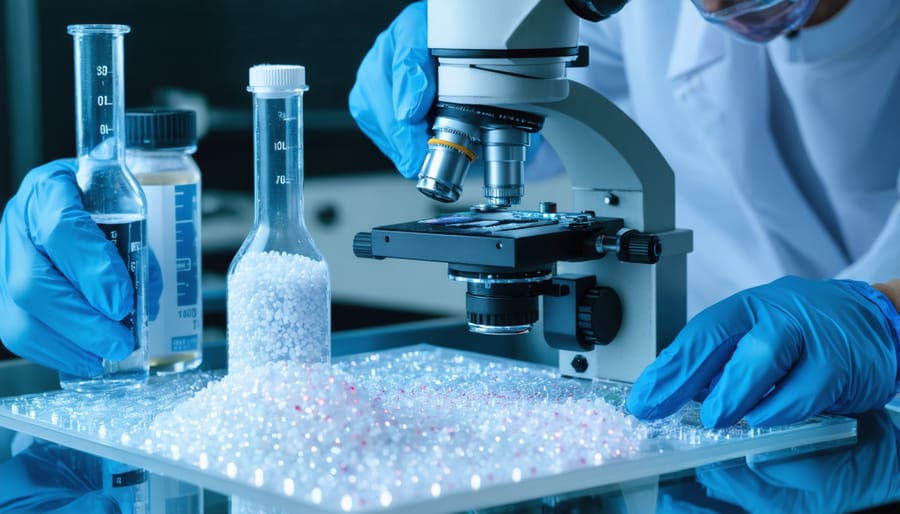
Recent developments in innovative sustainable materials are transforming the solar panel industry. Researchers are exploring several promising alternatives to traditional toxic components, with particular focus on lead-free perovskites and bismuth-based compounds. These emerging materials demonstrate comparable efficiency while significantly reducing environmental impact.
Tin-based perovskites have emerged as a leading candidate to replace lead-based materials, showing encouraging results in laboratory testing with conversion efficiencies exceeding 12%. Similarly, copper-zinc-tin-sulfide (CZTS) compounds are proving viable alternatives to toxic cadmium-containing layers, offering enhanced sustainability without compromising performance.
Organic photovoltaic materials, derived from carbon-based compounds, represent another breakthrough in non-toxic solar technology. These materials can be synthesized from abundant natural resources and demonstrate excellent biodegradability characteristics. Recent advances in polymer science have yielded organic semiconductors with improved stability and efficiency.
Transparent conducting oxides (TCOs) made from earth-abundant elements are being developed to replace indium tin oxide, addressing both toxicity and resource scarcity concerns. Additionally, carbon-based electrodes are showing promise as alternatives to silver and other precious metals, potentially reducing both environmental impact and production costs.
These developments are supported by rigorous testing protocols and environmental impact assessments, ensuring that new materials meet both performance requirements and sustainability goals.
Sustainable Manufacturing Processes
The evolution of solar panel manufacturing has made significant strides toward environmental sustainability through innovative production techniques and resource management. Modern facilities increasingly implement closed-loop manufacturing processes that minimize waste and maximize resource efficiency. These systems recover and reuse materials throughout the production cycle, significantly reducing environmental impact and manufacturing costs.
Key sustainable practices include water recycling systems that purify and reuse process water, reducing consumption by up to 90% compared to traditional methods. Advanced emission control technologies capture and filter airborne particles and volatile organic compounds (VOCs), ensuring cleaner air quality both inside and outside manufacturing facilities.
Energy-efficient production lines utilize renewable power sources, often generated by on-site solar installations, creating a self-sustaining manufacturing ecosystem. Automated quality control systems optimize material usage and reduce waste through precise measurements and real-time adjustments.
Material innovations have enabled the replacement of toxic substances with environmentally friendly alternatives. For instance, lead-free soldering techniques and non-toxic encapsulation materials maintain performance while reducing environmental hazards. These sustainable manufacturing methods not only benefit the environment but also enhance product quality and durability, contributing to longer panel lifespans and improved return on investment for end users.
Performance Comparison
Recent studies comparing non-toxic solar panels with traditional alternatives demonstrate promising results in both efficiency and longevity. Modern non-toxic alternatives utilizing bismuth-based materials achieve conversion efficiencies of 9-11%, approaching the performance of conventional CdTe cells at 12-14%. While slightly lower in initial efficiency, these sustainable options show remarkable stability over time, with degradation rates of less than 1% annually.
Durability testing reveals that non-toxic panels maintain 90% of their original performance after 20 years of simulated exposure, comparable to traditional panels. Silicon-based non-toxic alternatives demonstrate particular resilience to temperature fluctuations and weather conditions, with operating temperature coefficients ranging from -0.35% to -0.40% per degree Celsius.
Copper-zinc-tin-sulfide (CZTS) solar cells, a prominent non-toxic alternative, have achieved laboratory efficiencies of up to 12.6%, with commercial implementations reaching 9-10%. These panels exhibit excellent thermal stability and resistance to environmental stressors, though manufacturing consistency remains a challenge.
Performance metrics also indicate that non-toxic panels perform exceptionally well in diffuse light conditions, making them particularly suitable for regions with variable weather patterns. Cost-performance analysis suggests that while initial manufacturing expenses may be higher, the reduced environmental impact and simplified end-of-life handling offset these costs, resulting in comparable lifetime value propositions to conventional technologies.

Recyclability and Circular Economy
Design for Recyclability
Design for recyclability is a crucial aspect of non-toxic solar panel development, incorporating modular construction and easily separable components to facilitate end-of-life processing. Modern non-toxic panels utilize specialized adhesives that can be thermally or chemically dismantled without producing hazardous byproducts. This design approach enables the efficient recovery of valuable materials while minimizing environmental impact.
Key design elements include frameless configurations that eliminate the need for aluminum frames, reducing material complexity and separation steps. Advanced encapsulation methods employ bio-based or thermoplastic materials that can be dissolved or melted for component recovery, replacing traditional cross-linked EVA that poses recycling challenges.
The semiconductor layers in non-toxic panels are engineered with mechanical separation points, allowing for clean material recovery without chemical processing. This design feature is particularly important for thin-film technologies, where precise layer separation ensures maximum material reclamation.
Manufacturers are implementing standardized marking systems and RFID tags to identify panel compositions and recommended recycling procedures. This traceability enhances recycling efficiency and ensures proper handling of different material streams. Additionally, innovative junction box designs feature snap-fit connections rather than permanent adhesives, simplifying the separation of electrical components.
Quality control measures during manufacturing focus on material purity and contamination prevention, ensuring that recovered materials maintain high value in secondary markets. The implementation of these design principles not only facilitates recycling but also reduces processing costs and improves the economic viability of solar panel recycling operations, contributing to a more sustainable photovoltaic industry.
Economic Benefits of Recyclable Solar Panels
The recyclability of non-toxic solar panels presents significant economic advantages for both manufacturers and consumers. Initial studies indicate that recovering materials from recyclable panels can reduce production costs by up to 30% compared to using virgin materials. This cost reduction stems from the decreased need for raw material extraction and processing, particularly for valuable components like silver and silicon.
Market analysis shows that manufacturers implementing recyclable panel designs can access growing sustainable product markets, with premium pricing potential among environmentally conscious consumers. The European Solar Manufacturing Council estimates that the market for recyclable solar panels could reach $12 billion by 2030, representing a substantial opportunity for industry growth.
From an operational perspective, manufacturers adopting recyclable designs often benefit from streamlined production processes and reduced waste management costs. The implementation of circular economy principles in panel manufacturing has demonstrated average operational cost savings of 15-20% across the production lifecycle.
End-users also experience economic benefits through extended product lifecycles and future value recovery. When panels reach their end-of-life stage, recyclable components can be sold to recycling facilities, offering a potential return on investment that traditional panels cannot match. Additionally, some regions offer tax incentives and subsidies for installing recyclable solar panels, further enhancing their economic appeal.
Insurance companies and financial institutions are beginning to offer preferential rates for recyclable solar installations, recognizing their reduced environmental liability and higher end-of-life value. This trend contributes to lower overall system costs and improved project financing terms for developers and installers.
Future Outlook and Industry Adoption
The adoption of non-toxic solar panels is gaining momentum as environmental regulations become more stringent and sustainability consciousness grows across the industry. Market analysis indicates a projected compound annual growth rate of 25% for eco-friendly photovoltaic technologies through 2030, driven by both consumer demand and corporate sustainability initiatives.
Several major manufacturers have already committed to transitioning their production lines to incorporate non-toxic materials, particularly in response to the European Union’s increasingly strict environmental policies. This shift is expected to catalyze broader industry adoption, though challenges remain in scaling production while maintaining cost competitiveness with traditional panels.
Investment in research and development of future solar technologies continues to accelerate, with particular focus on alternatives to lead-based solder, toxic semiconductor materials, and harmful encapsulants. Collaborative efforts between industry leaders and research institutions are yielding promising results in developing commercially viable solutions.
Implementation challenges primarily center around manufacturing infrastructure adaptation, supply chain reorganization, and initial cost considerations. However, decreasing material costs and improving production efficiencies are gradually narrowing the price gap between conventional and non-toxic alternatives.
Industry experts anticipate that by 2025, non-toxic solar panels will represent approximately 30% of new installations in developed markets. This transition is expected to be particularly pronounced in regions with robust environmental regulations and strong governmental support for sustainable technologies.
The standardization of testing protocols and certification processes for non-toxic solar components is currently underway, which will facilitate wider market acceptance and regulatory compliance. These developments, combined with increasing consumer awareness and corporate sustainability goals, suggest a promising outlook for the widespread adoption of non-toxic solar technology in the coming decade.
Non-toxic solar panels represent a crucial advancement in photovoltaic technology, addressing both environmental concerns and sustainability goals in renewable energy production. By eliminating hazardous materials and incorporating eco-friendly alternatives, these innovative solutions pave the way for truly sustainable solar energy systems. The transition to non-toxic materials not only enhances environmental protection but also improves end-of-life management and recycling capabilities. As the solar industry continues to evolve, the development and implementation of non-toxic solar panels will play an increasingly vital role in achieving global renewable energy targets while minimizing ecological impact. The commitment to non-toxic alternatives demonstrates that technological progress and environmental stewardship can work hand in hand, creating a more sustainable and responsible energy future for generations to come.