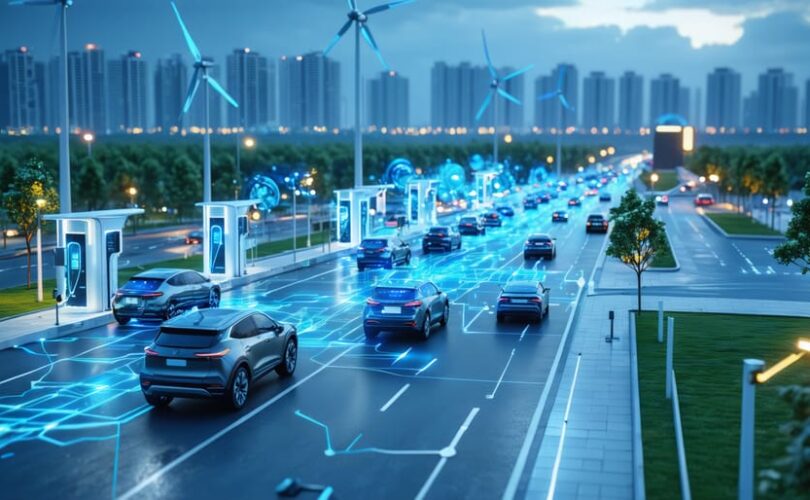
Vehicle grid integration (VGI) represents a transformative approach to power system management, where electric vehicles serve as dynamic grid assets rather than mere power consumers. As the global EV fleet expands exponentially, the ability to harness millions of mobile battery systems offers unprecedented opportunities for grid stabilization, renewable energy integration, and demand response optimization.
This bidirectional relationship between EVs and the power grid enables sophisticated load management strategies while creating new value streams for vehicle owners and utilities alike. Through smart charging protocols and vehicle-to-grid (V2G) technology, EVs can help balance grid fluctuations, store excess renewable energy during peak production periods, and provide emergency backup power during outages.
The convergence of VGI with renewable energy sources, particularly solar photovoltaics, marks a critical milestone in the transition toward a more resilient and sustainable energy infrastructure. As utilities and grid operators modernize their networks, VGI technologies are becoming essential tools for managing the intermittency of renewable generation while maintaining grid reliability and power quality.
Understanding the technical requirements, market mechanisms, and policy frameworks governing VGI implementation is crucial for stakeholders across the energy sector as we move toward a more distributed and democratized power system.
The Foundation of Vehicle Grid Integration
Bidirectional Charging Technology
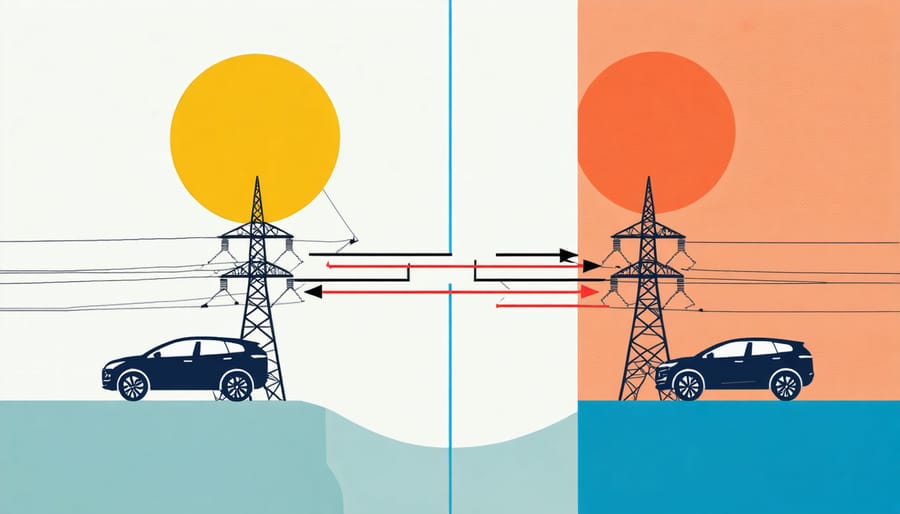
Bidirectional charging technology enables electric vehicles (EVs) to both receive power from and supply power back to the electrical grid. Vehicle-to-Grid (V2G) functionality allows EVs to discharge stored energy back to the grid during peak demand periods or emergencies, effectively turning vehicle batteries into distributed energy resources. This capability helps balance grid loads and provides valuable grid services such as frequency regulation and voltage support.
Grid-to-Vehicle (G2V) represents the conventional charging process where EVs draw power from the grid to replenish their batteries. Modern bidirectional charging systems intelligently manage both V2G and G2V operations, optimizing charging schedules based on grid conditions, electricity prices, and user preferences. This sophisticated power flow management requires specialized hardware, including bidirectional chargers and inverters, along with advanced communication protocols between vehicles and grid operators.
The implementation of bidirectional charging technology creates new revenue opportunities for EV owners through participation in demand response programs while simultaneously enhancing grid resilience and stability. As this technology becomes more widespread, it will play an increasingly important role in supporting renewable energy integration and grid modernization efforts.
Smart Charging Infrastructure
Smart charging infrastructure combines sophisticated hardware components and advanced software systems to enable seamless vehicle-grid integration. The hardware foundation includes bidirectional chargers, smart meters, and communication modules that facilitate power flow between electric vehicles and the grid. These components are equipped with real-time monitoring capabilities and protective mechanisms to ensure safe and efficient charging operations.
The software layer comprises intelligent energy management systems, grid communication protocols, and user interfaces. These systems process real-time data from both vehicles and the grid to optimize charging schedules, respond to grid signals, and manage power quality. Advanced algorithms calculate optimal charging patterns based on factors such as electricity prices, grid demand, and user preferences.
Communication standards like OpenADR and OCPP (Open Charge Point Protocol) enable interoperability between different charging systems and grid operators. Security features, including encryption and authentication protocols, protect against cyber threats and unauthorized access. The infrastructure also incorporates load management capabilities to prevent grid overload and maintain stable operation during peak demand periods.
This integrated hardware-software ecosystem forms the backbone of successful vehicle-grid integration programs, enabling utilities to effectively manage distributed energy resources while providing reliable service to EV owners.
Integration with Renewable Energy Systems
Solar PV Integration
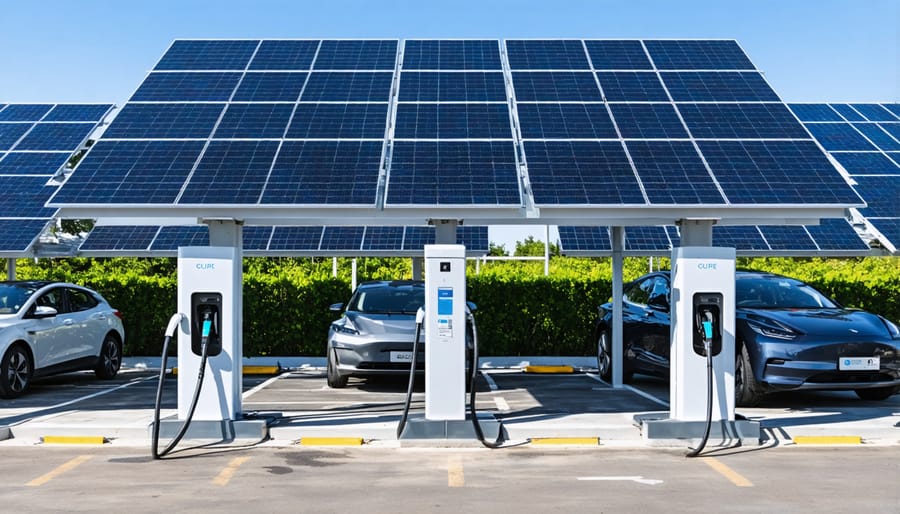
The integration of solar photovoltaic (PV) systems with electric vehicles presents a compelling opportunity for enhanced grid resilience and renewable energy optimization. EVs can serve as mobile energy storage units, effectively managing the intermittent nature of solar power generation while providing grid support services. This synergy is particularly valuable in community solar programs, where shared solar resources can be maximized through strategic EV charging and discharging cycles.
Smart charging infrastructure enables EVs to store excess solar energy during peak production hours and release it during high-demand periods or when solar generation is low. This bidirectional power flow capability, known as Vehicle-to-Grid (V2G), enhances grid stability while maximizing the utilization of solar-generated electricity. Advanced power electronics and control systems ensure seamless integration between solar PV systems, EVs, and the grid infrastructure.
The implementation of solar PV integration with EVs requires sophisticated energy management systems that can forecast both solar generation and vehicle charging demands. These systems optimize charging schedules based on factors such as solar irradiance predictions, electricity prices, and grid load conditions. Through intelligent coordination of solar PV output and EV charging patterns, grid operators can better manage network constraints while reducing the need for conventional peak generation capacity.
Grid Stability Enhancement
Electric vehicles (EVs) serve as dynamic assets in maintaining grid stability, particularly as power systems incorporate increasing amounts of variable renewable energy sources. Through intelligent charging and discharging protocols, EV fleets can effectively smooth out supply fluctuations and respond to grid demands in real-time.
The bidirectional power flow capability of modern EVs enables them to function as distributed energy storage systems. During periods of excess renewable generation, EVs can absorb surplus power through strategic charging. Conversely, when grid demand peaks or renewable generation drops, these vehicles can feed stored energy back into the grid through vehicle-to-grid (V2G) technology.
Grid operators can leverage aggregated EV batteries to provide essential grid services, including frequency regulation, voltage support, and demand response. By coordinating charging patterns across thousands of vehicles, utilities can create virtual power plants that enhance grid resilience and optimize power distribution.
Smart charging algorithms prioritize grid stability while ensuring vehicle availability for transportation needs. These systems consider factors such as time-of-use electricity rates, renewable energy availability, and grid congestion to determine optimal charging schedules. Advanced forecasting methods help predict both vehicle availability and grid requirements, enabling proactive grid management.
The integration of EVs into grid stabilization efforts requires sophisticated communication infrastructure and standardized protocols. This ensures seamless interaction between vehicles, charging stations, and grid operators while maintaining system reliability and security.
Policy Framework and Implementation
Regulatory Requirements
Vehicle grid integration must comply with various regulatory standards to ensure safety, interoperability, and grid stability. Key standards include IEEE 1547, which governs distributed energy resource connections, and SAE J3072 for interconnection requirements of plug-in electric vehicles. These standards work alongside protocols like ISO 15118 for communication between vehicles and charging infrastructure.
Utilities and service providers must also adhere to regional requirements for grid services, power quality, and solar energy integration. Common compliance measures include smart meter certification, bidirectional charging equipment validation, and cybersecurity protocols outlined by NERC CIP standards.
Grid operators typically require V2G-enabled vehicles and charging stations to meet specific performance criteria for frequency regulation, voltage support, and demand response capabilities. These requirements ensure that electric vehicles can effectively participate in grid services while maintaining power system reliability and stability. Compliance documentation, regular testing, and certification from recognized bodies are mandatory for equipment manufacturers and service providers.
Incentive Programs
Various governments and utilities offer robust clean energy incentives to accelerate VGI adoption. These programs typically include direct rebates for smart charging equipment, reduced electricity rates for participating in managed charging programs, and performance-based incentives for providing grid services. California’s Electric Vehicle Supply Equipment (EVSE) rebate program offers up to $4,000 for installing smart chargers, while utilities like PG&E provide time-of-use rates specifically designed for EV owners who participate in grid-supporting charging programs.
Federal initiatives such as the Investment Tax Credit (ITC) can now be applied to bi-directional charging equipment when installed alongside solar PV systems. Additionally, several states have implemented demand response programs that compensate EV owners for adjusting their charging patterns during peak demand periods. Utility-managed programs often combine monetary incentives with user-friendly mobile apps that automate the charging process while optimizing for grid conditions and electricity prices.
These incentive structures are continuously evolving to reflect technological advances and grid needs, making VGI increasingly attractive for both residential and commercial applications.
Future Prospects and Challenges
Technological Advancement
Recent technological advancements in vehicle grid integration have significantly enhanced the potential for bidirectional power flow between electric vehicles and the grid. Smart charging systems now incorporate sophisticated algorithms that optimize charging schedules based on grid demand, electricity prices, and renewable energy availability. These systems utilize real-time communication protocols to enable seamless interaction between vehicles, charging stations, and grid operators.
Advanced power electronics, including bidirectional inverters and smart meters with enhanced communication capabilities, facilitate precise control over charging and discharging processes. Modern VGI systems employ artificial intelligence and machine learning to predict charging patterns, analyze grid conditions, and optimize energy distribution across the network.
Vehicle-to-grid (V2G) technology has evolved to include enhanced battery management systems that protect battery life while maximizing grid services. New power conversion systems achieve higher efficiency rates, reducing energy losses during bidirectional power transfers. Smart charging protocols now support various international standards, ensuring interoperability across different vehicle models and charging infrastructure.
Integration platforms have become more sophisticated, incorporating cloud computing and edge processing capabilities to manage large fleets of electric vehicles. These platforms provide real-time monitoring, automated demand response, and advanced analytics for grid operators. Emerging wireless charging technologies are also being developed to simplify the connection between vehicles and the grid, potentially enabling dynamic charging during vehicle operation.
Market Development
The vehicle grid integration (VGI) market is projected to experience substantial growth, with analysts forecasting a compound annual growth rate of 28.4% from 2023 to 2030. This expansion is primarily driven by increasing electric vehicle adoption, evolving smart grid technologies, and growing renewable energy integration requirements.
Key market opportunities are emerging in bidirectional charging infrastructure, with utility companies investing heavily in V2G (Vehicle-to-Grid) capabilities. The market value is expected to reach $17.5 billion by 2027, presenting significant opportunities for technology providers, utilities, and automotive manufacturers.
Business models are evolving around aggregator services, which bundle multiple EVs to provide grid services at scale. These services include demand response, frequency regulation, and voltage support, creating new revenue streams for fleet operators and individual EV owners.
Major automotive manufacturers are forming strategic partnerships with utilities and technology providers to develop VGI-ready vehicles and charging systems. This collaboration is essential for standardizing protocols and ensuring interoperability across different platforms and regions.
Emerging opportunities include specialized software platforms for managing vehicle-grid interactions, smart charging hardware development, and grid integration consulting services. The market is particularly robust in regions with high renewable energy penetration, where EVs can help balance grid fluctuations and optimize energy distribution.
Investment in VGI infrastructure continues to grow, supported by government initiatives and utility modernization programs that recognize the critical role of electric vehicles in future grid operations.
Vehicle Grid Integration represents a critical cornerstone in the ongoing transformation of our electrical infrastructure and the transition to renewable energy. As power grids become increasingly complex and dynamic, the strategic integration of electric vehicles serves as both a solution to grid stability challenges and an enabler for higher renewable energy penetration. The bidirectional power flow capabilities of modern EVs, combined with smart charging technologies, create a flexible and distributed energy resource that can respond to grid demands in real-time.
The significance of VGI extends beyond simple grid support, playing a vital role in achieving sustainability goals and enabling the widespread adoption of intermittent renewable energy sources. By providing essential grid services such as frequency regulation, voltage support, and demand response, VGI helps maintain grid reliability while accommodating higher percentages of solar and wind power generation.
Looking ahead, the continued development of VGI technologies and standards will be essential for realizing the full potential of a modernized, renewable-powered grid. The success of this integration depends on ongoing collaboration between utilities, automakers, policymakers, and consumers. As electric vehicle adoption accelerates and renewable energy deployment expands, VGI will become increasingly important in ensuring grid resilience, reducing carbon emissions, and creating a more sustainable energy future. The technology’s ability to balance grid loads, store excess renewable energy, and provide emergency power support positions it as a fundamental component of tomorrow’s clean energy ecosystem.