Showing 4 Result(s)
Architect in a hard hat reviewing a semi-transparent photovoltaic glass facade on a modern office building at golden hour, with a blurred city skyline and crane in the background

Why BIPV Standards Matter More Than You Think (And What They Mean for Your Project)

Building-Integrated Photovoltaics (BIPV) represents a fundamental shift in how solar technology merges with architectural design. Unlike traditional rooftop panels that sit atop existing structures, BIPV systems function as integral building components—replacing conventional materials like windows, facades, roofing tiles, or shading devices while simultaneously generating electricity. This dual functionality transforms buildings from energy consumers into power producers without compromising aesthetic appeal or structural integrity.
Understanding BIPV extends beyond simple definition. For professionals entering the photovoltaic …

"Technician wearing safety glasses examines a crystalline silicon solar panel secured in a mechanical load test rig with sensors in a modern certification laboratory, with environmental chamber and instruments softly blurred in the background."

Why Your PV Modules Need These Certifications (Before They Touch a Roof)

The global photovoltaic industry operates on a foundation of rigorous testing protocols and internationally recognized certification standards that determine whether solar modules can safely enter commercial markets. Every solar panel installed on rooftops, ground-mount systems, or utility-scale facilities has undergone extensive evaluation to verify electrical performance, mechanical durability, and long-term reliability under real-world environmental stresses.
PV certifications represent far more than bureaucratic checkboxes. They function as universal quality language that enables manufacturers to demonstrate compliance, helps …

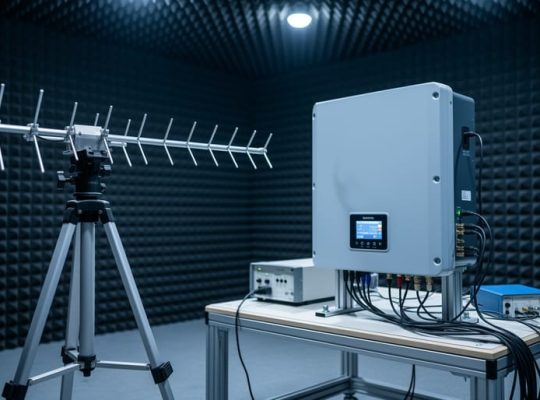
Solar inverter inside a semi-anechoic chamber with a log-periodic antenna on a tripod aimed at it, soft studio lighting, foam absorber panels blurred in the background, no visible text or logos

Why Your PV Equipment Needs EMC Certification (Before It’s Too Late)

Electromagnetic compatibility certification determines whether photovoltaic equipment can operate without causing or suffering from electromagnetic interference—a regulatory requirement that directly impacts market access, system reliability, and professional credibility in the solar industry. For manufacturers, EMC certification validates that inverters, charge controllers, and monitoring systems meet international standards like IEC 61000 series, EN 61000, and FCC Part 15, preventing costly recalls and legal complications. Without proper certification, PV equipment cannot legally enter European, North American, or most Asian markets, …

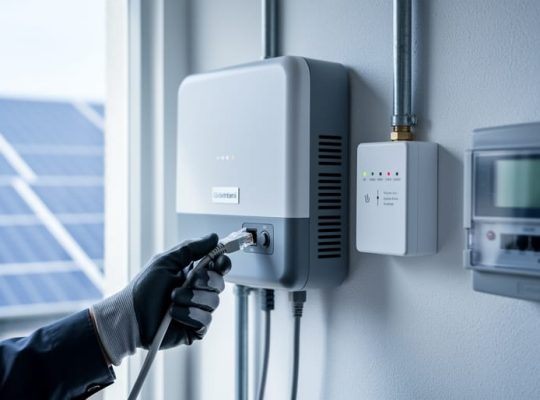
Gloved technician holding an Ethernet cable near a wall-mounted solar PV inverter with a small gateway, with blurred rooftop solar panels, conduit, and a utility smart meter in the background under soft daylight.

Why Your PV Inverter Could Be Your Solar System’s Weakest Security Link

Selecting the appropriate photovoltaic inverter requires understanding how three primary architectures—string inverters, microinverters, and power optimizers—differ in functionality, performance, and increasingly, cybersecurity vulnerability. String inverters centralize DC-to-AC conversion for multiple solar panels, creating a single point of system control that demands robust network security protocols to prevent unauthorized access to utility-connected systems. Microinverters distribute conversion at the individual panel level, expanding the attack surface through multiple network-connected devices but isolating potential breaches to…