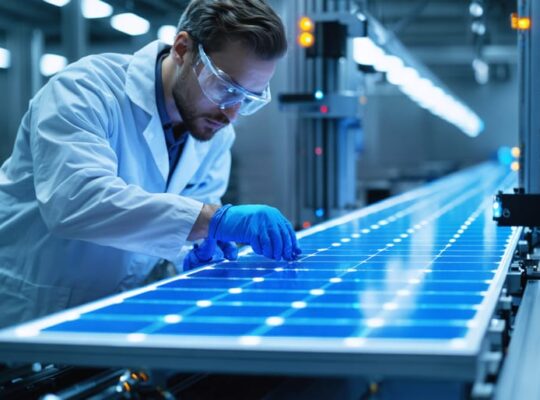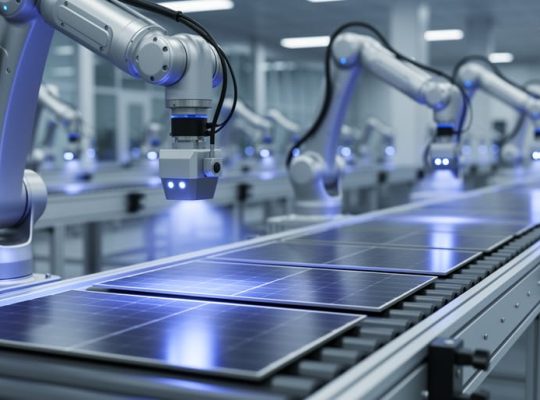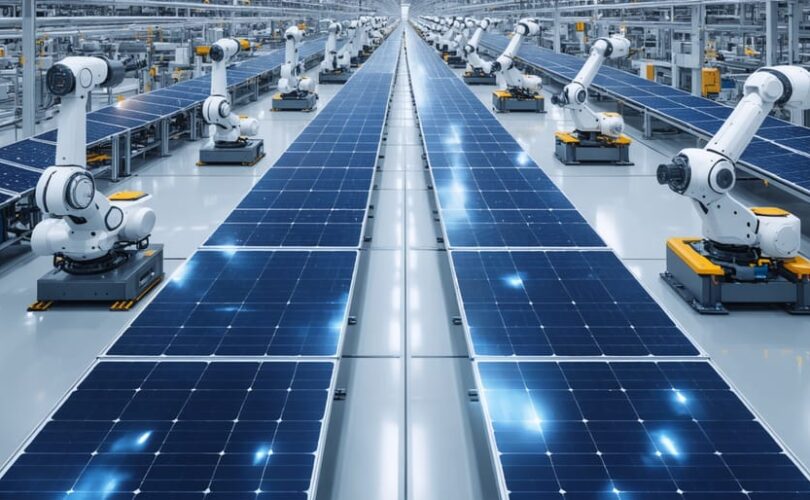
Automation revolutionizes solar manufacturing by transforming quality control, efficiency, and production capacity across the renewable energy sector. Advanced AI-driven systems now monitor PV modules throughout their production lifecycle, detecting microscopic defects with unprecedented accuracy while reducing human error by up to 95%. This technological leap enables manufacturers to maintain consistent quality standards while scaling operations to meet growing global demand for solar solutions.
Machine learning algorithms, coupled with high-precision robotics, optimize every aspect of solar panel assembly—from silicon wafer inspection to final performance testing. These automated systems operate 24/7, increasing production throughput by 40% compared to traditional manufacturing methods while simultaneously reducing operational costs by 30%. By integrating real-time data analytics with automated decision-making processes, modern solar facilities achieve previously impossible levels of precision and efficiency in quality assurance.
As the solar industry continues its rapid expansion, automation emerges as the cornerstone of sustainable manufacturing practices, ensuring both product excellence and economic viability. This transformation represents not just an improvement in manufacturing processes, but a fundamental shift in how we approach renewable energy production at scale.
The Evolution of Quality Control in Solar Manufacturing
Traditional QC Methods and Their Limitations
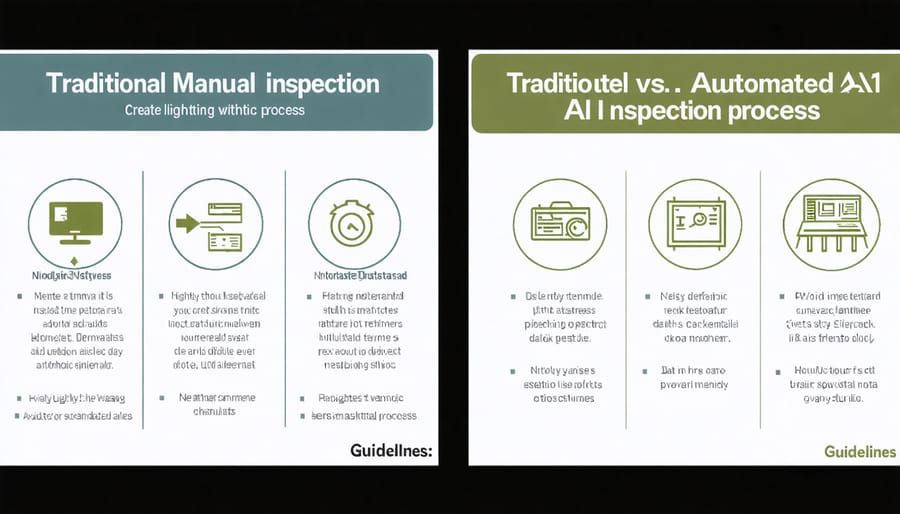
Traditional quality control methods in solar panel manufacturing have primarily relied on manual visual inspection and spot-checking by trained technicians. These processes typically involve examining individual panels for defects such as microcracks, cell misalignment, and surface contamination. While human inspectors can identify obvious defects, their effectiveness is limited by several significant factors.
The time-intensive nature of manual inspection creates bottlenecks in production, reducing overall manufacturing efficiency. Human inspectors are also susceptible to fatigue and inconsistency, particularly during long shifts, which can lead to missed defects or false positives. Additionally, some defects may be too subtle for the human eye to detect, especially in early stages when intervention would be most cost-effective.
Statistical sampling methods, commonly used in traditional QC, examine only a fraction of produced panels. This approach leaves room for defective units to pass through undetected, potentially affecting the manufacturer’s reputation and warranty claims. Furthermore, the increasing complexity of solar panel designs and the industry’s growing production volumes have made manual inspection increasingly impractical and economically unfeasible.
These limitations have driven the industry toward automated solutions that offer greater accuracy, consistency, and throughput capabilities.
The Rise of Machine Vision Systems
Machine vision systems emerged as a groundbreaking innovation in solar manufacturing during the early 2000s, revolutionizing quality control and inspection processes. These sophisticated systems introduced unprecedented precision in detecting microscopic defects and variations in solar cell production, marking a significant shift from traditional manual inspection methods. By incorporating high-resolution cameras, advanced imaging algorithms, and real-time analysis capabilities, these systems became integral components of automated manufacturing processes.
The early adoption of machine vision technology enabled manufacturers to identify surface irregularities, microcracks, and structural imperfections with exceptional accuracy. This technological advancement not only enhanced production efficiency but also significantly reduced human error in quality assessment. The systems could process thousands of solar cells per hour, maintaining consistent inspection standards while dramatically improving throughput rates.
Initially implemented for basic defect detection, these systems evolved to incorporate multiple inspection parameters, including cell alignment, ribbon positioning, and lamination quality. This comprehensive approach to automated quality control established the foundation for modern solar manufacturing excellence and continues to drive innovation in the industry.
Core Components of AI-Driven Quality Control
Deep Learning Algorithms for Defect Detection
Deep learning algorithms have revolutionized defect detection in solar panel manufacturing by enabling highly accurate, real-time identification of microscopic flaws and inconsistencies. These sophisticated AI systems utilize convolutional neural networks (CNNs) to analyze high-resolution images of solar cells and modules during production.
The algorithms are trained on vast datasets of both defective and non-defective solar components, learning to recognize patterns that might be imperceptible to the human eye. Common defects they can identify include microcracks, finger interruptions, broken busbars, and contamination spots, with detection accuracy rates often exceeding 98%.
During the inspection process, multiple cameras capture detailed images from different angles, while specialized lighting systems enhance surface detail visibility. The AI system processes these images through multiple layers of neural networks, each designed to detect specific types of defects. The system can analyze hundreds of panels per hour, significantly outperforming manual inspection methods.
Advanced feature extraction techniques enable the algorithms to distinguish between genuine defects and harmless variations in manufacturing. This capability reduces false positives and ensures that only truly defective panels are flagged for review. The system continuously learns from new data, improving its accuracy over time through machine learning feedback loops.
Implementation of these AI systems has led to substantial improvements in quality control efficiency, with some manufacturers reporting up to 90% reduction in defect escape rates. The technology also provides valuable data analytics for process optimization, helping manufacturers identify recurring issues in their production lines and implement preventive measures.
Real-time Process Monitoring and Adjustment
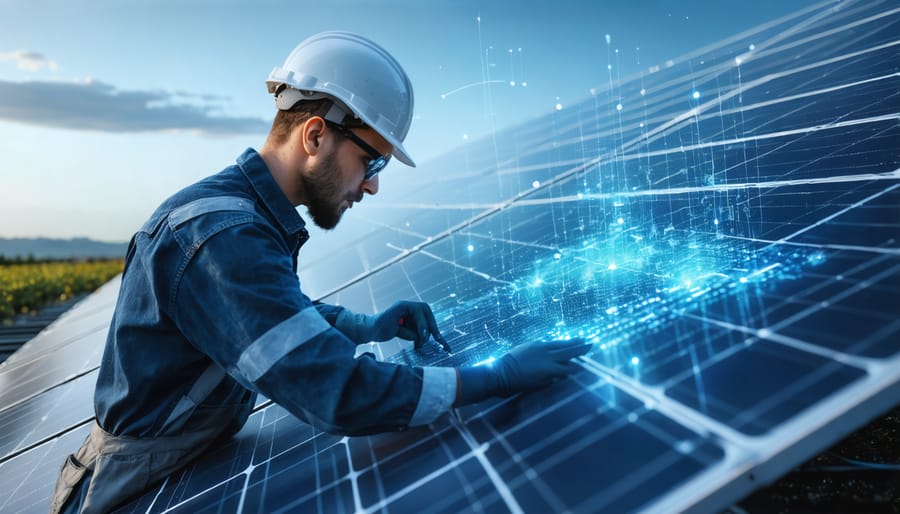
In modern solar manufacturing facilities, real-time process monitoring systems powered by artificial intelligence have revolutionized quality control and production consistency. These sophisticated systems employ an array of sensors and imaging devices to continuously analyze manufacturing parameters, material properties, and production line performance.
AI algorithms process thousands of data points per second, detecting subtle variations in temperature, pressure, material composition, and assembly precision. This immediate feedback enables automated systems to make instantaneous adjustments to maintain optimal production conditions. For instance, when fabricating photovoltaic cells, the AI monitors critical factors such as silicon wafer thickness, dopant concentrations, and metallization patterns.
The system’s predictive capabilities allow it to anticipate potential issues before they impact product quality. By analyzing historical data patterns, the AI can identify early warning signs of equipment wear, material inconsistencies, or process drift. This proactive approach significantly reduces defect rates and improves overall yield.
Manufacturing parameters are automatically adjusted within predetermined thresholds to maintain consistency. If variations exceed acceptable limits, the system can initiate corrective actions or alert operators for manual intervention. This level of automation ensures that every solar panel meets rigorous quality standards while minimizing material waste and production downtime.
The integration of machine learning algorithms enables the system to continuously improve its monitoring accuracy and adjustment precision. As more production data is accumulated, the AI refines its understanding of optimal manufacturing conditions, leading to increasingly efficient operations and higher-quality solar products.
Benefits of AI Quality Control Systems
Enhanced Detection Accuracy
Recent studies comparing AI-powered inspection systems with traditional human inspection methods have revealed significant improvements in detection accuracy for solar panel defects. Research conducted across multiple manufacturing facilities shows that automated systems achieve detection rates of up to 99.8% for micro-cracks, compared to 85-90% for experienced human inspectors.
The superiority of AI systems stems from their ability to consistently identify defects as small as 100 micrometers, well beyond human visual capabilities. These systems maintain this high level of accuracy even during extended operation periods, whereas human inspector performance typically decreases after 4-6 hours due to fatigue.
Machine learning algorithms have demonstrated particular effectiveness in detecting subtle variations in cell coloration, microscopic scratches, and edge defects – issues that human inspectors often miss. In a controlled study of 10,000 solar panels, AI systems identified 15% more potential failure points than manual inspection teams.
The economic impact of enhanced detection accuracy is substantial. Manufacturing facilities implementing automated inspection systems report a 40% reduction in warranty claims related to undetected manufacturing defects. Additionally, the false positive rate for AI systems stands at just 0.3%, compared to 2-5% for human inspection, resulting in fewer unnecessary panel rejections and improved production efficiency.
These improvements in accuracy directly translate to higher quality solar products and increased consumer confidence in photovoltaic technology.
Production Cost Optimization
Artificial Intelligence implementation in solar manufacturing processes has demonstrated significant potential for optimizing production costs and improving return on investment. By leveraging machine learning algorithms and automated systems, manufacturers can achieve substantial improvements in solar manufacturing efficiency, reducing operational expenses by up to 30%.
The economic benefits of AI automation are particularly evident in quality control processes, where advanced vision systems and predictive analytics can detect defects early in the production cycle. This early detection significantly reduces material waste and rework costs, which traditionally account for 5-10% of manufacturing expenses.
Implementation of AI-driven automation systems typically requires an initial investment ranging from $500,000 to $2 million, depending on facility size and complexity. However, manufacturers report average payback periods of 18-24 months, with some achieving ROI in as little as 12 months through reduced labor costs, improved throughput, and enhanced product quality.
Key financial benefits include:
– Reduced labor costs through automated inspection and handling
– Decreased material waste through precise process control
– Lower energy consumption through optimized equipment operation
– Improved production yields through real-time quality monitoring
– Minimized downtime through predictive maintenance
These improvements contribute to a more competitive cost structure, enabling manufacturers to maintain profitability while meeting increasing market demands for high-quality solar products.
Implementation Challenges and Solutions
Integration with Existing Systems
Integrating automated quality control systems with existing solar manufacturing infrastructure requires careful planning and systematic implementation. The process typically begins with a comprehensive assessment of current production lines, identifying potential integration points and necessary modifications. This evaluation should consider both hardware compatibility and software interoperability to ensure seamless operation.
Modern solar manufacturing facilities often utilize Manufacturing Execution Systems (MES) and Enterprise Resource Planning (ERP) systems. AI-powered quality control solutions must effectively communicate with these platforms through standardized protocols and APIs. This integration enables real-time data exchange, allowing for immediate production adjustments based on QC findings and maintaining detailed documentation for traceability.
Key technical considerations include network infrastructure requirements, data storage capacity, and processing power needed to handle the increased computational load. Organizations should implement robust cybersecurity measures to protect sensitive production data and maintain system integrity. Additionally, backup systems and redundancy protocols must be established to prevent production interruptions.
Training existing personnel on new automated systems is crucial for successful integration. This includes both operation and basic troubleshooting procedures. Many manufacturers opt for a phased implementation approach, starting with pilot programs in specific production areas before expanding to full-scale deployment. This method allows for fine-tuning and optimization while minimizing disruption to ongoing operations.
To ensure long-term success, regular system updates and maintenance schedules should be established, along with clear procedures for handling software updates and hardware upgrades.
Training Requirements and Best Practices
Effective implementation of solar automation systems requires comprehensive staff training and adherence to established best practices. Personnel should undergo specialized training programs that cover system operation, maintenance protocols, and troubleshooting procedures. These programs typically combine theoretical knowledge with hands-on experience using simulation tools and real-world equipment.
Key training components include understanding automation software interfaces, interpreting system data, and responding to automated alerts. Operators must develop proficiency in monitoring key performance indicators (KPIs) and recognizing patterns that may indicate potential issues. Regular refresher courses ensure staff remain current with technological advances and system updates.
For optimal system performance, organizations should establish clear standard operating procedures (SOPs) and maintain detailed documentation of all processes. This includes regular calibration schedules, preventive maintenance routines, and emergency response protocols. Implementation of a continuous improvement program enables teams to identify opportunities for system optimization and efficiency gains.
Cross-training staff across different aspects of the automated solar system creates operational resilience and ensures consistent performance during staff transitions. Collaboration with equipment manufacturers and industry experts can provide valuable insights into system optimization strategies and emerging best practices.
Quality assurance protocols should be integrated into training programs, emphasizing the importance of data accuracy and system reliability. Regular performance assessments help identify areas for additional training or system adjustments, ensuring the automation system continues to meet operational objectives effectively.
The integration of artificial intelligence in solar manufacturing quality control represents a transformative shift that will continue to reshape the industry’s future. As automation technologies become more sophisticated, manufacturers can expect to see unprecedented improvements in production efficiency, defect detection accuracy, and overall panel quality. The combination of machine learning algorithms, computer vision systems, and robotic automation is creating a new paradigm where human expertise is augmented rather than replaced by intelligent systems.
Looking ahead, we can anticipate the emergence of more advanced AI solutions that will enable real-time adjustments to manufacturing processes, predictive maintenance capabilities, and even self-optimizing production lines. These developments will not only reduce costs and improve consistency but also contribute to the broader goal of making solar energy more accessible and affordable.
The success of this technological evolution will depend on continued collaboration between industry stakeholders, research institutions, and technology providers. As standards for automated quality control become more established, manufacturers who embrace these innovations will gain a competitive edge in the market. Additionally, the integration of AI-driven quality control systems will play a crucial role in meeting the growing global demand for solar panels while maintaining the highest quality standards.
For the solar manufacturing industry to fully realize these benefits, ongoing investment in workforce training and infrastructure development remains essential. The future of solar quality control lies in striking the optimal balance between automated precision and human oversight, ensuring that technological advancement serves the ultimate goal of sustainable energy production.