Protecting renewable energy infrastructure from cyber threats has become mission-critical as digitalization transforms the power sector. Recent attacks targeting smart grid systems and solar installations have exposed critical vulnerabilities, with potential cascading effects across entire power networks. The convergence of operational technology (OT) and information technology (IT) in renewable energy systems creates new attack surfaces that malicious actors actively exploit.
This heightened risk landscape demands a sophisticated cybersecurity approach tailored to renewable energy’s unique challenges. From compromised inverters and battery management systems to manipulated SCADA controls, the threats are both diverse and evolving. Industry estimates suggest cyber attacks on renewable infrastructure increased by 46% in 2022 alone, highlighting the urgent need for robust security frameworks.
As renewable energy facilities increasingly integrate with traditional power infrastructure, implementing comprehensive cybersecurity measures becomes fundamental to ensuring grid stability and energy security. This article examines essential strategies for protecting renewable assets, regulatory compliance requirements, and emerging best practices in cyber resilience for sustainable energy systems.
The Evolving Threat Landscape in Renewable Energy
Common Attack Vectors in Solar PV Systems
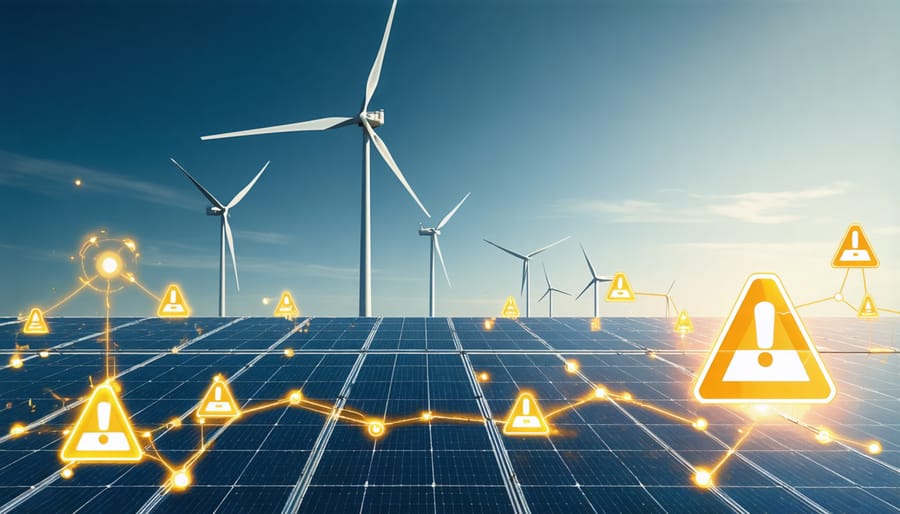
Solar PV systems face several critical attack vectors that malicious actors can exploit. The monitoring systems, which collect and transmit performance data, are particularly vulnerable to man-in-the-middle attacks and data manipulation. Attackers can potentially falsify generation metrics, leading to incorrect billing or system optimization decisions.
Inverters represent another significant vulnerability point due to their direct connection to both the solar array and the grid. Modern smart inverters, while offering advanced grid integration capabilities, can be compromised through firmware manipulation or unauthorized remote access. This could result in power quality issues or complete system shutdown.
Grid connection points present additional risks, especially in utility-scale installations. Threat actors might exploit communication protocols between solar facilities and grid operators, potentially disrupting power flow or creating grid instability. Remote monitoring and control systems, essential for large-scale operations, can be targeted through credential theft or software vulnerabilities.
Authentication mechanisms and communication protocols between components often become targets, with attackers attempting to intercept or modify control signals. This can lead to unauthorized system modifications or performance degradation, impacting both energy production and grid stability.
Real-world Security Incidents and Lessons Learned
Several notable cybersecurity incidents have highlighted vulnerabilities in renewable energy infrastructure. In 2019, a major European wind farm operator experienced a sophisticated cyber attack that disrupted turbine operations for 48 hours, resulting in significant power generation losses. The incident revealed inadequate network segmentation and outdated firmware as primary vulnerabilities.
Another significant case occurred in 2020 when a solar farm in North America fell victim to ransomware, affecting monitoring systems and compromising operational data. The attack exploited unsecured remote access points, emphasizing the importance of robust authentication protocols and regular security audits.
A 2021 incident involving a utility-scale solar installation demonstrated how supply chain vulnerabilities could impact operations. Malicious code embedded in third-party monitoring software allowed unauthorized access to critical control systems. This event led to industry-wide improvements in vendor assessment protocols and software verification procedures.
These incidents underscore the critical need for comprehensive cybersecurity strategies, regular system updates, and employee training programs. They also highlight the importance of implementing defense-in-depth approaches and maintaining current incident response plans.
Essential Security Policies for Renewable Infrastructure
Access Control and Authentication Protocols
Access control and authentication protocols form the cornerstone of renewable energy cybersecurity, particularly in solar PV installations. Multi-factor authentication (MFA) should be implemented across all system access points, requiring users to provide at least two forms of verification before gaining entry to critical systems.
Role-based access control (RBAC) ensures that personnel only have access to the specific system components necessary for their duties. This principle of least privilege helps minimize the potential impact of compromised credentials. System administrators should regularly review and update access permissions, immediately revoking access for departed employees or contractors.
Strong password policies must be enforced, requiring complex combinations of characters, regular password changes, and restrictions on password reuse. Password managers can help maintain security while ensuring operational efficiency. For remote access, secure protocols such as Virtual Private Networks (VPNs) with end-to-end encryption should be mandatory.
Authentication logs should be maintained and regularly audited to detect unusual access patterns or potential security breaches. Automated systems can flag suspicious activities, such as login attempts from unusual locations or during non-standard hours.
Additional security measures should include:
– Session timeout controls
– IP address whitelisting
– Failed login attempt limitations
– Regular security token rotation
– Biometric authentication where appropriate
These protocols should be documented in the organization’s security policy and regularly updated to address emerging threats and technological advances.
Data Protection and Encryption Standards
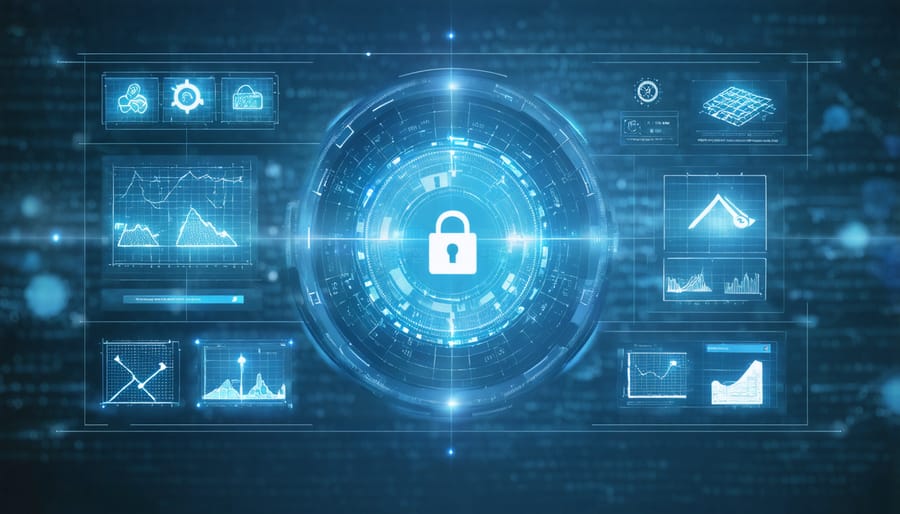
Data protection and encryption in renewable energy systems require robust standards to safeguard sensitive operational information from cyber threats. The implementation of AES-256 encryption for all data transmissions serves as the baseline standard, particularly for communications between solar inverters, monitoring systems, and control centers.
Critical operational data must be categorized into different security levels, with each level requiring specific encryption protocols. Level 1 data, including system configurations and access credentials, demands end-to-end encryption and multi-factor authentication. Level 2 data, comprising real-time performance metrics and grid integration parameters, requires transport layer security (TLS) protocols version 1.3 or higher.
Regular data backups should be maintained in encrypted formats, with backup systems physically separated from primary operational networks. Implementation of secure key management systems is essential, with keys rotated at predetermined intervals based on risk assessments.
For data in transit, secure protocols such as HTTPS, SFTP, and SSH must be utilized exclusively. Additionally, all remote access to renewable energy systems should occur through encrypted VPN tunnels with strict access controls and logging mechanisms in place.
Organizations must also implement data loss prevention (DLP) solutions to monitor and control the movement of sensitive information across networks. This includes automated systems for detecting and preventing unauthorized data transfers and maintaining detailed audit trails of all data access and modifications.
Incident Response and Recovery Planning
Effective incident response and recovery planning is crucial for maintaining the resilience of renewable energy systems against cyber threats. The framework consists of four key phases: preparation, detection, response, and recovery. Organizations must establish clear protocols and responsibilities for each phase to ensure swift and coordinated action during security incidents.
The preparation phase involves developing comprehensive documentation, including incident response playbooks and communication protocols. These documents should outline specific steps for different types of cyber incidents, from ransomware attacks to unauthorized access attempts. Regular training sessions and tabletop exercises help ensure team members understand their roles and can execute response procedures effectively.
During the detection phase, organizations must maintain continuous monitoring of their renewable energy systems through advanced security information and event management (SIEM) tools. Early warning systems should be configured to alert security teams of potential threats or suspicious activities within the operational technology (OT) environment.
The response phase requires immediate action to contain and neutralize threats while maintaining essential energy generation operations. This includes implementing predetermined isolation procedures, engaging with relevant stakeholders, and documenting all response activities for later analysis.
Recovery planning focuses on system restoration and implementing lessons learned. Organizations should maintain secure backups of critical system configurations and establish clear procedures for bringing systems back online safely. Post-incident analysis helps identify improvements needed in security measures and response procedures, contributing to ongoing cybersecurity enhancement.
Implementation Strategies for Solar PV Installations

Security Assessment and Risk Management
Security assessment and risk management in photovoltaic systems requires a systematic approach combining threat analysis, vulnerability assessment, and mitigation strategies. The process begins with identifying critical assets within the PV infrastructure, including inverters, monitoring systems, control units, and communication networks.
A comprehensive risk assessment framework typically involves three key phases: asset identification and classification, threat modeling, and vulnerability analysis. Organizations must catalog their PV system components, categorizing them based on criticality and potential impact on operations. This inventory serves as the foundation for developing targeted security measures.
Threat modeling involves analyzing potential attack vectors, including unauthorized access to control systems, data manipulation, and denial-of-service attacks. Security teams should consider both external threats, such as cybercriminals and state-sponsored actors, and internal risks from unintentional employee actions or insider threats.
Risk quantification employs standardized methodologies like FAIR (Factor Analysis of Information Risk) or NIST frameworks to evaluate potential impacts. These assessments consider both the likelihood of security incidents and their potential consequences, including financial losses, operational disruptions, and reputational damage.
Effective risk management strategies incorporate:
– Regular security audits and penetration testing
– Continuous monitoring of system anomalies
– Implementation of access control mechanisms
– Incident response planning
– Security awareness training for personnel
Organizations should establish a risk register documenting identified threats, their potential impact, and corresponding mitigation measures. This living document requires regular updates to reflect emerging threats and changes in system architecture. Regular review cycles ensure that security measures remain effective and aligned with evolving industry standards and best practices.
Compliance and Certification Requirements
In the renewable energy sector, maintaining robust cybersecurity measures requires adherence to various regulatory compliance standards and certifications. Key frameworks include the North American Electric Reliability Corporation Critical Infrastructure Protection (NERC CIP) standards, which establish comprehensive requirements for securing critical energy infrastructure.
Organizations must also comply with ISO/IEC 27001 for information security management systems and IEC 62443 for industrial automation and control systems security. These standards provide structured approaches to identifying, assessing, and mitigating cybersecurity risks in renewable energy installations.
For solar PV systems specifically, the UL 2900-2-3 standard addresses cybersecurity requirements for network-connectable products. This certification ensures that solar equipment meets stringent security criteria before deployment. Additionally, the International Electrotechnical Commission (IEC) 62351 standards focus on data and communications security for power system management.
Compliance requirements vary by jurisdiction and system size. Utility-scale renewable energy installations typically face more stringent regulations than smaller distributed energy resources. However, all installations must adhere to basic cybersecurity guidelines outlined in frameworks such as the NIST Cybersecurity Framework and the European Network and Information Security Directive (NIS Directive).
Regular audits and assessments are essential to maintain certification status and ensure ongoing compliance. Organizations must document their security controls, conduct periodic vulnerability assessments, and update their security measures to address emerging threats. This proactive approach helps maintain system integrity while meeting evolving regulatory requirements.
Future-proofing Renewable Energy Security
Emerging Technologies and Security Solutions
The renewable energy sector is witnessing rapid advancements in cybersecurity technologies designed specifically for smart grid infrastructure and distributed energy resources. Blockchain technology has emerged as a promising solution for securing energy transactions and maintaining distributed ledger systems that enhance grid reliability. These systems provide immutable records of energy generation, distribution, and consumption while ensuring data integrity.
Artificial Intelligence and Machine Learning algorithms are being deployed to detect anomalies in real-time, identifying potential cyber threats before they can impact operations. These systems analyze patterns in network traffic, system behavior, and user activities to establish baseline operations and flag suspicious deviations.
Advanced encryption protocols, specifically designed for renewable energy systems, now protect sensitive operational data and control mechanisms. Zero-trust architecture frameworks are being implemented across renewable energy facilities, requiring verification at every access point and limiting potential attack surfaces.
Edge computing solutions are enhancing security by processing critical data closer to the source, reducing transmission vulnerabilities. Additionally, quantum-resistant cryptography is being developed to protect against future quantum computing threats, ensuring long-term security for renewable energy infrastructure.
Training and Workforce Development
The rapidly evolving landscape of renewable energy cybersecurity demands a well-trained workforce equipped with specialized knowledge and skills. Organizations must invest in comprehensive training programs that cover both technical and operational aspects of cybersecurity specific to renewable energy systems.
Security training should encompass fundamental concepts such as threat identification, incident response protocols, and best practices for maintaining system integrity. Regular workshops and simulation exercises help personnel develop practical skills in identifying and responding to potential cyber threats targeting renewable energy infrastructure.
Professional development programs should focus on emerging technologies and evolving threat landscapes. This includes specialized training in industrial control systems (ICS) security, SCADA systems protection, and network security specific to renewable energy installations. Certification programs provided by recognized institutions help validate expertise and maintain industry standards.
Cross-functional training is essential, ensuring that cybersecurity knowledge extends beyond IT departments to include operations staff, maintenance teams, and management personnel. This comprehensive approach creates a security-aware culture throughout the organization and strengthens the overall security posture of renewable energy facilities.
Organizations should also establish partnerships with educational institutions to develop curriculum-based programs that address the specific cybersecurity challenges in renewable energy systems, creating a pipeline of qualified professionals for the industry.
The evolving landscape of renewable energy demands a robust and proactive approach to cybersecurity. As our analysis has shown, the integration of digital technologies in solar PV systems and other renewable energy infrastructure creates both opportunities and vulnerabilities. Organizations must prioritize comprehensive security frameworks, regular risk assessments, and continuous employee training to maintain system integrity. The implementation of multi-layered security protocols, combined with regular audits and updates, forms the foundation of effective cyber defense. Moving forward, collaboration between industry stakeholders, technology providers, and security experts will be crucial in developing and maintaining resilient renewable energy systems. By embracing these security measures today, we can ensure the sustainable and secure operation of renewable energy infrastructure for generations to come.