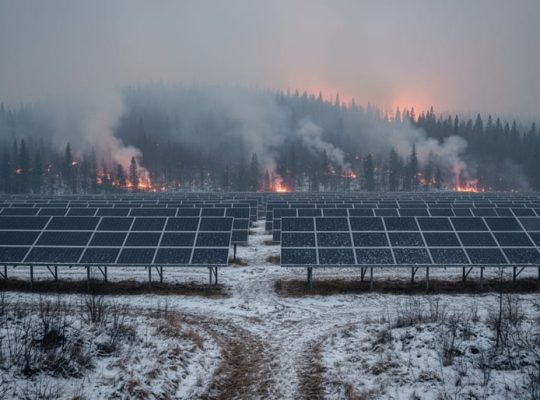
Photovoltaic system fires represent a convergence of electrical hazards, environmental stressors, and installation vulnerabilities that demand comprehensive understanding from solar professionals. While PV-initiated fires remain statistically rare—occurring in fewer than 0.006% of installations—the consequences prove catastrophic when they occur, threatening property, personnel safety, and the renewable energy industry’s reputation. More prevalent are the challenges wildfire events pose to solar installations, where extreme heat, airborne embers, smoke particulates, and corrosive ash deposits create multilayered risks requiring proactive resilience strategies.
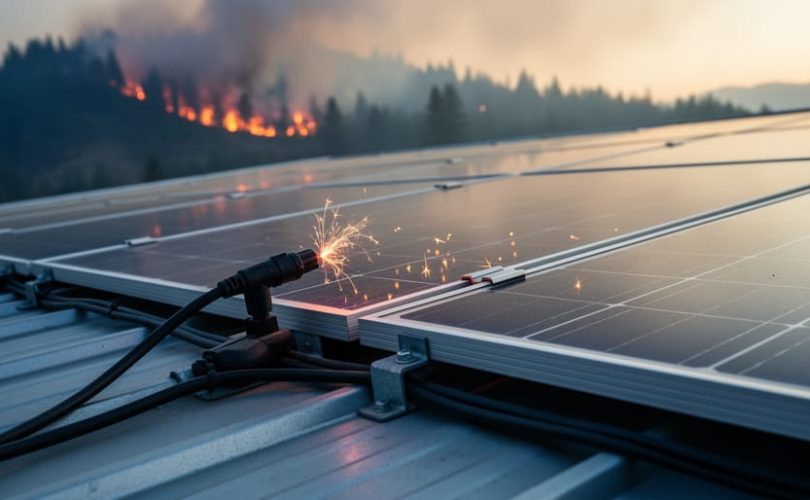
DC arc faults constitute the primary ignition mechanism in solar arrays, typically originating from damaged cables, loose connections, or compromised module junction boxes. Unlike AC electrical systems, DC circuits cannot self-extinguish arcing events, allowing sustained temperatures exceeding 3,000°F that readily ignite combustible roofing materials or accumulated debris. Parallel risks emerge from module-level defects including hotspots, bypass diode failures, and manufacturing defects that concentrate thermal energy beyond design specifications.
Wildfire exposure introduces distinct hazard categories beyond direct flame contact. Smoke infiltration reduces solar production by 20-90% depending on density and duration, while microscopic ash particles create conductive pathways across panel surfaces, increasing leakage currents and ground fault potential. Post-fire ash deposits, particularly from vegetation fires, often contain corrosive compounds that accelerate connector degradation and moisture ingress when left unaddressed.
Prevention centers on systematic monitoring, vegetation management within defensible space zones, and strategic equipment selection including arc-fault circuit interrupters and rapid shutdown systems. Recovery protocols require specialized cleaning techniques, comprehensive electrical testing, and documentation for insurance and regulatory compliance. Understanding these interconnected factors enables solar professionals to design, install, and maintain systems that withstand both internal electrical risks and external environmental threats in increasingly fire-prone regions.
Understanding PV Fires: Causes and Mechanisms
Internal Fire Risks in PV Systems
Photovoltaic systems contain multiple electrical components operating at high voltages and currents, creating inherent fire risks when faults occur. Understanding these internal hazards is essential for proper system design, installation, and maintenance.
Electrical faults represent one of the most common fire triggers in PV installations. These occur when current flows through unintended pathways due to insulation breakdown, damaged wiring, or loose connections. Such faults generate excessive heat that can ignite surrounding materials, particularly in combiner boxes, inverters, and junction boxes where multiple circuits converge.
Arc faults pose an especially dangerous threat, producing temperatures exceeding 5,000 degrees Fahrenheit. These high-energy electrical discharges result from deteriorated connections, damaged cables, or incompatible components. Unlike steady-state faults, arc faults are intermittent and difficult to detect without specialized protection devices.
Hot spots develop when individual solar cells or modules experience localized heating due to shading, soiling, or manufacturing defects. This phenomenon causes reverse current flow through affected cells, generating heat that can degrade encapsulation materials and potentially ignite fires. Bypass diodes typically mitigate this risk but can fail over time.
Improper installation practices significantly elevate fire risk. Common mistakes include inadequate wire sizing, incorrect grounding, poor workmanship in connections, and failure to maintain proper clearances. Component failures, whether from manufacturing defects or end-of-life degradation, can also initiate thermal events. Capacitors, transformers, and DC optimizers are particularly susceptible components requiring regular inspection and quality assurance during procurement.
External Wildfire Threats to Solar Installations
Photovoltaic installations in wildfire-prone regions face significant external fire threats that can compromise system integrity and pose serious safety hazards. Understanding how approaching wildfires interact with solar arrays is essential for developing effective protection strategies and making informed installation decisions.
Wildfires threaten PV systems through three primary mechanisms. Radiant heat from approaching flames can reach temperatures exceeding 1,000°C, sufficient to melt module encapsulants, warp aluminum frames, and damage junction boxes long before flames make direct contact. This thermal radiation can ignite combustible mounting materials and penetrate ventilation gaps in roof-mounted systems. Ember exposure represents an equally dangerous threat, as wind-borne firebrands can travel several kilometers ahead of the main fire front. These glowing fragments accumulate in module frame channels, inverter housings, and cable conduits, where they ignite accumulated debris or directly damage electrical components. Direct flame contact, while less common in properly maintained installations, can cause catastrophic failure of protective equipment and create electrical hazards that persist after the fire passes.
Several installation factors significantly influence vulnerability to external wildfire threats. Ground-mounted systems in areas with dense vegetation or accumulated leaf litter face elevated ignition risk, particularly when vegetation management protocols lapse. Roof-mounted arrays on structures with combustible roofing materials create compounding hazards, as the PV system and building become mutually reinforcing fire risks. Cable routing through vegetated areas, inadequate clearance distances from surrounding combustibles, and installations lacking ember-resistant junction box designs all increase susceptibility. Research conducted in collaboration with universities studying wildfire behavior has identified that systems installed with minimum defensible space—typically 30 to 100 feet depending on terrain and fuel loads—demonstrate substantially improved survival rates during wildfire events, highlighting the critical importance of site-specific risk assessment during system design.
The Wildfire Smoke and Ash Challenge for PV Systems
Performance Degradation from Smoke and Ash Deposits
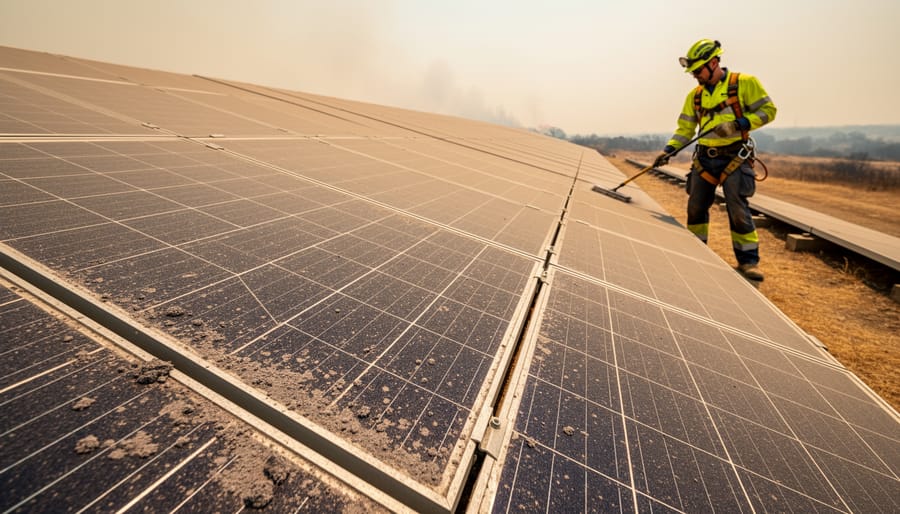
Wildfire smoke and ash deposits present significant challenges to photovoltaic system operations, directly impacting energy generation capacity and system longevity. When particulate matter settles on module surfaces, it creates an opaque barrier that substantially reduces light transmission to the photovoltaic cells beneath. Research indicates that even thin layers of ash can decrease solar panel performance by 15-40%, with dense accumulations causing losses exceeding 60% in severe wildfire events.
The composition of wildfire particulates compounds these efficiency losses. Fine ash particles, often less than 10 micrometers in diameter, adhere tenaciously to glass surfaces through electrostatic attraction and moisture bonding. Unlike regular dust, ash contains oils and resins that create stubborn residues resistant to natural rainfall cleaning. This persistent contamination extends performance degradation well beyond the immediate fire event.
Uneven soiling patterns present an additional hazard beyond simple output reduction. When ash accumulates non-uniformly across module surfaces, it creates differential current flows within series-connected cells. Heavily soiled cells generate less current, forcing cleaner cells to operate at reduced voltage while dissipating excess energy as heat. These localized temperature elevations can exceed 85°C, forming hot spots that accelerate cell degradation and potentially initiate thermal runaway conditions.
University collaborations have documented that corner and edge accumulations prove particularly problematic, as these areas experience reduced airflow and retain moisture longer, intensifying the soiling effect and increasing hot spot risk.
Corrosive Effects and Long-Term Damage
When wildfire ash settles on photovoltaic installations, the immediate performance concerns often overshadow a more insidious threat: long-term corrosive damage to system components. Understanding ash composition and its chemical interactions with solar equipment is essential for developing effective post-wildfire maintenance protocols.
Wildfire ash contains a complex mixture of acidic compounds, mineral salts, and carbon particulates. The specific composition varies depending on burned vegetation and structural materials, but commonly includes sulfates, chlorides, nitrates, and alkaline earth metals. When moisture from dew, rain, or humidity mixes with these compounds, it creates corrosive electrolyte solutions that actively attack metal surfaces and protective coatings.
Aluminum module frames are particularly vulnerable to this chemical assault. The acidic nature of ash-contaminated water can compromise the anodized protective layer, exposing bare aluminum to accelerated oxidation. Similarly, junction boxes and electrical connectors face degradation as corrosive solutions penetrate seals and gaskets, targeting copper contacts and solder joints. This deterioration often manifests gradually, creating latent failure points that may not become apparent until months or years after the initial ash exposure.
The mineral content in ash also contributes to galvanic corrosion when dissimilar metals contact each other in the presence of electrolytes. Stainless steel hardware, copper wiring, and aluminum components can form micro-galvanic cells, accelerating metal loss at connection points. Even anti-reflective coatings on module glass surfaces may experience chemical etching from prolonged ash contact, permanently reducing light transmission and system efficiency.
Regular post-fire inspections and thorough cleaning protocols become critical investments in system longevity, preventing costly component failures that emerge long after flames have subsided.
Ash Accumulation as a Fire Accelerant
Wildfire ash and airborne debris pose a dual threat to photovoltaic systems by introducing combustible materials directly onto installation surfaces and compromising thermal management. As fine particulate matter settles on modules, inverters, and combiner boxes, it creates a layer of organic and carbonized material that can ignite when exposed to electrical arcs or localized heating from equipment malfunctions. This accumulation is particularly hazardous around junction boxes and wiring connections, where electrical resistances naturally generate elevated temperatures during normal operation.
The insulating properties of ash deposits further compound fire risk by reducing the system’s ability to dissipate heat effectively. When ash layers prevent adequate convective cooling, electrical components operate at higher temperatures, accelerating degradation of wire insulation and increasing the probability of short circuits. Research conducted in collaboration with universities has demonstrated that even moderate ash coverage can elevate panel operating temperatures by 15-20 degrees Celsius, pushing sensitive components closer to their thermal limits and creating conditions conducive to thermal runaway events in compromised systems.
Building PV Resilience: Prevention and Protection Strategies
Design Considerations for Fire-Prone Regions
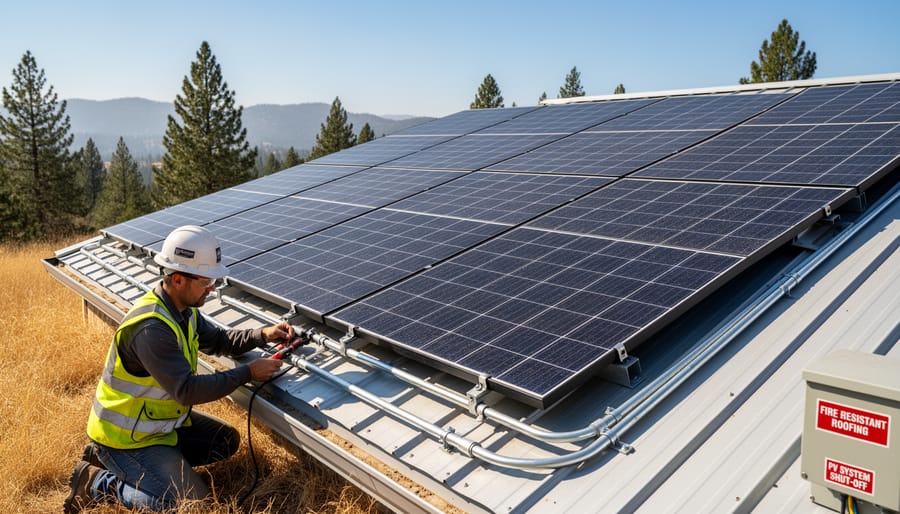
Protecting photovoltaic installations in wildfire-prone regions requires thoughtful resilient PV system design that addresses both direct flame exposure and airborne threats. Material selection forms the foundation of fire-resistant systems. Fire-rated backsheets constructed from materials like fluoropolymers or glass-fiber composites provide superior protection compared to standard polymer backsheets, which can ignite or deteriorate under extreme heat. Tempered glass front surfaces offer dual benefits: they resist thermal shock from rapid temperature changes and create a non-combustible barrier protecting underlying photovoltaic cells.
Spacing requirements between arrays and structures prove critical for fire safety. Industry guidelines recommend maintaining minimum clearances of 18 inches between panel edges and roof perimeters, creating accessible pathways for firefighting operations while reducing radiant heat transfer to building materials. Module-to-module spacing of at least one inch allows heat dissipation and prevents fire propagation across arrays.
Vegetation management establishes crucial defensible space around ground-mounted installations. Maintaining a 30-foot clearance zone free from dry grasses, shrubs, and combustible debris significantly reduces ignition risk from approaching wildfires. Beyond this primary zone, an extended 100-foot area should feature fire-resistant landscaping with adequate irrigation.
Installation angle optimization serves dual purposes in fire-prone regions. Steeper tilt angles, typically 25-35 degrees, facilitate natural ash and debris shedding through gravity and rainfall, preventing accumulation that could create hot spots or reduce efficiency. This self-cleaning mechanism minimizes maintenance requirements while maintaining optimal system performance during fire season.
Advanced Monitoring and Early Detection Systems
Modern fire prevention in photovoltaic systems relies heavily on sophisticated monitoring technologies that detect anomalies before they escalate into dangerous situations. Arc fault detection systems represent a critical first line of defense, continuously monitoring electrical circuits for the characteristic signatures of arcing events. These devices can identify series and parallel arcs that generate excessive heat and immediately trigger protective responses.
Thermal imaging technology has emerged as an invaluable tool for both routine maintenance and real-time monitoring. Infrared cameras and sensors can detect hotspots in panels, junction boxes, and electrical connections that indicate potential failure points. Some advanced systems integrate continuous thermal monitoring with automated alert systems, enabling rapid response to temperature anomalies.
Performance monitoring systems serve dual purposes: optimizing energy production and identifying safety concerns. Significant deviations from expected output patterns often signal underlying issues such as damaged cells, faulty connections, or debris accumulation. When integrated with weather data and historical performance metrics, these systems provide comprehensive diagnostic capabilities.
Automated shutdown systems represent the final safety layer, capable of rapidly de-energizing arrays when fire risk is detected. Modern rapid shutdown devices comply with stringent electrical codes while providing installers and emergency responders with safer working conditions. Universities collaborating with industry partners continue advancing these technologies, developing machine learning algorithms that improve detection accuracy and reduce false alarms.
Protective Coatings and Anti-Soiling Technologies
Protective coatings represent a critical line of defense for photovoltaic systems in wildfire-prone regions, where ash deposition can severely compromise energy generation. Hydrophobic coatings create water-repellent surfaces that prevent ash particles from bonding to panel glass, significantly reducing adhesion strength and facilitating natural rain-assisted cleaning. These nano-structured coatings work by minimizing the contact angle between contaminants and the panel surface, causing ash and debris to roll off more easily rather than adhering tenaciously.
Self-cleaning technologies leverage photocatalytic properties, typically utilizing titanium dioxide nanoparticles that break down organic matter when exposed to UV light. This process continuously degrades accumulated ash residues, preventing the formation of persistent films that reduce light transmission. Some advanced resilience technologies combine both hydrophobic and photocatalytic properties for enhanced protection.
Field studies demonstrate that coated panels maintain 15-25% higher efficiency after wildfire events compared to uncoated modules. Application methods include factory-applied permanent coatings or field-applied treatments requiring periodic renewal. Universities collaborating with coating manufacturers continue developing next-generation formulations with improved durability and ash-repelling capabilities, making these technologies increasingly viable for utility-scale deployments in high-risk areas.
Post-Wildfire Assessment and Recovery Protocols
Safety-First Inspection Procedures
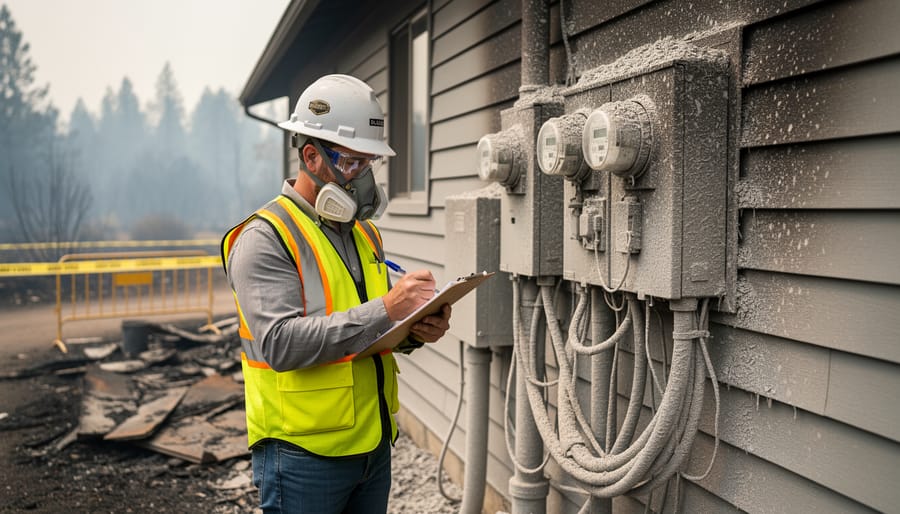
Assessing photovoltaic systems after fire exposure requires rigorous safety protocols to protect personnel and prevent further damage. Before any inspection begins, ensure the fire department has declared the site safe and obtain proper authorization from system owners and local authorities.
The initial step involves complete electrical isolation. De-energize the system at all disconnect points, including inverters, combiners, and the main service panel. Remember that PV modules generate voltage whenever exposed to light, even in damaged conditions or under cloud cover. Use appropriate lockout/tagout procedures and verify zero voltage with calibrated testing equipment before proceeding.
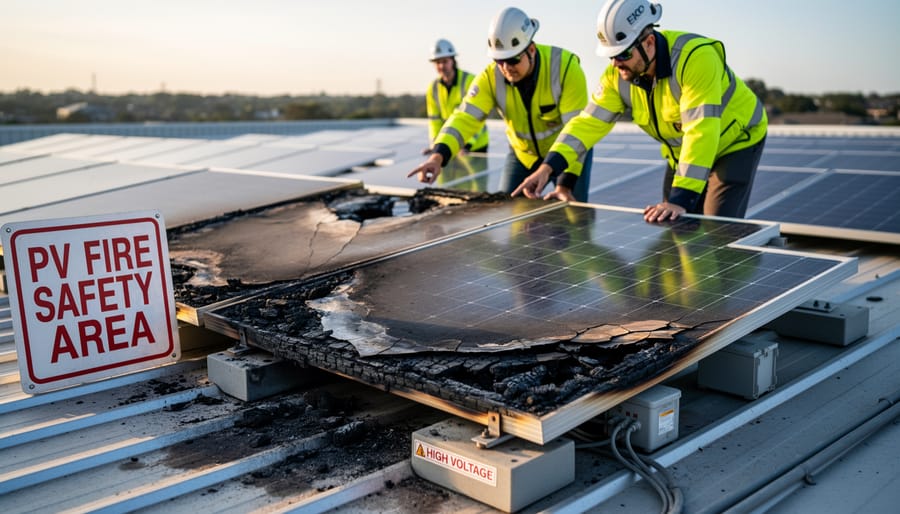
Conduct a thorough visual assessment from a safe distance, examining the array structure for compromised mounting hardware, charred wiring, and cracked or delaminated modules. Ash accumulation can create conductive pathways and ground faults, particularly when combined with morning dew or residual fire suppression water. Document all observations with photographs and detailed notes.
Structural integrity evaluation is essential, as fire exposure weakens roof penetrations, support rails, and attachment points. Engage qualified structural engineers when significant damage is apparent. Never walk on fire-damaged roofs or touch modules with visible cracks, as both electrical shock and physical hazards exist.
Personal protective equipment must include insulated gloves rated for electrical work, hard hats, safety glasses, and respiratory protection against ash particulates. Only trained professionals familiar with photovoltaic systems should perform post-fire inspections.
Effective Cleaning Methods for Ash Removal
Removing wildfire ash from photovoltaic modules requires careful attention to avoid scratching protective glass surfaces or compromising system integrity. The optimal approach begins with timing: wait until ash has fully settled and temperatures have returned to safe levels before initiating cleaning procedures.
Begin by gently rinsing panels with low-pressure water to remove loose particulate matter. High-pressure washing should be avoided, as it can force abrasive ash particles across the glass surface, creating microscopic scratches that reduce long-term efficiency. Early morning or late evening cleaning sessions are preferable, minimizing thermal stress from temperature differentials between cold water and warm panels.
For persistent ash deposits, use only manufacturer-approved cleaning solutions or pH-neutral detergents specifically designed for photovoltaic applications. Avoid household cleaners, alkaline solutions, or abrasive compounds that may damage anti-reflective coatings or degrade sealants. Soft brushes with non-abrasive bristles can assist in loosening stubborn residue without surface damage.
Document the cleaning process through photographic records and operational performance metrics. This data proves valuable for insurance claims and helps establish baseline performance expectations. Professionals should consider collaborating with university research programs studying ash impact mitigation strategies, contributing to industry-wide best practices development while enhancing their technical expertise in post-wildfire system restoration protocols.
Determining System Viability and Repair Needs
Post-fire system assessment requires systematic evaluation to determine whether photovoltaic installations remain operational or require intervention. Module inspection should prioritize identification of cracked glass, delamination, burn marks, or junction box damage, as these defects compromise electrical safety and performance. Modules exhibiting physical damage, reduced insulation resistance below manufacturer specifications, or hotspot formation during thermal imaging typically warrant replacement rather than repair.
Inverter and power electronics assessment involves checking for soot infiltration, melted components, or compromised ventilation systems. Even systems appearing superficially intact may have sustained thermal stress affecting semiconductor reliability. Conduct infrared scans and electrical testing to verify proper operation before reconnissioning.
Comprehensive documentation proves essential for insurance claims and compliance purposes. Photograph all damage systematically, record serial numbers of affected components, and obtain third-party inspection reports when available. Document pre-fire and post-fire performance data, including energy production metrics and thermal imaging results. Universities collaborating on wildfire resilience research often provide assessment protocols that establish industry best practices. Maintain detailed records of cleaning procedures, replacement components, and electrical testing results to support warranty claims and demonstrate due diligence in system restoration efforts.
Regulatory Standards and Industry Best Practices
The photovoltaic industry has developed comprehensive fire safety standards and testing protocols to address both system-inherent fire risks and wildfire resilience challenges. Current regulatory frameworks establish minimum safety requirements while emerging guidelines specifically target fire-prone environments.
UL 1703 remains the primary North American standard for flat-plate photovoltaic modules and panels, incorporating rigorous fire safety testing requirements. This standard evaluates module construction, electrical safety, and fire resistance under various conditions. Complementing this, IEC 61730 provides international safety qualification standards for PV modules, addressing construction requirements and type approval testing that includes fire performance evaluation.
For installations in wildfire interface zones, building codes increasingly mandate Class A fire-rated roofing assemblies where PV systems are mounted. The International Building Code and International Fire Code now include specific provisions for rooftop solar installations, requiring proper setbacks, access pathways for firefighters, and rapid shutdown capabilities. California’s Title 24 Building Energy Efficiency Standards set precedent by incorporating stringent fire safety requirements for solar installations in high fire hazard severity zones.
Testing protocols have evolved beyond basic flammability assessments. Modern evaluation includes ignition resistance, flame spread characteristics, and structural integrity during fire exposure. These protocols inform the development of weather-resistant PV systems designed for challenging environmental conditions.
Research collaborations between industry leaders and universities drive advancing fire safety knowledge. Institutions including Sandia National Laboratories, the National Renewable Energy Laboratory, and university fire research centers conduct ongoing studies examining ignition mechanisms, thermal runaway scenarios, and mitigation strategies. These partnerships produce data-driven guidelines that inform next-generation standards.
Industry organizations such as the Solar Energy Industries Association and International Association of Fire Chiefs actively develop best practice documents addressing PV system fire resilience. These emerging guidelines emphasize system design modifications, enhanced component selection, and proactive maintenance protocols specifically tailored to wildfire-prone regions, bridging the gap between traditional electrical safety standards and environmental fire threats.
Understanding the multifaceted risks associated with PV fires and wildfire impacts is essential for building resilient solar energy systems that perform safely and efficiently throughout their operational lifespan. As this analysis has demonstrated, fire hazards in photovoltaic installations stem from various sources including electrical faults, improper installation practices, and component degradation, while wildfire smoke and ash introduce additional challenges that can compromise system performance and structural integrity.
The evidence clearly indicates that proactive design choices significantly reduce fire vulnerability. Implementing proper electrical isolation, selecting fire-resistant materials, maintaining adequate spacing between components, and ensuring robust grounding systems form the foundation of fire-resilient PV installations. However, design alone cannot guarantee long-term safety. Regular maintenance protocols including thermal imaging inspections, connector assessments, and ash removal procedures are equally critical for identifying potential hazards before they escalate into dangerous situations.
Education remains a cornerstone of advancing safety standards across the solar industry. As wildfire frequency and intensity continue to increase in many regions, PV professionals must stay informed about emerging threats and evolving best practices. Mose Solar demonstrates this commitment through collaborative partnerships with universities and comprehensive educational programs that equip installers, system designers, and maintenance personnel with the knowledge required to implement fire-resilient strategies effectively. These initiatives complement ongoing product development efforts focused on enhancing system safety through innovative engineering solutions.
Moving forward, the solar industry must prioritize continuous learning and proactive implementation of fire-resilient practices. System owners should work with qualified professionals to assess their installations, while aspiring PV professionals should seek opportunities to deepen their understanding of fire prevention and wildfire resilience. By integrating safety considerations into every phase of system planning, installation, and maintenance, the industry can protect both investments and lives while advancing the broader adoption of clean energy technologies.