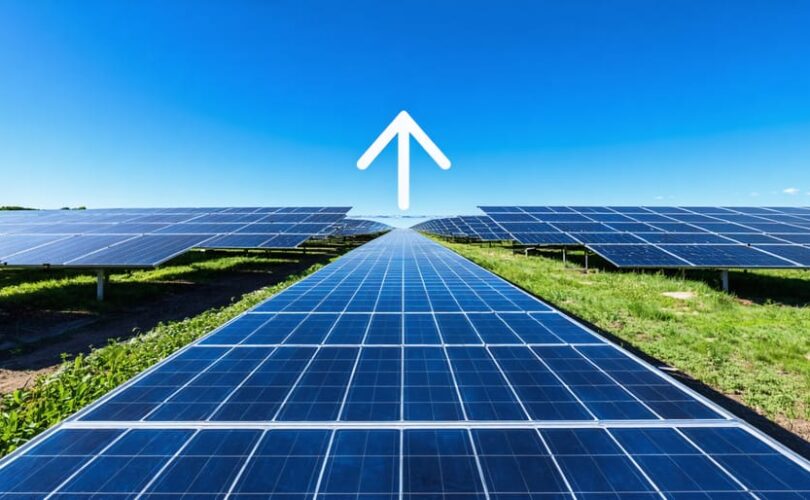
Solar panel efficiency stands at the forefront of renewable energy innovation, with modern commercial panels achieving conversion rates between 15% and 23%. This remarkable advancement, driven by breakthrough technologies in photovoltaic materials and manufacturing processes, represents a significant leap from the single-digit efficiencies of early solar cells. Laboratory prototypes now demonstrate even more promising results, with multi-junction cells reaching efficiencies above 47%, pointing to the tremendous potential still waiting to be unlocked in solar technology.
The evolution of solar panel efficiency directly impacts global energy markets, infrastructure development, and climate change mitigation strategies. As manufacturers continue to push the boundaries of photovoltaic technology, understanding current efficiency rates becomes crucial for stakeholders across the renewable energy sector. From silicon-based panels dominating today’s market to emerging technologies like perovskite cells, the landscape of solar efficiency presents both challenges and opportunities for future energy solutions.
This analysis examines the latest developments in solar panel efficiency, exploring how technological innovations, material science advancements, and manufacturing improvements are reshaping the future of renewable energy production.
Current Solar Panel Efficiency Standards
Commercial vs. Residential Panel Efficiency
Commercial and residential solar panels exhibit distinct efficiency characteristics based on their specific applications and design requirements. Commercial installations typically achieve higher efficiency rates, ranging from 17% to 22%, due to the implementation of advanced technologies and premium materials. These systems often utilize monocrystalline panels with sophisticated tracking systems, maximizing energy capture throughout the day.
Residential solar panels generally operate at slightly lower efficiency rates, typically between 15% and 20%, primarily due to cost considerations and installation constraints. However, recent technological advances have narrowed this gap, with high-end residential systems now approaching commercial efficiency levels. The main factors contributing to this difference include panel quality, system design, and installation methods.
Space utilization also plays a crucial role in efficiency optimization. Commercial installations often benefit from large, unobstructed roof areas or dedicated solar farms, allowing for optimal panel placement and orientation. Residential installations must frequently contend with limited roof space, shading from nearby structures, and varying roof angles, which can impact overall system efficiency.
Despite these differences, both sectors continue to see efficiency improvements through innovations in cell technology, module design, and installation techniques. The choice between commercial and residential panels ultimately depends on specific project requirements, budget constraints, and available installation space rather than efficiency rates alone.
Technology-Specific Efficiency Rates
Current solar panel technology offers varying efficiency rates depending on the type and manufacturing process employed. Monocrystalline PERC (Passivated Emitter and Rear Cell) panels lead the commercial market with efficiency rates ranging from 20-22%, representing the highest performance among widely available options. These panels maximize energy conversion through advanced cell architecture and superior silicon crystal structure.
Multi-crystalline (polycrystalline) panels typically achieve efficiency rates between 15-17%, offering a balance between performance and cost-effectiveness. While slightly less efficient than their monocrystalline counterparts, these panels remain popular in large-scale installations where space constraints are less critical.
Thin-film technologies, including amorphous silicon (a-Si), cadmium telluride (CdTe), and copper indium gallium selenide (CIGS), demonstrate efficiency rates ranging from 10-12% for a-Si to 15-17% for advanced CIGS modules. These emerging solar technologies offer unique advantages in specific applications, particularly in building-integrated photovoltaics.
High-efficiency modules, utilizing technologies like heterojunction (HJT) or interdigitated back contact (IBC) cells, can achieve efficiency rates exceeding 23%. However, these premium options currently represent a smaller market segment due to higher production costs and specialized manufacturing requirements.

Policy Impacts on Efficiency Development
Research and Development Incentives
Governments worldwide recognize the critical role of solar technology advancement in achieving renewable energy goals. Through strategic policy incentives for solar adoption and research funding, public institutions are accelerating efficiency improvements in photovoltaic technology.
The U.S. Department of Energy’s Solar Energy Technologies Office (SETO) leads significant initiatives, allocating substantial resources to research projects aimed at pushing solar cell efficiency boundaries. Their SunShot Initiative has set ambitious targets for cost reduction while maintaining focus on efficiency gains through advanced materials research and innovative cell designs.
In Europe, the European Union’s Horizon Europe program provides dedicated funding streams for solar research, emphasizing collaborative projects between research institutions and industry partners. These initiatives focus on developing next-generation solar technologies, including perovskite cells and multi-junction architectures.
China’s renewable energy research programs have similarly prioritized solar efficiency improvements, with significant state funding directed toward both university research and industrial development. Their approach combines fundamental research with rapid commercial implementation, contributing to accelerated efficiency gains in mass-produced panels.
Research institutions benefit from tax credits, grants, and public-private partnership opportunities designed to facilitate breakthrough innovations. These incentives have proven particularly effective in advancing thin-film technologies and pursuing theoretical efficiency limits in emerging cell designs.
The collaborative nature of these programs, involving national laboratories, universities, and private sector partners, has created an ecosystem that consistently delivers incremental improvements in solar cell efficiency while working toward transformative technological advances.
Efficiency Requirements in Regulations
Regulatory frameworks worldwide have established minimum efficiency requirements for solar panels to ensure market quality and promote technological advancement. In the United States, the Department of Energy mandates that residential solar panels must achieve at least 15% efficiency to qualify for federal tax incentives and certification programs. The European Union maintains similar standards through its Ecodesign Directive, requiring minimum efficiency ratings of 16% for crystalline silicon modules.
These efficiency requirements serve multiple purposes in the market. They act as quality control mechanisms, preventing substandard products from flooding the market and protecting consumer interests. Additionally, they drive manufacturers to invest in research and development, pushing technological boundaries to meet or exceed these standards.
The International Electrotechnical Commission (IEC) provides globally recognized testing standards for solar panel efficiency certification. These standards ensure consistent measurement methodologies across different manufacturers and geographical locations. Manufacturers must submit their panels for independent testing to verify compliance with these requirements.
The market impact of these regulations has been significant. Higher efficiency standards have contributed to the steady improvement of commercial solar panels, with most mainstream products now achieving 18-22% efficiency. This regulatory framework has also fostered healthy competition among manufacturers, leading to continued innovation and cost reductions while maintaining quality standards.
For emerging markets and developing nations, many have adopted similar regulatory frameworks, often modeled after established standards in the EU and US. This global harmonization of efficiency requirements has helped create a more uniform international market for solar technology while ensuring consistent quality standards worldwide.
Economic Implications of Efficiency Rates
Return on Investment Calculations
The efficiency of solar panels plays a crucial role in determining solar investment returns and overall system performance. Higher efficiency ratings directly correlate with increased power output per square meter, potentially reducing the total installation area required and associated costs. For instance, a 20% efficient panel will generate significantly more power than a 15% efficient panel of the same size, leading to faster payback periods and improved long-term returns.
When calculating ROI, efficiency impacts several key metrics. First, it affects the initial system size needed to meet energy requirements, influencing upfront costs. Second, higher efficiency often translates to better performance in limited space conditions, making it particularly valuable for residential and commercial installations with space constraints. Third, more efficient panels typically demonstrate superior performance in low-light conditions, contributing to consistent energy generation throughout the year.
The financial benefits of higher efficiency panels must be weighed against their premium pricing. While more efficient panels command higher prices, their increased power output can offset this cost through reduced installation area requirements, lower balance-of-system costs, and decreased maintenance needs over time. A comprehensive ROI analysis should consider these factors alongside local electricity rates, available incentives, and specific installation requirements to determine the most cost-effective solution.
Market Pricing Trends
The relationship between solar panel efficiency and market pricing has shown a consistent inverse correlation over the past decade. As manufacturing processes improve and technology advances, higher-efficiency panels have become increasingly cost-effective. Current market data indicates that the average cost per watt for solar panels has decreased by approximately 70% since 2010, while efficiency rates have steadily improved.
Premium solar panels with efficiency ratings above 20% typically command higher upfront costs, ranging from $0.60 to $1.00 per watt more than standard panels. However, these higher-efficiency panels often prove more economical in the long term due to their superior power generation capacity and reduced space requirements. The economy of scale in manufacturing, coupled with technological breakthroughs in cell design, continues to drive down production costs.
Recent market analysis shows that monocrystalline panels, which generally offer higher efficiency rates, have experienced the most significant price reductions. This trend has made high-efficiency options more accessible to both residential and commercial consumers. The competitive landscape has also intensified, with manufacturers focusing on achieving the optimal balance between efficiency improvements and cost reduction.
Industry projections suggest that as new manufacturing technologies and materials emerge, the cost-per-watt of high-efficiency panels will continue to decrease, potentially reaching price parity with standard panels within the next five years.

Future Efficiency Projections
Research institutions and industry leaders project significant advancements in solar panel efficiency over the next decade. Current laboratory developments suggest that future efficiency developments could push commercial solar panel efficiency beyond 25% by 2025, with some experimental technologies achieving rates above 30%.
Multi-junction cells represent one of the most promising paths forward, with theoretical efficiency limits approaching 45%. These cells utilize multiple semiconductor layers to capture different portions of the solar spectrum, maximizing energy conversion. Perovskite-silicon tandem cells are particularly noteworthy, as they combine established silicon technology with next-generation materials.
Advanced manufacturing techniques and materials science breakthroughs are expected to reduce production costs while increasing efficiency. Quantum dot technology and concentrated photovoltaic systems show potential for achieving efficiency rates above 40% in controlled settings, though commercial viability remains a key consideration.
Policy frameworks worldwide are adapting to support these technological advances. Research grants, tax incentives, and renewable energy mandates are accelerating the development and deployment of high-efficiency solar technologies. The European Union’s Green Deal and similar initiatives in other regions are creating favorable conditions for rapid innovation in photovoltaic technology.
Market analysts predict that improved efficiency rates will significantly impact the levelized cost of electricity (LCOE) from solar installations. As efficiency increases and production costs decrease, solar energy is projected to become the most cost-effective power source in most global markets by 2030. This trend has important implications for energy policy, infrastructure planning, and investment decisions in the renewable energy sector.
These projections underscore the importance of continued research and development investment in photovoltaic technology. Universities and research institutions are establishing specialized programs to advance solar cell efficiency, while industry partnerships are helping to bridge the gap between laboratory innovations and commercial implementation.
Solar panel efficiency has made remarkable strides over the past decade, with current commercial modules typically achieving 15-20% efficiency, while premium models reach up to 23%. Laboratory research continues to push boundaries, with experimental cells achieving efficiencies above 40% under concentrated sunlight conditions. These advances demonstrate the industry’s commitment to enhancing photovoltaic technology’s performance and economic viability.
The future outlook for solar panel efficiency remains promising, driven by innovative materials research, improved manufacturing processes, and breakthrough technologies like perovskites and multi-junction cells. Industry experts anticipate commercial panel efficiencies reaching 25-30% within the next decade, while maintaining cost-effectiveness and durability.
However, efficiency improvements must be balanced with other crucial factors, including manufacturing costs, environmental impact, and long-term reliability. The industry’s focus is shifting toward optimizing the overall value proposition rather than pursuing efficiency gains alone. This holistic approach considers factors such as energy payback time, lifecycle emissions, and integration capabilities with emerging smart grid technologies.
As research institutions and manufacturers continue their collaborative efforts, we can expect to see not only higher efficiency ratings but also more sustainable production methods and enhanced grid integration capabilities. These developments will further strengthen solar energy’s position as a cornerstone of the global renewable energy transition, making it an increasingly attractive option for both utility-scale projects and residential installations.