
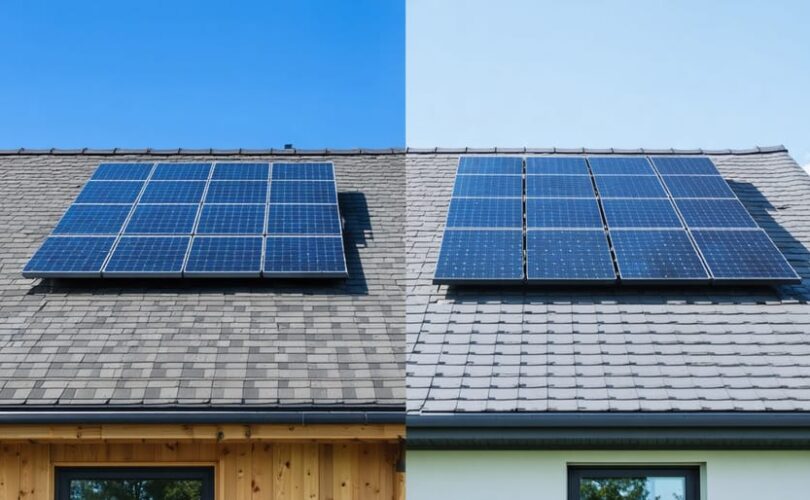
Solar shingles and traditional solar panels present distinctly different investment propositions for homeowners seeking renewable energy solutions. While solar shingles vs solar panels both convert sunlight into electricity, their cost structures vary significantly. Solar shingles typically command $20-25 per square foot installed, approximately 15-20% higher than conventional solar panels at $15-20 per square foot. This premium reflects their dual functionality as both roofing material and power generators.
For a 2,000-square-foot residential installation, solar shingles cost between $40,000-50,000 before incentives, whereas comparable solar panels range from $30,000-40,000. This initial price differential must be weighed against reduced roofing material costs, enhanced aesthetic value, and potentially higher property resale values. Installation costs also differ substantially, with solar shingles requiring specialized expertise and integration with existing roofing systems.
Key financial considerations extend beyond upfront costs to include energy generation efficiency, maintenance requirements, and warranty coverage. Traditional panels typically offer superior power output per square foot, making them the more cost-effective choice for maximizing electricity generation. Solar shingles, however, provide seamless architectural integration that may justify their higher investment for homeowners prioritizing curb appeal or living in neighborhoods with strict design guidelines.
Side-by-side comparison of a roof with solar shingles and traditional solar panels
Understanding the Basic Cost Differences
Solar Shingle Pricing Breakdown
Solar shingles typically range from $21 to $25 per square foot for materials alone, significantly higher than traditional solar panels which average $4 to $10 per square foot. This premium pricing reflects the advanced technology and dual functionality of solar shingles as both roofing material and power generators.
Installation costs for solar shingles are particularly notable, ranging from $15 to $20 per square foot, largely due to the specialized expertise required. Certified installers must have both roofing and electrical expertise, as the installation process involves complex integration with existing roof structures and home electrical systems.
For a typical 2,000-square-foot roof, homeowners can expect total costs between $60,000 and $75,000 for a complete solar shingle system. This calculation includes materials, professional installation, inverters, and necessary electrical components. Additional costs may arise from structural reinforcement requirements, as solar shingles add approximately 2-4 pounds per square foot to roof load.
The specialized nature of solar shingle systems also impacts permitting costs, which typically range from $500 to $2,500 depending on local regulations and system complexity.
Solar Panel Cost Structure
Traditional solar panel systems typically range from $15,000 to $25,000 for residential installations, with costs varying based on system size and location. The price structure breaks down into two main components: hardware and installation costs.
Hardware costs account for approximately 60% of the total investment. A standard solar panel averages $200-$250 per panel, with premium models reaching $400. Additional equipment includes inverters ($1,000-$2,500), mounting hardware ($500-$1,000), and electrical components ($1,000-$2,000).
Installation costs comprise the remaining 40%, covering labor, permits, and inspections. Labor expenses typically range from $0.50 to $1.50 per watt installed, depending on roof complexity and local market rates. Permit fees vary by jurisdiction but generally fall between $200 and $500.
A typical 6kW residential system requires 18-20 panels, resulting in hardware costs of approximately $9,000-$12,000 and installation costs of $6,000-$8,000. Economies of scale apply to larger systems, potentially reducing per-watt costs. Most manufacturers offer 25-year performance warranties, ensuring long-term reliability and performance.
Installation and Labor Expenses
Specialized Installation Requirements
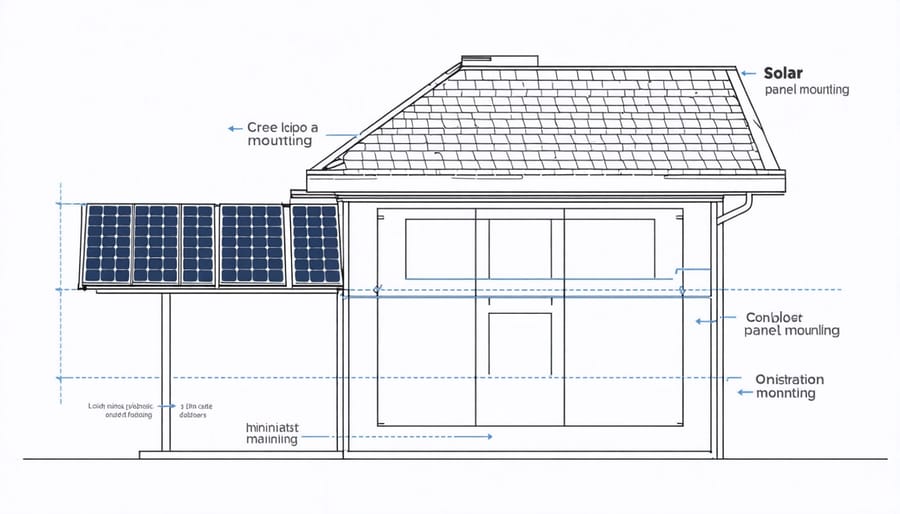
Solar shingle installation requirements differ significantly from traditional solar panel mounting, influencing overall project costs. Unlike conventional panels that attach to existing roofs, solar shingles must be integrated during roof installation or complete replacement, requiring specialized expertise and precise timing.
Professional installation demands certified contractors with both roofing and solar technology experience. These specialists must understand electrical systems, weatherproofing techniques, and proper shingle integration methods. The installation process typically takes 5-7 days, compared to 2-3 days for traditional panels, increasing labor costs.
Structural considerations also play a crucial role. Roof pitch, orientation, and load-bearing capacity must meet specific parameters for optimal performance. Additionally, the electrical system integration requires careful planning to ensure compatibility with existing home infrastructure and local utility requirements.
Weather conditions during installation are more critical for solar shingles, as the roof remains partially exposed during the process. This vulnerability can lead to scheduling delays and increased installation complexity, potentially affecting final costs.
Traditional Panel Installation Costs
Traditional solar panel installation costs typically range from $16,000 to $27,000 for a residential system in 2026, with labor expenses accounting for approximately 18-35% of the total project cost. The installation process involves mounting hardware installation, panel placement, electrical wiring, and inverter setup, requiring specialized expertise and equipment.
The key components of traditional panel installation costs break down as follows:
- Mounting hardware (10-15% of total cost): Racking, rails, and structural supports
- Panel placement (25-30% of total cost): Photovoltaic modules and assembly
- Electrical wiring (15-20% of total cost): Conduit, cables, and connection infrastructure
- Inverter setup (10-15% of total cost): Power conversion equipment and installation
- Permits and documentation (5-8% of total cost): Local building approvals and utility applications
- Inspection fees (2-4% of total cost): Final sign-off and compliance verification
Labor costs vary significantly based on several factors, including roof complexity, system size, and geographical location. Metropolitan areas generally command higher installation rates, ranging from $0.55 to $1.35 per watt, while rural locations may offer more competitive pricing. A typical 6kW system installation requires 20-30 labor hours, involving certified electricians and solar technicians.
The mounting system installation represents a substantial portion of labor costs, requiring precise measurement and alignment to ensure optimal panel positioning and structural integrity. Electrical work, including inverter installation and grid connection, demands licensed professionals to meet local building codes and utility requirements.
Additional factors affecting installation costs include roof modifications, permit acquisition, and safety equipment requirements. Many installers offer package pricing that bundles equipment and labor costs, potentially providing cost savings compared to separate component pricing.
Long-term Cost Considerations
Maintenance Requirements and Costs
Maintenance requirements differ significantly between solar shingles and traditional panels, impacting long-term ownership costs. Solar panels typically require more regular cleaning and inspection to maximize solar panel efficiency, with annual maintenance costs ranging from $150 to $300. These tasks include removing debris, checking electrical connections, and ensuring optimal positioning.
Solar shingles generally demand less frequent maintenance due to their integrated design and weatherproof construction. Their maintenance costs average $100-200 annually, primarily focusing on system monitoring and occasional cleaning. However, when repairs are needed, solar shingles can be more expensive to fix or replace since they’re integrated into the roof structure.
Professional inspection schedules are similar for both systems, with recommended checks every 2-3 years. While long-term panel maintenance may require more frequent attention, their modular design makes individual component replacement more straightforward and cost-effective.
Insurance considerations also factor into maintenance costs. Solar panels often qualify for existing home insurance coverage with minimal premium increases, while solar shingles might require specialized coverage due to their dual role as both roofing material and power generation system. Property owners should factor these ongoing maintenance and insurance costs into their total investment calculations when choosing between the two options.
Lifespan and Replacement Considerations
The lifespan comparison between solar shingles and traditional solar panels represents a crucial factor in long-term cost assessment. Traditional solar panels typically maintain optimal performance for 25-30 years, with manufacturers providing warranties that guarantee at least 80% power output after 25 years. Solar shingles, being a newer technology, generally come with 20-25 year warranties, though real-world longevity data is still emerging.
Both systems experience gradual performance degradation, with panels declining at approximately 0.5-0.8% annually and shingles showing similar deterioration rates of 0.7-1% per year. However, solar shingles serve a dual purpose as both energy generators and roofing materials, potentially offsetting some replacement costs when compared to traditional panels installed over existing roofing.
Solar Panels Pros
- Longer proven track record with 25-30 year warranties backed by extensive performance data.
- Individual panels can be replaced without disturbing the entire array or roof structure.
- Lower annual degradation rate of 0.5-0.8% compared to solar shingles.
- Simpler maintenance access and more straightforward repairs.
Solar Shingles Pros
- Dual-purpose design eliminates separate roof replacement costs during the system’s lifetime.
- Integrated warranty covers both roofing and energy generation in a single product.
- No need to coordinate separate roofing and solar contractors for future work.
- Aesthetic integration means no visible mounting hardware to maintain or replace.
Future replacement considerations differ significantly between the two options. Traditional panels can often be replaced individually if damaged, while solar shingles might require section-by-section replacement, potentially increasing maintenance costs. The integration of shingles into the roof structure means that replacement may necessitate more extensive roof work, though manufacturers are continuously improving installation methods to simplify future maintenance and replacement procedures.
When calculating long-term costs, factor in potential roof repairs or replacements during the system’s lifetime, as well as the possibility of technological advancements rendering current systems less efficient compared to newer alternatives. For a comprehensive breakdown of how solar shingles vs solar panels compare across multiple factors, understanding these lifespan dynamics helps inform the total ownership picture.
Energy Production and ROI Analysis
Energy Output Comparison
When comparing energy output between solar shingles and traditional solar panels, several key factors influence their respective performance capabilities. Traditional solar panels typically demonstrate efficiency rates between 15-20%, while solar shingles currently achieve efficiency ratings of 14-18%. This marginal difference in efficiency means that solar panels generally produce more electricity per square foot of installation area.
A standard 60-cell solar panel can generate approximately 300-350 watts under optimal conditions, whereas an equivalent area of solar shingles might produce 250-300 watts. This output differential becomes significant when considering whole-roof installations. For example, a 2,000-square-foot roof installation using traditional panels could potentially generate 8-10 kilowatts, while the same area with solar shingles might yield 6-8 kilowatts.
However, solar shingles offer unique advantages that can offset their lower efficiency. Their ability to cover larger roof areas without aesthetic compromise means they can sometimes achieve comparable total energy output through greater coverage area. Additionally, newer generations of solar shingles are showing improved efficiency ratings, narrowing the performance gap with traditional panels.
Environmental conditions affect both systems similarly, with factors such as shade, orientation, and temperature impacting power generation. Both technologies experience approximately 0.5% efficiency loss per degree Celsius above optimal operating temperature, though some newer solar shingle designs incorporate advanced cooling features to mitigate this effect.
Financial Return Timeline
The financial return timeline for solar investments varies significantly between traditional solar panels and solar shingles. Typically, conventional solar panels offer a faster payback period of 5-7 years, while solar shingles generally require 7-12 years to reach the break-even point. This difference stems primarily from the higher initial installation costs of solar shingles.
Several factors influence these payback periods, including local electricity rates, available solar incentives, and regional sun exposure. In areas with high utility costs and abundant sunshine, both systems can achieve faster returns. Federal tax credits, currently at 30% of the system cost, apply equally to both options, though some state-specific incentives may vary.
Long-term financial benefits extend beyond the initial payback period. Both systems typically offer 25-30 years of energy production, with solar panels maintaining 85% efficiency after 25 years, while solar shingles demonstrate similar durability. When factoring in roof replacement costs, solar shingles may present additional value since they serve dual purposes as both roofing material and power generators.
Annual energy savings can range from $1,000 to $2,500 depending on system size and local conditions. Property value increases also factor into the financial equation, with solar installations typically adding 4-6% to home values. While solar shingles often command a higher premium due to their aesthetic appeal, both options contribute significantly to long-term property appreciation.
The choice between solar shingles and traditional solar panels ultimately depends on several key factors specific to each homeowner’s situation. For those prioritizing aesthetics and roof integration, solar shingles present a compelling option despite their higher initial cost, typically ranging from 15-25% more than conventional panels. However, homeowners working within stricter budgets may find traditional solar panels more financially viable, offering comparable energy production at a lower installation cost.
Property owners planning new construction or imminent roof replacement should seriously consider solar shingles, as the integrated installation can offset some of the cost differential. Conversely, those with recently installed or well-maintained roofs may find traditional solar panels more cost-effective, avoiding unnecessary roof modifications.
Long-term value considerations favor both options, though traditional panels currently offer a faster return on investment due to their lower initial costs and proven track record. Solar shingles may provide additional value through enhanced property aesthetics and potential insurance benefits, factors particularly relevant in upscale residential markets.
For optimal decision-making, homeowners should evaluate their specific circumstances, including budget constraints, architectural requirements, energy needs, and local climate conditions. Consulting with certified solar installers and reviewing current incentive programs can further inform this important investment choice. Remember that both technologies continue to evolve, with efficiency improvements and cost reductions expected in the coming years.


