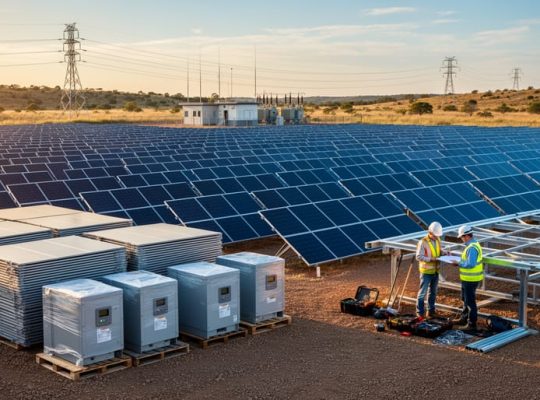
The U.S. solar market has achieved record-breaking solar industry growth, expanding to a remarkable $33.6 billion valuation in 2023, with installations surpassing 20 gigawatts of new capacity. This exponential growth reflects a transformative shift in America’s energy landscape, driven by declining equipment costs, favorable federal policies, and increasing corporate sustainability commitments. As states like California, Texas, and Florida lead deployment efforts, the market demonstrates unprecedented momentum across utility-scale, commercial, and residential sectors. Industry analysts project the U.S. solar market to triple in size by 2030, catalyzed by the Inflation Reduction Act’s investment tax credits and domestic manufacturing incentives. This comprehensive analysis examines current market dynamics, regional distribution patterns, and growth trajectories that are reshaping America’s renewable energy future.
Current U.S. Solar Market Size and Valuation
Total Installed Capacity
The United States solar market has achieved remarkable growth in total installed capacity, reaching over 130 gigawatts (GW) by the end of 2022. This capacity is distributed across three primary sectors: residential, commercial, and utility-scale installations, each serving distinct market segments and energy needs.
Utility-scale installations dominate the market, accounting for approximately 60% of total installed capacity. These large-scale projects, typically exceeding 1 MW in size, are primarily developed by independent power producers and utilities to supply clean energy to the grid. Many of these installations are located in states with abundant solar resources, such as California, Texas, and Florida.
The residential sector represents roughly 25% of the total installed capacity, with over 4 million American homes now powered by solar energy. This segment has experienced consistent growth, driven by declining installation costs, improved financing options, and increasing consumer awareness of environmental benefits.
Commercial and industrial installations make up the remaining 15% of capacity. This sector includes installations on business premises, factories, warehouses, and institutional buildings. While growth in this segment has been slower compared to residential and utility-scale sectors, recent policy initiatives and corporate sustainability goals are driving increased adoption.
Recent trends indicate accelerated growth across all sectors, with annual capacity additions consistently breaking previous records. This growth trajectory is supported by federal incentives, state-level policies, and technological improvements that continue to reduce costs and improve system efficiency.
Market Valuation and Investment
The U.S. solar market has demonstrated remarkable growth, reaching a valuation of approximately $33.1 billion in 2022, with projections indicating continued expansion through 2030. Investment patterns show increasing confidence in solar technologies, driven by improved solar power financial models and declining installation costs.
Private equity and venture capital investments in the solar sector reached record levels, with $12.4 billion invested in 2022 alone. Corporate funding, including public market financing, debt financing, and venture capital, has shown consistent year-over-year growth. Institutional investors have particularly focused on utility-scale solar projects, which attract significant capital due to their stable returns and long-term power purchase agreements.
Federal incentives, including the Investment Tax Credit (ITC) and various state-level programs, continue to play a crucial role in market growth. The Inflation Reduction Act of 2022 has further strengthened investment confidence by extending and expanding solar incentives. This legislative support has attracted new investors and encouraged existing stakeholders to increase their solar portfolios.
Project financing mechanisms have evolved, with green bonds and solar-specific investment vehicles gaining popularity. Community solar projects have emerged as an attractive investment category, offering both environmental and social returns while expanding access to solar energy across diverse demographic groups.
Growth Drivers and Market Dynamics
Policy and Incentives
Federal policies have played a pivotal role in driving U.S. solar market growth, with the Investment Tax Credit (ITC) serving as the cornerstone of national solar incentives. The ITC, which currently offers a 30% tax credit for solar installations through 2032, has significantly influenced modern PV project financing and development decisions across the country.
The Inflation Reduction Act of 2022 has further strengthened federal support by extending and expanding solar incentives, including additional bonuses for domestic manufacturing and projects in low-income communities. These policy frameworks have created a stable environment for long-term industry growth and investment.
At the state level, diverse policy mechanisms complement federal initiatives. Renewable Portfolio Standards (RPS) mandate utilities to source specific percentages of their electricity from renewable sources, creating consistent demand for solar power. Net metering policies, implemented in 38 states, allow solar system owners to receive credits for excess electricity fed back to the grid.
Property Assessed Clean Energy (PACE) programs and Solar Renewable Energy Certificates (SRECs) provide additional financial incentives, making solar installations more economically viable for both residential and commercial customers. States like California, New York, and Massachusetts have established particularly robust incentive frameworks, contributing to their leadership in solar deployment.
Local governments further supplement these efforts through tax abatements, expedited permitting processes, and municipal solar programs. This multi-tiered policy approach has created a comprehensive support system that continues to accelerate solar adoption across market segments.
Technology Advancements
Technological advancements in solar photovoltaic (PV) systems have played a pivotal role in driving down costs and expanding market adoption across the United States. The efficiency of commercial solar panels has improved significantly, with modern modules achieving conversion rates above 20%, compared to 15% just a decade ago. This enhanced performance has directly contributed to better return on investment for both residential and commercial installations.
Manufacturing innovations, particularly in silicon wafer production and cell architecture, have reduced production costs by approximately 85% since 2010. Automated production lines, improved materials, and economies of scale have made solar installations increasingly cost-competitive with traditional energy sources. The introduction of bifacial panels, which can capture reflected sunlight on both sides, has further increased energy yield by 5-30% in optimal conditions.
Energy storage solutions have also evolved considerably, with lithium-ion battery costs declining by more than 89% since 2010. This development has made solar-plus-storage systems more viable for both utility-scale and residential applications, addressing intermittency concerns and enabling greater grid integration.
Advanced inverter technologies now offer sophisticated grid support functions, improving power quality and system reliability. Smart monitoring systems and predictive maintenance capabilities have enhanced operational efficiency while reducing maintenance costs. These improvements have extended system lifespans and increased overall project bankability.
The implementation of artificial intelligence and machine learning in system design and operation has optimized energy production and reduced soft costs. These technological improvements, combined with streamlined installation processes and standardized components, continue to drive down the levelized cost of solar electricity, making it increasingly competitive with conventional power sources.

Regional Market Distribution
The U.S. solar market exhibits distinct regional patterns, with adoption rates varying significantly across different states due to factors including solar resources, policy frameworks, and economic incentives. California continues to lead the nation in solar installations, accounting for approximately 40% of the total installed capacity. The state’s ambitious renewable energy goals, supportive policies, and high electricity rates have created a favorable environment for solar development.
The Southwest region, including Arizona, Nevada, and Texas, represents another significant hub for solar deployment, benefiting from excellent solar radiation and large tracts of available land for utility-scale projects. These states have experienced substantial growth in both residential and commercial installations, driven by declining installation costs and favorable net metering policies.
The Northeast, despite lower solar resources, has emerged as a growing market, particularly in states like Massachusetts, New York, and New Jersey. Strong state-level incentives, renewable portfolio standards, and high electricity costs have spurred significant solar adoption in these regions. Community solar programs have gained particular traction in these states, making solar access more equitable for urban residents.
The Southeast, historically slower to adopt solar, has shown remarkable growth in recent years. States like Florida, North Carolina, and Georgia have witnessed increased utility-scale solar development, supported by improving economics and corporate renewable energy commitments. The region’s potential for solar expansion remains substantial, given its abundant solar resources and growing population centers.
The Midwest has demonstrated varying levels of solar market development, with states like Illinois and Minnesota leading through progressive renewable energy policies and community solar initiatives. While adoption rates have traditionally been lower compared to coastal regions, declining technology costs and expanding state incentives are driving increased interest in solar installations across the Midwest.
Mountain states such as Colorado and Utah have leveraged their excellent solar resources to develop robust markets, particularly in utility-scale projects. These states benefit from abundant land availability and supportive regulatory frameworks that encourage solar development.
Market Challenges and Opportunities
Infrastructure and Grid Integration
The expansion of U.S. solar market capacity presents significant infrastructure challenges, particularly in grid integration and transmission capabilities. Aging power infrastructure requires substantial modernization to accommodate the increasing penetration of solar energy into the electrical grid. Utility companies are implementing advanced grid management systems and smart technologies to address intermittency issues and maintain grid stability.
Energy storage solutions play a crucial role in managing solar power integration. The deployment of utility-scale battery systems has increased significantly, with installations reaching 4.6 GW of capacity in 2022. These storage systems help balance supply and demand, providing grid operators with greater flexibility in managing solar power distribution.
Interconnection queues remain a notable bottleneck, with many solar projects facing lengthy waiting periods for grid connection approval. Regional transmission organizations (RTOs) and independent system operators (ISOs) are working to streamline these processes through updated policies and technical requirements.
Grid modernization initiatives include the implementation of advanced metering infrastructure (AMI) and distributed energy resource management systems (DERMS). These technologies enable better coordination between solar installations and traditional power sources, improving overall grid reliability and efficiency.
The Department of Energy’s Grid Modernization Initiative provides funding and technical support for infrastructure improvements, focusing on enhancing grid resilience and flexibility to accommodate higher levels of solar generation. This includes developing advanced forecasting tools and control systems for better solar integration management.
Future Growth Prospects
The U.S. solar market is poised for unprecedented growth over the next decade, driven by favorable federal policies, technological advancements, and declining installation costs. According to industry forecasts, the market is expected to triple in size by 2030, with utility-scale installations leading the expansion. The Investment Tax Credit (ITC) extension and the Inflation Reduction Act’s provisions are projected to catalyze significant private investment in solar infrastructure.
Analysis of latest solar market trends indicates substantial growth potential in residential and commercial sectors, particularly as energy storage integration becomes more prevalent. Experts anticipate that distributed solar-plus-storage systems will become increasingly cost-competitive with traditional energy sources, driving adoption rates across diverse market segments.
Emerging opportunities include the expansion of community solar projects, which are expected to grow by 150% through 2027, and the development of solar manufacturing capabilities within the United States. The push for domestic production, supported by federal incentives, is likely to strengthen supply chain resilience and create new employment opportunities.
Additionally, technological innovations in bifacial panels, perovskite solar cells, and smart grid integration are expected to improve system efficiency and reduce costs further. These advancements, combined with increasing corporate sustainability commitments and state-level renewable portfolio standards, suggest a robust growth trajectory for the U.S. solar market in the coming years.
The U.S. solar market demonstrates remarkable resilience and growth potential, with current market indicators pointing toward sustained expansion in the coming years. Analysis of market trends reveals that the industry has successfully navigated challenges such as supply chain disruptions and policy uncertainties while maintaining steady growth trajectories. The combination of declining installation costs, technological advancements, and supportive federal policies, particularly the Inflation Reduction Act, positions the sector for continued robust development.
Key findings indicate that utility-scale projects remain the primary driver of market growth, while residential and commercial segments show promising acceleration. The increasing adoption of energy storage solutions and smart grid technologies further enhances the market’s value proposition. States like California, Texas, and Florida continue to lead in installation capacity, though emerging markets in the Southeast and Midwest regions demonstrate significant growth potential.
Looking ahead, projections suggest the U.S. solar market will maintain its upward trajectory through 2030 and beyond. Factors supporting this outlook include ongoing technological innovations, improving cost-competitiveness, and growing corporate commitments to renewable energy. The industry’s expansion is expected to create substantial employment opportunities while contributing significantly to the nation’s clean energy goals. However, success will depend on addressing challenges such as grid integration, workforce development, and maintaining stable policy frameworks. As the market matures, emphasis on quality, efficiency, and sustainability will become increasingly crucial for industry stakeholders.