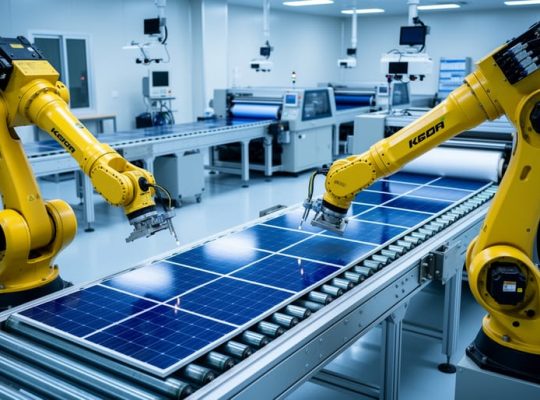
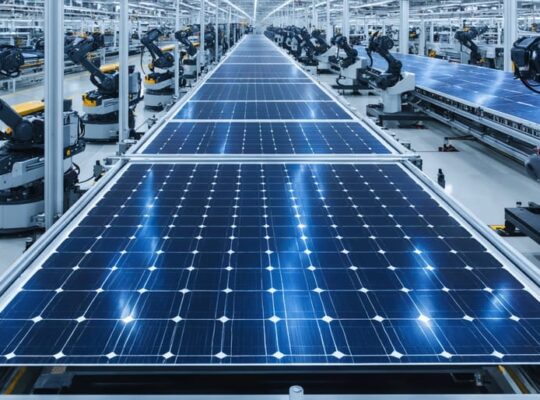
Sustainable manufacturing stands at the forefront of modern industrial innovation, representing a critical paradigm shift in how we produce solar panels and renewable energy technologies. The intersection of environmental responsibility and manufacturing efficiency has become increasingly vital as global energy demands surge alongside mounting environmental concerns. By implementing advanced recycling protocols, optimizing resource utilization, and adopting circular economy principles, manufacturers are revolutionizing traditional production methods while significantly reducing their environmental footprint.
Recent technological advancements have enabled manufacturing facilities to reduce energy consumption by up to 40% through smart automation systems and energy recovery processes. These innovations, coupled with the integration of renewable energy sources in production facilities, demonstrate how sustainability can enhance both environmental stewardship and operational efficiency. The implementation of closed-loop water systems, zero-waste initiatives, and responsible material sourcing has established new benchmarks for sustainable manufacturing excellence.
Moving forward, the industry’s focus on developing biodegradable materials, implementing AI-driven optimization systems, and creating cradle-to-cradle product lifecycles promises to further transform sustainable manufacturing. This evolution not only addresses current environmental challenges but also positions manufacturers at the forefront of innovation, creating resilient, future-proof production systems that benefit both the planet and profitability.
Core Principles of Sustainable PV Manufacturing
Resource Optimization and Material Recovery
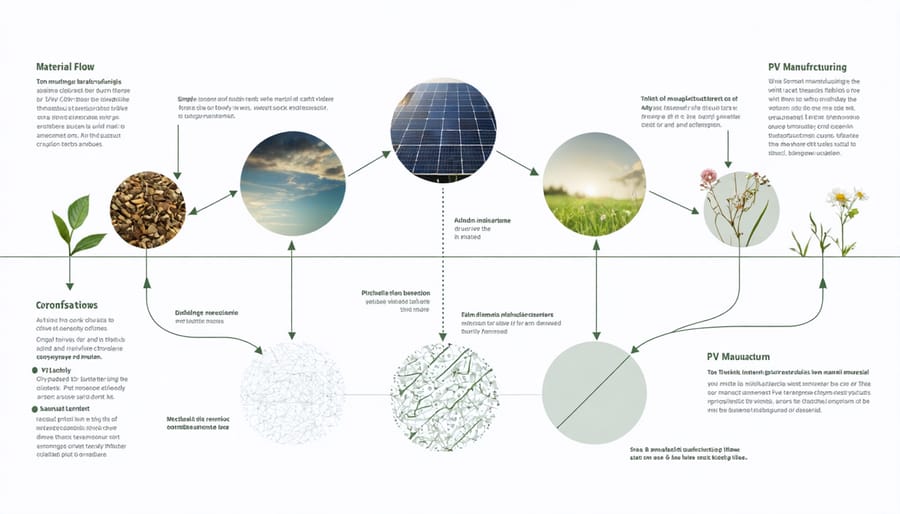
Efficient resource utilization and material recovery are critical components of sustainable PV manufacturing, emphasizing the implementation of closed-loop manufacturing processes to minimize waste and maximize resource efficiency. Advanced manufacturing facilities employ sophisticated material recovery systems that capture and recycle silicon wafer fragments, metallic components, and glass materials during production.
Key optimization strategies include the recovery of silver and aluminum from metallization processes, the reclamation of damaged wafers through etching and reprocessing, and the implementation of water recycling systems that can reduce freshwater consumption by up to 90%. Manufacturing facilities are increasingly adopting automated sorting systems for precise material separation, enabling higher recovery rates of valuable materials.
The integration of artificial intelligence and machine learning algorithms helps optimize resource allocation and predict maintenance needs, reducing material waste and energy consumption. These systems work in conjunction with real-time monitoring technologies to ensure optimal resource utilization throughout the manufacturing process, while maintaining strict quality control standards and reducing environmental impact.
Energy-Efficient Production Methods
Energy-efficient production methods in sustainable manufacturing focus on optimizing resource utilization while maintaining high-quality output. Advanced heat recovery systems capture and repurpose thermal energy from production processes, reducing overall energy consumption by up to 30%. Variable frequency drives (VFDs) in manufacturing equipment enable precise control of motor speeds, resulting in significant power savings during non-peak operations.
Smart factory automation systems integrate IoT sensors and real-time monitoring to optimize energy usage across production lines. These systems automatically adjust power consumption based on production demands and identify areas for efficiency improvements. Implementation of LED lighting with motion sensors and natural lighting solutions further reduces facility energy requirements.
Process integration techniques, such as combining multiple manufacturing steps, minimize energy losses between production stages. Combined heat and power (CHP) systems maximize energy efficiency by simultaneously generating electricity and useful thermal energy. Regular maintenance schedules and equipment upgrades ensure optimal performance and prevent energy waste through equipment inefficiencies.
These strategies, when implemented comprehensively, can achieve energy consumption reductions of 40-60% compared to traditional manufacturing methods while maintaining or improving production quality.
Advanced Manufacturing Technologies
Smart Factory Integration
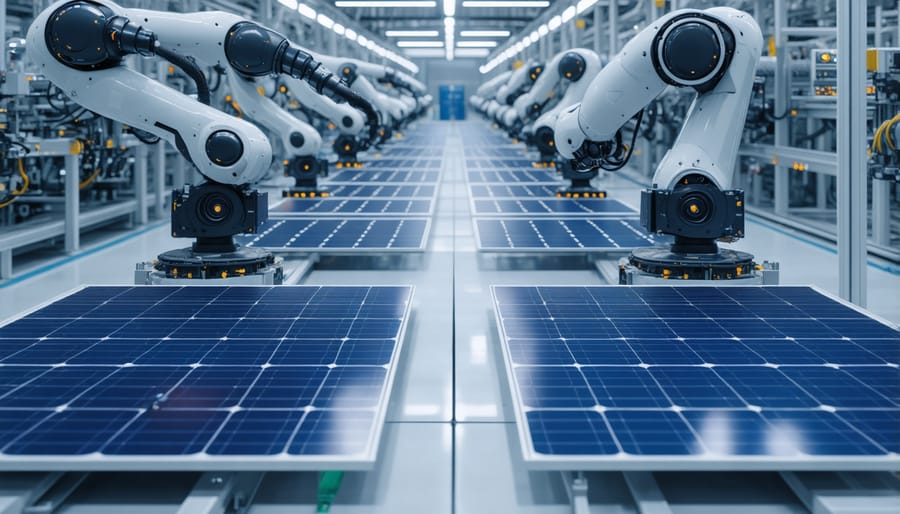
The integration of smart factory automation represents a significant advancement in sustainable manufacturing processes within the photovoltaic industry. By implementing Internet of Things (IoT) sensors and automated systems, manufacturers can optimize resource utilization while maintaining precise quality control throughout the production cycle.
Advanced monitoring systems continuously track energy consumption, material usage, and production efficiency in real-time. This data-driven approach enables manufacturers to identify and eliminate wasteful processes, reducing both environmental impact and operational costs. Intelligent scheduling algorithms optimize production timing to maximize energy efficiency and minimize idle equipment time.
Machine learning algorithms analyze production data to predict maintenance needs, preventing unexpected downtime and extending equipment lifespan. This predictive maintenance approach reduces waste from equipment failures and ensures consistent product quality. Additionally, automated material handling systems minimize material waste through precise measurements and controlled processing.
IoT integration enables comprehensive environmental monitoring, tracking emissions, water usage, and energy consumption across the facility. This granular data collection allows manufacturers to implement targeted improvements and demonstrate compliance with environmental regulations. Smart energy management systems automatically adjust power consumption based on production demands, optimizing energy usage during peak and off-peak periods.
The implementation of these smart manufacturing solutions creates a more sustainable and efficient production environment while maintaining the high quality standards essential for photovoltaic components.
Waste Reduction Technologies
Modern photovoltaic manufacturing facilities employ sophisticated waste reduction technologies to minimize environmental impact while maximizing resource efficiency. Advanced material recovery systems capture and recycle silicon wafer fragments, reducing raw material waste by up to 85% compared to traditional processes. Automated cutting systems with precision controls minimize kerf loss during wafer slicing, while innovative water recycling systems can reclaim up to 90% of process water.
Chemical waste management technologies incorporate closed-loop systems that filter and purify chemicals for reuse in various manufacturing stages. Integration of artificial intelligence and machine learning algorithms optimizes production parameters in real-time, reducing defect rates and material waste. Smart inventory management systems ensure just-in-time production, minimizing excess material storage and potential obsolescence.
Innovative encapsulation techniques reduce material wastage during module assembly, while advanced robotics systems ensure precise material application and handling. Manufacturers increasingly implement waste heat recovery systems that capture thermal energy from production processes for reuse in facility operations. Additionally, smart packaging solutions minimize packaging waste while ensuring product protection during transportation.
These technologies are complemented by lean manufacturing principles and circular economy approaches, where waste from one process becomes input for another. Regular monitoring and analytics help identify waste reduction opportunities and validate the effectiveness of implemented solutions, ensuring continuous improvement in sustainable manufacturing practices.
Environmental Impact Management
Carbon Footprint Reduction
Manufacturing facilities can significantly reduce their carbon footprint through strategic implementation of energy-efficient technologies and processes. Energy monitoring systems enable real-time tracking of consumption patterns, allowing manufacturers to identify areas of high energy usage and implement targeted improvements. Advanced heat recovery systems capture and repurpose waste heat from production processes, reducing overall energy requirements.
The integration of renewable energy sources, particularly solar and wind power, plays a crucial role in decreasing reliance on fossil fuels. Many facilities are installing on-site renewable energy systems, complemented by smart grid technologies for optimal energy management. Energy-efficient lighting systems, equipped with motion sensors and LED technology, further contribute to reduced electricity consumption.
Process optimization through automation and smart manufacturing technologies helps minimize energy waste while maintaining production efficiency. Implementation of variable frequency drives for motors and pumps ensures equipment operates at optimal energy levels. Regular maintenance schedules and equipment upgrades prevent energy losses from inefficient operation.
Carbon offsetting initiatives, such as participating in reforestation projects or investing in renewable energy certificates, help balance unavoidable emissions. Additionally, sustainable supply chain management, including local sourcing and efficient logistics planning, reduces transportation-related emissions while supporting regional economic development.
Water Conservation Practices
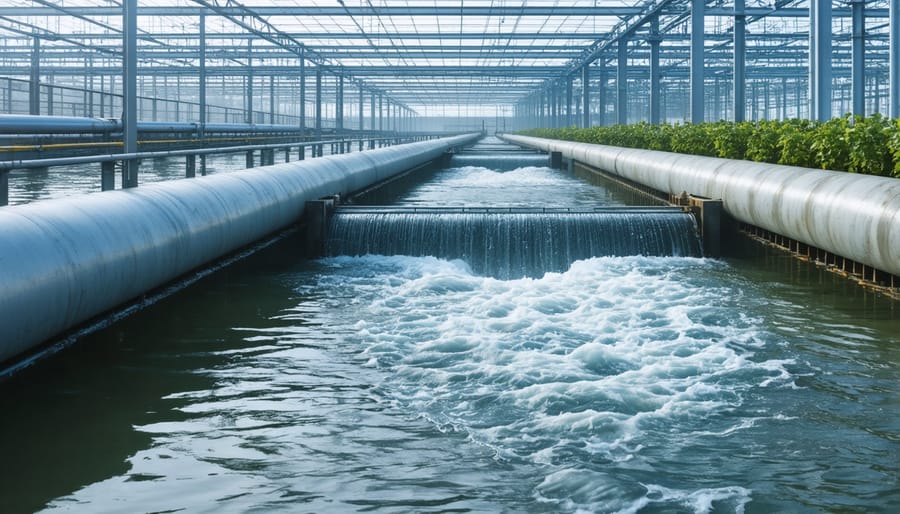
Water conservation in photovoltaic manufacturing involves implementing sophisticated recycling systems and efficient management protocols to minimize water consumption while maintaining production quality. The industry employs closed-loop water systems that capture, treat, and reuse process water across multiple manufacturing stages. These systems typically achieve water recycling rates of up to 90%, significantly reducing freshwater demand.
Advanced filtration technologies, including reverse osmosis and deionization systems, ensure that recycled water meets the stringent purity requirements for solar cell production. Manufacturers implement real-time monitoring systems to track water usage patterns and identify optimization opportunities throughout the production process.
Key water conservation strategies include:
– Implementation of dry cleaning processes where feasible
– Installation of high-efficiency cooling towers
– Usage of advanced wastewater treatment systems
– Integration of smart metering systems for consumption monitoring
– Application of water-efficient cleaning technologies
Leading manufacturers are increasingly adopting zero liquid discharge (ZLD) systems, which eliminate wastewater discharge by converting all liquid waste into solid waste and purified water. This approach not only conserves water but also prevents environmental contamination and ensures compliance with stringent environmental regulations.
Modern facilities also incorporate rainwater harvesting systems and utilize treated greywater for non-critical operations, further reducing their environmental footprint.
Quality Assurance in Sustainable Manufacturing
Quality assurance in sustainable manufacturing requires a comprehensive approach that integrates traditional quality control methods with environmentally conscious practices. This integration ensures that products meet high-performance standards while minimizing environmental impact throughout the production process.
Modern sustainable manufacturing facilities implement multi-layered quality control systems that begin with raw material verification and extend through final product testing. These systems incorporate real-time monitoring technologies, statistical process control (SPC), and AI-powered quality control mechanisms to maintain consistent product quality while optimizing resource utilization.
Key components of quality assurance in sustainable manufacturing include:
1. Environmental Management Systems (EMS) integration with quality control protocols
2. Life Cycle Assessment (LCA) considerations in quality metrics
3. Resource efficiency monitoring and optimization
4. Waste reduction through precise quality control measures
5. Energy consumption tracking during quality testing procedures
Documentation and traceability play crucial roles in sustainable quality assurance. Manufacturing facilities maintain detailed records of material sources, production parameters, and quality test results. This documentation helps identify opportunities for process improvement while ensuring compliance with environmental standards and regulations.
Advanced monitoring systems track key performance indicators (KPIs) that combine quality metrics with sustainability parameters. These might include:
– Defect rates versus energy consumption
– Material efficiency in relation to quality standards
– Water usage optimization while maintaining product specifications
– Emissions monitoring during quality control processes
Regular calibration of testing equipment and continuous training of quality control personnel ensure that sustainable practices remain effective while maintaining high product standards. This approach creates a balanced system where quality objectives align with environmental goals, resulting in products that meet both performance requirements and sustainability criteria.
The transition toward sustainable photovoltaic manufacturing represents a crucial evolution in the renewable energy sector. Through the implementation of resource-efficient processes, waste reduction strategies, and eco-friendly material selection, the industry has made significant strides in minimizing its environmental footprint while maintaining high production standards.
The integration of circular economy principles, advanced recycling technologies, and energy-efficient production methods has demonstrated that sustainability and profitability can coexist in PV manufacturing. Companies that have adopted these practices report reduced operational costs, improved brand reputation, and enhanced market competitiveness.
Looking ahead, the future of sustainable PV manufacturing appears promising, with emerging technologies and innovative approaches continually being developed. The industry is moving toward completely carbon-neutral production facilities, advanced materials recovery systems, and zero-waste manufacturing processes. Research and development efforts are focusing on biodegradable components, water-based processing methods, and AI-driven optimization of resource utilization.
To maintain this momentum, continued collaboration between manufacturers, research institutions, and regulatory bodies is essential. Investment in workforce training, technological advancement, and infrastructure development will be crucial for scaling sustainable practices across the industry. As global demand for solar energy continues to rise, the commitment to sustainable manufacturing will become increasingly important in meeting both environmental obligations and market expectations.
Success in this evolution will require ongoing dedication to innovation, environmental stewardship, and industry-wide cooperation, ensuring that photovoltaic technology truly delivers on its promise of clean, sustainable energy for future generations.