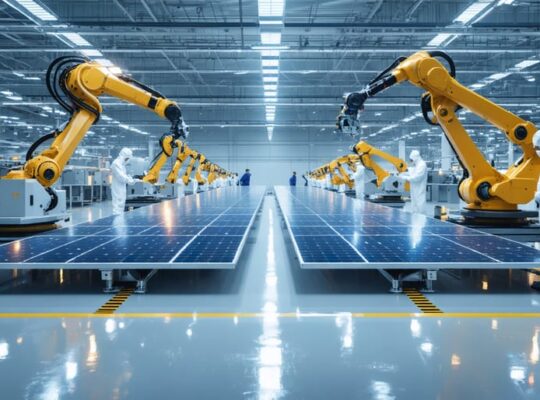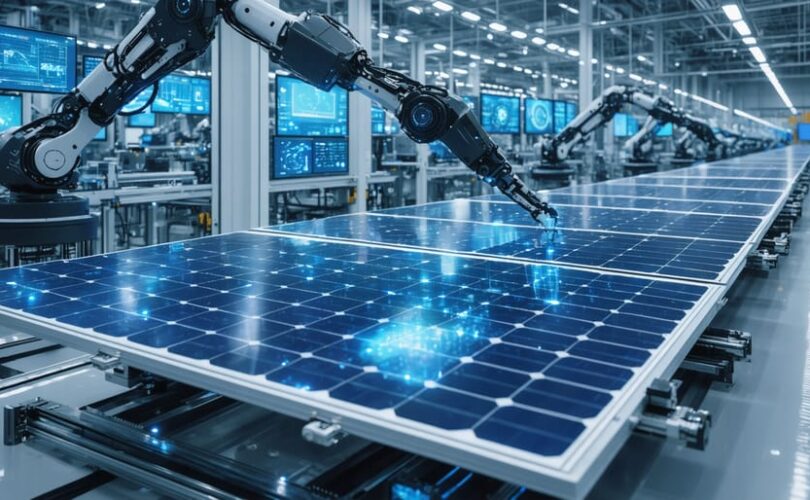
Solar automation represents a transformative leap in photovoltaic manufacturing, revolutionizing how we produce and deploy renewable energy solutions at scale. By integrating advanced robotics, artificial intelligence, and smart manufacturing systems, the solar industry has dramatically improved production efficiency while reducing costs and maintaining exceptional quality standards.
The convergence of Industry 4.0 technologies with solar manufacturing has created unprecedented opportunities for streamlined production processes, from wafer handling to module assembly. Modern automated production lines can now manufacture solar panels with precision measured in micrometers, achieving throughput rates that were unimaginable just a decade ago.
This technological evolution arrives at a crucial moment, as global demand for solar energy solutions continues to surge. Automated manufacturing systems not only address the scaling challenges faced by the industry but also ensure consistent quality control, reduced material waste, and enhanced worker safety. These advancements have contributed significantly to the declining cost of solar energy, making it increasingly competitive with traditional power sources.
As we stand at the intersection of renewable energy and industrial automation, the integration of smart manufacturing principles in solar production represents not just an optimization of current processes, but a fundamental shift in how we approach clean energy manufacturing for a sustainable future.
The Evolution of Solar PV Manufacturing
Traditional vs. Automated Manufacturing
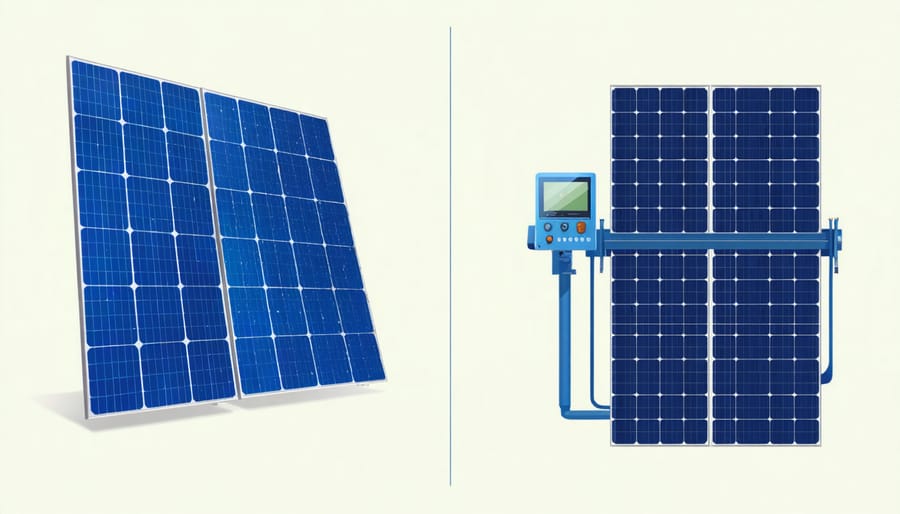
Traditional solar panel manufacturing relies heavily on manual labor and semi-automated processes, requiring operators to handle material transport, quality inspection, and assembly tasks. This conventional approach, while offering flexibility for small-scale production, often results in inconsistent quality, slower throughput, and higher labor costs.
In contrast, automated manufacturing systems employ advanced robotics, artificial intelligence, and integrated control systems to streamline production. Modern automated lines feature precision robots for cell handling, automated stringers for cell interconnection, and sophisticated vision systems for quality control. These systems can operate continuously with minimal human intervention, maintaining consistent quality standards across production runs.
The key differences extend beyond operational efficiency. While traditional methods typically achieve production rates of 40-60 panels per hour, automated lines can produce 180-200 panels hourly. Quality control in automated systems uses advanced imaging and artificial intelligence to detect defects with 99.9% accuracy, compared to approximately 95% in manual inspection. Additionally, automated systems reduce material waste by up to 25% through precise handling and optimized processes, significantly improving cost-effectiveness and environmental sustainability.
Key Drivers of Manufacturing Automation
Several compelling factors are driving the rapid adoption of automation in solar manufacturing. Rising labor costs in traditional manufacturing regions, coupled with increasing demand for higher production volumes, have made automated solutions increasingly attractive. Quality control requirements have become more stringent, as modern solar panels must meet precise specifications to achieve optimal efficiency and durability.
Global competition has intensified, pushing manufacturers to optimize their operations and reduce costs while maintaining consistent quality. The need for precision in handling delicate solar components, such as thin wafers and cells, makes human error a significant concern in manual processing. Automated systems can perform these tasks with superior accuracy and repeatability.
Additionally, advances in robotics, machine learning, and sensor technologies have made automation more accessible and cost-effective. The integration of Industry 4.0 principles has enabled smart manufacturing capabilities, allowing real-time monitoring and predictive maintenance. Environmental considerations also play a role, as automated processes typically generate less waste and consume resources more efficiently than manual operations.
The push for higher solar panel efficiency at lower production costs continues to drive innovation in manufacturing automation, making it an essential element of competitive solar production.
Core Automated Processes in Solar Panel Production
Wafer Processing and Cell Production
Automation plays a crucial role in modern wafer processing and solar cell manufacturing process, significantly enhancing efficiency and quality control. Advanced robotics systems handle delicate silicon wafers throughout multiple processing stages, minimizing breakage and contamination risks. These systems employ precision sensors and computer vision technology to ensure accurate placement and orientation of wafers during cutting, texturing, and doping procedures.
Automated handling systems transport wafers between processing stations using specialized end-effectors and vacuum-based grippers. These mechanisms maintain careful control over wafer orientation and spacing, crucial for consistent processing results. Integration of artificial intelligence and machine learning algorithms enables real-time quality inspection and process optimization, identifying defects before they impact downstream operations.
Modern manufacturing lines incorporate in-line monitoring systems that continuously assess wafer thickness, surface quality, and electrical properties. This automated quality control ensures uniformity across production batches and reduces material waste. Additionally, environmental parameters such as temperature, humidity, and particulate levels are automatically regulated to maintain clean room conditions essential for high-quality cell production.
The automation of wafer processing has resulted in significantly higher throughput rates, with some facilities capable of processing thousands of wafers per hour while maintaining exceptional quality standards. This level of automation has become instrumental in achieving the cost reductions necessary for solar energy’s continued market competitiveness.
Module Assembly Automation
Modern solar panel assembly facilities leverage advanced robotic manufacturing systems to achieve unprecedented precision and efficiency in module production. These automated systems handle critical processes such as cell positioning, string assembly, and lamination with remarkable accuracy and consistency.
Robotic arms equipped with vacuum end-effectors precisely place solar cells onto the module substrate, ensuring optimal spacing and alignment. Automated string assemblers then connect cells using specialized soldering techniques, while vision systems continuously monitor quality control parameters. The integration of smart conveyor systems enables seamless material flow between different assembly stations.
The lamination process, crucial for module durability, is controlled by automated systems that maintain precise temperature and pressure profiles. Advanced lamination equipment incorporates multiple chambers for simultaneous processing, significantly increasing throughput while ensuring uniform encapsulation quality.
Quality assurance is enhanced through automated inspection systems utilizing artificial intelligence and machine learning algorithms. These systems detect microscopic defects, verify electrical connections, and ensure proper alignment throughout the assembly process. Real-time data collection and analysis enable immediate process adjustments, minimizing waste and optimizing production efficiency.
Modern automation solutions also incorporate flexible manufacturing capabilities, allowing quick adaptation to different module designs and specifications while maintaining consistent quality standards. This adaptability is essential for meeting evolving market demands and technological advancements in solar panel design.
Quality Control and Testing
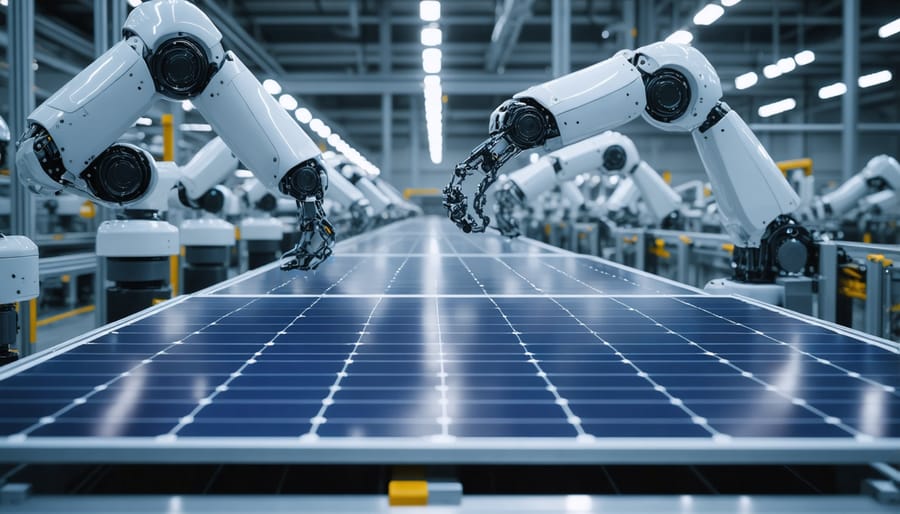
Automated inspection and testing systems play a crucial role in maintaining the quality and reliability of solar panel production. Advanced machine vision systems equipped with high-resolution cameras and artificial intelligence algorithms perform continuous inspection of solar cells and modules throughout the manufacturing process. These systems can detect microscopic defects, such as microcracks, scratches, and material inconsistencies, with precision that surpasses human capability.
Electroluminescence (EL) testing, integrated into automated production lines, enables real-time identification of cell defects and potential failure points. This non-destructive testing method applies electrical current to solar cells while specialized cameras capture detailed images of cell performance and structural integrity. Flash testing systems automatically measure the power output and electrical characteristics of completed modules, ensuring they meet performance specifications.
Quality control automation extends to environmental testing chambers that simulate various weather conditions and stress factors. These systems conduct accelerated lifecycle testing, subjecting panels to extreme temperatures, humidity levels, and mechanical loads to verify long-term durability and performance. Data from these tests is automatically logged and analyzed, creating comprehensive quality reports and enabling continuous process improvement.
Statistical Process Control (SPC) software integrates with testing equipment to monitor quality metrics in real-time, allowing manufacturers to identify and address production issues before they impact larger batches. This data-driven approach to quality control has significantly reduced defect rates while increasing production efficiency and product reliability.
Benefits of Manufacturing Automation
Production Efficiency and Cost Reduction
Automation in solar manufacturing has revolutionized production efficiency while significantly reducing costs across the supply chain. Modern automated production lines can produce solar panels at rates exceeding 2,400 units per day, compared to traditional manual processes that typically yielded 200-300 units. This substantial increase in throughput directly contributes to economies of scale and lower per-unit costs.
The implementation of robotic systems and artificial intelligence in quality control has reduced defect rates by up to 85%, minimizing material waste and rework requirements. Advanced vision systems can detect microscopic flaws in solar cells with 99.9% accuracy, ensuring consistent product quality while reducing labor costs associated with manual inspection.
Manufacturing cost reductions through automation are particularly evident in cell stringing and module assembly processes. Automated stringers can process cells three times faster than manual operations, while maintaining precise alignment and reducing cell breakage rates to less than 0.1%. Moreover, automated material handling systems optimize inventory management and reduce storage costs by up to 30%.
Energy consumption in automated facilities has also improved, with smart systems managing production schedules to maximize energy efficiency. Modern automated lines consume approximately 40% less energy per unit produced compared to traditional manufacturing methods. These efficiency gains, combined with reduced labor costs and improved quality control, have contributed to a 70% decrease in solar panel production costs over the past decade.
Quality and Consistency Improvements
Automation in solar manufacturing significantly enhances product quality and consistency through precise control of critical manufacturing parameters. Advanced robotics and machine learning systems maintain exact specifications throughout the production process, reducing human error and ensuring uniform cell characteristics across large production volumes.
Computer-integrated manufacturing systems continuously monitor and adjust variables such as temperature, pressure, and material flow rates in real-time. This precise control results in higher cell efficiency rates and fewer defects compared to manual production methods. Quality control systems equipped with artificial intelligence can detect microscopic imperfections that might be missed by human inspectors, ensuring only products meeting strict quality standards reach the market.
Statistical process control (SPC) implemented through automated systems enables manufacturers to maintain consistent product specifications across multiple production lines and facilities. This standardization is crucial for maintaining high-performance ratings and meeting international certification requirements.
The implementation of automated testing and inspection systems has reduced quality control cycle times while increasing detection accuracy. Modern production lines incorporate in-line testing at multiple stages, allowing immediate identification and correction of process deviations. This proactive approach minimizes waste and ensures that resources are utilized efficiently.
Automated data collection and analysis provide manufacturers with detailed insights into production metrics, enabling continuous process optimization and predictive maintenance scheduling. This data-driven approach helps maintain consistent quality levels while reducing downtime and manufacturing costs.
Future Trends in Solar Manufacturing Automation
AI and Machine Learning Integration
Artificial intelligence and machine learning technologies are revolutionizing solar panel manufacturing through enhanced automation capabilities and data-driven decision-making. Modern PV production facilities increasingly rely on AI-powered quality control systems that can detect microscopic defects with unprecedented accuracy while maintaining high throughput rates.
Machine learning algorithms analyze vast amounts of production data to optimize manufacturing parameters in real-time, resulting in improved cell efficiency and reduced material waste. These systems can predict equipment maintenance needs, prevent downtime, and automatically adjust processing conditions to maintain optimal production standards.
Neural networks are being deployed to enhance wafer classification, cell sorting, and module assembly processes. By analyzing patterns in manufacturing data, AI systems can identify potential bottlenecks and suggest process improvements that human operators might overlook. This integration of AI technology has led to significant improvements in production yield rates, with some manufacturers reporting efficiency gains of up to 15%.
The future of solar manufacturing will likely see even greater AI integration, with autonomous facilities capable of self-optimization and predictive maintenance becoming the industry standard.

Industry 4.0 and Smart Manufacturing
Industry 4.0 is revolutionizing solar panel manufacturing through intelligent automation, data analytics, and interconnected systems. The integration of smart manufacturing principles enables real-time monitoring, predictive maintenance, and optimized production workflows. Key technologies driving this transformation include Industrial Internet of Things (IIoT) sensors, cloud computing, and digital twin technology.
Smart manufacturing systems in solar production facilities leverage artificial intelligence and machine learning algorithms to analyze vast amounts of production data, enabling automated quality control and process optimization. These systems can detect minute defects in solar cells, adjust manufacturing parameters in real-time, and maintain consistent product quality while reducing waste.
The implementation of cyber-physical systems allows seamless communication between machinery, enabling autonomous decision-making and improved production efficiency. Advanced robotics and automated guided vehicles (AGVs) streamline material handling and assembly processes, while integrated Manufacturing Execution Systems (MES) provide comprehensive production oversight and traceability.
This digital transformation significantly reduces manufacturing costs, improves product quality, and accelerates production timelines, making solar energy more accessible and cost-effective for consumers.
Automation has become an indispensable force in solar manufacturing, transforming the industry’s capability to meet growing global demand for photovoltaic solutions. Through advanced robotics, artificial intelligence, and integrated systems, manufacturers have achieved unprecedented levels of precision, consistency, and production efficiency. These technological advancements have not only reduced costs but also improved the quality and reliability of solar panels, making renewable energy more accessible to markets worldwide.
The future of solar automation appears exceptionally promising, with emerging technologies set to further revolutionize manufacturing processes. Machine learning algorithms are becoming more sophisticated in optimizing production parameters, while smart factories are integrating IoT sensors and real-time monitoring systems to enhance quality control. Industry experts anticipate that next-generation automation will enable even higher production volumes while maintaining superior quality standards.
As we look ahead, the role of automation in solar manufacturing will continue to expand, driven by increasing demand for sustainable energy solutions and the need for greater manufacturing efficiency. Continued investment in research and development, coupled with collaboration between industry leaders and academic institutions, will likely yield innovative automated solutions that further reduce production costs and improve panel efficiency. This evolution in manufacturing technology will be crucial in achieving global renewable energy goals and accelerating the transition to a sustainable future.