Parallel solar panel configurations revolutionize modern renewable energy systems by maximizing power output and enabling flexible smart grid integration. Connecting four solar panels in parallel combines their current outputs while maintaining consistent voltage, creating a robust power generation system ideal for residential and commercial applications. This configuration delivers enhanced performance during partial shading conditions, as each panel operates independently, preventing the efficiency losses common in series connections. Understanding parallel solar arrays becomes crucial as distributed energy systems evolve, offering improved reliability and scalability for modern power needs. The strategic implementation of four-panel parallel systems represents a critical advancement in photovoltaic technology, providing the foundation for sophisticated power management solutions while maintaining system stability and operational efficiency.
Understanding Parallel Solar Panel Configurations
Basic Principles of Parallel Connections
In parallel solar panel connections, the fundamental electrical principles play a crucial role in solar PV system design and performance. When connecting panels in parallel, the voltage remains constant across all modules while the currents add together. This configuration maintains each panel’s rated voltage while combining their current outputs, making it particularly effective for systems requiring higher amperage.
For example, in a parallel connection of four identical 12V solar panels, each producing 5 amperes, the system maintains 12V output voltage while delivering a total current of 20 amperes (4 × 5A). This relationship follows Kirchhoff’s current law, where the total current equals the sum of individual panel currents.
The power output in parallel configurations is calculated by multiplying the system voltage by the total current. Using the previous example, the total power would be 12V × 20A = 240 watts. This arrangement offers several advantages, including improved system reliability since each panel operates independently. If one panel’s performance decreases due to shading or malfunction, the other panels continue functioning at their rated voltage.
Understanding these principles is essential for optimizing system performance and ensuring proper equipment sizing, particularly for charge controllers and inverters that must handle the combined current output.
Advantages of 4-Panel Parallel Arrays
Connecting four solar panels in parallel offers several significant advantages for photovoltaic system design and performance optimization. The primary benefit is the increased current output while maintaining a consistent voltage level, making this configuration particularly suitable for applications requiring higher amperage. This arrangement allows for greater energy production during partial shading conditions, as each panel operates independently, minimizing the impact of shading on the overall system performance.
The parallel configuration enhances system reliability through redundancy. If one panel experiences issues or requires maintenance, the remaining three panels continue to function, ensuring continuous power generation. This feature is particularly valuable in critical applications where uninterrupted power supply is essential.
Another notable advantage is the flexibility in panel selection and system expansion. Four-panel parallel arrays accommodate panels with matching voltage ratings but different current outputs, providing greater design flexibility. This configuration also simplifies future system upgrades, as additional panels can be integrated without significant reconfiguration of the existing setup.
The parallel arrangement optimizes power generation during morning and evening hours when sunlight angles vary across panels. This configuration also proves beneficial in installations where panels face different directions, maximizing energy harvest throughout the day. Additionally, the lower voltage requirements of parallel systems often simplify compliance with electrical codes and safety regulations, making them particularly suitable for residential and small commercial applications.
Smart Grid Integration Considerations
Power Output Optimization
To maximize energy production from four solar panels connected in parallel, several optimization strategies should be implemented. First, ensure all panels have matching voltage ratings and similar power characteristics to prevent power losses due to mismatched components. The parallel configuration allows for maintaining voltage while increasing current output, making it crucial to size conductors appropriately to handle the combined amperage.
Implement Maximum Power Point Tracking (MPPT) technology to continuously adjust the electrical operating point of the array, ensuring optimal power extraction under varying environmental conditions. This becomes particularly important in parallel configurations where each panel may receive different levels of irradiance.
Regular maintenance and monitoring are essential for optimal performance. Install monitoring systems to track individual panel output and detect any underperforming units quickly. Keep panels clean and free from shading, as partial shading on even one panel can significantly impact the entire array’s output in a parallel configuration.
Consider incorporating power optimizers for each panel to mitigate the effects of panel mismatch and shading. These devices allow each panel to operate at its individual maximum power point while maintaining the benefits of parallel connection. For grid-tied systems, ensure the inverter specifications match the combined current output of the parallel array while maintaining appropriate voltage levels for grid compatibility.
Temperature management also plays a crucial role in optimization. Maintain adequate airflow behind the panels and consider using temperature-resistant components to minimize power losses during high-temperature operation.
Monitoring and Control Systems
Effective monitoring and control systems are essential for optimizing the performance of solar panels connected in parallel. Modern power monitoring systems utilize advanced sensors and data analytics to track voltage levels, current flow, and power output across each panel in the array.
Key monitoring parameters include individual panel voltage, total array current, temperature variations, and real-time power generation metrics. Smart monitoring solutions typically incorporate Maximum Power Point Tracking (MPPT) controllers that automatically adjust operating conditions to maintain optimal power output from each panel.
Data logging capabilities enable system operators to analyze historical performance trends, identify potential issues, and implement preventive maintenance schedules. Advanced monitoring platforms often feature remote access functionality, allowing technicians to diagnose and resolve problems without on-site visits.
Modern control systems also integrate safety features such as rapid shutdown capabilities and ground fault detection. These systems can automatically isolate malfunctioning panels to prevent performance degradation of the entire array. Additionally, smart monitoring solutions provide detailed performance reports and efficiency calculations, helping system owners maximize their return on investment while ensuring consistent power generation.
Many contemporary monitoring systems also offer mobile applications and web-based interfaces, making it easier for both professionals and homeowners to track system performance and receive automated alerts about potential issues or maintenance requirements.

Grid Synchronization Requirements
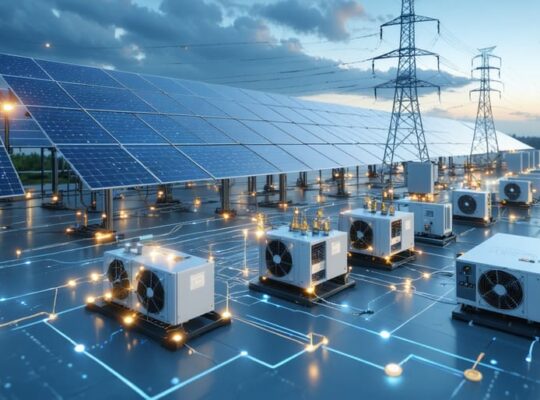
When connecting four solar panels in parallel to the utility grid, strict adherence to grid synchronization requirements is essential for system stability and safety. The primary parameters that must be synchronized include voltage matching, frequency alignment, and phase synchronization.
The inverter system must maintain output voltage within ±5% of the nominal grid voltage, typically 230V or 400V in most regions. Frequency synchronization must remain within ±0.5 Hz of the standard 50/60 Hz grid frequency. Phase angle deviation should not exceed ±10 degrees to prevent circulating currents and ensure smooth power flow.
Modern grid-tie inverters incorporate automated synchronization controls that monitor these parameters continuously. These systems must comply with IEEE 1547 standards for interconnection and interoperability, including rapid disconnect capabilities during grid anomalies. Anti-islanding protection is mandatory, ensuring the system automatically shuts down during grid outages to prevent backfeeding.
The parallel configuration requires additional monitoring for current balancing among the four panels. Each panel must operate within its Maximum Power Point (MPP) range while maintaining balanced current distribution. Current monitoring devices and string optimization technology help achieve this balance, preventing hotspots and ensuring optimal system performance.
For successful grid integration, the installation must include appropriate surge protection devices, DC and AC disconnects, and proper grounding according to local electrical codes and utility requirements.
Installation and Maintenance Best Practices
Wiring and Connection Guidelines
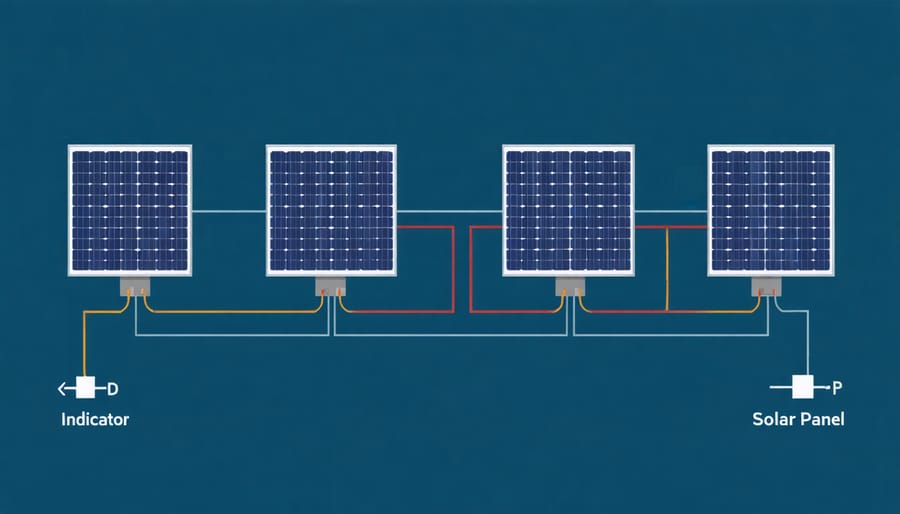
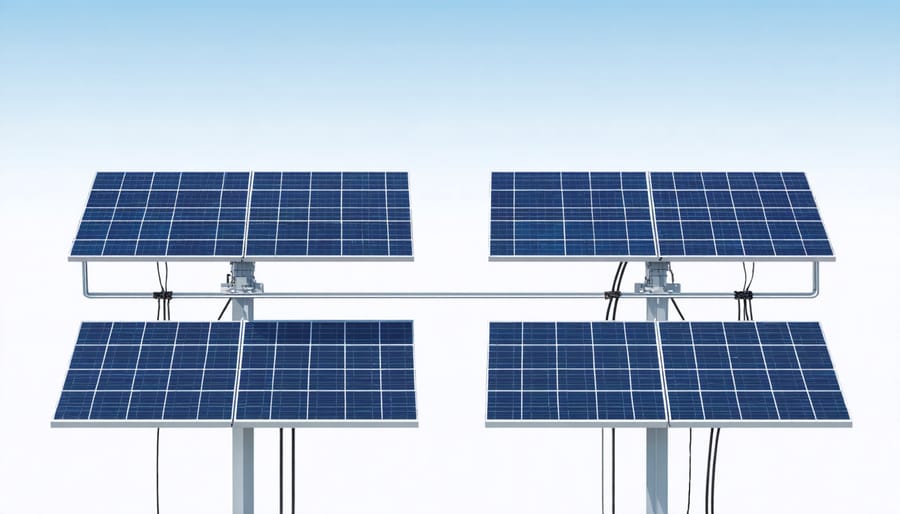
When connecting four solar panels in parallel, proper wiring technique is essential for optimal performance and safety. Begin by identifying the positive and negative terminals on each panel. All positive terminals must connect to a single positive conductor, while all negative terminals connect to a single negative conductor.
Use appropriately sized solar cables rated for your system’s voltage and current specifications. For a 4-panel parallel configuration, select cables that can handle the combined current output, which is the sum of each panel’s current rating. The cable gauge should account for voltage drop and comply with local electrical codes.
Install a combiner box near the panel array to safely join the parallel connections. Within the combiner box, connect each panel’s positive wire to a bus bar designated for positive connections, and repeat the process for negative connections. Each connection point must be properly tightened to prevent loose connections that could cause arcing or power loss.
Include blocking diodes for each parallel string to prevent reverse current flow between panels. Position overcurrent protection devices rated at 1.56 times the panel’s short circuit current. Install disconnects at both the array and inverter ends of the circuit to enable safe maintenance.
Ensure all connections are weather-sealed using appropriate solar connectors (typically MC4) and verify proper polarity before finalizing connections. Label all wiring clearly to facilitate future maintenance and troubleshooting.
Safety Considerations
When working with four solar panels in parallel configuration, adherence to safety protocols is paramount to prevent accidents and ensure system longevity. Always disconnect the system from power sources before performing any maintenance or modifications. Use appropriate personal protective equipment (PPE), including insulated gloves and safety glasses, when handling solar panels or electrical connections.
Verify that all panels have matching voltage ratings before connecting them in parallel to prevent potential damage from voltage mismatches. Install properly rated overcurrent protection devices for each parallel string to safeguard against reverse currents and potential hotspots. Ensure all wiring meets local electrical codes and is correctly sized for the total current capacity of the parallel configuration.
Ground the system properly according to manufacturer specifications and local regulations. Install surge protection devices to protect against lightning strikes and voltage spikes. Regular inspection of connection points is essential to identify signs of corrosion or loose connections that could lead to arc faults.
Maintain clear documentation of the system configuration and implement proper labeling of all components. Consider environmental factors such as wind load and snow accumulation when mounting panels. Always work with qualified professionals for initial installation and major system modifications to ensure compliance with safety standards and optimal performance.
Exercise caution during adverse weather conditions and never attempt maintenance during storms or high winds. Keep emergency shutdown procedures readily accessible and ensure all maintenance personnel are properly trained in safety protocols.
Troubleshooting Common Issues
When connecting four solar panels in parallel, several common issues may arise that require prompt attention. One frequent challenge is voltage mismatch between panels, which can occur due to partial shading or panel degradation. To resolve this, ensure all panels receive uniform sunlight exposure and conduct regular maintenance checks to identify underperforming modules.
Another significant concern is reverse current flow, particularly during partial shading conditions. Installing blocking diodes between panels prevents this issue by allowing current to flow in only one direction, protecting the system from potential damage. Regular inspection of these diodes is essential for maintaining system integrity.
Poor connection quality at junction boxes or terminals can lead to increased resistance and heat generation. This issue manifests as reduced system efficiency and potential safety hazards. Implement proper torque specifications during installation and perform periodic connection tightening to maintain optimal performance.
Hot spots may develop when individual cells or modules experience excessive current flow. Monitor panel temperatures regularly using thermal imaging equipment and verify proper bypass diode functionality. If hot spots are detected, inspect the affected panels for physical damage or connection issues.
Ground faults represent another critical issue, often resulting from damaged insulation or moisture infiltration. Install appropriate ground fault protection devices and maintain clean, dry connection points to minimize this risk. Regular system monitoring and swift response to fault indicators will help ensure long-term reliability of your parallel solar array configuration.
Connecting four solar panels in parallel offers significant advantages for solar power systems, particularly in terms of current output and system reliability. Throughout this discussion, we’ve explored the fundamental principles, implementation considerations, and smart grid integration aspects of parallel solar configurations. The key benefits of increased current capacity, maintained voltage stability, and enhanced system redundancy make this configuration particularly valuable for both residential and commercial applications.
As the renewable energy sector continues to evolve, parallel solar panel configurations will play an increasingly important role in maximizing energy production and system efficiency. The integration of advanced monitoring systems and smart grid technologies further enhances the capabilities of parallel solar arrays, enabling more sophisticated power management and optimization strategies.
Looking ahead, emerging technologies in solar panel design and power electronics will likely introduce new opportunities for improving parallel configuration performance. The development of more efficient microinverters and power optimizers specifically designed for parallel arrays promises to further enhance system reliability and energy yield. Additionally, the growing adoption of energy storage solutions and smart grid infrastructure will create new possibilities for leveraging parallel solar configurations in grid-interactive applications.
For professionals and enthusiasts entering the solar energy field, understanding parallel solar panel configurations remains essential knowledge, forming a crucial foundation for designing and implementing effective photovoltaic systems that meet modern energy demands.