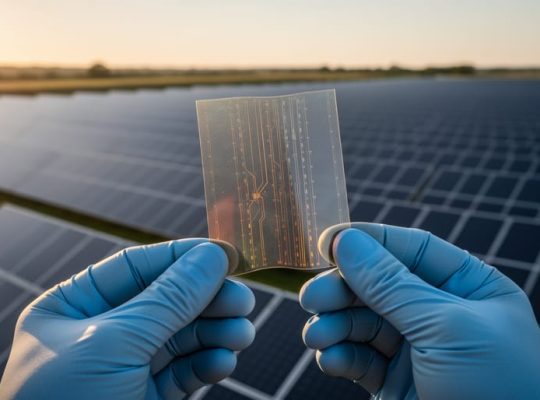
3D-printed solar panels represent a groundbreaking convergence of additive manufacturing and renewable energy technology, poised to revolutionize the future of solar technology. This innovative fabrication method enables the creation of highly customizable photovoltaic cells with complex geometries and enhanced efficiency profiles previously unattainable through traditional manufacturing processes.
By leveraging advanced materials science and precision 3D printing techniques, researchers have developed solar panels that can be produced with reduced material waste, lower production costs, and improved energy conversion rates. The technology allows for the integration of microscale optical features and specialized surface textures that optimize light capture and maximize power output.
This emerging manufacturing approach not only promises to accelerate solar panel production but also opens new possibilities for building-integrated photovoltaics (BIPV) and customized energy solutions. As the technology matures, it has the potential to transform both large-scale solar installations and distributed energy generation systems, making sustainable power more accessible and economically viable across diverse applications.
The Technology Behind 3D-Printed Solar Cells
Materials and Printing Methods
The fabrication of 3D printed solar panels involves a sophisticated combination of advanced photovoltaic materials and specialized printing techniques. The primary materials used include photosensitive polymers, conductive inks containing silver nanoparticles, and semiconducting materials such as perovskites or organic photovoltaic compounds.
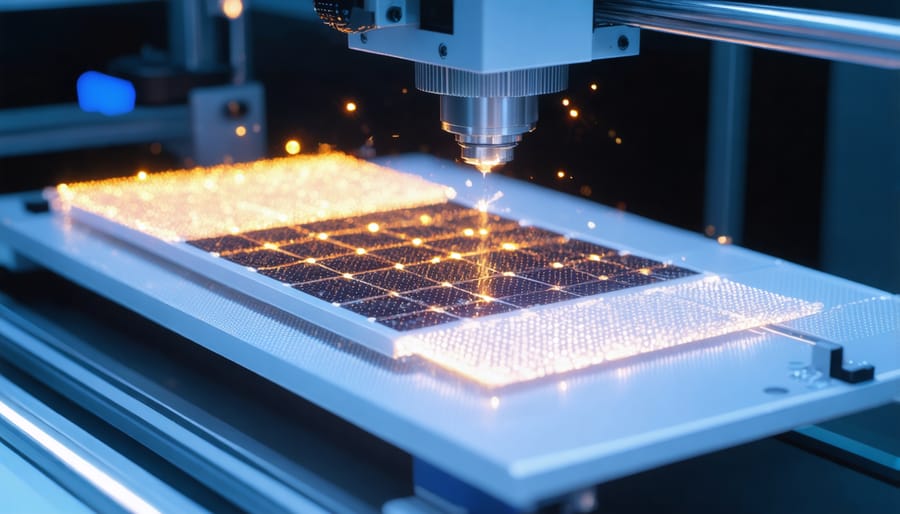
The printing process typically employs direct ink writing (DIW) or fused deposition modeling (FDM) techniques, with precise control over layer thickness and material deposition. Multi-material printers capable of handling both conductive and semiconducting materials simultaneously are essential for creating functional solar cells. The printing parameters, including nozzle temperature, bed temperature, and extrusion rate, must be carefully calibrated to ensure optimal material properties and layer adhesion.
Current manufacturing processes utilize specialized equipment that maintains controlled environmental conditions during printing, as material degradation and contamination can significantly impact cell efficiency. The substrate material, usually a flexible polymer or glass base, must be carefully selected to ensure compatibility with both the printing process and the active materials.
Post-processing steps, including thermal annealing and surface treatment, are crucial for optimizing the printed layers’ electrical and optical properties. These treatments enhance charge carrier mobility and improve overall solar cell performance.
Design Innovations and Efficiency Features
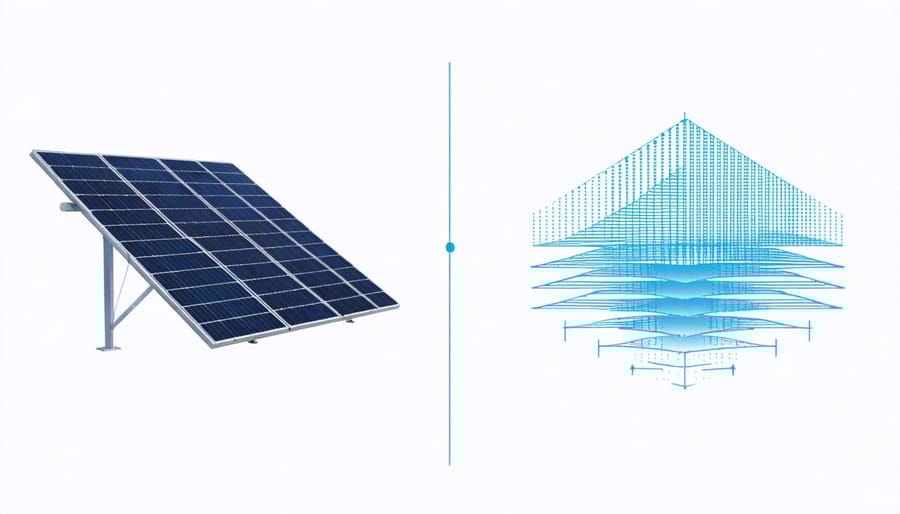
3D printing technology has revolutionized solar panel design by enabling novel geometric configurations that maximize light absorption and energy conversion efficiency. The ability to create complex, multi-layered structures allows for the integration of light-trapping features, such as microscale pyramidal textures and honeycomb patterns, which significantly increase the surface area exposed to sunlight.
Recent innovations include the development of customized photovoltaic cell architectures that incorporate advanced materials like perovskites and quantum dots directly into the printing process. These designs feature precisely controlled thickness gradients and optimized interface layers that enhance charge carrier transport and reduce recombination losses.
The printing process enables the creation of bifacial solar cells with specialized back-surface configurations that capture reflected and diffused light. Engineers have also developed innovative cooling channels within the panel structure, improving thermal management and maintaining optimal operating temperatures for enhanced efficiency.
Another significant advancement is the integration of micro-tracking systems printed directly into the panel framework, allowing for subtle adjustments to maximize solar exposure throughout the day. The precision of 3D printing enables the fabrication of ultra-thin conducting paths and electrode patterns that minimize resistive losses while maintaining structural integrity.
These design innovations have led to reported efficiency improvements of up to 20% compared to conventional manufacturing methods, while simultaneously reducing material waste and production costs.
Advantages of 3D-Printed Solar Technology
Cost Reduction and Manufacturing Efficiency
3D printing technology is revolutionizing solar panel production by significantly reducing manufacturing costs and improving operational efficiency. The implementation of automated manufacturing processes through 3D printing has demonstrated potential cost reductions of up to 50% compared to traditional manufacturing methods.
The primary cost benefits stem from reduced material waste, lower labor requirements, and streamlined production workflows. 3D printing enables precise material deposition, eliminating excess waste typically associated with conventional manufacturing techniques. This optimization extends to both active photovoltaic materials and supporting components, resulting in substantial material cost savings.
Labor costs decrease significantly as 3D printing systems require minimal human intervention during production. A single operator can oversee multiple printing units, dramatically improving workforce efficiency. Additionally, the technology enables on-demand production, reducing inventory costs and warehouse space requirements.
The manufacturing efficiency gains are equally impressive. 3D printing allows for rapid prototyping and iteration, accelerating product development cycles from months to weeks. The technology enables the production of complex geometries in a single process, eliminating multiple assembly steps and reducing production time.
Quality control improvements further enhance efficiency, as 3D printing systems incorporate real-time monitoring and adjustment capabilities. This results in higher yield rates and fewer defective units, contributing to overall cost reduction. The integration of digital workflows also enables better production planning and resource allocation.
As the technology continues to mature, economies of scale are expected to drive costs even lower, making 3D-printed solar panels increasingly competitive in the renewable energy market. This cost-effectiveness, combined with improved manufacturing efficiency, positions 3D printing as a transformative force in solar panel production.
Customization and Application Flexibility
One of the most compelling advantages of 3D printed solar panels lies in their remarkable adaptability to various applications and installation scenarios. The technology enables customization of panel shapes, sizes, and configurations to meet specific project requirements, offering solutions that traditional manufacturing methods cannot achieve.
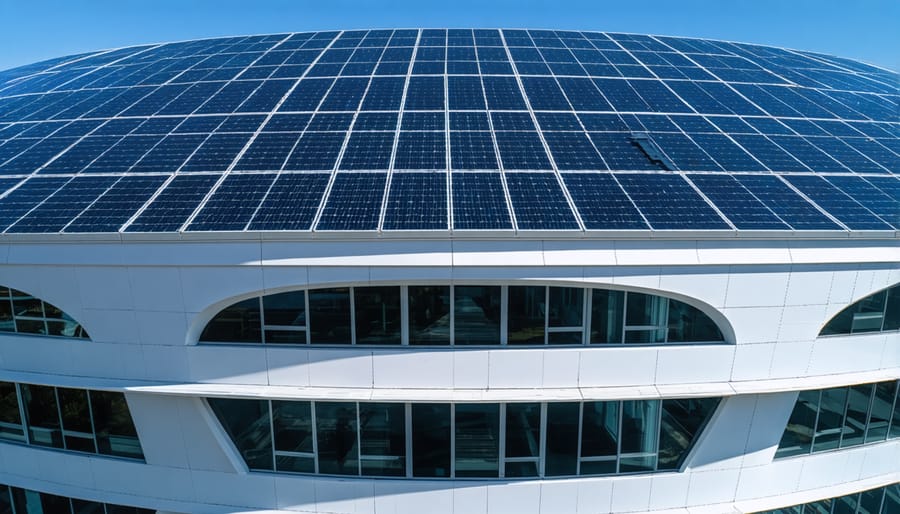
The flexibility in design allows for the creation of curved surfaces and complex geometries, making it possible to integrate solar panels into architectural elements seamlessly. This adaptability proves particularly valuable in urban environments where space constraints and aesthetic considerations play crucial roles. Designers can now incorporate photovoltaic capabilities into building facades, windows, and even sculptural elements without compromising visual appeal.
Furthermore, 3D printing technology facilitates the production of specialized solar panels for unique applications. These include lightweight panels for portable devices, robust designs for extreme environments, and custom solutions for space exploration vehicles. The ability to adjust internal structures and material compositions enables optimization for specific performance requirements, such as enhanced durability or improved efficiency under particular lighting conditions.
The customization potential extends to the microscale, where researchers can experiment with different surface textures and patterns to maximize light absorption. This level of control over panel characteristics allows for the development of application-specific solutions, from high-efficiency panels for utility-scale installations to specialized designs for consumer electronics.
Additionally, the technology supports rapid prototyping and iterative design improvements, enabling manufacturers to respond quickly to market demands and technological advancements. This flexibility in production helps accelerate innovation in the solar energy sector while maintaining cost-effectiveness and reducing waste in the manufacturing process.
Current Applications and Future Prospects
Commercial and Residential Applications
The integration of 3D printed solar panels has made significant inroads in both commercial and residential applications, demonstrating versatility across different scales and settings. In commercial installations, several pioneering companies have successfully deployed 3D printed solar arrays on large warehouse rooftops, maximizing energy capture through customized panel configurations that conform to unique architectural features.
Notable examples include the Solar Innovation Center in Dubai, which showcases curved 3D printed panels that follow the building’s distinctive design while maintaining optimal sun exposure throughout the day. In the residential sector, homeowners are increasingly adopting custom-fit 3D printed solar solutions that integrate seamlessly with complex roof structures and historical architectural elements.
Swedish company Midsummer has implemented 3D printed thin-film solar cells in residential applications, particularly on buildings where traditional panels would be impractical due to weight restrictions or aesthetic considerations. Their success has demonstrated the technology’s potential for heritage buildings and modern homes alike.
Several urban development projects have incorporated 3D printed solar panels into building-integrated photovoltaics (BIPV), where the panels serve dual purposes as both power generators and architectural elements. This approach has proven particularly effective in smart city initiatives, where solar elements are seamlessly integrated into building facades, windows, and even street furniture.
Research Developments and Future Possibilities
Current research in 3D-printed solar panel technology is advancing rapidly, with several promising developments on the horizon. Leading research institutions are exploring novel printing materials that could significantly improve solar cell efficiency while reducing production costs. A notable breakthrough involves the development of perovskite-based inks specifically designed for 3D printing, potentially achieving conversion efficiencies exceeding 25%.
Multi-material printing techniques are emerging as a particularly promising area of research. Scientists are developing methods to simultaneously print different functional layers of solar cells, including light-absorbing materials, conducting layers, and protective coatings. This advancement could streamline manufacturing processes and enhance overall panel performance.
Looking ahead, researchers are investigating the integration of quantum dots and advanced nanomaterials into 3D-printable solar solutions. These materials could potentially revolutionize light absorption capabilities and significantly improve energy conversion efficiency. Additionally, work is underway to develop flexible and curved solar panels that can be printed directly onto various surfaces, expanding installation possibilities beyond traditional flat panels.
The future may also see the emergence of hybrid manufacturing systems that combine 3D printing with conventional solar panel production techniques. This approach could optimize both the benefits of additive manufacturing and traditional methods, leading to more efficient and cost-effective production processes. As research continues, we can expect to see improvements in printing resolution, material durability, and overall system performance.
Challenges and Solutions
Technical Challenges
The development of 3D printed solar panels faces several significant technical challenges that researchers and manufacturers are actively working to overcome. Material limitations present a primary concern, as the photovoltaic materials must maintain their efficiency while being suitable for the printing process. Current printing technologies struggle to achieve the precise layer thickness and uniform distribution necessary for optimal solar energy conversion.
Print resolution remains a critical factor affecting cell efficiency. While traditional manufacturing methods can achieve extremely fine features, 3D printing technologies are still evolving to match these precision levels. The interface between printed layers can create microscopic defects that reduce overall panel performance and longevity.
Durability and weather resistance pose additional challenges. 3D printed panels must withstand various environmental conditions, including UV exposure, temperature fluctuations, and moisture. Current printing materials often show degradation rates higher than conventionally manufactured panels, necessitating ongoing research into more resilient compositions.
Scale-up capabilities present another hurdle. While small-scale printing has shown promise, achieving consistent quality in larger panels remains challenging. Researchers are developing new printing techniques and material formulations to address these limitations.
Despite these challenges, continuous improvements in printing technology and materials science are yielding promising results. Advanced polymer composites and multi-material printing techniques are showing potential for enhanced efficiency and durability, while reduced production costs make the technology increasingly viable for commercial applications.
Industry Implementation Barriers
Despite the promising potential of 3D printed solar panels, several significant barriers currently impede widespread industry adoption. Manufacturing scalability remains a primary challenge, as existing 3D printing technologies struggle to match the production speed and volume of traditional sustainable solar production methods. Material costs present another substantial hurdle, with specialized photovoltaic printing materials commanding premium prices compared to conventional solar panel components.
Quality control and standardization issues also pose significant challenges. The layer-by-layer printing process can introduce inconsistencies in panel performance and durability, requiring robust quality assurance protocols that are still under development. Additionally, current regulatory frameworks and certification processes are not fully adapted to 3D printed solar technology, creating uncertainty in market entry and compliance requirements.
To address these challenges, industry stakeholders are pursuing several solutions. Research partnerships between manufacturers and academic institutions focus on developing more cost-effective materials and optimizing printing processes. Investment in automated quality control systems and standardization efforts are helping to ensure consistent product quality. Furthermore, industry associations are working with regulatory bodies to establish appropriate certification standards for 3D printed solar panels, paving the way for broader market acceptance and implementation.
The emergence of 3D-printed solar technology represents a significant advancement in renewable energy manufacturing, promising to revolutionize how we produce and deploy solar panels. This innovative approach combines the flexibility of additive manufacturing with photovoltaic technology, potentially reducing production costs while enabling customized solar solutions for diverse applications. As research continues and manufacturing processes improve, we can expect to see increased efficiency, reduced material waste, and greater accessibility to solar energy solutions. The technology’s ability to create complex geometries and integrate multiple materials opens new possibilities for building-integrated photovoltaics and specialized applications. With ongoing collaboration between industry leaders and research institutions, 3D-printed solar panels are poised to play a crucial role in accelerating the global transition to sustainable energy, making solar power more adaptable, affordable, and widely available for future generations.