
The rapid growth of solar energy installations across the globe has created an unprecedented demand for skilled photovoltaic professionals, driving the critical need for comprehensive workforce development programs. Industry leaders project the solar workforce to double by 2030, requiring structured training initiatives that combine technical expertise with practical field experience. Forward-thinking organizations are now establishing specialized training centers, partnering with technical institutions, and developing standardized certification programs to bridge the growing skills gap.
This surge in solar career opportunities spans multiple sectors, from system design and installation to sales and project management, creating diverse pathways for professional advancement. Successful workforce development programs integrate hands-on laboratory experience, safety protocols, and real-world project simulations while adhering to industry standards and regulatory requirements. By investing in workforce development today, organizations position themselves to meet tomorrow’s renewable energy challenges while creating sustainable employment opportunities in communities nationwide.
The evolution of solar technology demands continuous learning and adaptation, making ongoing professional development essential for maintaining a competitive edge in this dynamic field. Modern training programs must balance technical fundamentals with emerging technologies, ensuring workers are equipped to handle both current demands and future innovations in the solar industry.
Current Challenges in Solar Installation Training
Industry Skills Gap Analysis
The solar industry faces a significant skills gap that requires immediate attention to meet growing installation demands. Modern solar installations demand proficiency in both technical and safety competencies, with key areas including electrical system integration, roof structural assessment, and advanced monitoring systems operation.
Technical competencies crucial for today’s solar professionals include photovoltaic system design, DC/AC power conversion principles, and energy storage integration. Installers must understand complex wiring diagrams, maintain precision in array mounting, and demonstrate expertise in performance monitoring software.
Safety competencies are equally vital, encompassing fall protection protocols, electrical safety procedures, and OSHA compliance requirements. Professionals must master proper tool handling, emergency response procedures, and weather-related safety considerations.
Current industry analysis reveals particular shortages in advanced troubleshooting skills, battery storage expertise, and smart inverter programming capabilities. Additionally, there’s growing demand for professionals who can effectively integrate solar systems with building energy management systems and smart grid technologies.
These skill requirements continue to evolve with technological advancement, necessitating ongoing professional development and updated training programs to maintain workforce competitiveness.
Regulatory Requirements and Certifications
Solar professionals must meet specific regulatory requirements and obtain necessary certifications to ensure safe, compliant installations. The North American Board of Certified Energy Practitioners (NABCEP) certification is widely recognized as the industry gold standard, with their solar PV installation certification being particularly crucial for installers. This certification validates technical knowledge, safety protocols, and professional competence.
State-specific licensing requirements vary, with some jurisdictions mandating electrical licenses alongside solar certifications. Installers must also comply with National Electrical Code (NEC) standards, OSHA safety regulations, and local building codes. Many manufacturers require additional product-specific certifications for warranty coverage and authorized installations.
Continuing education is typically required to maintain certifications, ensuring professionals stay current with evolving technology and regulations. Organizations must establish comprehensive training programs that align with these requirements while preparing workers for certification exams. Regular audits and documentation of compliance measures help maintain high standards and protect both workers and consumers.
Essential Components of Effective Training Programs
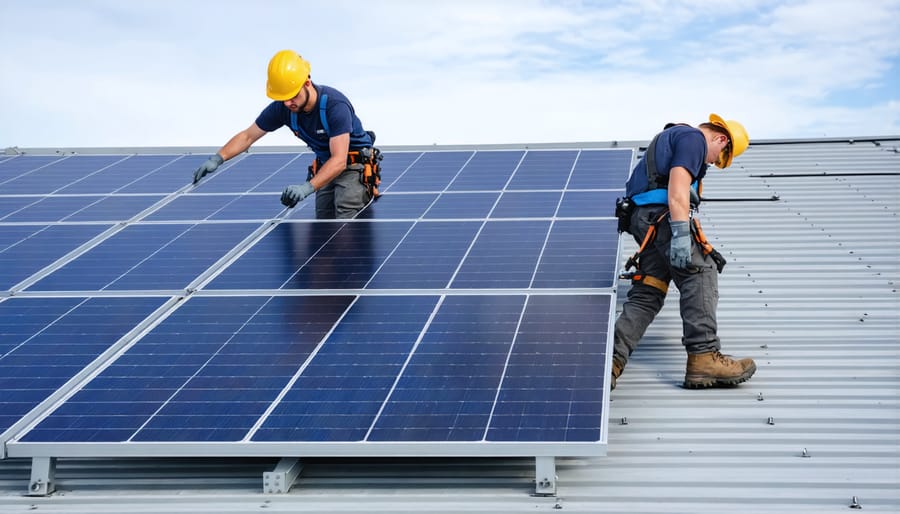
Technical Skills Development
Technical proficiency forms the cornerstone of successful solar workforce development, encompassing a comprehensive range of skills essential for industry professionals. Core competencies include electrical theory, photovoltaic system design, and advanced installation techniques that ensure optimal system performance.
Hands-on training programs typically focus on three primary areas: system design and engineering, installation and maintenance procedures, and safety protocols. Participants learn to analyze site conditions, perform shade studies, and calculate system requirements while mastering industry-standard tools and equipment. Practical experience with inverter installation, racking systems, and electrical connections is emphasized through supervised field exercises.
Safety training remains paramount, covering fall protection, electrical safety, and OSHA requirements. Professionals must demonstrate proficiency in proper tool handling, personal protective equipment usage, and emergency response procedures. Additionally, training includes troubleshooting methodologies, system monitoring, and performance optimization techniques.
Technical certification programs often incorporate emerging technologies and sustainable practices, ensuring workforce readiness for evolving industry demands. Programs typically conclude with hands-on assessments, where participants demonstrate mastery of installation procedures, maintenance protocols, and problem-solving capabilities under real-world conditions. This comprehensive approach ensures graduates possess both theoretical knowledge and practical skills necessary for successful career advancement in the solar industry.

Safety Protocol Training
Safety training forms the cornerstone of professional solar installation practices, requiring comprehensive understanding of essential safety protocols and industry standards. Installation teams must master fall protection techniques, electrical safety procedures, and proper equipment handling to ensure workplace safety and project success.
Training programs typically begin with fundamental safety orientation, covering OSHA requirements, personal protective equipment (PPE) usage, and site hazard identification. Participants learn proper ladder safety, roof access procedures, and fall prevention systems implementation. Electrical safety training emphasizes arc flash protection, proper lockout/tagout procedures, and safe handling of live components.
Advanced safety modules address weather-related hazards, emergency response procedures, and proper tool maintenance. Teams receive instruction on heat stress prevention, lightning safety protocols, and appropriate responses to severe weather conditions. Equipment-specific training covers proper lifting techniques, secure material handling, and safe operation of power tools.
Regular safety refresher courses and updated certifications ensure teams maintain current knowledge of industry best practices. Documentation of safety training completion, incident reporting procedures, and emergency protocols becomes part of each worker’s professional portfolio. This comprehensive approach to safety training creates a culture of awareness and responsibility, reducing workplace incidents while enhancing installation quality and team efficiency.
Project Management Skills
Successful solar installations require robust project management skills that extend beyond technical expertise. Project managers in the solar industry must effectively coordinate multiple teams, manage timelines, and ensure compliance with regulations while maintaining quality standards. These professionals need to master resource allocation, scheduling, and risk management to deliver projects on time and within budget.
Key project management competencies include stakeholder communication, where managers must effectively liaison between clients, installation crews, permitting authorities, and utility companies. They must develop detailed project plans that account for equipment procurement, site preparation, installation phases, and grid connection procedures.
Financial management skills are equally crucial, involving budget oversight, cost control, and understanding incentive programs. Project managers must also demonstrate strong problem-solving abilities to address unexpected challenges, from weather delays to supply chain disruptions.
Quality control and safety management are paramount responsibilities. This includes ensuring adherence to installation standards, maintaining proper documentation, and implementing safety protocols. Project managers must stay current with industry regulations and best practices while fostering a culture of safety and excellence among their teams.
Leadership skills are essential for motivating crews, managing conflicts, and maintaining project momentum. Successful project managers excel at team building, delegation, and creating an environment that promotes efficiency and collaboration while meeting project objectives.
Implementing Modern Training Methods
Hybrid Learning Approaches
Modern solar workforce development programs increasingly embrace hybrid learning approaches, combining the flexibility of online education with essential hands-on training components. This integrated methodology leverages proven training methods to deliver comprehensive education that meets industry demands while accommodating diverse learning styles.
The online component typically includes interactive modules, virtual simulations, and self-paced coursework covering theoretical concepts, safety protocols, and industry regulations. These digital resources allow learners to absorb foundational knowledge at their own pace while reducing traditional classroom time requirements. Video demonstrations, 3D modeling tools, and virtual reality applications enhance understanding of complex installation procedures before physical practice.
Hands-on training sessions complement the digital curriculum by providing practical experience with actual solar equipment and installation scenarios. These supervised workshops enable learners to develop essential technical skills, troubleshooting abilities, and physical competencies required for field work. Laboratory exercises and mock installations help reinforce theoretical concepts through experiential learning.
The hybrid approach offers several advantages:
– Improved knowledge retention through multiple learning modalities
– Reduced training costs while maintaining quality
– Greater scheduling flexibility for working professionals
– Consistent delivery of standardized content
– Enhanced safety through practice in controlled environments
– Ability to track and measure learning progress digitally
Success in implementing hybrid programs requires careful curriculum design, appropriate technology infrastructure, and qualified instructors capable of delivering both online and in-person training effectively. Regular assessment and feedback mechanisms ensure learning objectives are met across both platforms.

Performance Assessment Strategies
Performance assessment in solar workforce development requires a comprehensive approach combining theoretical knowledge evaluation and practical skills verification. Industry-standard assessment methods typically include written examinations, hands-on practical tests, and portfolio evaluations to ensure trainees meet required competency levels.
Written assessments evaluate theoretical understanding of solar principles, electrical systems, safety protocols, and relevant codes and standards. These assessments often incorporate multiple-choice questions, problem-solving scenarios, and technical calculations to verify knowledge retention.
Practical skill evaluation involves supervised installation exercises, troubleshooting simulations, and equipment handling demonstrations. Assessors use standardized rubrics to measure competency in areas such as module mounting, electrical connections, system commissioning, and maintenance procedures. This hands-on assessment ensures trainees can safely and effectively perform real-world tasks.
Portfolio assessment requires trainees to document their project experience, including system designs, installation photographs, and maintenance reports. This comprehensive evaluation method demonstrates the ability to apply knowledge across different scenarios and maintain professional documentation standards.
Professional certification examinations, such as those offered by NABCEP (North American Board of Certified Energy Practitioners), serve as independent verification of competency. These certifications often require both written and practical assessments, providing industry-recognized credentials.
Continuous assessment through regular performance reviews and feedback sessions helps identify areas for improvement and ensures ongoing professional development. This approach includes peer evaluations, mentor assessments, and self-reflection exercises to support comprehensive skill development.
Success metrics should align with industry standards and employer requirements, focusing on both technical proficiency and soft skills essential for career advancement in the solar industry.
Measuring Training Success
Evaluating the effectiveness of solar workforce training programs requires a comprehensive approach using both quantitative and qualitative metrics. Key performance indicators (KPIs) should align with program objectives and industry standards while providing actionable insights for continuous improvement.
Primary quantitative metrics include certification pass rates, job placement rates, and time-to-employment statistics. Training programs should track the percentage of participants who successfully obtain industry-recognized certifications such as NABCEP credentials. Employment metrics should measure both immediate placement rates and long-term retention in the solar industry, typically assessed at 6-month and 1-year intervals.
Qualitative assessment focuses on competency demonstration and stakeholder feedback. Skills assessment matrices evaluate participants’ technical proficiency, safety awareness, and problem-solving capabilities through practical examinations and on-site evaluations. Employer surveys gauge satisfaction with graduate performance and identify areas for curriculum enhancement.
Return on investment (ROI) calculations consider both direct costs (training materials, instructor fees, equipment) and indirect benefits (increased productivity, reduced errors, improved safety records). Programs should establish baseline measurements before training and compare against post-training performance indicators.
Success metrics should also include:
– Student satisfaction scores
– Knowledge retention rates
– Project completion success rates
– Safety incident frequency
– Customer satisfaction ratings for installed systems
– Career advancement tracking
Regular assessment intervals, typically quarterly and annually, allow for timely program adjustments and continuous improvement. Documentation of these metrics supports accreditation requirements and helps secure continued funding for workforce development initiatives.
The solar workforce development landscape continues to evolve rapidly, driven by technological advancements and growing demand for renewable energy solutions. As the industry expands, the need for well-trained professionals becomes increasingly critical. Training programs that combine theoretical knowledge with hands-on experience have proven most effective in preparing workers for successful careers in solar installation.
Looking ahead, the solar workforce sector shows promising growth potential, with projections indicating sustained demand for qualified installers over the next decade. Educational institutions and industry partnerships will play a crucial role in meeting this demand through standardized certification programs and specialized training modules. The integration of advanced technologies, such as virtual reality training platforms and remote learning capabilities, will further enhance the accessibility and effectiveness of solar installation training.
Success in this field increasingly depends on maintaining high training standards while adapting to emerging technologies and installation methodologies. Organizations that invest in comprehensive workforce development programs position themselves to meet industry demands while contributing to the broader adoption of solar energy solutions. As the sector matures, continued focus on quality training and professional development will remain essential for sustaining growth and maintaining installation standards.