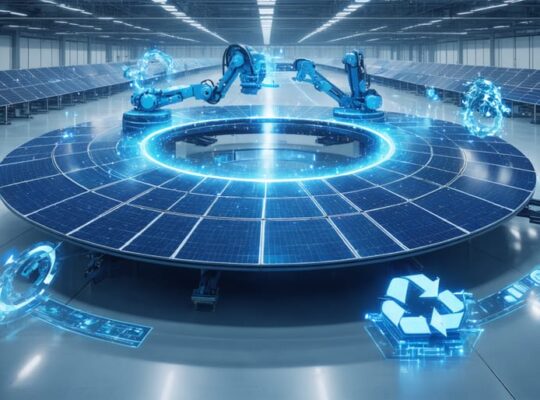
In the rapidly evolving landscape of renewable energy, hybrid wind-solar systems represent a groundbreaking advancement in sustainable power generation. These integrated systems harness the complementary nature of wind and solar resources, maximizing energy production through sophisticated engineering and intelligent design. By combining photovoltaic panels with wind turbines, these hybrid installations achieve remarkable efficiency gains of 20-35% compared to standalone systems, while reducing the intermittency challenges inherent to individual renewable sources.
Recent technological breakthroughs in power electronics and smart grid integration have revolutionized hybrid system architecture, enabling seamless power flow management and enhanced grid stability. The strategic implementation of these systems not only optimizes land use efficiency but also delivers consistent power output across diverse weather conditions and seasonal variations. Modern hybrid installations incorporate advanced monitoring systems, predictive maintenance protocols, and adaptive control algorithms that ensure optimal performance while minimizing operational costs.
As global energy demands continue to rise and grid reliability becomes increasingly critical, wind-solar hybrid systems emerge as a robust solution for sustainable power generation. These systems demonstrate exceptional versatility across various applications, from utility-scale power plants to distributed generation networks, offering a practical pathway toward achieving renewable energy targets while maintaining grid stability and reducing carbon emissions.
Understanding Wind-Solar Hybrid Integration
System Architecture Components
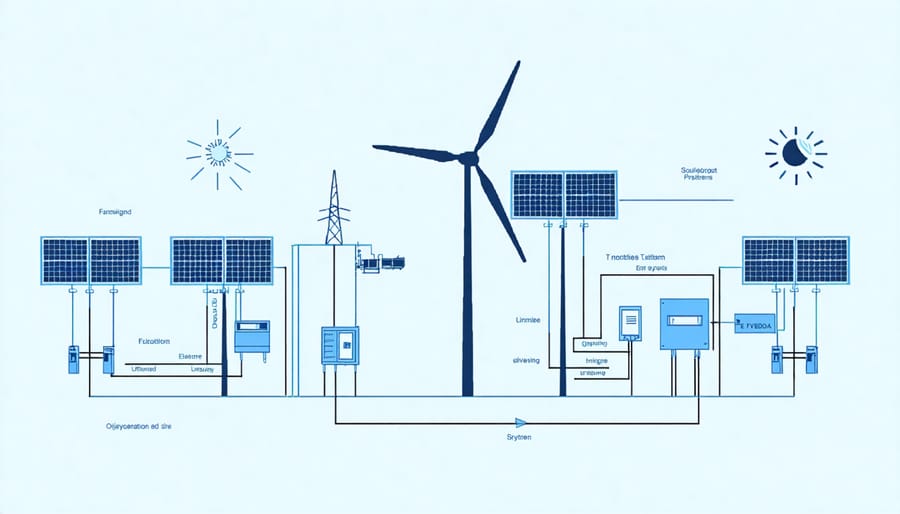
A wind turbine solar panel hybrid system comprises several essential components working in harmony to optimize renewable energy generation. The primary components include wind turbines, PV modules, charge controllers, inverters, and energy storage systems.
The wind turbine subsystem typically features aerodynamic blades, a generator, and a robust tower structure. Modern turbines incorporate pitch control mechanisms and yaw systems to maximize wind energy capture across varying conditions. The solar component consists of photovoltaic arrays mounted on specialized frames, often with tracking capabilities to follow the sun’s path.
Power conditioning units play a crucial role in system integration. Charge controllers regulate the charging process and protect batteries from overcharging, while inverters convert DC power to AC for grid compatibility. The hybrid controller serves as the system’s brain, managing power flow between components and optimizing overall performance.
Energy storage solutions, typically comprising advanced battery banks or other storage technologies, ensure consistent power supply during periods of low renewable resource availability. The monitoring and control system provides real-time performance data, enabling efficient system management and maintenance scheduling.
Additional components include protection devices, such as circuit breakers and surge protectors, along with specialized wiring and connection infrastructure designed to withstand environmental conditions while maintaining optimal system efficiency.
Power Management Integration
Power management integration in wind-solar hybrid systems requires sophisticated control mechanisms to optimize energy production and system efficiency. The core component is the hybrid controller, which manages power flow between wind turbines, solar panels, energy storage systems, and the grid connection point.
Modern hybrid systems employ Maximum Power Point Tracking (MPPT) technology for both wind and solar components. The MPPT controllers continuously adjust operating parameters to extract maximum available power under varying environmental conditions. This optimization occurs through real-time monitoring of voltage, current, and power output levels.
The power management system incorporates intelligent load balancing algorithms that determine optimal power distribution. During periods of excess generation, surplus energy is directed to storage systems or fed into the grid. Conversely, when generation falls below demand, the system draws from stored energy or supplements with grid power.
Advanced monitoring systems utilize data analytics to predict weather patterns and adjust system operation accordingly. This predictive capability enables proactive power management, reducing response times to changing conditions and minimizing power quality issues such as voltage fluctuations.
Grid integration protocols ensure compliance with utility requirements while maintaining system stability. Power conditioning equipment, including inverters and power factor correction devices, maintains output quality within specified parameters. This sophisticated integration strategy maximizes system reliability while optimizing overall energy yield from both renewable sources.
Advanced Fabrication Techniques
Solar Panel Integration Methods
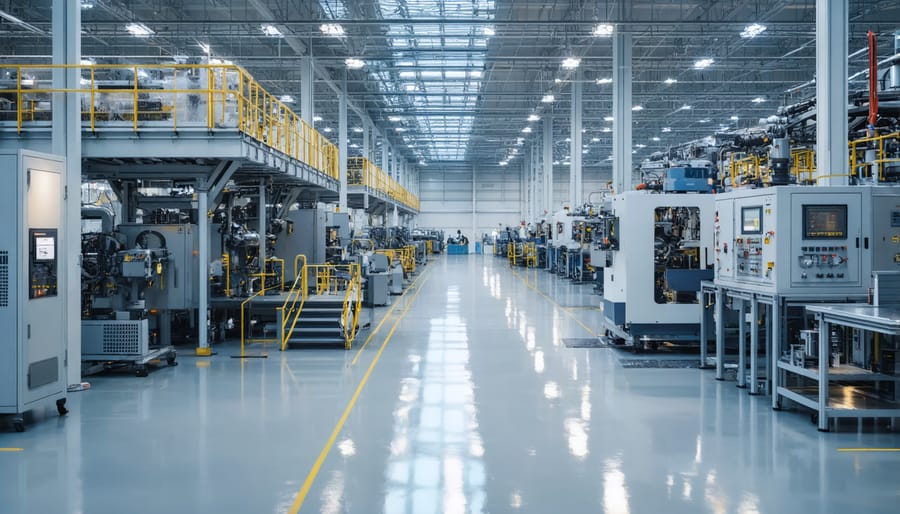
The integration of solar panels with wind turbine structures requires specialized engineering approaches to maximize energy generation while maintaining structural integrity. Modern automated manufacturing processes have enabled precise installation methods that optimize the dual-harvesting potential of these hybrid systems.
Primary integration methods include tower-mounted arrays, where photovoltaic panels are strategically attached to the turbine tower using reinforced mounting brackets. These installations typically follow a helical pattern to minimize wind resistance while maximizing solar exposure throughout the day. Ground-level integration involves installing solar arrays in the immediate vicinity of the turbine base, utilizing the existing infrastructure for power transmission and monitoring systems.
Advanced integration techniques incorporate flexible thin-film solar technologies directly onto turbine blade surfaces, though this approach requires careful consideration of aerodynamic effects and structural loading. Some designs feature innovative tracking systems that adjust panel orientation based on both solar position and wind direction, ensuring optimal energy capture from both resources.
Structural engineers must account for additional wind loads on the turbine structure when designing panel mounting systems. This includes implementing vibration dampening mechanisms and utilizing corrosion-resistant materials suitable for long-term outdoor exposure. Integration methods also consider maintenance accessibility, incorporating service platforms and safety systems for technicians.
Modern hybrid systems often feature smart junction boxes and sophisticated power management systems that efficiently combine and regulate the dual power sources. These components must be carefully positioned to minimize power losses while maintaining system reliability and serviceability.
Structural Enhancement Processes
The integration of wind turbines and solar panels requires specialized structural enhancement processes to ensure optimal performance and longevity. Manufacturers employ advanced composite materials, including carbon fiber reinforced polymers and high-grade aluminum alloys, to create lightweight yet durable support structures that can withstand diverse environmental conditions.
The structural framework undergoes rigorous stress testing and finite element analysis to identify potential weak points. Engineers apply protective coatings using plasma spray technology and advanced polymer treatments to prevent corrosion and enhance weather resistance. These coatings also incorporate self-cleaning properties to maintain optimal energy capture efficiency.
To improve structural integrity, manufacturers implement precision welding techniques and automated assembly processes. Computer-controlled manufacturing ensures exact specifications for critical components such as mounting brackets, support beams, and connection points between solar panels and wind turbine components.
The integration process includes vibration dampening systems strategically placed throughout the structure to minimize mechanical stress from wind turbine operation. These systems utilize advanced elastomeric materials and hydraulic dampeners to protect both the solar panels and supporting framework.
Quality control measures include non-destructive testing methods such as ultrasonic scanning and radiographic inspection to verify structural integrity. Regular maintenance protocols are established during the manufacturing phase, with integrated sensor systems designed to monitor structural health and alert operators to potential issues.
The manufacturing process also incorporates modular design principles, allowing for easier transportation, installation, and future upgrades. This approach enables manufacturers to optimize production efficiency while maintaining high quality standards and ensuring long-term reliability of the hybrid system.
Quality Control Protocols
Quality control protocols for wind turbine solar panel hybrid systems involve rigorous testing procedures throughout the manufacturing process. Each component undergoes systematic verification to ensure optimal performance and reliability. The process begins with incoming material inspection, where raw materials are tested for conformity to specifications and industry standards.
During assembly, multiple checkpoints are established to verify proper integration of solar panels and wind turbine components. Key parameters such as electrical connectivity, mechanical stability, and structural integrity are assessed using calibrated testing equipment. Modern facilities implement AI-powered quality control systems to detect microscopic defects and ensure consistent product quality.
Performance testing includes power output verification, insulation resistance measurements, and environmental stress screening. Each hybrid system undergoes accelerated lifecycle testing to simulate real-world conditions and validate long-term durability. This includes thermal cycling, humidity exposure, and mechanical load testing.
Final quality assurance involves comprehensive system validation, including:
– Power conversion efficiency testing
– Grid compatibility verification
– Safety system functionality checks
– Weather resistance validation
– Control system integration testing
Documentation and traceability are maintained throughout the process, with each unit receiving a unique identifier for warranty and maintenance tracking. Third-party certification ensures compliance with international standards and regulations, providing stakeholders with confidence in system reliability and performance.
Performance Optimization Strategies
Smart Control Systems
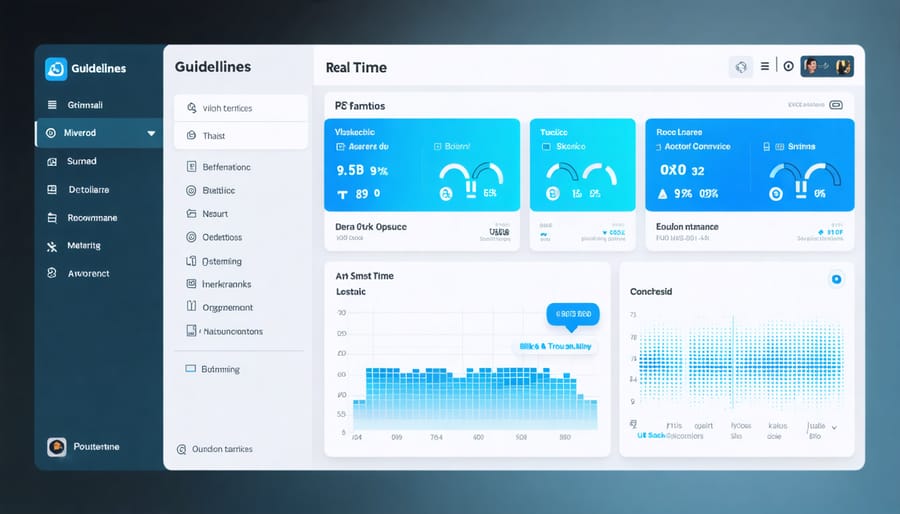
Smart control systems play a pivotal role in optimizing the performance and efficiency of wind turbine solar panel hybrid systems. These sophisticated monitoring and control mechanisms integrate advanced sensors, artificial intelligence, and real-time data analytics to ensure seamless operation between wind and solar components while maximizing energy production.
At the heart of modern hybrid system control is digital twin technology, which creates virtual replicas of physical systems for enhanced monitoring and predictive maintenance. This technology enables operators to simulate various operational scenarios and optimize system parameters before implementing changes in the actual installation.
The control architecture typically consists of three main layers: local controllers for individual components, a power management system for coordinating energy flow, and a supervisory control system for overall system optimization. Advanced algorithms continuously monitor weather conditions, energy demand patterns, and system health indicators to make real-time adjustments that maximize energy yield while maintaining system stability.
Machine learning algorithms play a crucial role in predictive maintenance by analyzing performance data to identify potential issues before they cause system failures. These algorithms can detect subtle changes in component behavior, enabling proactive maintenance scheduling and reducing downtime.
The system’s power management interface utilizes sophisticated load-following strategies to balance energy generation between wind and solar sources. During periods of varying wind speeds or solar irradiance, the control system automatically adjusts power distribution to maintain consistent output while protecting system components from stress.
Modern hybrid systems also incorporate grid integration protocols that ensure compliance with utility requirements and enable participation in grid services. Advanced forecasting capabilities help predict energy production patterns, allowing for better integration with existing power infrastructure and more efficient energy storage management.
These intelligent control mechanisms significantly enhance system reliability, reduce operational costs, and improve the overall return on investment for hybrid installations. Regular software updates and system calibration ensure that the control architecture remains current with evolving grid requirements and technological advances.
Environmental Adaptation Features
Wind turbine solar panel hybrid systems require careful adaptation to various environmental conditions to maintain optimal performance and longevity. These systems incorporate specialized design elements that enable them to function effectively across diverse climates and weather patterns.
In cold climates, the hybrid systems feature advanced anti-icing mechanisms for both turbine blades and solar panels. Heating elements integrated into the panel surface prevent snow accumulation, while specialized coatings on turbine blades reduce ice formation. The structural components utilize cold-weather-rated materials that maintain their integrity even in sub-zero temperatures.
For hot, arid environments, enhanced cooling systems prevent performance degradation. Solar panels incorporate temperature-regulated mounting systems that facilitate air circulation, while turbine components feature heat-resistant materials and advanced thermal management solutions. Desert-specific designs include dust-repelling coatings and automated cleaning mechanisms to maintain efficiency despite sand and dust exposure.
Coastal installations face unique challenges due to salt spray and high humidity. These systems employ marine-grade materials with superior corrosion resistance, including specialized protective coatings for both solar panels and turbine components. Additional features include sealed electrical connections and reinforced structural elements to withstand strong coastal winds.
High-altitude installations benefit from modified aerodynamic profiles and strengthened structural supports. The solar panels utilize UV-resistant materials to handle increased solar radiation, while turbine blades feature optimized designs for lower air density operation.
In regions with extreme weather variations, adaptive control systems continuously monitor environmental conditions and adjust system parameters accordingly. Smart sensors detect weather changes and automatically modify turbine blade pitch and solar panel orientation to maximize energy harvesting while ensuring system protection.
These environmental adaptations are complemented by robust monitoring systems that provide real-time performance data, enabling predictive maintenance and optimal system operation across all climate conditions.
Future Manufacturing Innovations
The manufacturing landscape for wind turbine solar panel hybrid systems is rapidly evolving, driven by technological advancements and innovative production methodologies. Advanced automation and robotics are revolutionizing assembly lines, enabling precise component integration and reducing production costs. Industry leaders are incorporating artificial intelligence and machine learning algorithms to optimize manufacturing processes and enhance quality control.
One significant development is the emergence of smart manufacturing facilities that utilize Internet of Things (IoT) sensors to monitor and adjust production parameters in real-time. These facilities are implementing digital twins to simulate and perfect manufacturing processes before physical implementation, resulting in higher efficiency and reduced waste.
The integration of breakthrough solar technologies with advanced wind turbine components is creating opportunities for more efficient hybrid systems. Manufacturers are exploring novel materials like perovskite-silicon tandems for solar cells and carbon fiber composites for turbine blades, promising enhanced durability and performance.
3D printing technology is gaining traction in prototype development and custom component manufacturing. This approach allows for rapid iteration of designs and the creation of complex geometries that were previously impossible with traditional manufacturing methods. Advanced additive manufacturing techniques are particularly valuable for producing specialized connection components that optimize the integration of solar and wind systems.
Sustainable manufacturing practices are becoming increasingly important, with manufacturers implementing closed-loop production systems and utilizing recycled materials. Energy-efficient production facilities powered by renewable sources demonstrate the industry’s commitment to reducing its carbon footprint throughout the manufacturing process.
Looking ahead, the industry is moving towards modular manufacturing approaches that allow for easier transportation and installation of hybrid systems. This trend is accompanied by the development of standardized connection interfaces that simplify system integration and maintenance, while ensuring compatibility across different manufacturers’ components.
The integration of wind turbines and solar panels into hybrid systems represents a significant advancement in renewable energy technology, offering enhanced reliability, improved energy yield, and optimized land utilization. Through this comprehensive examination, we have demonstrated how these hybrid systems effectively address the intermittency challenges inherent to individual renewable energy sources while providing complementary power generation capabilities.
The success of hybrid systems lies in their ability to harness both solar and wind resources, particularly beneficial in regions with varying seasonal patterns. The technological developments in power electronics, energy storage solutions, and smart grid integration have further strengthened the viability of these systems for both utility-scale and distributed generation applications.
Looking ahead, the future of wind-solar hybrid systems appears promising, with ongoing research focused on improving system efficiency, reducing costs, and developing more sophisticated control algorithms. Emerging trends indicate a growing interest in incorporating advanced energy storage technologies and artificial intelligence for predictive maintenance and optimal resource management.
As global energy demands continue to rise and environmental concerns intensify, wind-solar hybrid systems are positioned to play a crucial role in the transition toward sustainable energy infrastructure. The continued advancement of fabrication techniques, coupled with supportive policy frameworks and decreasing component costs, will likely accelerate the adoption of these systems across diverse geographical and economic contexts.