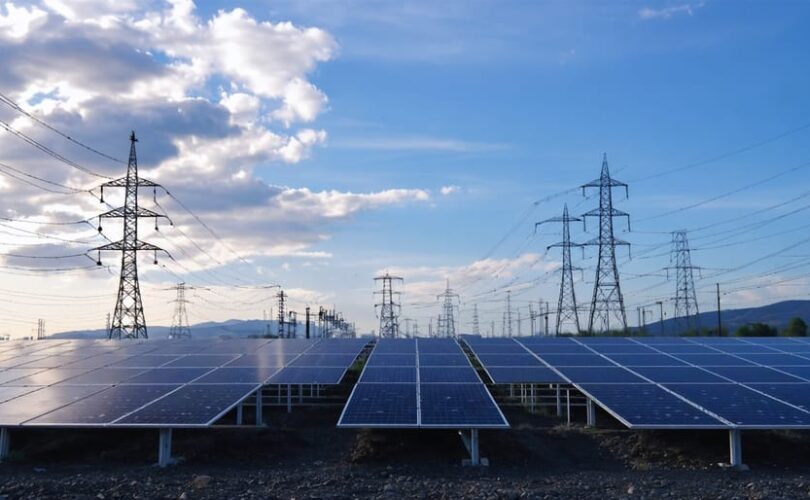
Solar energy has reached a critical inflection point: while photovoltaic installations now generate over 1,300 gigawatts globally, their integration into existing electrical grids presents formidable technical and systemic challenges that threaten to constrain further expansion. The intermittent nature of solar generation creates voltage fluctuations and frequency instabilities that stress infrastructure designed for predictable, centralized power sources. Grid operators face the complex task of balancing supply and demand when cloud cover can reduce output by 70% within minutes, while aging transmission networks struggle to accommodate bidirectional power flows from distributed solar installations.
Beyond technical hurdles, regulatory frameworks lag behind technological capabilities, creating uncertainty for investors and developers. Forecasting accuracy remains imperfect despite advanced meteorological tools, complicating day-ahead market participation and reserve requirements. Energy storage solutions, while improving, still carry prohibitive costs for many applications. Interconnection queues stretch years long in some regions, delaying projects and increasing financial risk.
These challenges, however, are not insurmountable. Emerging technologies like advanced inverters, sophisticated grid management software, and hybrid renewable systems are reshaping integration paradigms. Understanding these obstacles—and the innovative solutions addressing them—is essential for professionals navigating the renewable energy transition. This article examines each major challenge category systematically, providing the technical depth and strategic insights needed to advance solar energy’s seamless grid integration while maintaining system reliability and economic viability.
The Fundamental Mismatch: How Solar Generation Clashes With Traditional Grid Design
The electrical grid infrastructure we rely on today was engineered over a century ago with a fundamentally different power generation model in mind. Traditional grids operate on the principle of centralized generation, where large-scale power plants—coal, natural gas, or nuclear—produce electricity continuously and predictably. These facilities generate what the industry calls “baseload power,” maintaining consistent output 24/7 to meet minimum demand. Grid operators could reliably forecast consumption patterns and dispatch generation accordingly, ensuring supply matched demand at every moment.
Solar photovoltaic systems disrupt this paradigm in two critical ways. First, solar generation is inherently intermittent, producing power only when the sun shines. Output fluctuates throughout the day following the solar irradiance curve, dropping to zero at night and diminishing substantially during cloudy conditions. This variability introduces unpredictability that traditional grid management systems weren’t designed to accommodate. Unlike baseload plants that operators can control with precision, solar generation depends on meteorological conditions beyond human control.
Second, solar installations are geographically distributed rather than centralized. Instead of power flowing unidirectionally from massive generating stations through transmission lines to consumers, solar grid integration requires managing thousands or millions of small-scale generators spread across rooftops, parking lots, and solar farms. This distributed architecture reverses power flows, particularly during peak solar production hours when residential and commercial installations may generate more electricity than they consume, sending excess power back upstream.
The mismatch becomes particularly acute during rapid transitions—sunrise and sunset periods when solar output changes dramatically within minutes, forcing conventional generators to ramp up or down quickly. These “duck curve” challenges, combined with the inability of solar to provide baseload power without storage solutions, create operational complexities that threaten grid stability and reliability, necessitating substantial infrastructure modernization and sophisticated management technologies.
Voltage Fluctuation and Power Quality Issues
The Cloud Pass Problem
Solar installations face a particularly disruptive phenomenon known as the “cloud pass problem,” where passing clouds cause dramatic and rapid fluctuations in power generation. Within seconds, a single cloud can reduce a solar array’s output by 50-70%, creating sudden voltage drops that propagate through the electrical grid. These swift transitions challenge grid operators who must maintain voltage stability within strict tolerances, typically ±5% of nominal values.
The destabilizing effects intensify with larger solar installations and higher grid penetration levels. When multiple megawatt-scale solar farms experience simultaneous cloud cover, the aggregate impact can trigger voltage sags affecting thousands of customers. Grid operators must deploy fast-responding resources—often fossil fuel peaker plants—to compensate for these fluctuations, undermining solar’s environmental benefits and adding operational costs.
Modern solutions include battery energy storage systems that provide instantaneous power buffering, advanced inverters with voltage regulation capabilities, and sophisticated cloud-tracking forecasting systems. Research collaborations between universities and industry leaders continue developing predictive algorithms that anticipate cloud movements minutes in advance, enabling proactive grid management responses. Understanding these voltage stability challenges remains essential for professionals designing resilient solar integration strategies.
Harmonic Distortion From Inverters
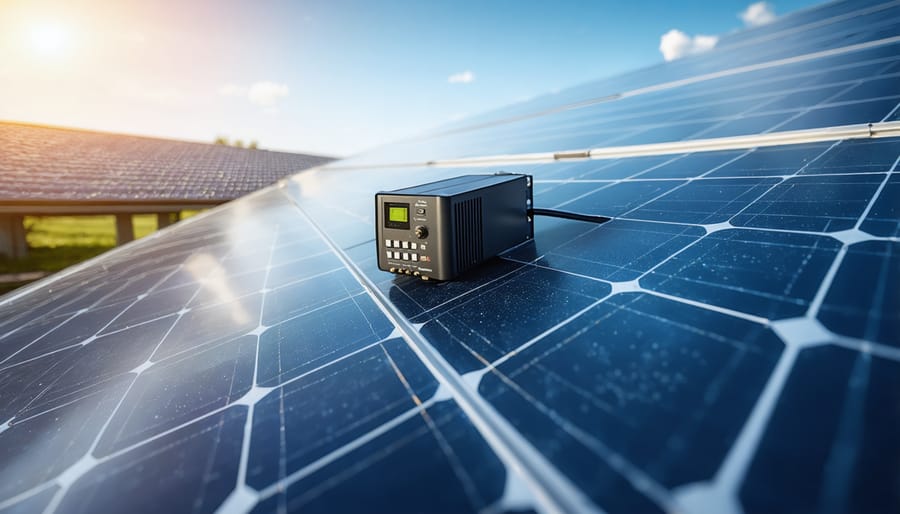
Solar inverters, while essential for converting DC power from photovoltaic panels to AC power for grid use, can inadvertently introduce harmonic distortion into the electrical grid. These harmonics—integer multiples of the fundamental frequency—result from the inverter’s switching operations and can degrade power quality, causing equipment overheating, communication interference, and reduced efficiency in transformers and motors.
Modern utility interactive inverters employ several technical strategies to minimize harmonic injection. Advanced pulse-width modulation (PWM) techniques optimize switching patterns to reduce harmonic content, while multilevel inverter topologies create smoother output waveforms with inherently lower distortion. Active filtering systems can dynamically compensate for harmonics by injecting opposing currents, effectively canceling unwanted frequencies.
Grid codes such as IEEE 1547 and IEC 61000 establish strict total harmonic distortion (THD) limits, typically requiring THD below 5% for grid-connected systems. Manufacturers have responded by integrating sophisticated control algorithms and improved circuit designs that maintain compliance even under varying load conditions.
Installation-level mitigation includes proper system sizing, strategic placement of harmonic filters, and regular power quality monitoring. Universities and research institutions continue developing innovative solutions, including hybrid filtering techniques and machine learning-based predictive control systems that adapt to changing grid conditions. As solar penetration increases, addressing harmonic distortion becomes increasingly critical for maintaining grid stability and power quality standards across distribution networks.
Frequency Regulation and Grid Stability Concerns
The Disappearing Inertia Challenge
Traditional power grids rely on large synchronous generators—massive rotating turbines in coal, gas, and nuclear plants—that provide natural inertia through their physical momentum. This rotational energy acts as a buffer against sudden frequency fluctuations, automatically stabilizing the grid during disturbances. However, solar photovoltaic systems connect to the grid through power electronics inverters, which have virtually no physical inertia.
As solar penetration increases and conventional generators retire, grid inertia diminishes proportionally. Research from Australia’s energy sector demonstrates that regions with high solar adoption have experienced inertia reductions exceeding 50%, leaving grids more vulnerable to cascading failures from unexpected outages or demand spikes. Lower inertia means the rate of change of frequency (RoCoF) accelerates dramatically during disturbances, potentially triggering protective relays and widespread disconnections before corrective measures activate.
This technical challenge requires innovative solutions. Grid-forming inverters represent a promising development, enabling solar installations to emulate the stabilizing characteristics of synchronous machines through advanced control algorithms. Universities and research institutions are collaborating with industry leaders to develop synthetic inertia technologies and fast frequency response systems that compensate for declining mechanical inertia. Energy storage systems, particularly battery installations, can also provide synthetic inertia services when properly configured, helping maintain grid stability as renewable penetration continues expanding.
Advanced Inverter Functions as a Solution
Modern inverter technology has emerged as a critical component in addressing solar energy’s grid integration challenges. Grid-forming inverters represent a paradigm shift from traditional grid-following systems, actively stabilizing voltage and frequency rather than merely responding to existing conditions. These advanced devices create a virtual synchronous generator effect, mimicking conventional power plants’ stabilizing characteristics.
Synthetic inertia technology enables solar installations to provide rapid frequency response during grid disturbances. By utilizing sophisticated algorithms and energy storage integration, these systems detect frequency deviations within milliseconds and inject or absorb power accordingly. This capability directly addresses the reduced system inertia created by displacing rotating generators.
Advanced inverters also offer volt-VAR optimization, power factor correction, and dynamic grid support functions. These grid stability solutions enable solar systems to contribute positively to power quality management. Universities and research institutions actively collaborate with manufacturers to refine these technologies, developing standardized protocols that ensure interoperability across diverse grid architectures. As inverter capabilities continue advancing, they transform solar installations from passive generators into active grid assets.
Infrastructure Limitations and Distribution Network Constraints
The physical infrastructure supporting electrical distribution networks was designed decades ago for centralized power generation, creating significant obstacles for widespread distributed solar deployment. As photovoltaic installations proliferate across residential and commercial properties, existing grid components increasingly struggle to accommodate bidirectional power flows and localized generation spikes.
**Transformer Capacity Limitations**
Distribution transformers represent a critical bottleneck in solar integration. These devices were sized to handle unidirectional power flow from substations to end-users, not reverse flows from customer-sited generation. When multiple properties within a transformer’s service area install solar arrays, the combined generation during peak production hours can exceed the transformer’s reverse power handling capacity. This creates overheating risks, accelerates equipment degradation, and potentially triggers protective disconnections. Utilities must either restrict additional solar interconnections or invest in transformer upgrades—often costing $15,000 to $50,000 per unit.
**Feeder Circuit Constraints**
Medium-voltage distribution feeders face similar capacity challenges. High solar penetration on specific circuits can cause voltage regulation issues, particularly at feeder endpoints distant from substations. When local generation exceeds consumption, voltage levels rise beyond acceptable operating ranges (typically 114-126 volts for 120-volt nominal systems). Legacy voltage regulation equipment, including load tap changers and capacitor banks, cannot respond rapidly enough to solar’s variable output, necessitating sophisticated monitoring and control systems.
**Infrastructure Upgrade Economics**
Addressing these constraints requires substantial capital investment. Utilities must upgrade conductors, reconfigure circuits, install smart inverters, and deploy advanced monitoring systems. Research indicates that distribution system upgrades can account for 10-40% of total grid modernization costs, with expenses often passed to ratepayers. These financial barriers particularly affect rural utilities serving dispersed populations where upgrade costs per customer are substantially higher, potentially limiting equitable solar access across geographic regions.
The Duck Curve and Demand-Supply Timing Mismatch
The duck curve represents one of solar energy’s most emblematic grid integration challenges, visualizing the growing mismatch between solar generation patterns and electricity demand. First identified by the California Independent System Operator (CAISO), this curve illustrates net electricity demand—total demand minus solar generation—throughout a typical day. The graph’s distinctive shape, resembling a duck’s profile, has become increasingly pronounced as solar capacity expands.
During midday hours when solar irradiance peaks, photovoltaic systems generate maximum output, sometimes exceeding immediate demand. This over-generation scenario creates several operational complications for grid operators. Excess electricity must either be curtailed, stored, exported to neighboring regions, or used to charge energy storage systems. Without adequate flexibility mechanisms, utilities may be forced to reduce solar generation output, effectively wasting clean energy resources and diminishing the economic returns on solar investments.
The steepest challenge emerges during the evening “ramp period” when solar generation rapidly declines as the sun sets, coinciding with increasing residential demand as people return home. Grid operators must compensate for this sudden generation loss by rapidly ramping up conventional power plants—typically natural gas facilities capable of quick response times. This ramping requirement can exceed 13,000 megawatts within three hours in major solar markets, straining grid flexibility and increasing operational costs.
The duck curve phenomenon fundamentally disrupts traditional electricity market structures designed around predictable baseload generation. As the curve’s belly deepens with additional solar capacity, wholesale electricity prices during midday hours often plummet or turn negative, creating financial challenges for all generators while simultaneously demanding expensive ramping services during evening peaks. Addressing this timing mismatch requires coordinated solutions including energy storage deployment, demand response programs, time-of-use rate structures, and enhanced grid interconnection to balance supply and demand across broader geographic regions.
Forecasting Difficulties and Dispatch Challenges
Solar power generation depends heavily on weather conditions, making accurate forecasting a persistent challenge for grid operators. Unlike conventional power plants that provide predictable output, solar facilities experience rapid fluctuations due to cloud cover, atmospheric conditions, and seasonal variations. These unpredictable changes can occur within minutes, creating significant complications for maintaining grid stability.
Forecast errors directly impact unit commitment decisions—the process of determining which power plants should operate to meet anticipated demand. When solar generation predictions prove inaccurate, grid operators must quickly activate backup generation or curtail excess power, often incurring substantial costs. Research indicates that day-ahead solar forecasts can carry error margins of 10-20%, while intra-hour predictions may still vary by 5-10%, depending on geographic location and forecasting methodology.
The financial implications extend throughout the electricity market. Underestimating solar output forces utilities to purchase expensive reserve power, while overestimation leaves conventional plants running unnecessarily. These mismatches affect wholesale electricity prices and increase operational expenses that ultimately pass to consumers.
Advanced forecasting technologies are emerging to address these challenges. Satellite imagery analysis, machine learning algorithms, and distributed sensor networks now enable more sophisticated predictions. Universities collaborating with industry partners are developing hybrid forecasting models that combine numerical weather prediction with artificial intelligence, achieving improved accuracy ranges. Additionally, shorter forecasting intervals and real-time data integration help grid operators respond more effectively to sudden generation changes, reducing the operational risks associated with solar variability.
Regulatory and Interconnection Barriers
While technological advancements have made solar energy increasingly viable, non-technical barriers continue to impede widespread deployment and grid integration. These regulatory and administrative challenges often prove as formidable as technical obstacles, creating significant delays and uncertainties for solar projects of all scales.
Interconnection queues have emerged as a critical bottleneck, with projects waiting years for grid connection approvals. The United States alone faces interconnection backlogs exceeding 2,000 gigawatts of proposed capacity, with average processing times stretching beyond three years in many regions. This delay stems from outdated approval processes designed for conventional power plants, failing to accommodate the distributed nature and rapid deployment timelines characteristic of solar installations.
Grid codes present another substantial hurdle, as many jurisdictions maintain regulations developed decades ago for centralized fossil fuel generation. These antiquated standards frequently require expensive modifications to solar systems or impose unnecessary technical requirements that increase project costs without corresponding reliability benefits. The lack of harmonization across different regulatory territories compounds this challenge, forcing developers to navigate conflicting requirements when operating across multiple jurisdictions.
Utility resistance, whether explicit or implicit, further complicates solar integration. Some utilities view distributed solar generation as a threat to established business models, leading to restrictive net metering policies, excessive interconnection fees, or deliberately complex application procedures. This institutional resistance creates artificial barriers that slow adoption rates despite favorable economics and consumer demand.
Inconsistent standards across states, provinces, and countries create additional complexity for manufacturers, installers, and developers. Equipment certification requirements, safety codes, and performance standards vary widely, increasing compliance costs and limiting economies of scale. Addressing these regulatory barriers requires coordinated policy reforms, streamlined interconnection processes, and standardized frameworks that balance grid reliability concerns with the imperative for accelerated renewable energy deployment.
Emerging Solutions and Integration Technologies
Energy Storage Systems
Energy storage represents one of the most critical challenges in solar grid integration, as photovoltaic systems generate electricity only during daylight hours while demand continues around the clock. Advanced energy storage systems serve as essential buffers, capturing excess solar generation during peak production periods and releasing it when needed.
Lithium-ion battery storage has emerged as the predominant solution for utility-scale and residential applications, offering rapid response times and declining costs. However, challenges persist regarding battery lifespan, resource availability, and safe disposal protocols. Pumped hydroelectric storage remains the most established large-scale solution, utilizing excess solar energy to pump water uphill into reservoirs, then releasing it through turbines during high-demand periods. Geographic limitations and environmental considerations restrict its deployment potential.
Emerging technologies include flow batteries, compressed air energy storage, and thermal storage systems, each offering distinct advantages for specific applications. Grid-scale storage deployment requires substantial capital investment, standardized interconnection protocols, and supportive regulatory frameworks. Research institutions and industry partners continue developing next-generation storage solutions with improved energy density, extended cycle life, and reduced environmental impact to enable seamless solar integration.
Smart Grid and Digital Control Systems
Modern smart grid technologies represent a transformative solution to solar integration challenges. Advanced metering infrastructure (AMI) enables bidirectional communication between utilities and consumers, providing granular data on energy generation and consumption patterns. Real-time monitoring systems track grid conditions continuously, detecting voltage fluctuations and frequency deviations within milliseconds to maintain stability.
Artificial intelligence and machine learning algorithms analyze historical weather data, consumption trends, and generation patterns to optimize power distribution automatically. These AI-driven management tools predict solar output with increasing accuracy, enabling proactive load balancing and storage dispatch decisions. Digital control systems coordinate distributed energy resources across multiple nodes, managing thousands of rooftop installations as virtual power plants.
University research partnerships are advancing predictive analytics capabilities, while utilities deploy sophisticated supervisory control and data acquisition (SCADA) systems. These innovations reduce curtailment incidents, minimize transmission losses, and enhance overall grid resilience against solar variability challenges.
Hybrid Power Plants and Virtual Power Plants
Hybrid power plants represent a strategic solution to solar energy’s intermittency challenges by combining photovoltaic systems with complementary generation sources such as battery storage, wind turbines, or natural gas peakers. This integrated approach enables continuous power delivery and enhanced grid stability, as different technologies compensate for each other’s limitations. For instance, battery storage can discharge during cloud cover, while wind generation often peaks during evening hours when solar output declines.
Virtual Power Plants (VPPs) take a distributed approach by aggregating numerous small-scale solar installations, energy storage systems, and controllable loads into a unified, remotely managed network. Through advanced software platforms and real-time communication protocols, VPPs coordinate these dispersed resources to function as a single controllable entity. This aggregation improves forecasting accuracy, provides ancillary services like frequency regulation, and allows residential and commercial solar systems to participate in wholesale energy markets. Universities collaborating with industry have demonstrated VPP effectiveness in balancing supply and demand while maximizing renewable energy utilization, offering scalable pathways toward grid-compatible solar integration.
The challenges facing solar energy grid integration represent not insurmountable barriers, but rather compelling opportunities for innovation and professional advancement in the renewable energy sector. While the technical complexities of voltage regulation, frequency stability, and infrastructure limitations are undeniably significant, the trajectory of technological development demonstrates that these obstacles are solvable through coordinated effort and strategic investment.
The integration challenges discussed throughout this article—from intermittency and forecasting difficulties to regulatory frameworks and storage limitations—require multidisciplinary solutions combining engineering expertise, policy innovation, and economic analysis. For aspiring photovoltaic professionals, understanding these challenges provides essential context for career development and specialization opportunities. The renewable energy transition depends on skilled professionals capable of addressing voltage management issues, developing sophisticated forecasting models, designing resilient grid infrastructure, and navigating complex regulatory environments.
Investment in research and development continues to yield promising solutions, including advanced inverter technologies, enhanced energy storage systems, and artificial intelligence-driven grid management platforms. Policy support mechanisms, such as modernized interconnection standards and supportive regulatory frameworks, are evolving to facilitate rather than hinder solar integration. Success requires collaboration among utilities, technology developers, policymakers, and educational institutions.
This convergence of challenges and solutions creates unprecedented opportunities for those entering the photovoltaic field. Mose Solar’s educational programs are specifically designed to prepare professionals for these real-world challenges, combining theoretical knowledge with practical applications through university collaborations. By equipping students with comprehensive understanding of both obstacles and emerging solutions, these programs ensure graduates are positioned to drive innovation and accelerate the global transition to sustainable energy systems.