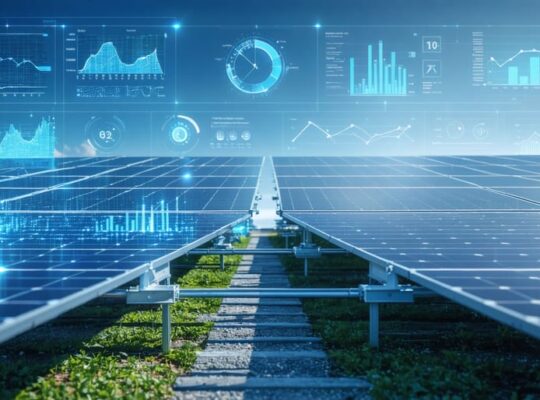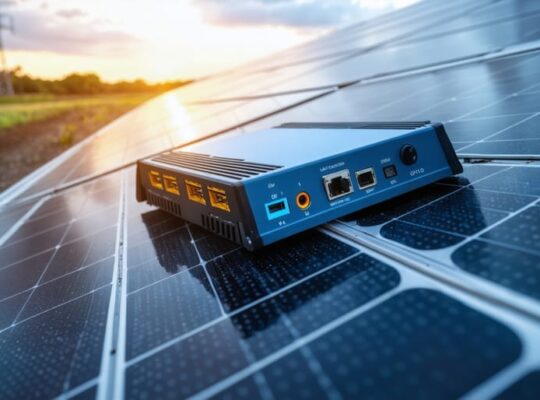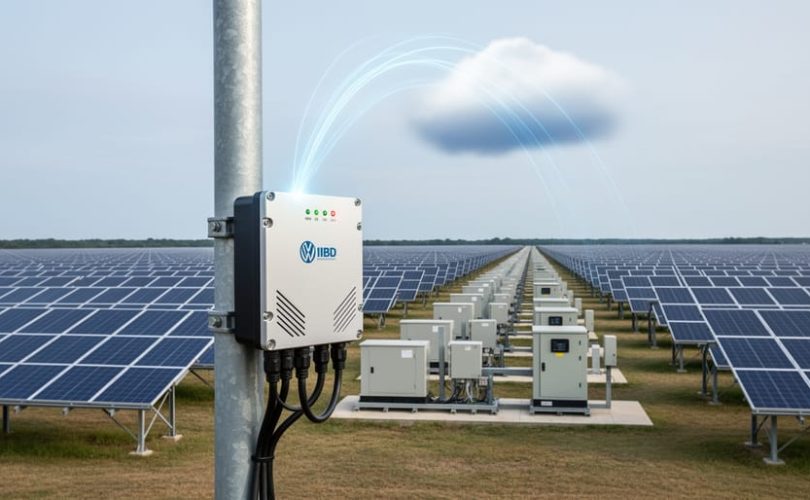
Modern photovoltaic monitoring platforms increasingly leverage edge computing to streamline site deployment, but the term “automatically created” requires clarification. When installers connect intelligent edge devices—such as data loggers, inverters with built-in communication modules, or dedicated monitoring gateways—to a cloud-based monitoring platform, the system behavior varies significantly depending on the platform architecture and configuration settings.
In most contemporary systems, edge devices initiate automatic site registration by transmitting device identifiers, location data, and system specifications upon first connection. The monitoring platform receives this initialization packet and generates a preliminary site profile without manual intervention. However, this automatic creation typically produces a skeletal entry requiring subsequent configuration. Installers must still verify site parameters, define system topology, assign user permissions, and calibrate performance benchmarks.
The distinction between true automation and semi-automated workflows matters considerably for large-scale deployment operations. Enterprise monitoring platforms may offer zero-touch provisioning when integrated with comprehensive device management systems, while entry-level solutions require varying degrees of manual setup. Understanding these technical prerequisites—network connectivity requirements, authentication protocols, data mapping conventions, and API specifications—enables professionals to optimize deployment efficiency.
This article examines how edge computing architecture enables automatic site creation, defines what “automatic” means across different platform ecosystems, identifies the technical conditions necessary for seamless operation, and provides practical guidance for photovoltaic professionals implementing these systems in real-world installations.
Understanding PV Site Creation in Monitoring Platforms
What Defines a PV Site in Monitoring Systems
A PV site in PV monitoring systems represents a structured data entity containing essential configuration parameters and hierarchical information. At its core, a site entry includes geographical coordinates, system capacity specifications, installed equipment inventory, and network topology definitions. The data structure typically comprises metadata such as site name, location details, timezone settings, and ownership information, alongside technical parameters including inverter models, panel configurations, string layouts, and communication protocol settings.
Modern monitoring platforms organize sites with parent-child relationships, where the site serves as the top-level container for devices like inverters, meters, and weather stations. Each site maintains unique identifiers, authentication credentials for connected devices, and data collection intervals. Configuration parameters define alarm thresholds, performance ratios, and expected generation profiles based on system design. The platform also stores commissioning dates, warranty information, and maintenance schedules. This comprehensive data framework enables the monitoring system to accurately track performance, identify anomalies, and generate meaningful analytics across single or multiple installations within portfolio management contexts.
Traditional Manual Site Configuration Methods
Historically, establishing a photovoltaic site within monitoring platforms required comprehensive manual configuration processes. System administrators or installers needed to access the platform interface and methodically input fundamental site information, including geographic coordinates, installation address, time zone settings, and site identification details. This initial data entry formed the foundation for accurate performance tracking and reporting.
Beyond basic location parameters, traditional setup demanded detailed system specifications. Professionals manually entered installed capacity measurements, panel quantities and orientations, inverter specifications, string configurations, and array layouts. Each component required individual registration within the platform database, creating opportunities for data entry errors that could compromise monitoring accuracy.
Device parameter configuration represented another critical manual step. Technicians established communication protocols, assigned unique device identifiers, configured data transmission intervals, and set performance thresholds for alerts. This process often involved navigating multiple configuration screens and required substantial technical knowledge of both the monitoring hardware and platform architecture.
The manual approach, while offering granular control over system setup, presented several challenges for PV professionals. Time investment for comprehensive site commissioning could extend from several hours to full days depending on installation complexity. Documentation requirements necessitated maintaining detailed records of all configuration choices. Additionally, human error during data entry could lead to monitoring inconsistencies requiring troubleshooting and correction efforts. These conventional methods established the baseline against which modern automatic site creation capabilities are now measured, highlighting the industry’s evolution toward streamlined deployment processes.
The Role of Edge Computing in Automated Site Discovery
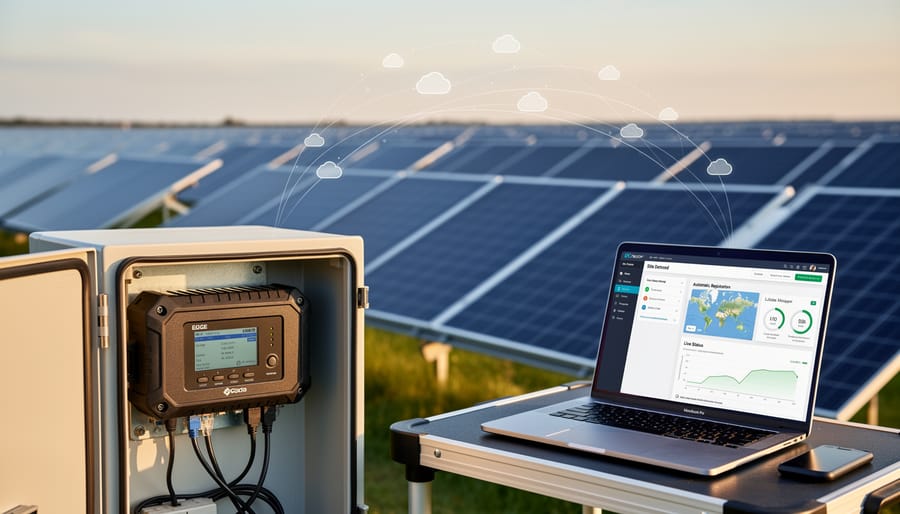
Edge Gateway Intelligence and Device Recognition
Modern edge gateway devices serve as intelligent intermediaries between photovoltaic equipment and cloud-based monitoring platforms, performing sophisticated device recognition and profiling functions that enable automatic site creation. These gateways utilize multiple identification protocols to discover and catalog connected equipment without manual intervention.
When an edge gateway powers on and establishes network connectivity, it immediately begins scanning for connected devices using standardized communication protocols such as Modbus TCP/IP, RS485, and proprietary inverter communication standards. The gateway queries each discovered device for its identification parameters, including manufacturer codes, model numbers, serial numbers, firmware versions, and operational specifications. This automated interrogation process builds a comprehensive equipment inventory within minutes of deployment.
The edge computing capabilities embedded in these gateways enable local processing of device data before transmission to the cloud platform. The gateway analyzes equipment characteristics to determine site topology, identifying string configurations, combiner box arrangements, and interconnection relationships between components. This intelligence allows the system to distinguish between residential installations with single inverters and commercial arrays with multiple parallel systems.
Advanced gateways incorporate machine learning algorithms that recognize equipment patterns and apply appropriate configuration templates based on detected hardware profiles. For instance, when the gateway identifies a specific inverter model paired with certain string monitoring devices, it automatically applies the correct data point mappings, polling intervals, and alert thresholds. This contextual awareness eliminates configuration errors and accelerates deployment timelines, transforming what traditionally required hours of manual setup into an automated process completing within the first synchronization cycle.
Plug-and-Play Site Registration Mechanisms
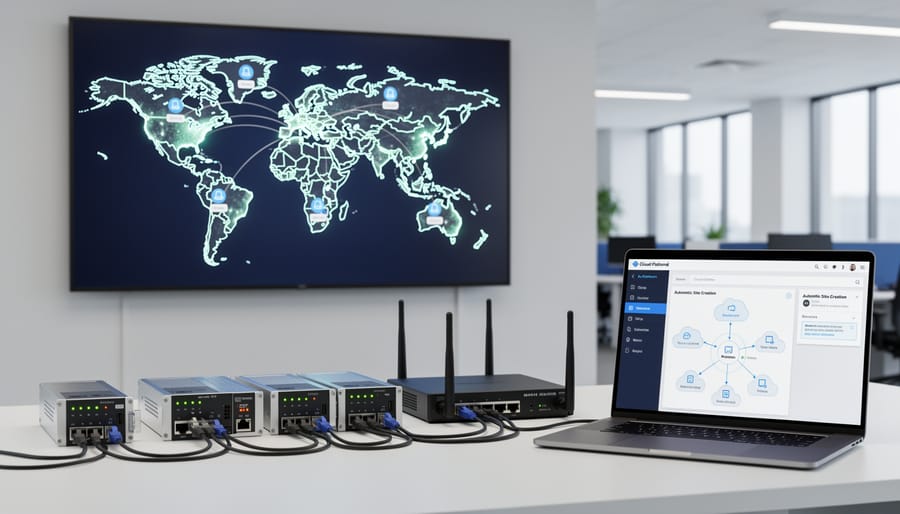
Modern edge monitoring technology enables streamlined site registration through automated communication protocols between field-deployed devices and cloud-based monitoring platforms. When installers connect edge devices such as data loggers or smart inverters to a PV system, these devices initiate a registration handshake with the manufacturer’s cloud infrastructure using pre-configured authentication credentials.
The technical process begins when the edge device establishes internet connectivity through Ethernet, Wi-Fi, or cellular networks. Upon connection, the device transmits its unique identifier, serial number, and embedded registration token to the platform’s API endpoint. The cloud platform validates these credentials against its device inventory database and, upon successful authentication, automatically generates a site entry with preliminary configuration parameters.
This plug-and-play approach minimizes manual data entry by extracting device-specific information during the initial communication sequence. The platform typically captures the device’s geographical location through GPS coordinates or IP geolocation, assigns default monitoring templates based on device type, and establishes bidirectional communication channels for ongoing data exchange. Some platforms incorporate additional intelligence by detecting connected equipment through modbus scanning or network discovery protocols, automatically populating the site topology with inverters, meters, and sensors.
However, the level of automation varies significantly across platforms. Premium solutions may automatically configure monitoring dashboards, alert thresholds, and performance baselines using machine learning algorithms trained on similar installations. Entry-level platforms might only create a basic site shell requiring substantial manual configuration afterward. Understanding these differences helps professionals set appropriate expectations and prepare necessary site-specific information including tariff structures, system capacity ratings, and custom naming conventions before deployment to expedite the commissioning process.
Automatic vs. Semi-Automatic Site Creation: What Monitoring Platforms Actually Offer
Fully Automated Creation Scenarios
True zero-touch site creation occurs when monitoring platforms can establish fully operational system entries without any installer intervention. This advanced capability requires specific hardware and infrastructure conditions to function reliably.
The fundamental prerequisite is an edge computing device with embedded identification credentials. Modern solar inverters and smart data loggers arrive pre-configured with unique serial numbers, equipment specifications, and manufacturer authentication certificates. When these devices connect to the internet for the first time, they transmit their credentials directly to the manufacturer’s cloud platform, which automatically generates a corresponding site entry with basic parameters populated.
Network connectivity represents the second critical requirement. Devices must establish stable communication through Ethernet, cellular modems, or Wi-Fi connections. Many platforms support multiple connectivity protocols, automatically selecting the most reliable option. The initial handshake between hardware and cloud infrastructure triggers automated site provisioning workflows.
Hardware must also include sufficient onboard intelligence to collect and transmit system metadata. This encompasses inverter models, rated capacities, firmware versions, and connection topologies. Advanced edge devices can even perform preliminary energy calculations before the site record exists, uploading historical data retroactively once the platform establishes the account.
Geographic location services further enhance automation. GPS-enabled data loggers automatically populate site coordinates, enabling accurate solar irradiance modeling and performance benchmarking. Some platforms cross-reference these coordinates with regional utility databases to pre-configure tariff structures and feed-in compensation rates, though installers should always verify this information for accuracy and contractual compliance.
Semi-Automatic Processes Requiring User Validation
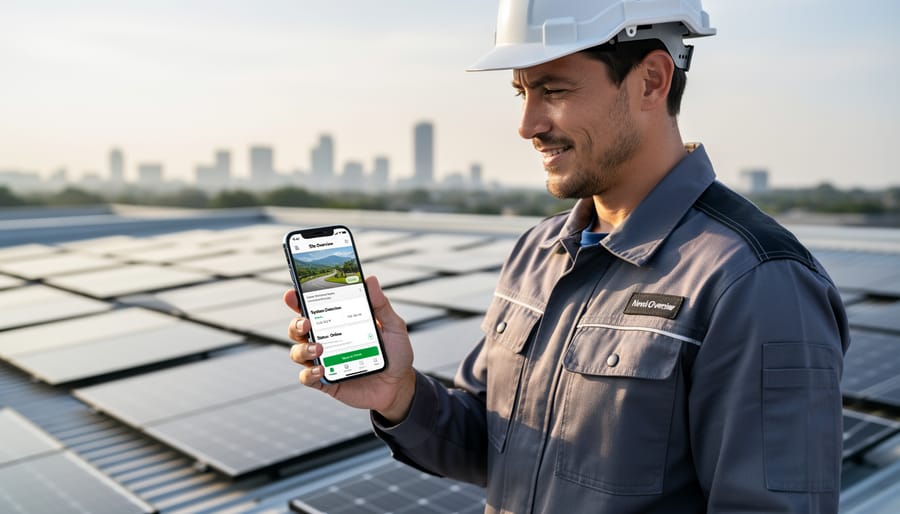
Most monitoring platforms employ a semi-automatic approach that balances convenience with configuration control. In these scenarios, the platform detects newly connected edge devices and begins the site creation process, but pauses for user validation at critical decision points.
When an inverter or data logger first connects to the cloud platform, the system typically identifies the hardware through its unique serial number and device type. Rather than immediately creating a site entry with default parameters, the platform generates a notification prompting the installer or system administrator to complete the setup. This validation step prevents duplicate entries, ensures accurate site naming conventions, and allows professionals to input essential metadata that automated systems cannot reliably determine.
Common validation requirements include confirming the physical site location with precise GPS coordinates, assigning meaningful site names that align with organizational standards, specifying the installed photovoltaic capacity in kilowatts, and selecting the appropriate tariff structure for financial performance calculations. Some platforms also request information about panel orientation, tilt angles, and shading factors that influence performance benchmarking.
This semi-automatic model offers significant advantages for professional installers managing multiple deployments. The platform handles device recognition and basic connectivity verification, reducing manual data entry while preserving human oversight for critical parameters. Users can typically access a pending sites queue through the platform dashboard, where they review detected systems and complete configuration within minutes.
For organizations with standardized deployment procedures, many platforms support templates that pre-populate common parameters, further streamlining the validation process while maintaining necessary quality controls.
Technical Prerequisites for Automatic Site Creation
Edge Device Capabilities and Firmware Requirements
Edge computing devices serving photovoltaic monitoring systems require specific hardware and firmware capabilities to support automatic site discovery and registration. Modern edge devices typically incorporate ARM Cortex-A series processors or equivalent computing power, minimum 512MB RAM, and secure storage for configuration data and temporary logging during connectivity interruptions.
Firmware requirements vary by manufacturer but generally include support for standard communication protocols such as Modbus TCP/RTU, SunSpec Alliance specifications, and RESTful APIs for cloud connectivity. Devices must implement TLS 1.2 or higher encryption standards to ensure secure data transmission during the auto-registration process. Most platforms require firmware version 2.0 or later to enable full auto-discovery features, though legacy devices may support limited functionality through manual configuration supplements.
Critical capabilities include embedded device identification mechanisms such as unique hardware serial numbers, MAC address reporting, and digital certificate management. The edge device must automatically detect connected inverters, meters, and sensors through active network scanning or serial bus enumeration. Geographic positioning capability, either through integrated GPS modules or network-based location services, enables automatic timezone configuration and solar resource mapping. Successful automatic site creation depends on the edge device maintaining persistent configuration memory and supporting over-the-air firmware updates to ensure compatibility with evolving platform requirements and security standards.
Network Connectivity and Cloud Communication Protocols
Automatic PV site creation fundamentally depends on robust network connectivity and standardized communication protocols between edge devices and cloud-based monitoring platforms. The edge computing gateway at your solar installation must maintain reliable internet access, typically through cellular networks (4G/LTE or 5G), ethernet connections, or Wi-Fi infrastructure. Most modern IoT-enabled monitoring platforms require minimum upload speeds of 256 kbps for basic data transmission, though higher bandwidth improves real-time monitoring capabilities.
Communication protocols play a critical role in enabling seamless automatic registration. Industry-standard protocols include MQTT (Message Queuing Telemetry Transport) for lightweight, efficient data exchange, HTTPS/REST APIs for secure web-based communication, and Modbus TCP for inverter-to-gateway connectivity. When an edge device powers on with proper network access, it initiates a handshake sequence with the monitoring platform’s cloud servers using these protocols.
The automatic site creation process requires specific network conditions: stable IP connectivity, proper DNS resolution, accessible firewall ports (typically TCP ports 443 and 8883), and sufficient signal strength for wireless connections. Edge devices transmit unique identification credentials, including serial numbers, MAC addresses, and authentication tokens, which the platform uses to automatically generate site profiles.
For educational institutions and research facilities collaborating with PV manufacturers, understanding these network requirements ensures successful deployment of monitoring infrastructure. System integrators should verify cellular coverage maps, configure network security policies, and test connectivity before commissioning to guarantee automatic site provisioning functions as intended.
Benefits and Limitations of Automated Site Creation in Solar Monitoring
Efficiency Gains and Reduced Configuration Errors
Automated site creation delivers substantial operational advantages for photovoltaic system operators and installers. Manual configuration processes typically require 30-60 minutes per site, involving data entry across multiple fields, network configuration, and system parameter definition. Automation reduces this timeline to mere seconds, allowing technical teams to focus on higher-value activities like system optimization and performance analysis.
Accuracy improvements represent another critical benefit. Manual data entry introduces human error risks, including incorrect coordinates, mismatched device identifiers, or inconsistent naming conventions. These mistakes can cascade through monitoring systems, complicating troubleshooting and performance assessment. Automated processes eliminate transcription errors by pulling configuration data directly from edge devices, ensuring consistency between physical installations and digital representations.
The operational benefits extend beyond initial setup. Automated site creation facilitates standardized workflows across distributed PV portfolios, enabling organizations to scale operations efficiently. When edge computing devices establish connectivity, monitoring platforms can immediately begin collecting performance data and generating real-time analytics. This immediate data availability supports faster commissioning processes and enables system integrators to verify installation quality promptly. For organizations managing hundreds of sites, these efficiency gains translate into significant cost savings and improved resource allocation.
Current Limitations and Manual Intervention Scenarios
Despite advancements in automation, several scenarios still require manual intervention to ensure accurate site configuration. Automatic creation typically fails when network connectivity issues prevent the initial handshake between edge devices and cloud platforms, or when firewall restrictions block essential communication ports. Incomplete device commissioning represents another common challenge, particularly when installers skip critical configuration steps during installation.
Complex system architectures involving multiple inverter brands, hybrid storage solutions, or custom sensor arrays often exceed the capabilities of standard automatic provisioning. These installations require professional oversight to map data points correctly and establish proper device hierarchies within the monitoring platform. Additionally, sites with non-standard electrical configurations or those integrating legacy equipment may produce incomplete profiles that lack essential performance parameters.
Geographic coordinate mismatches frequently occur when GPS-enabled devices report inaccurate locations, affecting solar radiation calculations and performance benchmarking. Custom naming conventions, specific alert thresholds, and organization-specific reporting requirements also necessitate manual adjustment after initial site creation. Understanding these limitations helps professionals anticipate configuration needs and allocate appropriate resources for system deployment, ensuring monitoring platforms accurately reflect actual installation characteristics from day one.
Best Practices for PV Professionals Working with Auto-Created Sites
Verification Checklist for Auto-Generated Site Configurations
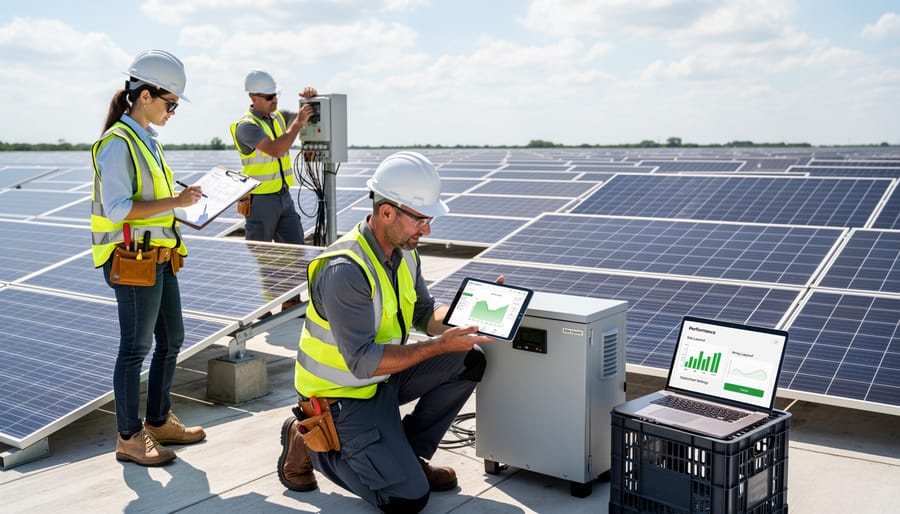
After automatic site creation, photovoltaic professionals should systematically verify several critical parameters to ensure monitoring accuracy. Begin by confirming the site identification details, including the installation address, geographical coordinates, and time zone settings, as these directly impact solar production calculations and performance comparisons. Next, examine the system capacity specifications: verify that the total installed DC capacity, inverter AC ratings, and array configuration match the physical installation. This validation prevents misleading performance ratio calculations.
Review communication settings to confirm that data transmission intervals align with your monitoring requirements and that the edge device maintains consistent connectivity. Check that all connected inverters, meters, and sensors appear in the equipment inventory with correct serial numbers and model designations. Validate the alert thresholds and notification rules, ensuring they reflect site-specific requirements rather than generic defaults.
Particularly important is verifying the system topology representation, confirming that string configurations, combiner box arrangements, and electrical relationships accurately reflect the actual installation. Additionally, review user access permissions to ensure appropriate personnel have suitable authorization levels. Finally, cross-reference automatically populated nameplate data against commissioning documentation, as discrepancies here can compromise long-term performance analysis and warranty claims. This comprehensive verification establishes a reliable foundation for accurate monitoring throughout the system’s operational lifetime.
Customizing and Optimizing Automatically Created Sites
While automatic site creation streamlines deployment, customization ensures monitoring platforms align with specific operational requirements. After initial site creation, professionals should verify and adjust key configuration parameters to optimize data accuracy and system performance.
Begin by reviewing automatically populated site information, including geographic coordinates, system capacity, and inverter specifications. Confirm these details match actual installation parameters, as discrepancies can affect performance ratio calculations and energy yield projections. Most platforms allow manual adjustment of timezone settings, system orientation, and tilt angles to improve accuracy of theoretical production models.
Customize alert thresholds based on project-specific performance expectations rather than relying on platform defaults. Set communication failure notifications, underperformance alerts, and equipment status warnings according to contractual obligations and maintenance response times. This tailored approach prevents alert fatigue while ensuring critical issues receive immediate attention.
Configure user access permissions to reflect organizational hierarchy and client requirements. Establish appropriate viewing and editing rights for installers, operations personnel, and end customers. Many platforms support custom dashboard creation, enabling stakeholders to access relevant metrics without navigating complex technical interfaces.
Finally, integrate third-party systems such as weather stations, revenue meters, or building management platforms when available. These connections enhance data correlation capabilities and support comprehensive performance analysis. Regular review of monitoring configurations ensures continued alignment with evolving project objectives and emerging best practices in photovoltaic system management.
Future Trends: AI-Enhanced Site Creation and Advanced Edge Intelligence
The photovoltaic monitoring landscape is advancing rapidly, with artificial intelligence and edge intelligence poised to transform how monitoring platforms create and manage site configurations. These emerging technologies promise to eliminate manual intervention while enhancing accuracy and operational efficiency.
Machine learning algorithms are increasingly being integrated into monitoring platforms to analyze historical data patterns from thousands of existing installations. These AI systems can automatically detect optimal configuration parameters for new sites based on geographic location, equipment specifications, and environmental conditions. When edge devices connect for the first time, AI-enhanced platforms will not only create the site automatically but also populate it with predictive performance baselines, maintenance schedules, and anomaly detection thresholds tailored to that specific installation.
Advanced edge intelligence is evolving beyond simple data collection to include sophisticated onboard processing capabilities. Next-generation edge devices will perform real-time equipment identification, automatically mapping inverter relationships, string configurations, and energy storage systems without requiring pre-configuration. These intelligent devices will communicate their complete system topology to the cloud platform, enabling truly zero-touch site creation.
Universities collaborating with monitoring platform developers are researching neural networks that can predict optimal site configurations by analyzing satellite imagery, weather patterns, and local grid characteristics before physical installation even begins. This research is informing educational programs that prepare the next generation of PV professionals for AI-assisted system deployment.
Blockchain technology is also emerging as a verification layer, creating immutable records of automatic site creation events and configuration changes. This advancement addresses security concerns while maintaining the convenience of automated processes, ensuring that automatically created sites meet industry standards and regulatory requirements without manual oversight.
The question of whether PV sites are automatically created in monitoring platforms reveals a nuanced reality that balances technological capability with professional oversight requirements. Modern edge-computing-enabled monitoring platforms have indeed advanced toward automatic site creation, but this automation operates within carefully designed parameters rather than as a completely hands-off process.
For PV professionals, the key takeaway is understanding that “automatic” means different things across platform ecosystems. Some manufacturers offer true plug-and-play experiences where edge devices auto-provision site entries upon network connection, while others require initial configuration templates or manual approval steps before full automation engages. The level of automation typically correlates with the sophistication of the edge computing infrastructure and the platform’s security architecture.
Edge computing has fundamentally transformed this landscape by enabling intelligent device-level processing that facilitates smoother site creation workflows. However, even the most advanced systems benefit from professional verification of critical parameters like system capacity, location data, tariff structures, and performance benchmarks. Automatic creation handles the technical connectivity; human expertise ensures operational accuracy.
The optimal approach for installers and system integrators combines leveraging available automation features to improve deployment efficiency while maintaining professional oversight of configuration accuracy. As monitoring platforms continue evolving, this balance will remain essential. Organizations should evaluate platforms based on their specific automation capabilities, understand technical prerequisites thoroughly, and establish standardized procedures that capitalize on automatic features while preserving quality control through strategic human intervention points.