The global solar industry represents a $300 billion annual investment landscape where financial protection mechanisms determine project viability and investor confidence. As photovoltaic installations expand across diverse geographic and regulatory environments, sophisticated insurance partnerships have emerged as the essential infrastructure protecting stakeholders from technical failures, extreme weather events, regulatory changes, and operational disruptions that could otherwise derail multi-million dollar projects.
Insurance solutions for solar assets have evolved from basic property coverage into comprehensive risk management ecosystems encompassing performance guarantees, political risk protection, cyber liability coverage, and environmental compliance assurance. These mechanisms directly influence project bankability—the ability to secure financing—by providing lenders and investors the security required to commit capital to solar developments spanning decades of operational life. Major insurance providers now collaborate with solar developers, engineering firms, and financial institutions to create tailored products addressing everything from manufacturing defects in photovoltaic modules to grid interconnection delays and force majeure events.
Understanding these insurance partnerships is no longer optional for professionals entering the renewable energy sector. Project developers must structure adequate coverage to satisfy lender requirements while managing premium costs. Investors need clarity on how insurance transfers reduce portfolio risk. Policy makers benefit from recognizing how insurance availability accelerates renewable energy deployment and climate goals. This comprehensive examination explores the insurance instruments protecting solar investments worldwide, analyzes successful partnership models between insurers and solar stakeholders, and provides practical insights into how proper risk mitigation strategies enhance project economics and accelerate the global energy transition toward sustainable photovoltaic generation.
Understanding Risk in Global Solar Deployment
Technical and Performance Risks
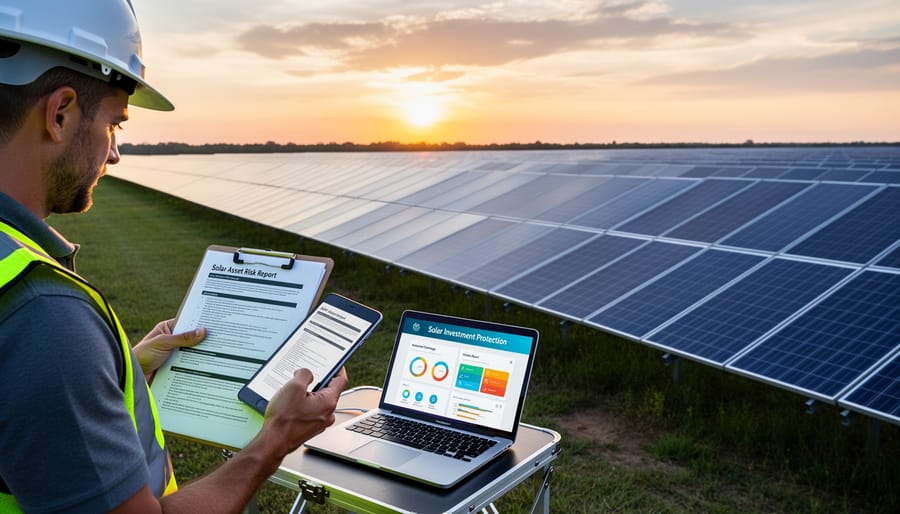
Technical and performance risks represent critical concerns in solar photovoltaic deployments, directly impacting project viability and return on investment. Understanding these risks enables stakeholders to implement appropriate mitigation strategies and secure adequate insurance coverage.
Equipment failures constitute a primary concern, with inverters typically experiencing shorter lifespans than PV modules. While quality solar panels carry warranties of 25-30 years, inverter replacement often becomes necessary after 10-15 years of operation. Manufacturing defects, though relatively rare in certified equipment, can manifest as microcracks, cell delamination, or bypass diode failures that compromise system performance before warranty expiration.
Degradation rates significantly influence long-term energy production calculations. Industry-standard degradation averages approximately 0.5-0.8 percent annually for crystalline silicon modules, though actual rates vary based on environmental conditions, installation quality, and manufacturing standards. Accelerated degradation may occur in harsh climates with extreme temperatures, high humidity, or substantial UV exposure.
Underperformance issues frequently arise from suboptimal system design, improper installation, or inadequate maintenance protocols. Shading, soiling accumulation, and mismatch losses can reduce actual output substantially below theoretical projections. Performance monitoring systems help identify deviations early, enabling corrective action before significant revenue loss occurs.
Manufacturing quality varies considerably across suppliers, making due diligence essential during procurement. Selecting Tier 1 manufacturers with proven track records and robust quality control processes minimizes defect-related risks. Insurance partnerships increasingly require documentation of equipment quality standards and installation certifications, recognizing that prevention strategies reduce claim frequency and improve overall project performance outcomes for all stakeholders involved.
Environmental and Climate-Related Risks
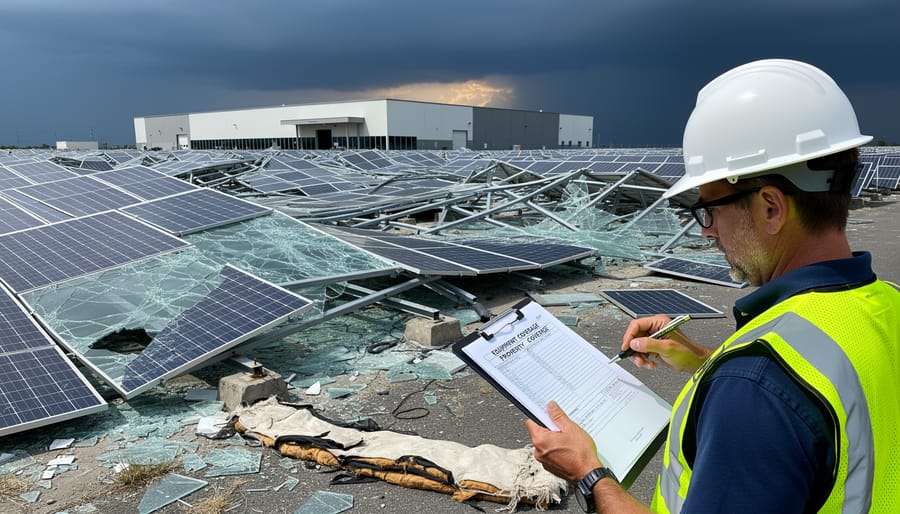
Solar installations face significant exposure to environmental and climate-related risks that can compromise system performance, structural integrity, and long-term viability. Extreme weather events, including hurricanes, tornadoes, and severe storms, pose immediate threats through high winds that can dislodge panels and damage mounting structures. Hailstorms represent a particular concern, as large hailstones can crack photovoltaic cells and reduce energy output even when surface damage appears minimal.
Temperature extremes affect solar performance in complex ways. While solar panels convert sunlight efficiently, excessive heat degrades semiconductor materials and reduces conversion efficiency, with output declining approximately 0.5% per degree Celsius above optimal operating temperatures. Conversely, freeze-thaw cycles in cold climates can compromise sealing materials and electrical connections.
Climate variability introduces additional challenges through unpredictable precipitation patterns, increased wildfire risk in drought-prone regions, and rising sea levels threatening coastal installations. Flooding events can inundate ground-mounted systems and damage electrical components, while prolonged cloud cover during climate anomalies reduces revenue projections. Insurance partnerships increasingly utilize climate modeling and meteorological data to assess regional vulnerabilities, price premiums appropriately, and recommend site-specific mitigation measures. Understanding these environmental risks enables developers and investors to implement robust protective strategies and ensure project resilience.
Financial and Market Risks
Solar project viability faces multiple financial and market uncertainties that require careful evaluation and mitigation strategies. Revenue volatility represents a primary concern, as electricity prices fluctuate based on grid demand, seasonal variations, and competitive market pressures. These fluctuations directly impact projected cash flows and return calculations essential for securing project financing.
Policy changes constitute another significant risk factor, particularly as government incentives, feed-in tariffs, and renewable energy mandates evolve with political transitions. Sudden regulatory shifts can alter project economics substantially, affecting both operational facilities and development pipelines. Investors and developers must monitor legislative landscapes across multiple jurisdictions to anticipate potential impacts.
Currency fluctuations present considerable challenges for international solar ventures, especially when equipment procurement occurs in different currencies than revenue generation. Exchange rate movements can dramatically affect project costs and returns, necessitating hedging strategies or local manufacturing partnerships to minimize exposure.
Market dynamics including technology obsolescence, supply chain disruptions, and competitive pressures from alternative energy sources further complicate financial planning. Understanding these interconnected risks enables stakeholders to structure comprehensive insurance coverage, establish appropriate contingency reserves, and develop adaptive business models that maintain project viability across diverse economic scenarios.
The Evolution of Solar Insurance Partnerships
Traditional Insurance Models vs. Solar-Specific Solutions
Traditional property insurance policies, originally designed for conventional buildings and infrastructure, often fall short when applied to solar installations. These standard policies typically categorize photovoltaic systems as roof-mounted equipment or general property additions, failing to address the unique risk profiles inherent to solar technology. Conventional insurers may not adequately account for performance guarantees, degradation rates, or the specialized nature of solar component failures.
The emergence of solar-specific insurance solutions responds directly to these limitations. Unlike traditional coverage, specialized solar insurance products incorporate performance-based protections that consider energy production targets, inverter failures, and module-level defects. These policies recognize that solar assets represent both physical infrastructure and revenue-generating mechanisms, requiring dual protection for equipment damage and business interruption.
A critical distinction lies in risk assessment methodologies. Traditional insurers rely on historical data from conventional property claims, while solar-specific providers analyze industry datasets including weather patterns affecting specific solar technologies, regional installation quality variations, and technology-specific failure modes. This specialized underwriting approach enables more accurate premium calculations and comprehensive coverage terms.
The development of solar-dedicated insurance partnerships has also fostered innovation in policy structures. Modern solar insurance products now include coverage for emerging risks such as cybersecurity threats to smart inverters, performance ratio shortfalls, and warranty insolvency of equipment manufacturers. Educational institutions collaborating with insurance providers have contributed valuable research on loss prevention strategies, helping refine these specialized products to better serve the photovoltaic industry’s evolving needs while maintaining competitive pricing structures.
Collaborative Risk-Sharing Frameworks
The solar industry’s maturation has catalyzed innovative collaborative risk-sharing frameworks that distribute financial exposure across multiple stakeholders. These partnerships unite manufacturers, project developers, insurance providers, and financial institutions in structured arrangements designed to optimize risk management while enabling project viability.
Under consortium-based models, equipment manufacturers often provide performance guarantees backed by insurance policies, while developers contribute operational warranties. Financial institutions complement these arrangements through specialized credit enhancement facilities that reduce borrowing costs. This multi-party approach creates redundancy in risk protection, ensuring that project failure at one level doesn’t cascade into complete financial loss.
Blended finance structures represent another collaborative framework where development finance institutions share first-loss positions with commercial insurers. This arrangement, frequently aligned with multilateral solar agreements, enables projects in emerging markets to access affordable coverage by reducing perceived risk for private insurers. Such partnerships have successfully deployed over $3 billion in solar projects across Sub-Saharan Africa and South Asia since 2018.
Academic institutions increasingly participate through research collaborations that develop predictive risk models. Universities partner with insurers to analyze equipment degradation patterns, weather impacts, and grid integration challenges, producing data-driven underwriting frameworks. These educational initiatives strengthen industry understanding while training the next generation of risk management professionals. Successful collaborative frameworks demonstrate that distributed responsibility, when structured properly, creates more resilient solar investments than traditional single-party insurance approaches.
Key Components of Comprehensive Solar Risk Mitigation
Performance Guarantees and Output Insurance
Solar project stakeholders increasingly rely on performance guarantees and output insurance to protect their substantial capital investments against revenue shortfalls. Energy yield insurance provides financial compensation when solar installations generate less electricity than projected due to factors like equipment defects, natural disasters, or unexpected degradation. These policies typically cover the difference between actual and guaranteed energy production, measured in kilowatt-hours over annual or multi-year periods.
Performance ratio guarantees, commonly issued by equipment manufacturers and engineering firms, establish minimum efficiency benchmarks that compare actual system output to theoretical maximum output under given conditions. When a photovoltaic array fails to meet specified performance ratios—often ranging from 75% to 85% depending on project characteristics—the guarantor compensates project owners for lost revenues or undertakes corrective measures at no additional cost.
These financial instruments prove essential for securing project financing, as lenders require concrete assurances that debt service obligations will be met through predictable energy revenues. Insurance providers conduct rigorous due diligence, evaluating site assessments, equipment quality, and installation practices before underwriting policies. This scrutiny often results in improved project design and execution standards, ultimately benefiting the entire solar industry ecosystem while providing investors with quantifiable risk mitigation strategies.
Equipment and Property Coverage
Comprehensive equipment and property coverage forms the foundation of solar project insurance, protecting substantial capital investments throughout system lifecycles. All-risk property insurance provides broad protection for photovoltaic installations against physical damage from natural disasters, fire, theft, vandalism, and other unforeseen perils. This coverage extends to solar panels, inverters, mounting structures, and electrical components, ensuring projects can recover financially from unexpected losses.
Equipment breakdown coverage addresses the specific vulnerabilities of solar technology, including mechanical failures, electrical malfunctions, and performance degradation beyond normal wear. This specialized protection covers repair or replacement costs when critical components like inverters or transformers fail due to manufacturing defects or operational stress, minimizing revenue interruptions during downtime.
Product liability protection shields manufacturers, installers, and project owners from claims arising from defective PV modules or system components. As photovoltaic technology continues advancing, this coverage becomes increasingly important for addressing warranty claims, performance guarantees, and third-party damage caused by equipment failures. Insurance partnerships with global carriers enable solar developers to secure comprehensive protection packages tailored to specific project risks, geographic exposures, and regulatory requirements. These multi-layered coverage strategies provide financial stability and demonstrate due diligence to investors and lenders, facilitating project financing and long-term operational success.
Natural Catastrophe and Weather Protection
Climate-related risks pose significant challenges to solar energy investments, prompting the development of innovative financial instruments that respond directly to environmental conditions. Parametric insurance represents a transformative approach, providing predetermined payouts when specific measurable triggers occur—such as wind speeds exceeding certain thresholds or hail size surpassing defined dimensions—eliminating lengthy claims assessments and accelerating recovery funding for solar facilities.
Catastrophe bonds, or cat bonds, transfer extreme weather risks from project owners to capital market investors. These securities enable solar developers to access substantial coverage for low-probability, high-impact events like hurricanes or severe storms. Investors receive attractive returns during calm periods but may lose principal if specified catastrophic conditions materialize, effectively distributing risk across global financial markets rather than concentrating it within traditional insurance frameworks.
Weather-indexed products utilize meteorological data to structure coverage around specific climate variables affecting solar generation. These instruments automatically compensate projects when irradiance levels, cloud coverage, or precipitation deviate beyond predetermined ranges. Unlike conventional policies requiring proof of physical damage, weather-indexed solutions trigger payments based solely on objective atmospheric measurements from recognized weather stations, streamlining the compensation process and providing predictable financial protection for revenue streams dependent on consistent environmental conditions.
Business Interruption and Revenue Protection
Business interruption insurance provides essential financial protection when solar installations experience unexpected downtime due to equipment failure, natural disasters, or grid-related issues. This coverage compensates project owners for lost revenue during repair periods, helping maintain debt service obligations and investor returns. Delayed startup policies specifically address revenue losses when commissioning schedules extend beyond projected timelines due to covered perils. For large-scale utility projects, business interruption protection often includes extra expense coverage for expedited repairs and contingent business interruption provisions addressing supply chain disruptions affecting operational capacity and energy production commitments.
Global Insurance Partnership Models in Action

Manufacturer-Backed Insurance Programs
Leading photovoltaic module manufacturers have recognized that product quality alone is insufficient without comprehensive risk protection frameworks. Several industry leaders now collaborate directly with insurance providers to deliver integrated warranty and performance assurance packages that extend far beyond standard manufacturer guarantees.
For example, certain tier-one manufacturers partner with specialized insurers to offer 25-year performance guarantees backed by insurance policies that protect against degradation rates exceeding agreed thresholds. These programs typically cover both product defects and energy output shortfalls, providing investors with dual-layered protection. When modules underperform relative to guaranteed efficiency levels, the insurance mechanism compensates project owners for lost revenue while the manufacturer addresses technical remediation.
Some manufacturers have established dedicated insurance partnerships that bundle equipment warranties with business interruption coverage and parametric insurance products. These comprehensive packages are particularly valuable for utility-scale projects where financing institutions require bankable risk mitigation instruments. The insurance backing transforms manufacturer promises into financially secure commitments, facilitating project financing and reducing capital costs.
Universities conducting research on solar project economics frequently examine how manufacturer-backed insurance programs influence investment decisions and long-term asset performance. These collaborative structures represent an evolving industry standard that aligns manufacturer accountability with third-party financial guarantees, ultimately strengthening market confidence in photovoltaic technology investments.
Multi-Stakeholder Risk Pools
Multi-stakeholder risk pools represent an innovative approach to managing financial exposure across solar portfolios by distributing risk among developers, financial institutions, and insurance providers. These collaborative mechanisms have demonstrated significant value in emerging markets where individual project insurance costs can be prohibitive.
A notable example is the Southeast Asian Solar Consortium, which united twelve developers across Thailand, Vietnam, and Indonesia to create a regional risk pool covering performance guarantees and equipment warranties. By aggregating 850 MW of installed capacity, participants reduced premium costs by approximately 23% compared to individual project policies while maintaining comprehensive coverage. The pool’s structure allowed smaller developers to access institutional financing previously unavailable due to insufficient insurance credentials.
In Africa, the Sahel Solar Insurance Platform exemplifies how public-private solar partnerships can create scalable risk mitigation frameworks. Launched in 2021, this initiative brings together seven development banks, three international insurers, and fifteen project developers across six countries. The platform pools operational risks including dust damage, extreme weather events, and grid curtailment, while establishing standardized assessment protocols that reduce underwriting costs.
Latin America’s Regional Energy Risk Facility demonstrates another successful model, covering political risk and currency fluctuation exposure for solar projects in Argentina, Chile, and Brazil. By incorporating development finance institutions as anchor investors, the facility secured AAA-rated reinsurance backing, enabling commercial banks to extend favorable loan terms. This collaborative framework has facilitated over $2.3 billion in renewable energy investments since inception, proving that strategic risk-sharing enhances project bankability while maintaining robust protection standards.
The Role of Data and Technology in Solar Risk Assessment
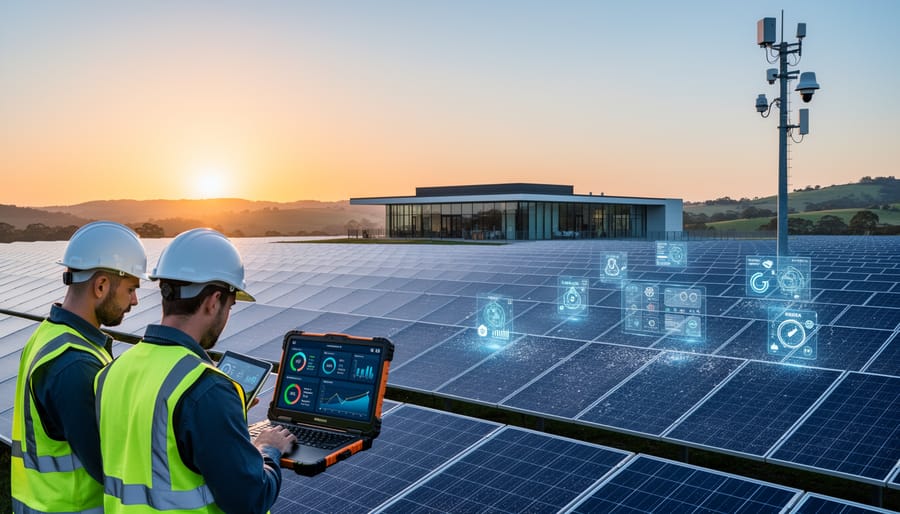
Remote Monitoring and Early Warning Systems
Modern solar installations increasingly rely on sophisticated remote monitoring systems that combine real-time performance tracking with Internet of Things (IoT) sensor networks to detect anomalies before they escalate into significant financial losses. These digital platforms continuously analyze key performance indicators including panel output, inverter efficiency, temperature variations, and grid connectivity status, enabling operators to identify deviations from expected performance benchmarks within minutes rather than days.
Advanced monitoring systems integrate weather data, predictive analytics, and machine learning algorithms to distinguish between normal operational variations and genuine system faults. For instance, when sensors detect unusual temperature spikes in specific panel clusters or unexpected drops in energy production that cannot be explained by weather conditions, automated alerts immediately notify maintenance teams and insurance partners. This proactive approach has proven particularly valuable for insurance underwriters, who can assess risk more accurately and potentially offer more favorable premium rates to projects demonstrating robust monitoring capabilities.
The integration of drone-based thermal imaging and artificial intelligence-powered diagnostic tools further enhances early detection capabilities, identifying issues such as hot spots, soiling accumulation, or microcracks that might otherwise remain unnoticed until performance degradation becomes severe. For large-scale solar portfolios spanning multiple geographic regions, centralized monitoring dashboards provide stakeholders with comprehensive visibility into asset health, supporting both operational excellence and risk management objectives that align with insurance partnership requirements.
Predictive Analytics and Risk Modeling
The integration of advanced analytics technologies has fundamentally transformed how insurers and project developers assess and manage solar energy risks. Machine learning algorithms now process vast datasets encompassing weather patterns, equipment performance metrics, and historical claims data to generate sophisticated risk profiles with unprecedented accuracy. These models analyze variables including seasonal irradiance fluctuations, extreme weather probabilities, and equipment degradation rates to predict potential loss scenarios.
Weather forecasting technologies have become particularly crucial for cross-continental solar investments, where regional climate variations significantly impact risk assessment. Satellite imagery, ground-based sensors, and atmospheric modeling combine to forecast conditions that might affect solar generation or asset integrity. Historical performance data from operational facilities enables insurers to refine their understanding of real-world risks versus theoretical projections.
The result is more precise premium calculations that reflect actual risk exposure rather than conservative estimates based on limited information. Project developers benefit from reduced insurance costs while insurers gain confidence in their underwriting decisions. Universities collaborating with insurance companies contribute research on emerging predictive methodologies, ensuring models continuously evolve. This data-driven approach ultimately enhances project bankability and investor confidence in solar ventures globally.
Impact on Project Financing and Bankability
Lender Requirements and Due Diligence
Financial institutions typically mandate comprehensive insurance coverage as a prerequisite for solar project financing, viewing it as essential collateral protection. Lenders conduct rigorous due diligence to verify that policies adequately address construction risks, operational hazards, and long-term revenue security. Standard requirements include builder’s risk insurance during installation phases, property and casualty coverage throughout the operational lifecycle, and business interruption insurance to safeguard debt service obligations.
Most lending agreements stipulate minimum coverage thresholds, often requiring policies that protect against 100% of the project’s replacement value plus anticipated revenue losses. Financial institutions also examine the creditworthiness of insurance providers, typically accepting only carriers with strong financial ratings from agencies like A.M. Best or Standard & Poor’s. The presence of robust insurance partnerships can significantly accelerate loan approval processes by demonstrating professional risk management practices.
Project developers who proactively secure comprehensive coverage packages often negotiate more favorable financing terms, including lower interest rates and extended repayment periods. Lenders increasingly recognize that strategic insurance partnerships reduce default probability while protecting their investment portfolios. This alignment between insurance adequacy and financing accessibility underscores the critical role of risk mitigation in advancing global solar deployment and ensuring project bankability across diverse markets.
Cost of Capital Reduction
Risk mitigation through comprehensive insurance partnerships directly translates into reduced financing costs for solar projects. Financial institutions view properly insured solar assets as lower-risk investments, resulting in more favorable lending terms. Studies indicate that projects with robust insurance coverage can achieve interest rate reductions of 50 to 150 basis points compared to uninsured counterparts, representing substantial savings over typical 20-25 year financing periods.
The quantifiable benefits extend beyond interest rates. Insurance-backed projects often secure higher loan-to-value ratios, sometimes reaching 80-85% compared to 65-70% for projects with limited coverage. This reduced equity requirement improves developer returns and accelerates portfolio expansion. Additionally, global solar data platforms enable insurers and lenders to assess performance metrics more accurately, further refining risk profiles and pricing structures.
Debt service coverage ratios benefit significantly from insurance protection against revenue interruption, with lenders typically accepting lower ratios when comprehensive policies are in place. This enhanced project economics makes solar investments more competitive against conventional energy sources while attracting institutional investors seeking stable, long-term returns with manageable risk exposure.
Educational Implications for Aspiring PV Professionals
Risk Management in Solar PV Curriculum
As photovoltaic installations expand globally, universities and professional development institutions must integrate comprehensive risk management frameworks into their curricula. Modern global solar training programs increasingly recognize that technical competency alone is insufficient for industry success. Future photovoltaic specialists require foundational knowledge in insurance products, liability frameworks, and risk mitigation strategies that protect solar investments throughout their lifecycle.
Educational programs should address key risk categories including equipment failure, performance guarantees, natural catastrophe coverage, and operational business interruption. Students benefit from understanding how insurance partnerships influence project financing, bankability assessments, and stakeholder confidence. Coursework incorporating real-world case studies demonstrates how proper risk allocation between developers, insurers, and investors enables project viability.
Professional certification programs must also emphasize practical applications of risk assessment methodologies, claims procedures, and contractual risk transfer mechanisms. By equipping graduates with insurance literacy alongside technical expertise, academic institutions prepare professionals who can confidently navigate complex project structures and communicate effectively with financial partners, ultimately strengthening the solar industry’s resilience and growth trajectory.
Career Opportunities in Solar Risk Management
The convergence of solar technology, financial services, and insurance sectors has created specialized career pathways for professionals equipped with interdisciplinary expertise. Solar risk analysts evaluate project vulnerabilities and develop mitigation strategies, requiring knowledge of meteorological patterns, equipment performance metrics, and insurance product structures. Insurance underwriters specializing in renewable energy assess solar portfolio risks, determine coverage terms, and price policies based on technical and geographic factors.
Financial risk managers in solar enterprises coordinate with insurers to optimize protection strategies while minimizing premium costs, balancing operational security with project economics. Claims specialists with photovoltaic technical backgrounds investigate solar-related losses, requiring understanding of equipment failure modes and industry standards. Universities are increasingly offering renewable energy finance programs that incorporate risk management curricula, preparing graduates for these emerging roles. Additionally, consulting firms seek professionals who can bridge communication between solar developers, insurers, and investors, translating technical complexities into actionable risk assessments. These positions offer competitive compensation and growth potential as the global solar market expands and insurance partnerships become fundamental to project success.
Future Trends in Solar Risk Mitigation and Insurance
Climate Change Adaptation and Resilience
Climate-related risks have emerged as a critical consideration in solar project insurance, prompting the industry to develop specialized products addressing intensifying weather patterns. Insurance providers now incorporate advanced climate modeling and historical weather data to assess site-specific vulnerabilities, from hurricane exposure in coastal regions to hail risks in agricultural zones. This data-driven approach enables more accurate premium calculations while identifying projects requiring enhanced protective measures.
Parametric insurance products represent a significant innovation in this space, offering predetermined payouts triggered by measurable weather events such as wind speeds exceeding specified thresholds or rainfall quantities falling below critical levels. Unlike traditional claim processes, these instruments provide rapid financial relief, enabling project operators to restore operations quickly following extreme weather events. Several major insurers have introduced climate resilience riders that cover additional costs associated with rebuilding to higher specifications following catastrophic damage.
The insurance sector increasingly collaborates with engineering firms and research institutions to develop resilience standards for solar installations in high-risk environments. These partnerships have produced enhanced mounting systems, improved drainage solutions, and fortified electrical components designed to withstand extreme conditions. Forward-thinking insurers now offer premium reductions for projects incorporating climate-adaptive design features, creating financial incentives for developers to prioritize long-term resilience over initial cost savings, ultimately strengthening the global solar infrastructure against evolving environmental challenges.
Emerging Technologies and Coverage Innovation
As solar technology evolves beyond traditional rooftop and ground-mounted systems, insurers must adapt coverage frameworks to address unique risk profiles. Bifacial modules, which capture sunlight from both sides to increase energy yield by up to 30%, present distinct considerations regarding rear-side damage assessment and performance validation. Insurance providers now develop specialized policies accounting for dual-surface exposure and the complex光追 tracking systems often paired with these modules.
Floating solar installations, or floatovoltaics, introduce marine-related risks including water damage, anchoring system failure, and environmental liability concerns. Insurers collaborate with engineering consultants to evaluate structural integrity, weather resistance, and potential ecological impacts on aquatic ecosystems. Building-integrated photovoltaics (BIPV), which serve dual functions as both building envelope and power generator, require coverage that bridges traditional property insurance and renewable energy policies.
Universities and research institutions partner with insurers to develop risk models for these emerging technologies, providing crucial data on long-term performance and failure modes. This collaborative approach ensures that coverage innovations keep pace with technological advancement, protecting investors while enabling continued solar market expansion. Project developers must work closely with insurance partners to ensure comprehensive protection tailored to each technology’s specific risk characteristics.
The global expansion of solar energy fundamentally depends on sophisticated insurance partnerships that transform high-risk ventures into viable investment opportunities. Throughout this examination of risk mitigation strategies, we have demonstrated how comprehensive insurance frameworks address financial, technical, operational, and political uncertainties that historically impeded large-scale photovoltaic deployment. These partnerships between insurers, developers, and financial institutions create the stability necessary for capital-intensive projects to secure funding and achieve commercial operation.
For aspiring photovoltaic professionals, understanding insurance mechanisms represents essential knowledge that distinguishes competent practitioners from exceptional leaders in the renewable energy sector. The integration of performance guarantees, business interruption coverage, and political risk insurance directly influences project feasibility assessments and financial modeling—core competencies required in today’s competitive market. Academic institutions increasingly recognize this connection, incorporating risk management modules into renewable energy curricula to prepare graduates for real-world challenges.
The strategic importance of these partnerships extends beyond individual projects to shape entire markets. By transferring and diversifying risk, insurance enables deployment in emerging economies where solar potential remains largely untapped. This acceleration toward energy transition creates expanding career opportunities across engineering, finance, policy development, and project management disciplines. Stakeholders who master the interplay between technical performance, financial structuring, and risk allocation position themselves to lead the transformation of global energy systems. As solar capacity continues its exponential growth trajectory, the professionals who understand how insurance partnerships facilitate this expansion will drive innovation and implementation at scale.