The integration of 6061 aluminum into additive manufacturing processes represents a significant advancement for solar panel production, offering unprecedented opportunities to optimize component design while reducing material waste. This aerospace-grade alloy, known for its excellent strength-to-weight ratio and superior corrosion resistance, has historically challenged conventional metal 3D printing methods due to its high thermal conductivity and susceptibility to cracking during solidification.
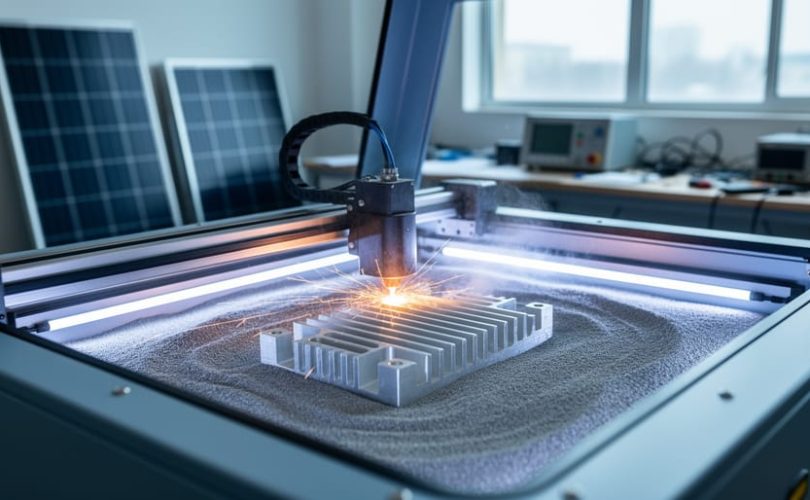
Recent developments in powder bed fusion and directed energy deposition technologies have overcome these limitations, enabling photovoltaic manufacturers to produce complex aluminum components with mechanical properties approaching wrought standards. These components include customized mounting brackets, heat sinks for concentrated solar systems, and lightweight structural elements that traditional machining or casting cannot economically produce in small batches.
The implications for solar technology extend beyond manufacturing flexibility. 6061 aluminum’s natural oxide layer provides inherent corrosion protection in outdoor environments, eliminating coating requirements that add cost and environmental impact. Its thermal conductivity properties enhance heat dissipation in high-temperature applications, while maintaining structural integrity across temperature ranges typical of solar installations.
However, successful implementation requires understanding process-specific considerations. Layer adhesion quality, porosity control, and post-processing requirements directly impact component performance and reliability. The technology currently serves niche applications where design complexity justifies higher per-unit costs compared to conventional manufacturing, though economies of scale continue improving as adoption increases.
This examination explores the technical fundamentals of 3D printing 6061 aluminum, evaluates its practical applications in photovoltaic systems, and provides realistic assessments of both current capabilities and future potential for solar manufacturing innovation.
The Case for 6061 Aluminum in Solar PV Applications

Material Properties That Matter for Solar Installations
6061 aluminum alloy possesses several inherent properties that make it particularly valuable for solar installations, and these characteristics translate effectively to 3D printed components. Understanding these material attributes helps explain why this alloy continues to be a preferred choice in photovoltaic applications.
Corrosion resistance stands as one of 6061 aluminum’s most critical advantages for outdoor solar deployments. The alloy naturally forms a protective oxide layer when exposed to atmosphere, providing excellent resistance to environmental degradation. This property proves essential for mounting structures and enclosures subjected to decades of weathering, humidity, and temperature fluctuations. Research conducted in collaboration with universities has demonstrated that properly treated 6061 aluminum maintains structural integrity even in coastal or industrial environments where corrosive conditions accelerate material deterioration.
The alloy’s thermal conductivity, measured at approximately 167 W/m·K, facilitates efficient heat dissipation in solar applications. This characteristic becomes particularly important for component housings and heat sinks that manage thermal loads in inverters and power electronics, where temperature control directly impacts system efficiency and longevity.
Weldability represents another practical advantage, allowing 3D printed 6061 components to be integrated with traditionally manufactured parts through conventional joining methods. This compatibility enables hybrid manufacturing approaches that optimize both design flexibility and production economics.
Finally, 6061 aluminum’s strength-to-weight ratio and dimensional stability across temperature ranges ensure that printed components maintain precise tolerances throughout their operational lifespan. The alloy’s yield strength of approximately 276 MPa in T6 condition provides adequate structural performance for most solar mounting applications while remaining lightweight enough to simplify installation procedures.
Current Manufacturing Limitations
Traditional manufacturing methods for 6061 aluminum components in solar applications face significant constraints that impact both production efficiency and design flexibility. Conventional extrusion processes limit geometries to uniform cross-sections, restricting the development of complex cooling channels or integrated structural elements essential for advanced photovoltaic systems. This rigidity prevents engineers from optimizing thermal management solutions critical to panel performance and longevity.
Casting methods, while offering greater shape flexibility, introduce porosity concerns and require expensive tooling that becomes cost-prohibitive for small production runs or custom prototypes. The lead times for mold creation can extend weeks or months, hindering rapid iteration during the research and development phase of solar manufacturing innovations.
Subtractive machining from solid aluminum billets generates substantial material waste, with removal rates often exceeding 70 percent for complex geometries. This approach contradicts sustainability principles central to renewable energy manufacturing and increases raw material costs. Additionally, machining lightweight structures with thin walls risks distortion and requires multiple setups, compounding production time and expense. These limitations collectively restrict the advancement of next-generation mounting systems, tracking mechanisms, and thermal management solutions that could significantly enhance photovoltaic efficiency.
How 3D Printing 6061 Aluminum Actually Works
Selective Laser Melting and Direct Metal Laser Sintering
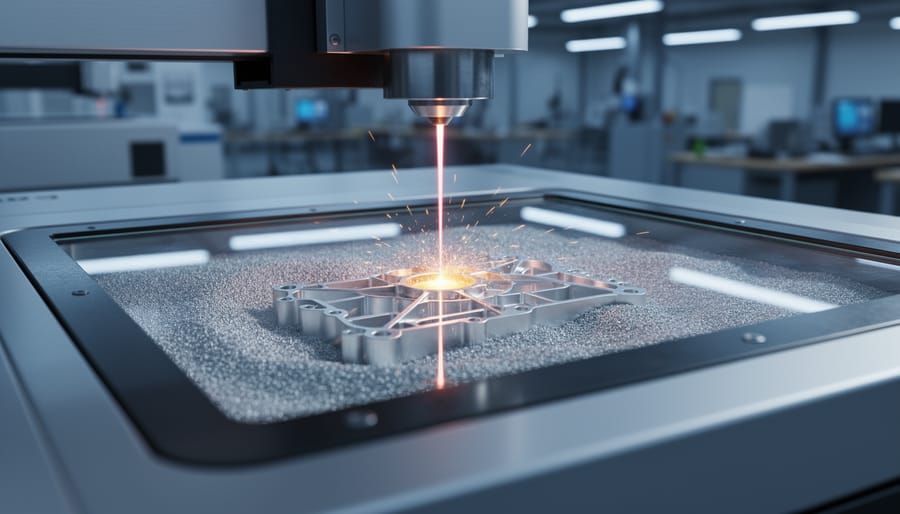
Selective Laser Melting (SLM) and Direct Metal Laser Sintering (DMLS) represent the primary technologies for 3D printing aluminum alloys in industrial applications. Both processes use high-powered lasers to selectively fuse metal powder particles layer by layer, creating complex geometries impossible with traditional manufacturing methods. SLM fully melts the powder particles, while DMLS heats them to a point where they fuse at a molecular level without complete liquefaction.
The distinction matters significantly when working with aluminum alloys. These technologies excel with alloys specifically formulated for additive manufacturing, such as AlSi10Mg and Scalmalloy, which contain silicon or other elements that improve laser absorption and reduce thermal cracking. These alloys typically achieve 99% density and mechanical properties comparable to conventionally manufactured parts.
However, 6061 aluminum presents notable challenges for both SLM and DMLS. This alloy’s high thermal conductivity causes rapid heat dissipation, making consistent laser melting difficult. Its susceptibility to hot cracking during solidification and tendency toward porosity result in parts with compromised structural integrity. The magnesium and silicon content in 6061, while beneficial for traditional manufacturing, creates unfavorable melting characteristics under laser processing.
Research institutions and universities are actively investigating modified processing parameters and alloy compositions to make 6061 more amenable to powder bed fusion technologies. Current limitations mean that for photovoltaic applications requiring 6061’s specific properties, manufacturers often select alternative aluminum alloys developed specifically for additive manufacturing, accepting minor compositional differences to achieve reliable production outcomes.
Post-Processing and Heat Treatment Requirements
Successfully 3D printing 6061 aluminum requires rigorous post-processing to achieve the mechanical properties necessary for photovoltaic applications. As-printed parts typically exhibit residual stresses from the rapid heating and cooling cycles inherent to the additive manufacturing process, making stress relief treatments essential before machining or final use.
The standard T6 heat treatment protocol remains critical for 3D printed 6061 aluminum components. This process involves solution heat treatment at approximately 530°C for one to two hours, followed by water quenching to lock the alloying elements in supersaturated solid solution. Subsequent artificial aging at 175°C for eight to eighteen hours precipitates hardening phases, delivering the strength characteristics required for structural solar mounting components and precision equipment housings.
Hot isostatic pressing may be employed to eliminate internal porosity, particularly important when components will experience thermal cycling in field-installed photovoltaic systems. Research collaborations between industry manufacturers and university materials science departments have refined these protocols specifically for additively manufactured aluminum alloys, addressing unique microstructural challenges that differ from conventionally cast material. Proper post-processing transforms printed parts into reliable components that meet the demanding performance standards of renewable energy infrastructure, ensuring long-term durability in solar installations.
Game-Changing Applications for Solar PV Manufacturing
Custom Mounting Brackets and Racking Systems
Additive manufacturing of 6061 aluminum has transformed how the photovoltaic industry approaches mounting and racking infrastructure. Traditional mounting systems often require extensive machining, welding, and adaptation during installation, particularly when dealing with irregular roof geometries or challenging terrain. By utilizing 3D printing technology, manufacturers can now produce custom brackets that precisely match site-specific requirements without the lead times and costs associated with conventional fabrication methods.
The process begins with digital site surveys that capture exact measurements and environmental parameters. Engineers then design optimized bracket geometries that account for wind loads, snow accumulation, and structural constraints unique to each installation. This approach eliminates the need for universal mounting solutions that frequently result in excess material usage and field modifications.
Installation teams benefit significantly from pre-engineered components that arrive ready for deployment. Research collaborations between industry partners and universities have demonstrated that custom-printed aluminum mounting systems can reduce installation time by up to 35 percent compared to traditional approaches. The material properties of 6061 aluminum, including its corrosion resistance and strength-to-weight ratio, make it particularly suitable for outdoor solar applications requiring decades of reliable performance.
Furthermore, additive manufacturing minimizes material waste inherent in subtractive processes. Rather than cutting away excess aluminum from stock material, 3D printing builds only what the design requires, aligning with sustainability objectives central to renewable energy deployment.
Integrated Cooling Solutions for High-Efficiency Panels
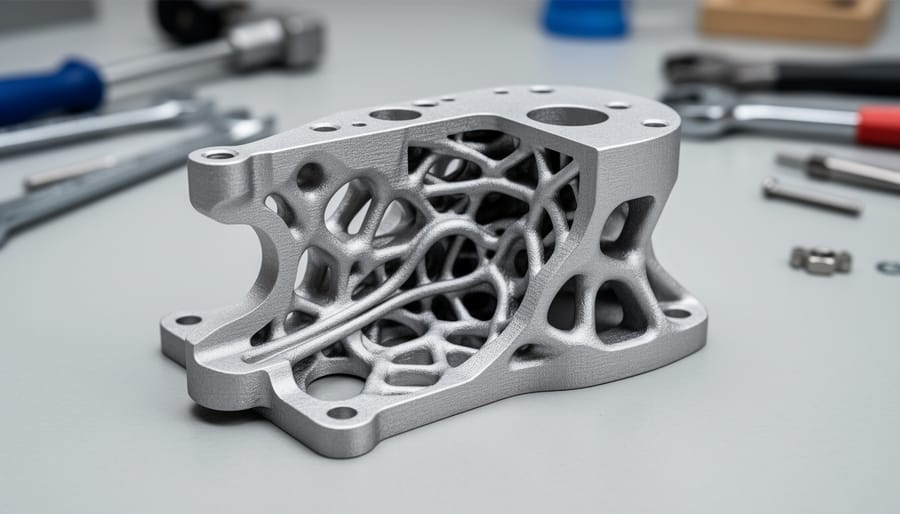
Thermal management represents a critical challenge in concentrated photovoltaic systems and high-efficiency modules, where elevated operating temperatures can significantly reduce performance and lifespan. 3D printing with 6061 aluminum enables the fabrication of integrated cooling structures with complex internal geometries impossible to achieve through conventional manufacturing methods. These designs can incorporate conformal cooling channels, heat sink arrays with optimized fin configurations, and lattice structures that maximize surface area while minimizing weight.
Academic institutions partnering with industry leaders have demonstrated that additively manufactured aluminum components can achieve superior heat dissipation coefficients compared to traditional extrusions. The ability to place cooling channels precisely where thermal loads concentrate allows engineers to maintain optimal cell temperatures even under high irradiance conditions. This capability proves particularly valuable for bifacial panels and tracking systems that experience variable thermal profiles throughout the day.
Research programs are currently evaluating designs featuring biomimetic cooling patterns inspired by natural systems, which distribute heat more efficiently than conventional parallel channels. While production scalability remains under investigation, prototype testing shows promising temperature reductions of 15-20 degrees Celsius, potentially translating to meaningful efficiency gains in commercial applications.
Rapid Prototyping for Panel Frame Innovation
3D printing with 6061 aluminum fundamentally transforms how photovoltaic manufacturers approach frame development. Traditional metal fabrication requires expensive tooling and dies, creating significant barriers to testing new designs. Additive manufacturing eliminates these constraints, enabling engineers to produce functional prototypes within days rather than months.
This acceleration proves particularly valuable for optimizing frame geometries that balance strength-to-weight ratios while accommodating evolving panel dimensions and mounting configurations. Design teams can rapidly test variations in corner brackets, mid-clamps, and structural reinforcements, iterating based on real-world stress testing without committing to mass production tooling.
Universities collaborating with industry partners leverage this technology to explore innovative frame architectures that reduce material consumption while maintaining structural integrity. Academic researchers can validate computational models against physical prototypes, bridging theoretical optimization with practical manufacturing constraints.
The technology enables manufacturers to respond quickly to emerging installation requirements, such as frames designed for specific wind loading conditions or integration with building-integrated photovoltaics. Educational programs focusing on solar engineering now incorporate 3D printing modules, preparing the next generation of professionals to utilize these capabilities for continuous innovation in panel frame design and structural component optimization.
Technical Challenges Facing the Industry
Material Consistency and Certification Issues
Achieving consistent material properties remains a significant challenge in 3D printing 6061 aluminum for structural photovoltaic applications. Unlike traditional manufacturing methods with decades of standardization, additive manufacturing introduces variables in layer adhesion, cooling rates, and microstructure formation that directly affect mechanical performance. The directional nature of layer-by-layer deposition can result in anisotropic properties, where strength varies depending on build orientation—a critical consideration for load-bearing solar mounting structures.
Meeting industry certifications presents additional hurdles. Structural components in solar installations must comply with rigorous standards for wind loads, seismic activity, and long-term outdoor exposure. Currently, few additive manufacturing processes have established certification pathways equivalent to those for wrought or cast 6061 aluminum. This gap creates hesitation among engineers and procurement teams when specifying 3D-printed components for critical infrastructure.
Research collaborations between universities and industry partners are actively addressing these challenges through improved process monitoring, post-processing heat treatments, and non-destructive testing protocols. As qualification standards evolve and more comprehensive material data becomes available, confidence in 3D-printed 6061 aluminum for certified solar applications will strengthen, enabling broader adoption across the renewable energy sector.
Production Speed and Cost Competitiveness
The economic viability of 3D printing 6061 aluminum for photovoltaic applications depends significantly on production volumes and component complexity. Traditional manufacturing methods like CNC machining and extrusion remain more cost-effective for high-volume production, typically breaking even at quantities exceeding 500-1,000 identical units. However, additive manufacturing demonstrates clear advantages in specific scenarios relevant to solar installations.
For prototype development and low-volume custom components, 3D printing eliminates tooling costs that can range from $5,000 to $50,000 for traditional methods. This makes it economically attractive for research institutions and universities developing innovative mounting solutions or experimental frame designs. Production speeds for aluminum additive manufacturing range from 50-200 cubic centimeters per hour, depending on the specific technology employed.
The cost structure shifts favorably for geometrically complex components where traditional subtractive manufacturing would require extensive machining time and material waste. For solar tracking systems requiring customized brackets or junction boxes with integrated features, 3D printing can reduce both material costs by 40-60% and lead times from weeks to days.
Current material costs for 6061 aluminum powder range from $80-150 per kilogram, compared to $3-5 per kilogram for standard aluminum stock. This price differential narrows when factoring in reduced waste, eliminated tooling, and faster iteration cycles. For pilot projects, small-scale installations, or components requiring frequent design modifications, additive manufacturing presents a compelling economic case despite higher per-unit material costs.
Research Initiatives and Industry Developments
University-Industry Partnerships Driving Innovation
Leading research institutions are partnering with industrial manufacturers to optimize 6061 aluminum for photovoltaic applications through additive manufacturing. These collaborations focus on developing refined printing parameters that enhance material properties critical to solar component performance, including thermal conductivity, structural integrity, and corrosion resistance in outdoor environments.
The National Renewable Energy Laboratory has initiated joint programs with aerospace and solar manufacturers to establish standardized protocols for printing 6061 aluminum solar mounting systems. These partnerships investigate powder composition modifications, laser power settings, and post-processing techniques that reduce porosity while maintaining the alloy’s favorable characteristics.
Universities including MIT and Arizona State University are conducting fundamental research into layer adhesion mechanisms and microstructure optimization specific to solar hardware requirements. Their findings contribute directly to commercial applications, bridging the gap between laboratory discoveries and manufacturing implementation.
Several partnerships have yielded proprietary material formulations that improve printability without compromising the mechanical properties essential for next-generation solar technologies. These collaborative efforts extend beyond technical development, offering educational opportunities through internship programs and specialized coursework that prepare the next generation of photovoltaic professionals.
Industry consortiums are establishing shared databases documenting successful printing parameters, accelerating adoption across the solar manufacturing sector while reducing development costs for smaller enterprises entering the additive manufacturing space.
Emerging Standards and Quality Control Protocols
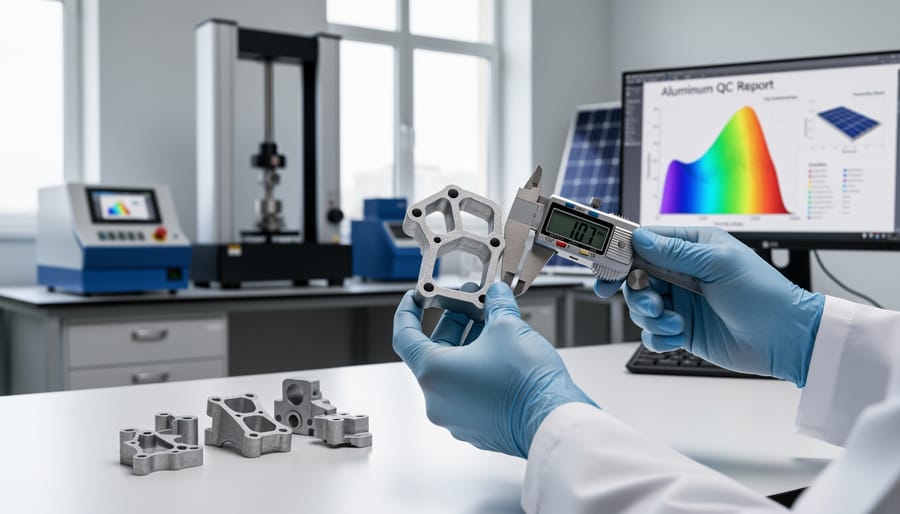
The additive manufacturing industry is actively developing standardized protocols for 3D printed 6061 aluminum components, particularly as these parts enter critical applications like photovoltaic systems. Organizations such as ASTM International and ISO are establishing testing methodologies that address layer adhesion strength, porosity levels, and thermal cycling performance specific to aluminum alloys. These standards aim to ensure consistent mechanical properties across different printing platforms and parameter sets.
For the solar industry, quality control protocols must verify that printed aluminum components can withstand decades of outdoor exposure, thermal expansion cycles, and mechanical loads. Universities are collaborating with industry partners to develop non-destructive testing methods including ultrasonic inspection and computed tomography scanning that can detect internal defects without compromising component integrity. Educational programs now incorporate these emerging standards into curriculum, preparing the next generation of professionals to implement rigorous quality assurance practices. As these protocols mature, they will enable wider adoption of 3D printed aluminum in certified photovoltaic installations while maintaining safety and performance requirements.
What This Means for Solar Professionals and the Industry
Skills and Knowledge Requirements
Professionals seeking to leverage 3D printing of 6061 aluminum in solar applications must develop a multidisciplinary skill set that bridges materials science, additive manufacturing, and photovoltaic technology fundamentals. Essential competencies include understanding metal powder metallurgy, laser sintering parameters, and thermal management principles specific to aluminum alloys. PV professionals should gain practical knowledge of Computer-Aided Design (CAD) software optimized for additive manufacturing, including topology optimization and support structure generation.
Technical proficiency in quality control methods such as non-destructive testing, surface finishing techniques, and post-processing requirements proves critical for ensuring component reliability. Understanding the mechanical properties of 6061 aluminum under various printing conditions enables professionals to specify appropriate parameters for solar mounting structures and heat dissipation components.
Universities and technical institutions increasingly offer specialized courses combining additive manufacturing with renewable energy applications. Recommended educational pathways include certifications in metal 3D printing technologies, materials characterization workshops, and hands-on training with Direct Metal Laser Sintering (DMLS) equipment. Collaboration with research institutions provides valuable exposure to emerging techniques and real-world solar manufacturing challenges, preparing professionals to implement these advanced technologies effectively.
The integration of 3D printing technology with 6061 aluminum presents a transformative opportunity for solar photovoltaic manufacturing, though realistic expectations about adoption timelines remain essential. This additive manufacturing approach offers compelling advantages, including design flexibility for complex geometries, reduced material waste, and the potential for customized mounting solutions that traditional fabrication methods struggle to achieve cost-effectively. The mechanical properties of 6061 aluminum—particularly its strength-to-weight ratio and corrosion resistance—make it ideally suited for outdoor solar applications where durability and longevity are paramount.
However, the pathway from promising technology to widespread commercial adoption requires sustained effort across multiple fronts. Current limitations in production speed, equipment costs, and standardization protocols mean that 3D printed 6061 aluminum components will likely see gradual implementation rather than immediate industry transformation. Early adoption will probably focus on specialized applications where customization justifies higher initial costs, such as unique mounting configurations or prototype development.
The progression toward commercial viability depends heavily on continued research collaboration between industry stakeholders and academic institutions. Universities play a critical role in advancing process optimization, material science understanding, and training the next generation of professionals equipped to work with these technologies. Educational programs that bridge theoretical knowledge with practical application will be instrumental in building the workforce capable of implementing these innovations effectively. As research continues and production costs decline, 3D printed 6061 aluminum components may become increasingly prevalent throughout solar manufacturing, fundamentally reshaping how we approach photovoltaic system design and deployment.