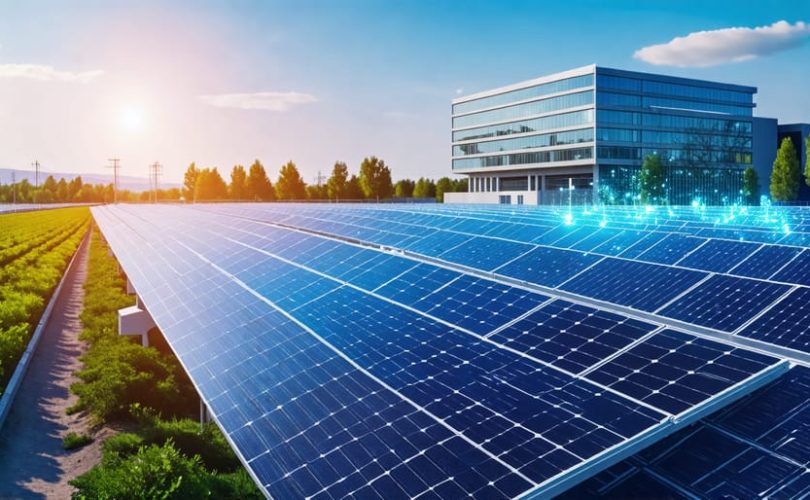
Enhance solar panel efficiency by incorporating bifacial technology, which captures sunlight on both sides of the panel, thereby increasing energy absorption. Collaborate with research universities to access cutting-edge advancements, such as perovskite solar cells, which promise higher efficiency and lower production costs. Implement educational programs for aspiring photovoltaic professionals, ensuring they are equipped with knowledge of the latest technologies and methodologies. Invest in and adopt AI-driven software for real-time data analysis and optimization of solar panel performance, enabling smarter decisions on energy management and maintenance.
Understanding Solar Panel Efficiency
Efficiency Metrics and Their Importance
Efficiency metrics are critical in evaluating solar panel performance, offering vital insights for both industry stakeholders and consumers. One of the primary metrics is conversion efficiency, which measures how effectively sunlight is converted into usable electricity. High conversion rates mean more energy output for the same surface area, a key factor for optimizing residential and commercial installations. Another significant metric is temperature coefficient, indicating how efficiency decreases with rising temperatures; panels with lower coefficients retain performance in hot climates, vital for installations in sun-rich regions.
Capacity factor is also important, representing the actual output over time compared to the maximum possible, affected by weather and installation conditions. Understanding these metrics assists in comparing technologies and making informed decisions about investments and installations. Stakeholders, including aspiring photovoltaic professionals and academic researchers, benefit from grasping these concepts, helping drive innovation and strategic development across the industry. As solar technologies evolve, these metrics remain central to both technological advancements and consumer education.

Current Average Efficiency Levels
Current average efficiency levels of solar panels vary depending on the type of technology employed. Monocrystalline solar panels, renowned for their high performance, boast efficiency rates averaging between 20% to 22%. These panels are crafted from a single crystal structure, allowing electrons more freedom to move and enhancing their overall efficiency. Meanwhile, polycrystalline solar panels typically offer slightly lower efficiencies, ranging from 15% to 18%, due to their multi-crystal configuration which slightly impedes electron movement. Thin-film solar panels, a more flexible and lightweight alternative, generally exhibit efficiencies between 10% to 12%, achieving their lower production costs through innovative manufacturing processes involving layers of photovoltaic material. Interestingly, advancements in perovskite solar cells show promise, with laboratory tests achieving greater than 25% efficiency. However, these cells are not yet widely available commercially. As research collaborations with universities and educational programs continue to drive innovation, these figures are expected to evolve, presenting aspiring professionals and industry stakeholders with exciting developments in photovoltaic technology.
Recent Advances in Solar Technology
Monocrystalline and Multi-Crystalline Panels
Recent innovations in solar technology have significantly enhanced the efficiency of both monocrystalline and multi-crystalline panels. Central to these advancements is the increased purity of silicon wafers used in manufacturing, leading to better light absorption and electron flow. Monocrystalline panels, renowned for their higher efficiency rates, have seen upgrades in cell design and use of passivated emitter and rear cell (PERC) technology, which enhances light capture and minimizes energy loss. These improvements make monocrystalline panels ideal for spaces where maximizing efficiency is crucial, ensuring they deliver superior performance with less surface area. For more details, consider exploring our resource on monocrystalline panels.
Multi-crystalline panels have also benefited from technological strides. Innovations like diamond-wire sawing have reduced manufacturing costs while improving surface texture for better sunlight capture. Additionally, collaborations with universities and research institutions have fostered educational programs aimed at training new generations in photovoltaics, pushing boundaries further. By integrating these academic insights and industry practices, multi-crystalline panels are increasingly closing the efficiency gap with their monocrystalline counterparts. The balance of cost-effectiveness and performance makes multi-crystalline panels a favorable choice for large-scale installations, ensuring broad accessibility to solar energy solutions. These developments underscore the ongoing potential for solar panel efficiency advancements, reflecting a promising future in renewable energy.
Introduction of Mono PERC Panels
Mono PERC panels are revolutionizing the landscape of solar technology by enhancing efficiency through advanced photovoltaic techniques. Standing for Passivated Emitter and Rear Cell, Mono PERC panels incorporate an innovative layer on the rear side of the solar cells. This additional layer functions to reflect untapped sunlight back into the cell, thus optimizing energy capture. Compared to traditional solar panels, Mono PERC panels boast a superior efficiency level due to their ability to minimize electron recombination losses and maximize sunlight absorption. This cutting-edge technology not only improves the electrical output per panel area but also reduces overall system costs by enabling more compact solar installations without compromising power generation. The significance of Mono PERC panels is emphasized in their widespread adoption, causing a positive shift towards achieving higher energy yields. By collaborating with educational institutions, industries are ensuring that advancements like these are accessible and well-understood, equipping today’s learners with essential knowledge for sustainable energy solutions. For a detailed exploration, visit Mono PERC panels.

Emergence of Solar Tiles and Roof Shingles
The emergence of aesthetically pleasing solar tiles and roof shingles is revolutionizing the way residential applications enhance solar energy efficiency. These innovations blend seamlessly with traditional roofing materials while offering a functional edge. By integrating photovoltaic modules directly into the roof structure, solar shingles reduce energy loss typically associated with separate panel installations. This enhanced efficiency is particularly significant in areas with architectural regulations that restrict conventional panel use, thus broadening accessibility for solar technology.
Research collaborations with universities have been pivotal in advancing the materials science behind these products, contributing to increased energy conversion rates. Furthermore, educational programs offer industry stakeholders insights into optimizing installation techniques that maximize exposure to sunlight. These advances support environmentally conscious consumers in their pursuit of sustainable energy solutions. By marrying form with function, solar tiles and shingles not only meet aesthetic demands but also facilitate a greener future by increasing overall photovoltaic system efficiency.

Collaboration and Educational Programs
University Collaborations
Collaborations with leading universities are pivotal in advancing solar panel efficiency. Through joint research initiatives, academic institutions and industry leaders are pushing the boundaries of photovoltaic technology. These partnerships facilitate access to state-of-the-art laboratories and foster a deeper understanding of materials science and energy conversion processes. Moreover, universities offer specialized educational programs that equip the next generation of scientists and engineers with the skills and knowledge needed to drive future innovations. By integrating academic research with industrial applications, these collaborations not only enhance solar technologies but also contribute to a more sustainable energy future.
Professional Development Programs
To foster expertise in photovoltaic (PV) technology, professional development programs are tailored to enhance skills crucial for increasing solar panel efficiency. These educational programs often collaborate with leading universities to offer cutting-edge curriculum in solar energy systems. Courses cover advanced topics like materials science, semiconductor physics, and emerging technologies such as bifacial solar cells and perovskite materials. Participants gain hands-on experience through laboratory work and real-world projects, ensuring they stay at the forefront of innovation. This education empowers professionals to drive advancements and implement sustainable energy solutions effectively.
Future Trends in Solar Efficiency
Emerging Materials
In the pursuit of increasing solar panel efficiency, emerging materials are poised to revolutionize future photovoltaic technologies. Among these, perovskite solar cells have garnered significant attention due to their remarkable efficiency rates and relatively low production costs. Perovskites are a class of materials with a distinctive crystalline structure, enabling them to absorb sunlight more effectively than traditional silicon-based cells. As universities and research institutions collaborate to overcome challenges such as stability and scalability, perovskites represent a promising frontier for commercial application.
Another innovative material is quantum dots, semiconductor particles that offer unique electronic properties. Their ability to absorb and emit light at different wavelengths can be tailored, paving the way for more efficient light capture and conversion in solar cells. Notably, educational programs are now increasingly focusing on integrating these advanced materials into their curricula, preparing the next generation of photovoltaic professionals to harness these innovations.
These materials, alongside collaborative research efforts, are spearheading advancements that could significantly enhance the performance and accessibility of solar technology for diverse applications, marking a pivotal step toward a sustainable energy future.
Integration with Smart Grids
The integration of solar panels with smart grids represents a pivotal advancement in enhancing solar energy efficiency. By allowing two-way communication between solar arrays and the grid, smart grids optimize the distribution and utilization of generated solar power. This synergy enhances grid stability and enables more effective load balancing, thus reducing energy waste and increasing overall system efficiency.
Collaborative initiatives between universities and industry stakeholders are playing a crucial role in this evolution. Through joint research programs and educational offerings, these partnerships are exploring cutting-edge technologies such as real-time data analytics and predictive maintenance that further streamline solar integration.
Moreover, smart grids empower consumers to participate in demand response programs, adjusting their energy consumption during peak periods. This active participation not only helps in stabilizing the grid but also incentivizes consumers, fostering a more sustainable energy future. By merging advanced grid infrastructures with efficient solar technologies, we move closer to achieving a more resilient and sustainable energy ecosystem.
Conclusion
As we conclude our exploration of solar panel efficiency, it’s clear that advancements are not only ongoing but crucial for the future of renewable energy. Key technological improvements, such as multi-junction cells and bifacial panels, have significantly pushed the envelope, offering increased energy capture and conversion rates. These innovations highlight the industry’s commitment to enhancing performance while reducing costs, making solar energy more accessible to a broader audience.
For the solar industry, these developments signal a promising shift towards greater sustainability and cost-effectiveness. By integrating such cutting-edge technologies, manufacturers can produce more efficient panels that require less space and materials, leading to a reduced environmental impact. This aligns with broader goals of reducing carbon footprints and promoting a clean energy future, providing a substantial incentive for continued investment and research.
Moreover, environmentally conscious consumers stand to benefit enormously. With higher efficiency panels becoming more prevalent, individuals can expect greater energy yields from smaller installations. This not only reduces their reliance on traditional power sources but also offers substantial savings on energy bills over time. As educational program offerings expand to inform the public and industry stakeholders, understanding and adopting these technologies becomes more seamless.
In collaboration with universities, the focus on educational initiatives ensures that upcoming photovoltaic professionals are prepared to tackle future challenges and champion these innovations. Encouraging collaboration across academic and industrial sectors will underpin the solar sector’s evolution, fostering a generation of informed and skilled individuals ready to usher in the next era of renewable energy solutions. The road ahead is promising, marked by a growing synergy between technological progress and environmental stewardship.