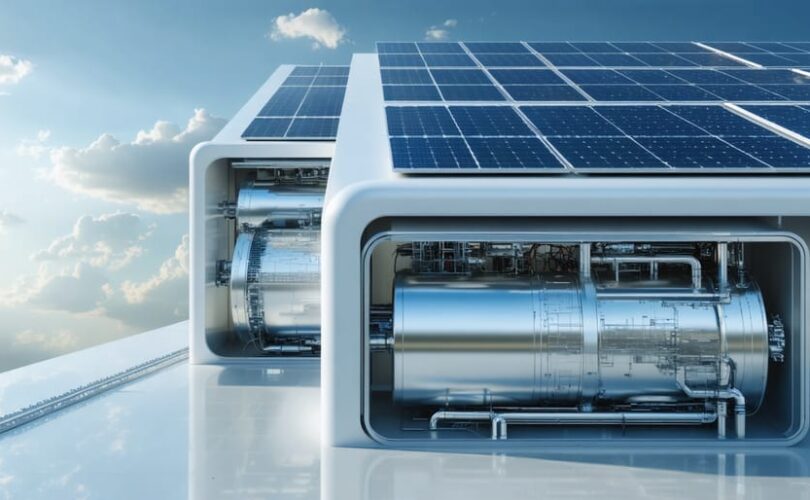
In the race toward sustainable energy storage solutions, zinc-based systems have emerged as a transformative technology for building-integrated photovoltaics and grid-scale applications. This abundant, safe, and cost-effective metal offers distinct advantages over traditional lithium-ion batteries, boasting a theoretical energy density of 1,086 Wh/kg and an impressive cycle life exceeding 1,000 charges. Zinc energy storage systems utilize earth-abundant materials, operate at ambient temperatures, and present minimal fire risk, making them ideal for urban energy installations. Recent technological breakthroughs in electrode design and electrolyte composition have addressed historical challenges of dendrite formation and capacity fade, positioning zinc-based storage as a viable solution for renewable energy integration. As global markets increasingly demand sustainable storage solutions, zinc technology represents a crucial bridge between intermittent renewable generation and reliable power delivery, offering both environmental and economic benefits for large-scale energy applications.
Understanding Zinc Energy Storage Technology
How Zinc Battery Systems Work
Zinc-based battery systems operate through a reversible electrochemical process that enables efficient energy storage and discharge. The fundamental mechanism involves zinc metal as the anode material, which undergoes oxidation during discharge and reduction during charging. During the discharge phase, zinc atoms release electrons, forming zinc ions that migrate through an electrolyte solution, typically consisting of an alkaline or mildly acidic medium.
The cathode material, often comprising nickel oxide or air electrodes, accepts these electrons, completing the electrical circuit. In air-breathing designs, oxygen from the atmosphere serves as the cathode reactant, making the system more cost-effective and environmentally sustainable. The reaction products are typically zinc oxide or zinc hydroxide, which remain stable and can be readily converted back to zinc metal during the charging process.
What distinguishes zinc battery systems is their ability to undergo multiple charge-discharge cycles without significant degradation. The electrochemical potential of zinc (-0.76V versus standard hydrogen electrode) provides an optimal balance between energy density and operational safety. Modern zinc battery designs incorporate advanced separators and electrolyte management systems to prevent dendrite formation and ensure uniform zinc deposition during charging.
These systems achieve energy densities ranging from 50 to 100 Wh/kg, with some advanced configurations reaching higher values. Their non-toxic nature and abundant material availability make them particularly attractive for large-scale energy storage applications.
Key Components and Materials
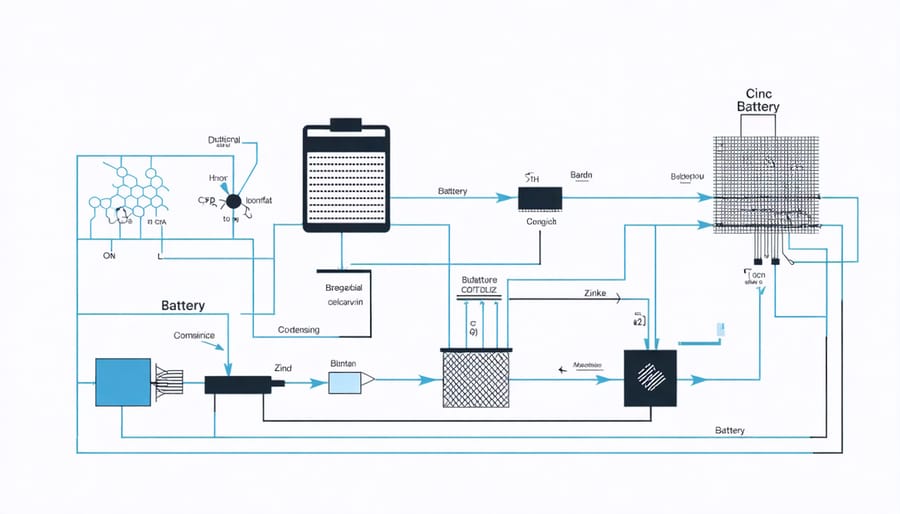
Zinc energy storage systems comprise several essential components that work together to enable efficient energy storage and delivery. The primary component is the zinc electrode, typically constructed from high-purity zinc metal or zinc oxide, which serves as the negative electrode (anode) during discharge. This electrode undergoes reversible oxidation and reduction reactions during charging and discharging cycles.
The positive electrode (cathode) often consists of air electrodes with specialized catalysts, commonly incorporating manganese dioxide or carbon-based materials, to facilitate oxygen reduction reactions. Between these electrodes lies a separator membrane, usually made from microporous polymeric materials, which prevents direct contact while allowing ion transport.
The electrolyte solution, a critical component, typically contains alkaline materials such as potassium hydroxide (KOH) or sodium hydroxide (NaOH). This solution enables zinc ion transport and supports the electrochemical reactions necessary for energy storage and release.
The system’s housing is constructed from corrosion-resistant materials, often including high-grade plastics or treated metals, designed to contain the electrolyte and protect internal components. Additional components include current collectors, typically made from nickel or stainless steel, and various monitoring and control systems to maintain optimal operating conditions.
The integration of these components requires precise engineering to ensure safety, efficiency, and longevity while maintaining cost-effectiveness for commercial applications.
Integration with Building PV Systems
Installation Requirements
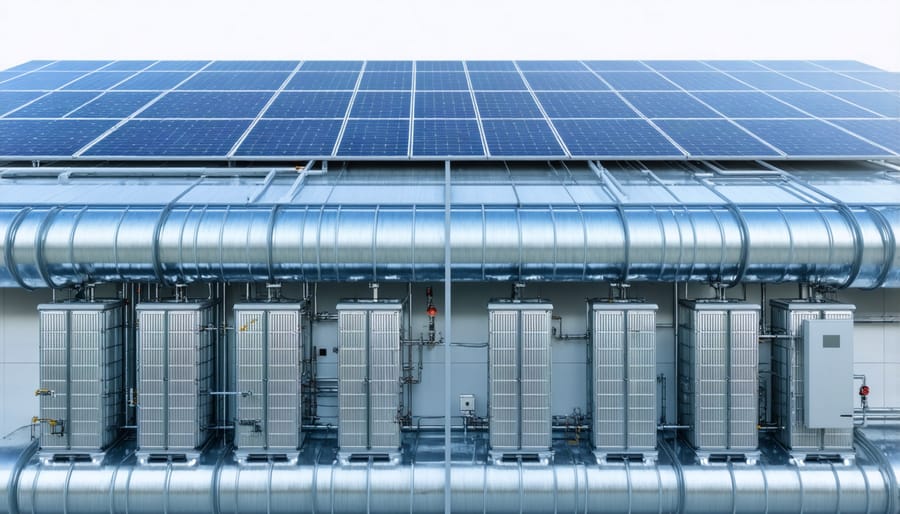
The implementation of zinc energy storage systems requires careful consideration of several technical specifications and site conditions. These systems are particularly well-suited for building-integrated solar storage solutions but demand specific installation requirements to ensure optimal performance and safety.
Primary installation considerations include adequate ventilation systems to manage temperature control, as zinc-based storage operates most efficiently between 0°C and 50°C. The installation area must maintain relative humidity levels below 85% to prevent condensation that could affect system performance. A minimum floor loading capacity of 25 kN/m² is necessary to support the storage units and associated equipment.
The electrical infrastructure must accommodate the system’s operational voltage range of 48V to 120V DC, with appropriate inverter compatibility for grid integration. Installation requires dedicated space for the main storage unit, control systems, and safety equipment, typically necessitating 0.5-1.0 m² per kWh of storage capacity.
Safety requirements include:
– Fire suppression systems rated for electrical fires
– Hydrogen detection sensors
– Emergency shutdown capabilities
– Spill containment measures
– Access to proper grounding points
Professional installation must comply with local building codes and electrical regulations. Installers should possess certification in energy storage systems and undergo specific training for zinc-based technology. Regular maintenance access points must be incorporated into the installation design, allowing for periodic system inspections and electrolyte level monitoring.
A comprehensive monitoring system should be integrated to track performance metrics, state of charge, and system health indicators, ensuring optimal operation throughout the storage system’s lifecycle.
System Optimization
To maximize the efficiency of zinc energy storage systems, several key optimization strategies must be implemented throughout the design and operational phases. The selection of electrode materials plays a crucial role, with research indicating that nano-structured zinc electrodes can significantly enhance charge-discharge efficiency. Maintaining optimal operating temperatures between 20-35°C ensures consistent performance and extends system longevity.
Electrolyte management is essential for system optimization. Regular monitoring and maintenance of electrolyte concentration helps prevent dendrite formation and reduces capacity fade. Implementation of advanced flow control systems can improve ionic transport and enhance overall system efficiency by up to 15-20%.
Power electronics and control systems should be carefully calibrated to match the specific characteristics of zinc-based storage. Smart charging algorithms that account for state-of-charge estimation and temperature variations can extend battery life while maintaining high round-trip efficiency. Integration of battery management systems (BMS) with predictive analytics capabilities enables real-time optimization and early detection of potential issues.
System sizing and configuration must be optimized based on specific application requirements. For grid-scale installations, modular designs allow for better scalability and maintenance flexibility. Implementing parallel cell configurations can enhance current handling capability while maintaining voltage stability.
Regular performance monitoring and preventive maintenance schedules are crucial. This includes periodic inspection of electrodes, electrolyte replacement when necessary, and calibration of monitoring equipment. Documentation of system performance metrics helps identify optimization opportunities and maintain peak efficiency levels throughout the system’s lifecycle.
The implementation of these optimization strategies can result in efficiency improvements of up to 25% compared to non-optimized systems, while significantly extending operational lifespan.
Advantages and Performance Metrics
Environmental Benefits
Zinc-based energy storage systems offer significant environmental advantages over conventional battery technologies. Unlike lithium-ion batteries, zinc-based systems utilize abundant, non-toxic materials that are readily available and easily recyclable. The primary components of zinc storage systems are environmentally benign, with zinc being a naturally occurring element that poses minimal ecological risk.
The manufacturing process for zinc storage systems generates a substantially lower carbon footprint compared to lithium-ion batteries. This reduced environmental impact stems from simpler production methods and the elimination of rare earth elements in the manufacturing process. Additionally, zinc-based systems do not require extensive mining operations that can lead to habitat destruction and environmental degradation.
From a lifecycle perspective, zinc storage solutions demonstrate superior sustainability characteristics. The materials used are 100% recyclable, and the recycling process is more straightforward and energy-efficient than that of other battery technologies. At the end of their operational life, zinc storage components can be safely disposed of or repurposed without creating hazardous waste.
The technology’s safety profile further enhances its environmental credentials. Unlike some energy storage alternatives, zinc-based systems do not pose risks of thermal runaway or toxic chemical leakage, eliminating potential environmental contamination concerns. This inherent safety feature makes zinc storage particularly suitable for deployment in environmentally sensitive areas and urban settings.
Cost-Performance Analysis
The economic viability of zinc energy storage systems presents compelling advantages compared to traditional lithium-ion solutions. Initial capital costs typically range from $150 to $200 per kWh, substantially lower than lithium-ion systems which average $300 to $400 per kWh. This cost advantage stems from zinc’s abundant availability and established supply chains.
Operating expenses for zinc storage systems benefit from minimal maintenance requirements and longer operational lifespans, typically 15-20 years. The levelized cost of storage (LCOS) calculations indicate favorable long-term economics, with estimates ranging from $0.05 to $0.08 per kWh cycled, depending on usage patterns and system configuration.
Return on investment (ROI) analysis reveals break-even periods of 5-7 years for most commercial installations, particularly when combined with renewable energy systems. Factors enhancing ROI include peak shaving capabilities, demand charge reduction, and potential grid services revenue streams.
The recyclability of zinc systems further improves their economic profile, with end-of-life material recovery rates exceeding 90%. This characteristic reduces disposal costs and aligns with circular economy principles. Additionally, zinc storage systems typically qualify for various energy storage incentives and tax benefits, enhancing their financial attractiveness for both commercial and industrial applications.
Insurance costs also tend to be lower due to the inherent safety characteristics of zinc-based systems, contributing to reduced total cost of ownership over the system’s lifetime.

Future Developments and Applications
The future of zinc energy storage systems shows remarkable promise, particularly in building-integrated applications. As emerging storage technologies continue to evolve, zinc-based solutions are positioned to play a crucial role in advancing sustainable architecture and energy management.
Research institutions and industry leaders are developing enhanced zinc electrode designs that could significantly improve energy density and cycle life. Advanced manufacturing techniques, including 3D printing of zinc electrodes and novel electrolyte formulations, are expected to reduce production costs while increasing system efficiency. These innovations could make zinc storage systems more commercially viable for widespread building integration.
Integration with smart building management systems represents another significant development pathway. Next-generation zinc storage systems will likely feature advanced monitoring capabilities, predictive maintenance algorithms, and automated energy optimization. This integration will enable buildings to better manage their energy consumption and storage based on real-time demand and weather conditions.
Emerging applications include facade-integrated storage solutions that combine zinc batteries with transparent photovoltaic elements, creating multifunctional building envelopes. These systems could revolutionize how we think about building energy independence and grid interaction. Additionally, researchers are exploring zinc-air battery configurations that could offer exceptional energy density while maintaining the inherent safety advantages of zinc-based systems.
The scalability of zinc storage technology suggests potential applications beyond individual buildings to district-level energy management systems. Future developments may enable entire neighborhoods to share stored energy efficiently, creating resilient micro-grids powered by renewable sources. This could fundamentally transform urban energy infrastructure while supporting the transition to sustainable cities.
Standardization efforts and improved regulatory frameworks are expected to facilitate wider adoption of these systems, while continued research into recycling and circular economy approaches will enhance the technology’s environmental credentials.
Zinc-based energy storage systems represent a promising frontier in sustainable energy solutions, offering a compelling combination of safety, efficiency, and environmental responsibility. Throughout this examination, we’ve explored how these systems utilize abundant, non-toxic materials while delivering reliable performance for various applications, particularly in how they can transform your building’s power future.
The technology’s key advantages – including cost-effectiveness, long cycle life, and minimal environmental impact – position it as a viable alternative to traditional lithium-ion batteries. As research and development continue, we can expect further improvements in energy density, charging efficiency, and system integration capabilities.
Looking ahead, the zinc energy storage sector is poised for significant growth, driven by increasing demand for sustainable energy solutions and supportive regulatory frameworks. Ongoing collaborations between industry leaders, research institutions, and governmental bodies will likely accelerate technological advancement and market adoption.
For stakeholders in the renewable energy sector, zinc-based storage solutions offer a practical path toward achieving energy independence while maintaining environmental stewardship. As the technology matures and manufacturing scales up, we can anticipate broader implementation across residential, commercial, and industrial applications, contributing significantly to the global transition toward sustainable energy systems.