Showing 23 Result(s)
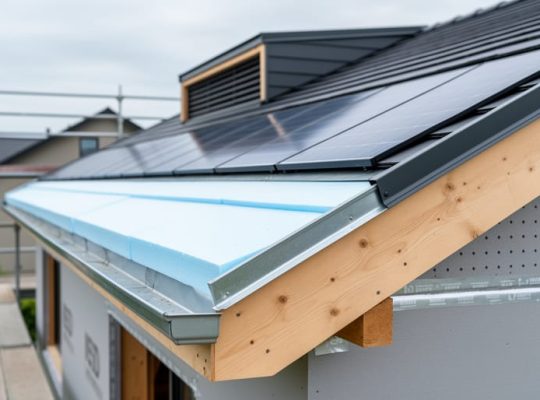
Close-up view of building-integrated photovoltaic shingles meeting rigid foam continuous insulation at a residential roof eave, with sealed roof deck and blurred scaffolding in the background under soft daylight.

Why Your Building-Integrated Solar System Must Meet These Insulation Standards

Verify your project’s climate zone classification through the International Energy Conservation Code (IECC) before specifying any insulation materials, as minimum R-values for walls, attics, and foundations vary dramatically between zones—ranging from R-13 wall insulation in Zone 1 to R-21 in Zone 7. Cross-reference these requirements with IRC Section N1102, which mandates specific thermal envelope performance standards that directly impact how building-integrated …
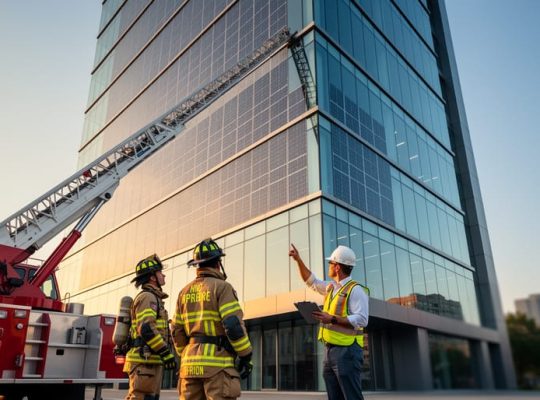
Firefighters and a building inspector evaluate a modern mid-rise with solar-integrated photovoltaic glass facade beside an extended ladder truck in warm late-afternoon light, with a soft urban skyline behind them.

Why Unified Building Codes Matter When Solar Panels Meet Fire Safety

Building-integrated photovoltaics represent a convergence of architectural innovation and renewable energy technology, but their successful deployment hinges on navigating a complex regulatory landscape. Unified building codes provide the essential framework that ensures BIPV systems meet structural, electrical, and fire safety requirements while maintaining consistency across jurisdictions.
Understanding these standardized codes is fundamental for anyone entering the photovoltaic profession. Unlike traditional solar installations, BIPV systems function as both building envelope components and power generators, subjecting them to …

Low-angle view of a large solar carport shading parked cars and pedestrians at sunset, with EV chargers, trees, and a soft city skyline in the background.

How Shade Buildings Are Transforming Solar Architecture Into Dual-Purpose Powerhouses

Shade buildings represent a transformative convergence of architectural design and solar energy generation, where structures specifically engineered to provide shelter simultaneously serve as productive photovoltaic installations. Unlike conventional building-integrated photovoltaics that retrofit solar panels onto existing structures, shade buildings are purpose-designed from inception to maximize both shading functionality and electricity generation—creating dual-purpose infrastructure that addresses urban heat mitigation while advancing renewable energy adoption.
These specialized structures include solar carports protecting …

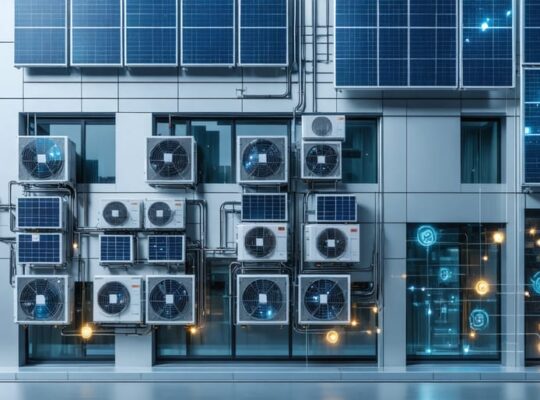
Conceptual image showing a building facade with photovoltaic panels and integrated HVAC unit ventilators, symbolizing modern energy-efficient climate control solutions.

How Unit Ventilators Transform Building-Integrated PV HVAC Performance

Unit ventilators represent a critical component in modern building-integrated photovoltaics and HVAC systems, delivering targeted climate control while maximizing energy efficiency. These sophisticated devices combine heating, cooling, and ventilation capabilities within a single, compact unit installed directly within individual rooms or zones. By integrating advanced temperature sensors, variable-speed fans, and smart controls, unit ventilators optimize indoor air quality…

Illustration of a modern building with structural insulated panels and integrated solar panels, highlighting thermal efficiency through R-value cross-section details and energy generation.

How SIP R-Values Enhance Building-Integrated PV Performance

Structural Insulated Panels (SIPs) revolutionize modern construction by delivering exceptional R-values ranging from R-14 to R-28 per inch, significantly outperforming traditional frame construction methods. When integrated with building-integrated photovoltaic systems, these high-performance panels create an energy-efficient envelope that optimizes both insulation and power generation capabilities. The expanded polystyrene (EPS) core, sandwiched between oriented strand …

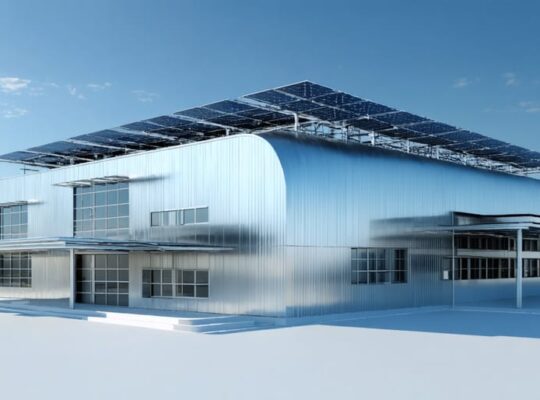
Conceptual illustration of a modern building featuring metal structural insulated panels with integrated solar panels, representing advanced energy-efficient construction technology.

Metal SIPs: The Future of Building-Integrated Solar Power

Metal Structural Insulated Panels (MSIPs) represent a revolutionary advancement in modern construction technology, seamlessly integrating with building-integrated photovoltaic systems to create energy-efficient building envelopes. These engineered composite panels, consisting of two metal facings bonded to an insulating core, deliver superior thermal performance while maintaining exceptional structural integrity. By combining the durability of metal with high-performance …

A futuristic city skyline showcasing buildings with integrated solar technologies, such as solar panels embedded in facades and roofing, demonstrating sustainable architectural design through BIPV implementation.

Building-Integrated PV Elements: Transform Your Structure into a Power Plant

Building-integrated photovoltaics (building-integrated photovoltaics) represent a revolutionary convergence of renewable energy and modern architecture, transforming conventional building elements into power-generating assets. This innovative technology seamlessly integrates solar cells into building materials—including windows, facades, and roofing components—creating structures that simultaneously serve as both shelter and clean energy generators. By replacing …

Conceptual illustration of a futuristic city skyline featuring high-rise buildings with integrated solar panels and gravity storage systems, depicting the fusion of architecture and renewable energy technologies.

Building-Integrated Gravity Storage: The Next Evolution in Solar PV Energy Management

Gravity energy storage systems represent a transformative solution in the renewable energy landscape, offering a powerful complement to building-integrated photovoltaics and other clean energy technologies. By harnessing the fundamental force of gravity, these systems store excess energy by lifting heavy weights during peak production periods and generate electricity by lowering them when demand increases.
Unlike conventional battery storage, gravity-based systems …

A modern building with sleek solar panels and a conceptually integrated zinc battery, representing innovative building-integrated solar power solutions in an urban setting.

Zinc Energy Storage: The Future of Building-Integrated Solar Power Systems

In the race toward sustainable energy storage solutions, zinc-based systems have emerged as a transformative technology for building-integrated photovoltaics and grid-scale applications. This abundant, safe, and cost-effective metal offers distinct advantages over traditional lithium-ion batteries, boasting a theoretical energy density of 1,086 Wh/kg and an impressive cycle life exceeding 1,000 charges. Zinc energy storage systems utilize earth-abundant materials, operate …

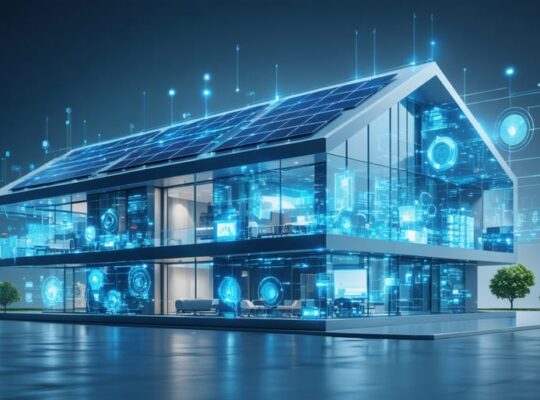
A futuristic building with a facade integrated with solar panels on the roof and windows, illustrating the seamless incorporation of building-integrated photovoltaics in modern architecture.

Building-Integrated Solar: Smart Storage Solutions That Transform Your Building’s Power Future

Building-integrated photovoltaics (building-integrated photovoltaics) represent a revolutionary convergence of architectural design and renewable energy technology, transforming traditional building elements into power-generating assets. This innovative approach seamlessly integrates solar cells into building materials – from roofing tiles and facades to windows and skylights – creating structures that actively contribute to their own energy needs while …

Illustration of a modern building with solar panels integrated into its facade, showcasing advanced energy storage solutions like batteries and thermal systems, along with a digital display representing smart energy management.

Building-Integrated Solar Storage: Smart Solutions for Maximum Energy Independence

Solar energy storage has become a crucial cornerstone in the widespread adoption of renewable power systems, enabling continuous electricity supply even when the sun isn’t shining. Modern building-integrated PV systems increasingly incorporate sophisticated storage solutions, transforming intermittent solar generation into reliable power sources. From advanced lithium-ion batteries and thermal storage systems to emerging technologies like flow batteries and hydrogen …

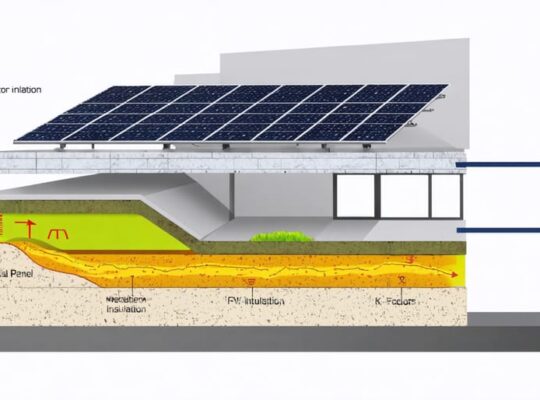
Conceptual illustration showing the integration of K-factor insulation within a building facade, alongside photovoltaic panels, with arrows to indicate thermal energy flow.

K-Factor Insulation: The Key to Maximizing PV Panel Efficiency in Building Facades

K-factor insulation plays a pivotal role in optimizing the thermal performance of building-integrated photovoltaic systems, directly impacting both energy efficiency and power generation capacity. This thermal resistance coefficient, measured in watts per meter-kelvin (W/m·K), determines how effectively building materials prevent heat transfer across facade elements. As global energy standards become increasingly stringent, understanding k-factor insulation has become …

Artistic rendering of a modern building with solar panels incorporated into the architecture, utilizing advanced quantum energy storage technology with vibrant light effects.

Quantum Energy Storage: The Next Evolution in Building-Integrated Solar Systems

Quantum energy storage represents a revolutionary frontier in renewable energy technology, promising to transform how we capture, store, and utilize solar power in building-integrated photovoltaics. By harnessing quantum mechanical principles at the nanoscale, this emerging technology enables unprecedented energy density and near-instantaneous charge-discharge cycles. Recent breakthroughs in quantum dot configurations and coherent spin states have demonstrated storage …

Conceptual illustration of a modern building with multi-layered photovoltaic glass windows, showcasing advanced insulation technologies and their role in energy-efficient urban architecture.

R-Value Glass Windows: The Key to Maximum PV Efficiency in Building Integration

R-value measurements in glass windows represent a critical performance metric that directly impacts energy efficiency and solar integration potential in modern building-integrated PV systems. This thermal resistance rating, measured in ft²·°F·h/BTU, determines how effectively window assemblies resist heat flow and maintain optimal interior temperatures. Advanced multi-pane configurations with low-emissivity coatings can achieve R-values up to 5.0, significantly …

Modern cityscape showcasing buildings with integrated photovoltaic concrete facade panels, highlighting sustainable architecture and solar energy technology.

Transform Your Building’s Energy Profile with Concrete PV Facade Panels

Concrete facade panels have revolutionized modern architecture by combining structural integrity with aesthetic innovation. As a cornerstone of building-integrated photovoltaics, these versatile elements offer unprecedented opportunities for sustainable construction. Advanced manufacturing techniques now enable the creation of panels that seamlessly integrate solar technology while maintaining the robust characteristics of traditional concrete facades. These engineered …