**Avoid payday loans entirely for solar panel financing—these short-term, high-interest products fundamentally contradict the long-term investment nature of photovoltaic systems.** While low apr payday loans may seem accessible when facing upfront solar costs, their typical 14-30 day repayment terms and APRs exceeding 400% create financial distress rather than solutions.
Solar installations represent capital investments spanning 25-30 years, requiring financing mechanisms aligned with their extended payback periods and energy savings trajectories. Payday loans, designed for emergency cash flow gaps of hundreds of dollars, cannot accommodate the $15,000-$35,000 investment required for residential photovoltaic systems. The mathematical incompatibility becomes clear: even a modest 5kW system financed through payday lending would generate impossible repayment obligations within weeks, potentially trapping borrowers in destructive debt cycles.
This fundamental mismatch explains why the solar industry has developed specialized financing instruments—including solar loans, power purchase agreements (PPAs), and property assessed clean energy (PACE) programs—that synchronize payment structures with energy production and savings. These alternatives offer extended terms, competitive interest rates, and often incorporate federal tax credits and state incentives that reduce effective costs by 30-50%.
Understanding why payday loans fail as solar financing tools empowers prospective solar adopters to pursue appropriate pathways that make renewable energy adoption financially sustainable rather than predatory.
Understanding Online Payday Loans: High-Cost, Short-Term Credit
The True Cost of Payday Loans
Understanding the financial mechanics of payday loans reveals why they’re unsuitable for solar panel purchases. A typical $1,000 payday loan carries annual percentage rates (APRs) between 300% and 600%, though the short-term nature initially obscures this cost.
Consider this concrete example: Borrowing $1,000 for a two-week period typically incurs a $150 fee, requiring repayment of $1,150. This translates to an APR of approximately 391%. For solar panels costing $15,000 to $25,000, even multiple payday loans would provide insufficient capital while generating unsustainable debt.
The rollover cycle compounds financial damage significantly. When borrowers cannot repay the principal plus fees within two weeks—a common scenario given that 80% of payday loans are rolled over or renewed within 14 days—they pay an additional fee to extend the loan. After four rollovers, that initial $1,000 loan accumulates $600 in fees alone, with the principal still outstanding. Within twelve weeks, fees can exceed $900 while the borrower remains trapped in debt.
For photovoltaic system financing, this approach proves financially devastating. Solar panels represent long-term investments with 25-year performance warranties, requiring financing structures that match their lifespan and value proposition. Payday loans’ astronomical costs and abbreviated timelines fundamentally contradict solar economics, making them perhaps the worst possible financing mechanism for renewable energy adoption.
Why Payday Loans Exist
Payday loans were designed as short-term financial instruments to address immediate, unexpected expenses—medical emergencies, urgent vehicle repairs, or essential appliance replacements that cannot wait until the next paycheck. These products typically target consumers with limited access to traditional credit, offering rapid approval processes with minimal documentation requirements. The repayment period generally spans two to four weeks, aligning with typical pay cycles.
However, payday loans fundamentally serve emergency liquidity needs, not long-term capital investments. Solar panel installations represent substantial infrastructure investments requiring 10-25 year financial planning horizons, making them categorically incompatible with payday loan structures. The demographic served by payday lenders—individuals experiencing temporary cash flow constraints—faces particular vulnerability when considering these products for renewable energy projects.
The substantial cost disparity creates immediate problems: residential solar installations typically range from $15,000 to $30,000, while payday loans rarely exceed $500 to $1,000. More critically, payday loan annual percentage rates (APRs) frequently exceed 400%, making any extended financing mathematically untenable. Understanding this fundamental mismatch protects consumers from predatory lending practices while directing them toward appropriate solar financing mechanisms designed specifically for photovoltaic system investments.
The Economics of Solar Panel Installation
Initial Investment Requirements
Understanding the actual investment required for solar panel systems is crucial before considering any financing option. For residential installations, homeowners should expect total costs ranging from $15,000 to $30,000 for a typical 5-10 kilowatt system before incentives. This investment encompasses several components: photovoltaic panels themselves ($5,000-$12,000), inverters ($2,000-$4,000), mounting equipment and racking systems ($1,500-$3,000), and electrical components including wiring and disconnects ($1,000-$2,000).
Professional labor costs constitute approximately 15-25% of the total project expense, typically $3,000-$6,000 for standard residential installations. This includes system design, electrical work performed by licensed technicians, structural assessments, and final connections to your electrical panel. Permitting and inspection fees vary significantly by jurisdiction but generally range from $500 to $2,000, covering building permits, electrical permits, and utility interconnection applications.
Small commercial installations demand substantially higher investments, typically $50,000 to $150,000 for systems sized between 25-100 kilowatts. These projects involve more complex engineering requirements, additional structural considerations, and often require upgraded electrical infrastructure.
The federal Investment Tax Credit currently reduces these costs by 30%, while many states offer additional rebates and incentives that can lower out-of-pocket expenses by an additional 10-25%. These substantial figures explain why consumers seek financing solutions, but they also illustrate why short-term, high-interest payday loans create an immediate financial crisis rather than providing a viable pathway to solar ownership.
Solar as a Long-Term Asset
Solar panels represent a substantial long-term investment rather than a short-term purchase, making payday loans particularly unsuitable for this application. Quality photovoltaic systems typically function efficiently for 25-30 years, with many manufacturers offering performance warranties spanning two to three decades. This extended operational lifespan fundamentally differentiates solar installations from consumer goods that depreciate rapidly.
The solar panel ROI timeline generally ranges from 6-10 years, depending on geographic location, electricity rates, system size, and available incentives. During this payback period, homeowners accumulate savings through reduced utility bills while their system continues generating clean energy. Once the initial investment is recovered, the remaining 15-20+ years deliver pure economic benefit.
Solar installations appreciate in value through compounding energy savings, particularly as utility rates increase over time. Research indicates homes equipped with solar systems command premium resale values, with buyers recognizing both the environmental benefits and financial advantages. Unlike depreciating assets, solar panels actively generate value throughout their lifespan, producing returns that extend far beyond typical investment horizons. This wealth-building characteristic makes solar installations ideal candidates for financing mechanisms aligned with their extended value proposition—such as home equity products or specialized solar loans—rather than short-term, high-cost borrowing options that create immediate financial strain without corresponding long-term benefits.
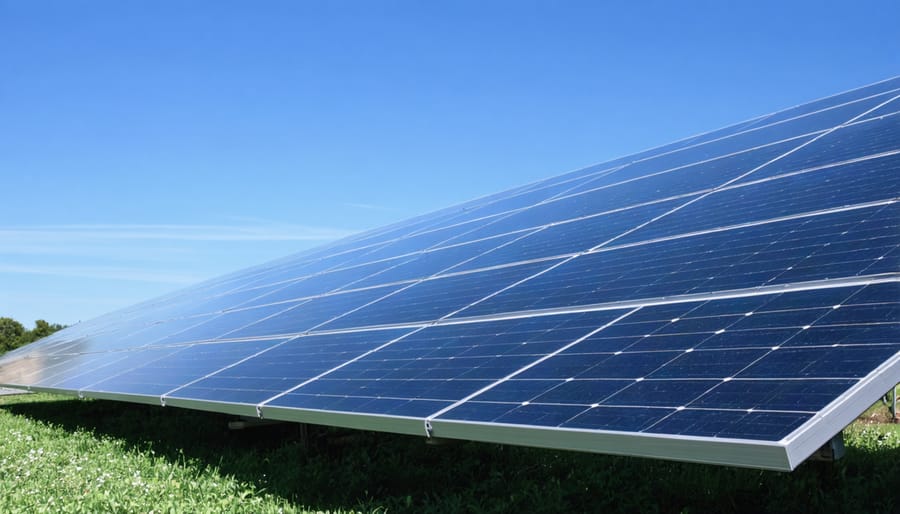
The Fundamental Mismatch: Why Payday Loans Can’t Fund Solar
The Timeline Problem
The fundamental mismatch between payday loan structures and solar installation realities creates an insurmountable financial obstacle. Typical payday loans require full repayment within 2-4 weeks, yet solar panel installation itself takes 1-3 months from permitting through final inspection and grid connection. This timeline gap means borrowers face loan repayment before their system even begins generating electricity.
More critically, the economics simply don’t align. Even after installation, solar panels produce energy savings gradually over decades, not weeks. A residential 6kW system might save $80-150 monthly on electricity bills—nowhere near the several thousand dollars needed to repay both the loan principal and the triple-digit APR interest charges within the payday loan term. This mathematical impossibility guarantees borrowers will either default or enter a devastating rollover cycle, accumulating fees that quickly exceed the solar equipment’s entire cost.
The repayment timeline conflict effectively transforms what should be a long-term investment into an immediate financial crisis. Solar energy’s value proposition depends on extended payback periods, typically 6-10 years, making short-term, high-interest debt fundamentally incompatible with photovoltaic system financing.
The Cost Amplification Trap
The mathematical reality of combining payday loans with solar panel purchases creates a devastating financial scenario that undermines the entire value proposition of renewable energy investment. A typical residential solar installation costs between $15,000 and $25,000 before incentives. When financed through payday loans with their characteristic APRs of 300-600%, the actual cost balloons exponentially.
Consider a $20,000 solar system that might generate $1,500 annually in electricity savings. If financed through sequential payday loans—as many borrowers do when unable to repay the initial loan—the effective interest can reach $6,000 to $12,000 annually. This means borrowers could pay $60,000 to $120,000 over just five years for a system worth $20,000, completely erasing any potential savings and creating costs three to six times the original investment.
The debt spiral accelerates because payday loans typically require full repayment within two to four weeks. Unable to satisfy these terms while meeting other obligations, borrowers often roll over loans or take new ones to cover previous debts. Each rollover adds additional fees and interest, compounding the financial burden. Research from the Consumer Financial Protection Bureau indicates that 80% of payday loans are renewed or followed by another loan within 14 days, demonstrating the cyclical trap these products create.
This cost amplification doesn’t just eliminate savings—it transforms a potentially beneficial investment into a severe financial liability that can persist for years beyond the solar system’s warranty period.
Legitimate Financing Options for Solar Panel Installation
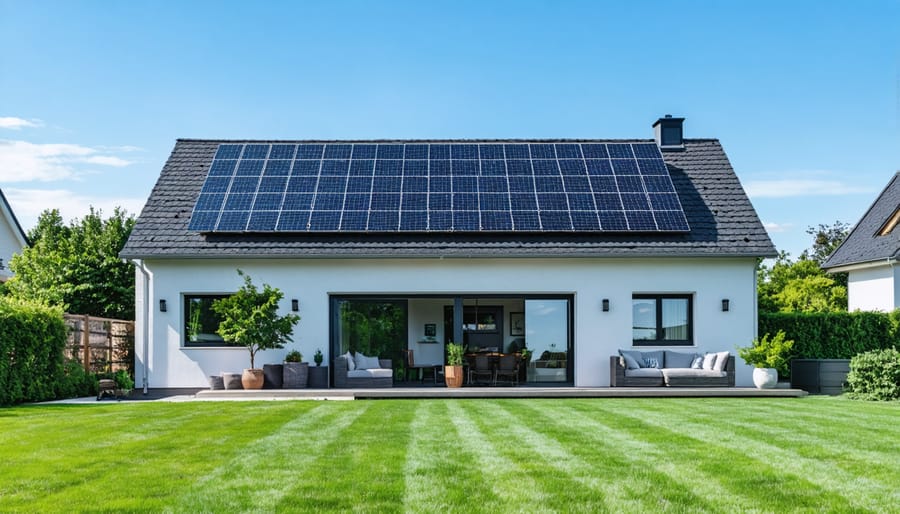
Solar-Specific Loans
Solar-specific loans represent the most appropriate financing mechanism for residential and commercial photovoltaic installations, offering structured terms that align with the economic realities of renewable energy investments. Unlike payday loans, these specialized financial products typically feature annual percentage rates ranging from 3% to 8%, making them considerably more affordable over the loan lifecycle.
These dedicated solar financing instruments are structured with extended repayment periods spanning 5 to 20 years, deliberately designed to correspond with the energy production timeline of photovoltaic systems. This temporal alignment ensures that monthly loan payments remain comparable to—or lower than—the electricity cost savings generated by the solar installation, creating a cash-flow positive scenario for many homeowners from day one.
Lending institutions offering solar-specific loans often incorporate energy savings projections directly into their underwriting processes, evaluating loan viability based on anticipated utility bill reductions rather than solely on traditional creditworthiness metrics. Many programs integrate federal Investment Tax Credit (ITC) benefits into the financing structure, allowing borrowers to reduce principal balances by applying their 30% tax credit upon receipt.
Some progressive lenders now offer zero-interest solar loans or promotional periods, further enhancing the financial accessibility of photovoltaic technology. These products frequently include no prepayment penalties, enabling borrowers to accelerate repayment schedules as their financial circumstances improve, thereby reducing total interest obligations while maintaining the environmental benefits of clean energy generation.
Home Equity Products and Property Assessed Clean Energy (PACE) Programs
Home equity products offer established homeowners compelling alternatives to short-term lending for solar investments. Home Equity Lines of Credit (HELOCs) and traditional home equity loans leverage accumulated property value to access substantial funding at interest rates significantly lower than payday loans—typically ranging from 6% to 10% depending on creditworthiness and market conditions.
HELOCs function as revolving credit lines, allowing homeowners to draw funds as needed during installation and construction phases. This flexibility proves particularly valuable when managing variable project costs or phased installations. Conversely, home equity loans provide lump-sum disbursements with fixed repayment terms, offering predictable monthly payments that facilitate long-term budgeting.
Property Assessed Clean Energy (PACE) programs represent an innovative financing mechanism that ties solar investments directly to property tax assessments. These programs enable homeowners to finance renewable energy improvements through voluntary property tax increases, with repayment obligations transferring to subsequent property owners if the home sells before loan completion. PACE financing typically covers 100% of project costs without requiring upfront payments, though availability varies significantly by jurisdiction.
The primary advantage of these equity-based approaches lies in their alignment with solar panel longevity—25 to 30-year system lifespans match well with 10 to 20-year loan terms. Additionally, because solar installations increase property values by approximately 4% according to Department of Energy research, borrowers effectively convert existing equity into an appreciating asset while reducing utility expenses throughout the repayment period.
Power Purchase Agreements and Leasing Options
Power Purchase Agreements (PPAs) and solar leases represent compelling alternatives to payday loans, eliminating upfront costs entirely while delivering immediate energy savings. Under a PPA, a third-party company owns and maintains the solar system on your property, selling you the generated electricity at a predetermined rate—typically 10-30% below utility prices. You pay only for the power produced, with no equipment purchase, installation fees, or maintenance responsibilities.
Solar leases operate similarly, charging a fixed monthly payment regardless of production levels. Both arrangements require no initial capital outlay and include system monitoring, maintenance, and performance guarantees throughout 20-25 year contract terms. These zero-down options make solar accessible to homeowners who lack savings or borrowing capacity, though you forgo ownership benefits like tax credits and increased home equity.
The hosting company claims federal Investment Tax Credits and depreciation benefits, offsetting their costs while passing savings to you through reduced electricity rates. This symbiotic arrangement allows immediate participation in renewable energy adoption without financial strain. However, credit checks remain standard, though requirements are generally less stringent than traditional financing.
For environmentally conscious consumers facing financial barriers, PPAs and leases provide legitimate pathways to solar adoption without resorting to high-interest payday loans. These professionally structured agreements protect consumers while advancing photovoltaic deployment, making them particularly valuable for academic institutions and nonprofit organizations exploring renewable energy transitions within budgetary constraints.
Federal and State Incentives That Reduce Upfront Costs
Before considering high-interest payday loans, understanding available government incentives reveals why such financing is unnecessary for most solar adopters. These programs substantially reduce upfront costs, making solar installations more financially accessible through legitimate channels.
The federal solar incentives, particularly the Investment Tax Credit (ITC), currently allows homeowners to deduct 30% of their solar installation costs from federal taxes through 2032. For a typical $20,000 residential system, this translates to $6,000 in direct tax savings, significantly lowering the effective purchase price.
State-level programs further enhance affordability. Many states offer additional rebates ranging from $500 to $5,000, depending on system size and location. These rebates function as immediate price reductions, directly lowering the amount requiring financing. Some jurisdictions provide performance-based incentives that generate ongoing payments for electricity production.
Utility companies frequently supplement governmental programs with their own incentive structures. Net metering policies allow solar owners to receive credits for excess electricity fed back to the grid, effectively reducing monthly utility bills and improving return on investment timelines.
When combined, these incentive programs can reduce solar installation costs by 40-50%, making traditional financing options like solar loans or home equity products far more attractive than predatory payday lending. Understanding these benefits enables informed financial decisions aligned with long-term economic sustainability rather than expensive short-term solutions.
Making Solar Accessible: Education Over Quick Fixes
Financial Planning for Solar Investment
Before considering any financing option, conduct a thorough assessment of your solar readiness. Begin by evaluating your current energy costs, roof condition, available sunlight exposure, and long-term property plans. A comprehensive energy audit provides baseline data for determining appropriate system sizing and realistic return-on-investment timelines, typically ranging from 5-15 years depending on location and incentives.
Develop a realistic budget that accounts for total cost of ownership rather than focusing solely on upfront expenses. Quality solar installations generally cost $15,000-$30,000 for residential systems before incentives. Factor in the 30% federal Investment Tax Credit, state rebates, and utility incentives—these can reduce your net cost by 40-50%. Calculate your projected monthly savings against financing payments to ensure positive cash flow from day one.
Understanding the distinction between short-term desperation financing and strategic investment planning is crucial. Payday loans carry APRs exceeding 300%, transforming a beneficial solar investment into a financial liability. Instead, prioritize building an emergency fund while researching appropriate financing mechanisms like solar loans with single-digit interest rates, home equity products, or Property Assessed Clean Energy (PACE) programs.
Consider timing your solar investment strategically. Many households benefit from delaying installation 6-12 months to improve credit scores, save for larger down payments, or align with favorable utility rate structures. This patience typically saves thousands compared to desperate, high-interest borrowing. Academic research consistently demonstrates that informed, well-planned solar investments yield superior financial and environmental outcomes compared to rushed decisions driven by financing accessibility alone.
The Role of Professional Education in Consumer Protection
Professional education serves as a critical defense against consumer exploitation in the solar industry. Mose Solar’s partnerships with academic institutions to deliver professional solar education create a knowledge ecosystem that benefits both industry practitioners and consumers. When photovoltaic professionals receive comprehensive training in system design, financing structures, and ethical sales practices, they become equipped to guide consumers toward financially sound decisions rather than predatory alternatives.
These educational initiatives emphasize the importance of matching financing solutions to project scope and consumer financial profiles. Graduates of university-affiliated PV programs understand the fundamental incompatibility between short-term, high-interest payday loans and long-term solar investments. This knowledge translates directly into consumer protection, as trained professionals actively discourage inappropriate financing arrangements and present legitimate alternatives such as dedicated solar loans, leases, and power purchase agreements. By elevating industry standards through education, Mose Solar contributes to a marketplace where informed professionals serve as advocates for consumer financial wellbeing, effectively reducing the appeal of harmful lending products.
Solar panel installations represent substantial long-term investments that generate decades of clean energy, utility savings, and environmental benefits. These sophisticated photovoltaic systems deserve financing solutions that match their value proposition—not high-cost, short-term debt instruments designed for emergency expenses. While the allure of quick cash through payday loans may seem tempting when facing upfront solar costs, this approach fundamentally undermines the financial advantages that make solar energy economically viable.
The solar industry has matured significantly, bringing with it a comprehensive ecosystem of financing options specifically tailored to renewable energy projects. From specialized solar loans with extended repayment terms to Property Assessed Clean Energy (PACE) programs, power purchase agreements, and manufacturer financing partnerships, legitimate pathways exist that align payment structures with the system’s energy production and savings timeline. These appropriate financing mechanisms preserve the return on investment that payday loans would otherwise erode through excessive interest charges.
We encourage readers exploring solar adoption to invest time in understanding these proper financing channels. Educational institutions and industry organizations offer valuable resources that demystify solar economics and financing structures. Rather than pursuing predatory lending solutions, connect with certified solar installers who can guide you through incentive programs, tax credits, and financing options that make solar accessible without compromising your financial wellbeing. The transition to renewable energy deserves financial strategies as sustainable as the technology itself.