
Quality assurance inspections serve as the cornerstone of reliable solar installations, directly impacting optimal panel performance and long-term system reliability. Rigorous inspection protocols verify critical components, including module alignment, wiring integrity, and structural soundness, while ensuring compliance with international safety standards and local regulatory requirements. Modern quality assurance frameworks integrate advanced testing methodologies, real-time data analysis, and systematic documentation procedures to identify potential issues before they impact system efficiency.
Professional inspectors utilize calibrated testing equipment, thermal imaging technology, and standardized checklists to evaluate installation quality across mechanical, electrical, and structural parameters. This comprehensive approach helps maintain system integrity, maximize energy production, and protect stakeholder investments throughout the solar installation’s operational lifecycle.
The implementation of structured quality assurance programs significantly reduces installation defects, enhances system performance, and ensures regulatory compliance while providing documented verification of workmanship standards. These inspection protocols form an essential bridge between installation completion and operational excellence, establishing a foundation for reliable, high-performing solar energy systems.

Visual Inspection Protocols
Module and Array Inspection
A thorough module and array inspection begins with verifying proper adherence to safety protocols for installation. Inspectors must systematically evaluate each panel’s physical mounting, ensuring secure attachment to the racking system with all fasteners properly torqued to manufacturer specifications.
Key inspection points include:
– Panel alignment and spacing uniformity
– Proper grounding connections and continuity
– Absence of cell damage or microcracks
– Frame integrity and weatherproofing
– Cable management and strain relief
– Mounting hardware completeness and security
Verify that module clamps are positioned correctly and tightened to specified torque values. Check for proper clearance between panels and roof surface to ensure adequate ventilation and drainage. Examine module frames for signs of physical stress or deformation that could indicate installation issues.
Inspect all wiring connections, ensuring proper polarity, appropriate wire gauge, and weatherproof terminations. Verify that optimizers or microinverters (if present) are securely mounted and properly paired with their respective modules. Document any aesthetic irregularities, including misaligned panels or visible gaps that could affect system performance or durability.
Finally, confirm that all labels and identification markers are properly placed and clearly visible, meeting local code requirements for system documentation and emergency response information.
Wiring and Connection Assessment
Proper wiring and connection assessment forms a critical component of solar installation quality assurance. Inspectors must thoroughly evaluate all electrical connections, ensuring they meet National Electrical Code (NEC) requirements and manufacturer specifications. This includes examining conductor sizing, insulation integrity, and proper termination at both DC and AC connection points.
Begin by inspecting all conduit installations for proper support, appropriate sizing, and weatherproof sealing. Verify that conduit runs maintain minimum bend radius requirements and include necessary expansion joints where thermal movement may occur. All penetrations through roofs or walls must demonstrate proper flashing and weatherproofing techniques.
Cable management requires particular attention, with inspectors verifying that all conductors are properly secured, labeled, and protected from physical damage. Check that wire management systems prevent cable stress, maintain appropriate spacing, and protect against UV exposure where applicable. Ensure all junction boxes are properly sealed and accessible for future maintenance.
Connection points demand careful scrutiny. Verify proper torque specifications on all electrical terminations, check for signs of corrosion or thermal damage, and confirm the presence of appropriate strain relief at cable entry points. Document the use of approved connectors and ensure compatibility between different components.
Finally, assess the grounding system installation, including equipment grounding conductors, bonding jumpers, and surge protection devices. Verify proper connection to the building’s grounding electrode system and the presence of required lightning protection measures where specified.
Performance Testing Procedures
Voltage and Current Testing
Voltage and current testing are critical components of solar installation quality assurance, providing essential data about system performance and safety. These measurements help verify that the photovoltaic array operates within specified parameters and meets design expectations.
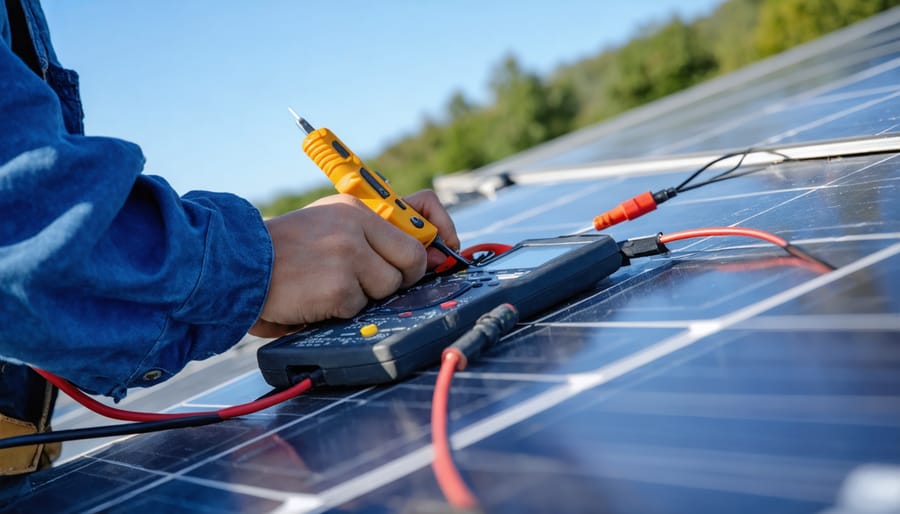
String voltage testing involves measuring the open-circuit voltage (Voc) of individual module strings using a calibrated digital multimeter. Technicians should perform these measurements during optimal sunlight conditions, typically between 10 AM and 2 PM on clear days. The measured values should align with the expected voltage calculations based on module specifications and string configuration, accounting for temperature coefficients and environmental conditions.
Current measurements require the use of a clamp-on ammeter to assess the operating current of each string under load. These measurements should be taken at maximum power point conditions to evaluate system performance accurately. Technicians must compare the measured current values against the expected calculations, considering factors such as solar irradiance, module temperature, and system losses.
Key testing protocols include:
– Verifying polarity of all string connections
– Measuring string voltages before connecting to inverters
– Recording individual string currents during peak production
– Comparing measurements across parallel strings
– Documenting all readings in inspection reports
When significant deviations from expected values are detected, technicians must investigate potential issues such as faulty connections, damaged modules, or shading problems. Regular voltage and current testing helps maintain system efficiency and identifies maintenance needs before they become critical issues.
Professional testing equipment must be properly calibrated and maintained to ensure measurement accuracy. Technicians should follow manufacturer guidelines and safety protocols while performing these essential diagnostic procedures.
Inverter Performance Verification
Inverter performance verification is a crucial step in ensuring optimal solar system operation. The process begins with a comprehensive functionality check of all inverter components, including DC input terminals, AC output connections, and communication interfaces. Technicians must verify proper voltage and current readings across all inputs while monitoring power conversion rates.
Key performance indicators include conversion efficiency, maximum power point tracking (MPPT) effectiveness, and grid synchronization capabilities. During verification, specialists conduct inverter efficiency optimization tests under various load conditions to ensure consistent performance across different operating scenarios.
Testing procedures should include:
– DC voltage and current measurement at input terminals
– AC output power quality assessment
– Temperature monitoring during operation
– Anti-islanding protection verification
– Grid code compliance testing
– Data logging system functionality check
Technicians must document all measurements and compare them against manufacturer specifications. Any deviations require immediate investigation and potential corrective action. Performance ratio calculations help determine if the inverter is operating at expected efficiency levels.
Regular monitoring of harmonic distortion, power factor, and frequency response ensures compliance with utility requirements. Advanced diagnostic tools can identify potential issues before they impact system performance, allowing for proactive maintenance.
Documentation of all verification procedures, including test results and any adjustments made, must be maintained for warranty purposes and future reference. This information becomes invaluable for trending analysis and predictive maintenance planning, ultimately ensuring long-term system reliability and optimal energy production.
Documentation and Compliance
System Documentation Requirements
Proper documentation is essential for maintaining quality assurance standards in solar installation inspections. A comprehensive documentation system should include detailed inspection reports, photographic evidence, testing results, and compliance certificates. These records serve as crucial evidence for warranty claims and certification requirements while demonstrating adherence to industry standards.
Key documentation requirements include installation verification forms, which detail the specific components used, their serial numbers, and installation parameters. Performance test results must be documented, including string measurements, voltage readings, and irradiance data collected during commissioning. Site survey reports should contain structural assessments, shading analyses, and roof condition evaluations.
Quality assurance documentation must also include maintenance schedules, incident reports, and corrective action records. These documents help track system performance over time and provide evidence of proper maintenance practices. For warranty purposes, maintain detailed records of equipment specifications, manufacturer warranties, and installation dates.
Certification documentation requires proof of installer qualifications, permits, and inspection approvals from relevant authorities. Environmental impact assessments and safety compliance records should be retained as part of the quality assurance package. All documentation should be stored securely, both digitally and in physical format, with regular updates and proper version control to ensure accessibility throughout the system’s lifetime.
Regulatory Compliance Verification
To ensure compliance with regulatory requirements, inspectors must follow a systematic verification process that addresses local codes and industry standards. This checklist approach helps maintain consistency and thoroughness in the inspection process.
Begin by verifying compliance with the National Electrical Code (NEC) requirements, particularly Articles 690 and 705 which govern photovoltaic systems. Document all electrical connections, grounding methods, and conductor sizing to ensure they meet current standards.
Check for compliance with local building codes, including structural requirements for roof-mounted systems and setback distances. Verify that all necessary permits were obtained and that installation follows approved plans. Special attention should be paid to fire safety requirements, including access pathways and rapid shutdown capabilities.
Review environmental compliance, including adherence to local watershed protection regulations and any specific requirements for historical districts or protected areas. Document compliance with utility interconnection requirements and verify that all necessary safety labels and placards are properly installed.
Create a detailed checklist that includes:
– Equipment certification verification
– Mounting system structural compliance
– Electrical system safety measures
– Fire code compliance
– Setback and access requirements
– Signage and labeling requirements
– Documentation completeness
Maintain records of all compliance verifications, including photographs and detailed notes. These records should be stored securely and made available for future reference or regulatory audits. Regular updates to compliance checklists ensure alignment with evolving industry standards and local requirements.
Common Issues and Solutions
During quality assurance inspections, several recurring issues often emerge that require immediate attention and resolution. Understanding these common durability challenges and their solutions is crucial for maintaining system performance and longevity.
One frequent issue is improper module mounting, which can lead to mechanical stress and potential damage. This typically manifests as misaligned rails or insufficient torque on mounting hardware. The solution involves conducting thorough mechanical assessments and ensuring all mounting components meet manufacturer specifications and local building codes.
Electrical connection problems represent another significant concern. Loose or improperly crimped connections can cause voltage drops and potential arc faults. Implementing systematic wire management protocols and utilizing calibrated torque tools for all electrical connections helps prevent these issues. Regular thermal imaging inspections can also identify potential hot spots before they become critical.
Water intrusion through poorly sealed roof penetrations remains a persistent challenge. This can be addressed through proper flashing installation and regular maintenance checks. Using high-quality sealants and ensuring correct overlap of flashing components significantly reduces the risk of water damage.
Grounding system deficiencies often surface during inspections, potentially compromising safety and compliance. The solution involves implementing comprehensive grounding verification procedures and ensuring all components are properly bonded according to current electrical codes.
Documentation gaps can hinder quality assurance processes. Establishing standardized documentation protocols, including detailed photographs and inspection checklists, helps maintain consistent quality standards. Digital documentation systems can streamline this process while ensuring accountability.
Module microcracking, while not always visible to the naked eye, can impact system performance. Regular electroluminescence testing and careful handling during installation help identify and prevent this issue. When detected, affected modules should be replaced according to warranty guidelines to maintain optimal system output.
In the realm of photovoltaic installations, inspection quality assurance stands as the cornerstone of system reliability and long-term performance. Through rigorous inspection procedures, stakeholders can effectively mitigate risks, ensure compliance with industry standards, and maximize the return on investment for solar energy systems.
The implementation of comprehensive inspection protocols serves multiple critical functions. It validates installation quality, verifies system safety, and establishes a baseline for future performance monitoring. These procedures not only protect investments but also contribute to the broader adoption of solar technology by maintaining high industry standards and building consumer confidence.
The impact of thorough quality assurance extends beyond immediate system verification. Regular inspections help prevent potential failures, reduce maintenance costs, and extend system lifespan. This proactive approach to quality management has proven instrumental in achieving optimal system efficiency and reliability throughout the operational life of photovoltaic installations.
Furthermore, systematic inspection procedures create a documented trail of compliance and performance metrics, which proves invaluable for warranty claims, performance guarantees, and system optimization. This documentation also facilitates continuous improvement in installation practices and helps identify trends that can advance industry standards.
As the solar industry continues to evolve, maintaining robust inspection quality assurance programs remains essential for ensuring the sustainable growth of photovoltaic technology and its role in the global energy transition. The commitment to thorough inspection procedures ultimately serves as a foundation for building a more reliable and efficient renewable energy infrastructure.