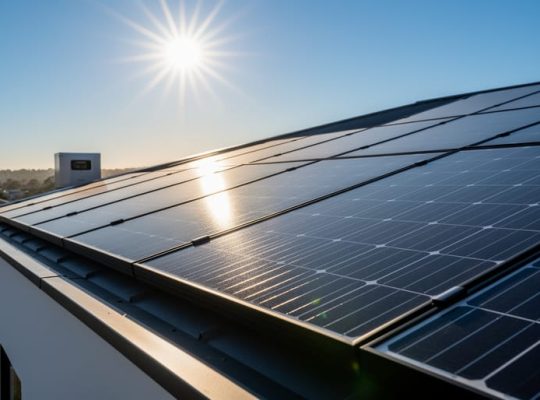
Photovoltaic cells represent a long-term investment in sustainable energy, with modern installations routinely delivering reliable power generation for 25-30 years. Understanding the factors that influence solar panel lifespan is crucial for maximizing return on investment and ensuring optimal system performance. While manufacturers typically guarantee 80% power output after 25 years, actual degradation rates vary significantly based on technology type, environmental conditions, and maintenance practices. Recent technological advances in cell architecture, materials science, and manufacturing processes have pushed theoretical lifespans beyond 40 years, though real-world performance depends heavily on installation quality and operating conditions. This comprehensive examination explores the critical factors affecting PV cell longevity, industry-standard testing methodologies, and evidence-based strategies for extending operational life, providing essential insights for stakeholders across the solar energy sector.
Understanding PV Cell Degradation
Common Degradation Mechanisms
Photovoltaic cells experience several degradation mechanisms that gradually reduce their performance over time. The primary physical process affecting solar cells is light-induced degradation (LID), which occurs during the initial exposure to sunlight and can reduce efficiency by 1-3% in the first few hours of operation.
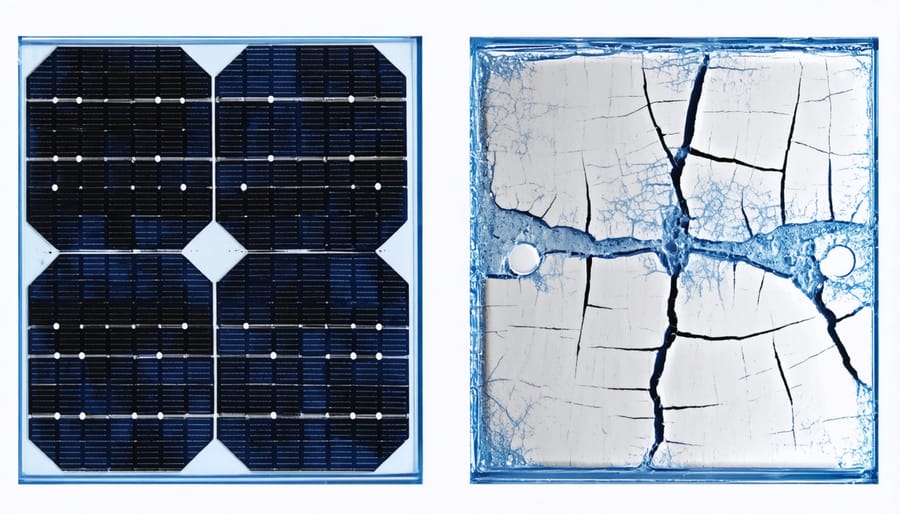
Thermal cycling causes expansion and contraction of different materials within the module, leading to mechanical stress and potential microcracks in solar cells. These microcracks can expand over time, creating paths for moisture ingress and reducing power output. Similarly, freeze-thaw cycles in colder climates can accelerate this degradation process.
Chemical degradation mainly occurs through potential-induced degradation (PID), where high system voltages drive sodium ions from the glass cover into the cell structure, affecting its electrical properties. Module encapsulants can yellow over time due to UV exposure, reducing light transmission to the cells. Additionally, moisture ingress through compromised seals can lead to corrosion of metallic components and delamination of module layers.
Hot spots, caused by partial shading or cell mismatches, create localized high-temperature areas that can permanently damage cells. Environmental factors such as salt spray in coastal areas, snow loads, and hail impacts can also contribute to accelerated degradation. Understanding these mechanisms is crucial for developing more durable photovoltaic technologies and implementing effective maintenance strategies to extend module lifespan.
Degradation Rate Factors
The rate at which photovoltaic cells degrade is influenced by various environmental and operational factors that significantly impact their performance over time. Temperature plays a crucial role, with higher operating temperatures accelerating degradation through thermal stress and material breakdown. In typical installations, temperature-induced degradation accounts for approximately 0.5% to 1% efficiency loss per year.
Humidity and moisture exposure can lead to corrosion of electrical connections and delamination of cell components, particularly in coastal areas or regions with high rainfall. UV radiation, while essential for photovoltaic operation, contributes to the degradation of the encapsulant materials protecting the cells, potentially leading to yellowing and reduced light transmission.
Mechanical stress factors, including wind loads, snow accumulation, and thermal cycling, can cause microcracks in solar cells and compromise structural integrity. Areas with extreme weather conditions often experience accelerated degradation rates of up to 2% annually.
Light-induced degradation (LID) affects primarily crystalline silicon cells during their initial exposure to sunlight, causing a 1-3% efficiency drop in the first few hours or days of operation. Additionally, potential-induced degradation (PID) can occur in high-voltage systems, especially in humid conditions, leading to substantial power losses if left unaddressed.
Dust and soiling accumulation can temporarily reduce efficiency by up to 15% in arid regions, though this effect is generally reversible through proper cleaning and maintenance procedures.
Expected Lifespan of Modern PV Cells
Monocrystalline vs. Multi-crystalline Longevity
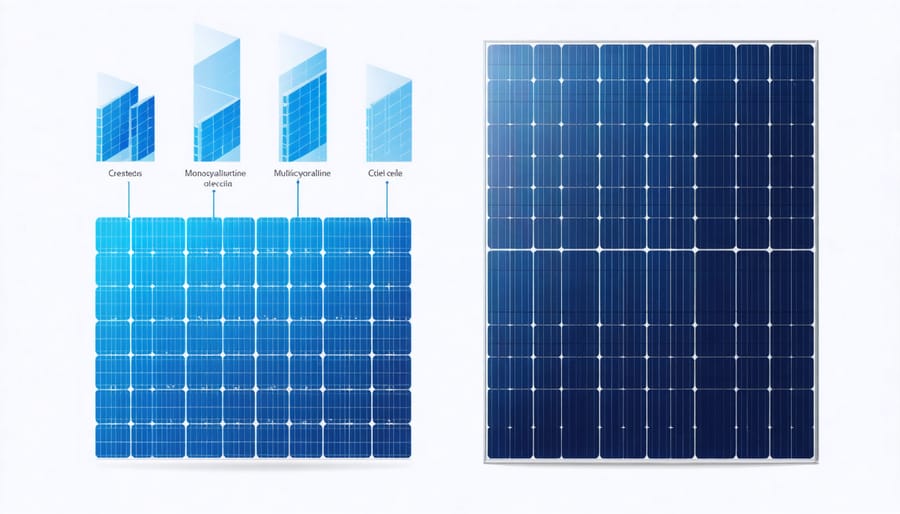
Monocrystalline and multi-crystalline solar cells exhibit distinct differences in their long-term performance and degradation patterns. Monocrystalline cells, manufactured from single-crystal silicon, typically demonstrate superior longevity with average annual degradation rates of 0.4% to 0.5%. This slower degradation is attributed to their uniform crystal structure, which provides better resistance to environmental stressors and thermal cycling.
Multi-crystalline cells, composed of multiple silicon crystals, generally experience slightly higher degradation rates, averaging 0.5% to 0.7% annually. The presence of grain boundaries between crystal structures creates additional vulnerability points for degradation mechanisms, potentially leading to faster performance decline over time.
Research indicates that monocrystalline panels often maintain above 80% of their initial efficiency after 25 years, while multi-crystalline panels typically reach this threshold slightly earlier. However, recent manufacturing improvements have narrowed this performance gap significantly. Both technologies now commonly carry 25-year performance warranties, reflecting increased confidence in their long-term reliability.
Environmental conditions play a crucial role in determining actual lifespan differences. In high-temperature environments, monocrystalline cells generally demonstrate better thermal stability and resistance to heat-induced degradation. Conversely, in moderate climates, the performance gap between the two technologies becomes less pronounced.
When properly maintained and installed, both cell types can exceed their warranty periods, often functioning effectively for 30-35 years. The choice between mono and multi-crystalline cells should consider not only longevity but also initial cost, space efficiency, and specific installation requirements.
PERC Technology Durability
PERC (Passivated Emitter and Rear Cell) technology has emerged as a leading innovation in photovoltaic manufacturing, demonstrating superior durability characteristics compared to conventional solar cells. Studies conducted by major research institutions indicate that PERC modules typically maintain over 85% of their initial power output after 25 years of operation under standard conditions.
The enhanced durability of PERC cells stems from their advanced architectural design, which incorporates a passivation layer on the rear surface. This additional layer not only improves efficiency but also provides better protection against degradation factors. Independent testing has shown that PERC modules experience an average annual degradation rate of 0.4% to 0.5%, compared to the 0.6% to 0.7% commonly observed in traditional cells.
PERC technology demonstrates particular resilience to light-induced degradation (LID) and potential-induced degradation (PID), two significant factors affecting solar panel longevity. Modern PERC manufacturing processes include specialized treatments that minimize the impact of these degradation mechanisms, resulting in more stable long-term performance.
Temperature cycling tests have verified that PERC modules maintain structural integrity and electrical performance under extreme weather conditions. The technology’s robust design allows for effective operation in temperatures ranging from -40°C to +85°C, with humidity resistance exceeding 85% relative humidity at 85°C for extended periods.
Quality manufacturers typically warranty their PERC modules for 25 to 30 years, reflecting confidence in the technology’s durability. Recent field data suggests that well-maintained PERC installations could potentially exceed these warranty periods, with some systems projected to maintain viable energy production for up to 35 years.
Maximizing PV Cell Lifespan
Installation Best Practices
The longevity of photovoltaic cells significantly depends on proper installation techniques, which establish the foundation for optimal performance throughout the system’s lifecycle. Critical factors include precise angle optimization, robust mounting systems, and appropriate spacing between panels to facilitate thermal regulation and cleaning access.
Professional installers should ensure modules are oriented to maximize sun exposure while considering local climate conditions. In regions with heavy snowfall, steeper angles may be necessary, while areas with high temperatures require adequate ventilation spacing. The mounting structure must be engineered to withstand local wind loads and weather conditions, utilizing corrosion-resistant materials and appropriate torque specifications.
Careful attention to wiring and connection details is essential. Installers should use industry-approved connectors, maintain proper cable management to prevent physical stress, and implement effective grounding systems. Weather-sealed junction boxes and properly rated conduits protect electrical components from moisture and environmental factors.
Quality control during installation involves thorough testing of all connections, verification of proper panel alignment, and documentation of system parameters. Post-installation inspections should confirm structural integrity, electrical safety, and optimal positioning. These initial measures significantly impact system efficiency and durability, potentially extending the operational lifespan of photovoltaic cells beyond standard warranty periods.
Maintenance Protocols
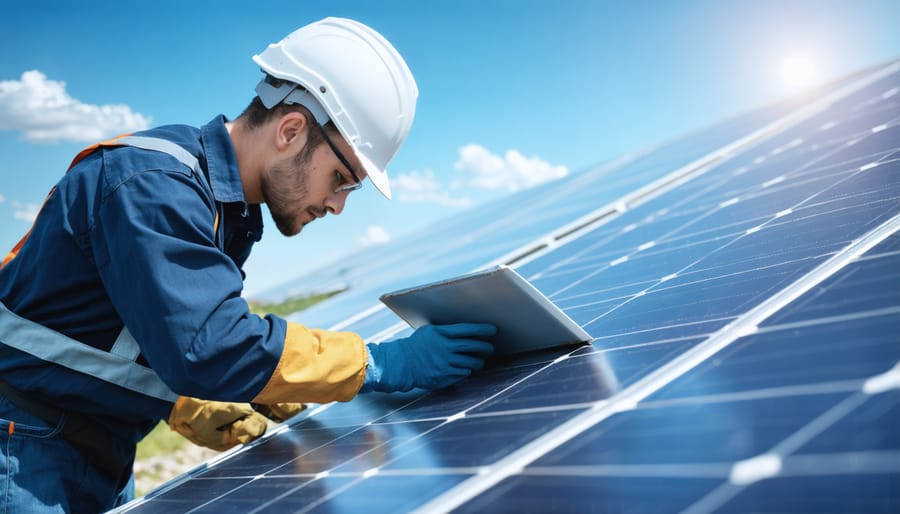
Regular maintenance is crucial for maximizing photovoltaic cell lifespan and ensuring optimal system performance. Following essential maintenance procedures can significantly reduce degradation rates and prevent unexpected system failures.
Primary maintenance tasks include regular panel cleaning to remove dust, debris, and bird droppings that can reduce efficiency. This should be performed quarterly or more frequently in dusty environments. Visual inspections should be conducted monthly to identify potential issues such as microcracks, delamination, or hot spots using infrared imaging technology.
Electrical system maintenance involves checking connection integrity, monitoring inverter performance, and ensuring proper grounding. Wiring inspections should be performed bi-annually to detect any signs of degradation or rodent damage. Maintaining accurate performance records through monitoring systems helps identify efficiency drops that may indicate maintenance needs.
Vegetation management around the installation prevents shading and maintains proper airflow for cooling. During winter months, snow removal may be necessary to prevent excessive weight loads and maintain generation capacity. Professional inspection of mounting hardware and structural components should be scheduled annually to ensure system stability and prevent water infiltration.
Implementing these protocols as part of a comprehensive maintenance plan can extend photovoltaic cell lifespan by up to 15% while maintaining optimal energy conversion efficiency throughout the system’s operational life.
Performance Monitoring
Effective monitoring of photovoltaic cell performance is crucial for maximizing system lifespan and maintaining optimal energy production. Modern monitoring systems employ sophisticated sensors and data analytics to track key performance indicators (KPIs) including voltage output, current flow, and power generation efficiency. Real-time performance monitoring enables swift detection of potential issues before they escalate into serious problems.
Essential monitoring tools include pyranometers for measuring solar irradiance, thermal imaging cameras for detecting hot spots, and I-V curve tracers for analyzing electrical characteristics. Data acquisition systems (DAS) collect and process this information, generating comprehensive performance reports and trending analyses.
Key parameters monitored include:
– Power output relative to environmental conditions
– Module temperature variations
– String current imbalances
– Inverter efficiency
– Grid interaction metrics
– Performance ratio (PR)
Advanced monitoring platforms integrate weather data and predictive analytics to establish baseline performance expectations. Deviations from these benchmarks trigger automated alerts, enabling maintenance teams to respond proactively. Regular performance assessments help identify gradual degradation patterns and optimize maintenance schedules.
Modern monitoring systems also feature remote access capabilities, allowing technicians to diagnose issues and adjust system parameters without on-site visits. This capability significantly reduces response times and maintenance costs while ensuring consistent system performance throughout the photovoltaic installation’s lifetime.
The evolution of photovoltaic cell technology has demonstrated remarkable progress in extending operational lifespans while maintaining performance efficiency. Current research indicates that modern solar panels can reliably function for 25-30 years, with some premium systems potentially lasting up to 40 years under optimal conditions and proper maintenance.
Understanding degradation factors and implementing preventive measures remains crucial for maximizing PV cell longevity. The industry has made significant strides in developing more resilient materials and manufacturing processes, resulting in annual degradation rates dropping from 0.8% in older systems to as low as 0.3% in contemporary installations.
The future outlook for PV cell lifespan appears promising, with emerging technologies focusing on enhanced durability and reduced degradation rates. Researchers are exploring advanced encapsulation materials, self-healing polymers, and more robust cell architectures that could potentially extend operational lifespans beyond 50 years. These innovations, coupled with improved maintenance protocols and monitoring systems, suggest a trajectory toward even more durable and cost-effective solar installations.
The economic implications of extended PV cell lifespans are substantial, offering improved return on investment for both residential and commercial applications. As manufacturing techniques continue to advance and new materials are developed, we can expect to see further improvements in both durability and efficiency, making solar energy an increasingly attractive long-term investment.
Moving forward, the industry’s focus on sustainability and circular economy principles is likely to drive additional innovations in PV cell design and end-of-life management. This holistic approach, combined with ongoing research and development efforts, positions photovoltaic technology as a increasingly reliable and sustainable energy solution for future generations.
The continued collaboration between research institutions, manufacturers, and industry stakeholders will be essential in pushing the boundaries of PV cell longevity while maintaining high performance standards and cost-effectiveness. As we advance, the integration of artificial intelligence and smart monitoring systems will further optimize maintenance strategies and predict potential issues before they impact system performance.