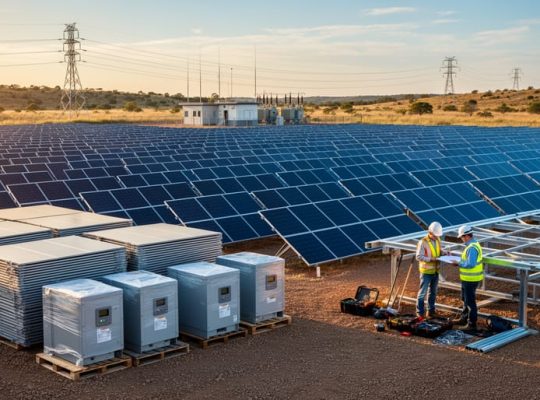
The global solar PV industry stands at a pivotal crossroads as modern supply chain management reshapes manufacturing landscapes worldwide. Offshoring has transformed traditional production models, creating intricate networks that span continents and challenge conventional operational paradigms. This evolution, driven by cost optimization and market access, has established manufacturing hubs in regions with competitive advantages while maintaining research and development centers in established markets. The resulting ecosystem balances efficiency with innovation, enabling manufacturers to leverage regional specializations while managing geopolitical risks and maintaining quality standards. Understanding these dynamics is crucial for stakeholders navigating the complex interplay between global market forces, technological advancement, and sustainable development goals in the solar energy sector.
The emergence of sophisticated supply chain architectures has created unprecedented opportunities for scaling production while introducing new challenges in coordination, quality control, and risk management. As industry leaders adapt to these shifting paradigms, the integration of advanced technologies and strategic partnerships becomes increasingly vital for maintaining competitive advantages in the global marketplace.
The Evolution of Global PV Supply Chains
Key Manufacturing Hubs
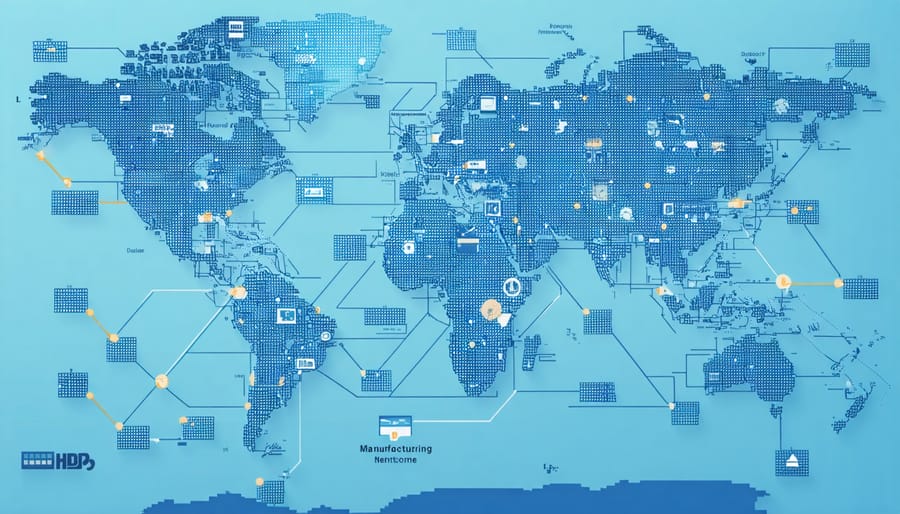
The global photovoltaic manufacturing landscape is dominated by key production hubs that have emerged through strategic specialization and economic advantages. China leads the market, accounting for over 80% of global solar panel production, with major manufacturing clusters in provinces like Jiangsu, Zhejiang, and Guangdong. These regions excel in both cell production and module assembly, leveraging advanced automation and economies of scale to maintain competitive pricing.
Following latest industry trends, Southeast Asian countries, particularly Vietnam, Malaysia, and Thailand, have become significant secondary manufacturing hubs. These nations offer cost-effective labor and strategic proximity to raw materials while maintaining quality standards that meet international requirements.
India has emerged as a promising manufacturing center, with dedicated solar manufacturing zones in states like Gujarat and Tamil Nadu. The country’s production capabilities span from solar cells to complete modules, supported by government initiatives and domestic market demand.
European manufacturing focuses on high-efficiency premium products, with Germany and Spain leading in specialized component production. These facilities emphasize automation, research collaboration, and innovative technologies, particularly in heterojunction cell manufacturing and advanced module designs.
The United States maintains strategic manufacturing capabilities in specific segments, particularly in emerging technologies like thin-film solar panels and specialized applications, with facilities concentrated in states like Ohio, Georgia, and California.
Supply Chain Dependencies
Global photovoltaic supply chains are characterized by complex interdependencies between raw materials, components, and manufacturing processes. Critical materials such as polysilicon, silver, and rare earth elements form the foundation of PV manufacturing, with their supply often concentrated in specific geographical regions. China currently dominates polysilicon production, accounting for over 80% of global capacity, creating a significant upstream dependency for manufacturers worldwide.
Component relationships in PV manufacturing follow a hierarchical structure, from wafer production to cell manufacturing and final module assembly. This vertical integration creates multiple points of potential supply disruption, as delays or shortages at any level can impact the entire production chain. The relationship between wafer manufacturers and cell producers is particularly critical, as specifications and quality requirements must align precisely for optimal performance.
Equipment and technology dependencies also play a crucial role, with specialized manufacturing tools and intellectual property often sourced from different global locations. Japanese and European equipment manufacturers supply essential production machinery, while various countries contribute different technological innovations and manufacturing processes.
Raw material availability, processing capabilities, and transportation logistics form an intricate web of dependencies that requires careful management. Supply chain resilience depends on maintaining diverse supplier relationships, developing alternative sourcing strategies, and investing in technological innovations that could reduce dependency on specific materials or components.
Economic Implications of PV Offshoring
Labor Cost Dynamics
Labor cost differentials across regions remain a primary driver in photovoltaic manufacturing location decisions. Developed nations typically experience higher labor costs, ranging from $30-50 per hour, while emerging economies offer rates between $2-10 per hour. This substantial disparity has historically motivated manufacturers to relocate production facilities to regions with lower labor expenses, particularly in Southeast Asia and parts of Latin America.
However, the relationship between labor costs and manufacturing decisions has become increasingly complex. While labor expense reduction continues to influence offshoring strategies, factors such as automation, productivity levels, and workforce expertise significantly impact the total cost equation. Advanced manufacturing facilities require skilled technicians and engineers, whose availability and cost vary significantly by region.
Recent trends indicate that labor cost advantages in traditional offshore locations are gradually diminishing due to rising wages and improved living standards. For instance, Chinese manufacturing wages have increased by approximately 12% annually over the past decade, prompting some companies to explore alternative locations or consider reshoring options.
The industry has responded by implementing hybrid approaches, maintaining high-skill operations in developed regions while leveraging cost advantages in emerging markets for labor-intensive processes. This balanced strategy allows companies to optimize their operational costs while ensuring access to necessary technical expertise and maintaining quality standards.
Scale Economics
Large-scale offshore production in the photovoltaic industry offers significant advantages through economies of scale, particularly when considering the economic benefits of solar PV manufacturing. By centralizing production in regions with lower operational costs, manufacturers can achieve substantial cost reductions across various aspects of the supply chain.
The primary advantages include reduced unit costs through bulk material procurement, optimized labor utilization, and enhanced production efficiency. Countries like China, Malaysia, and Vietnam have developed sophisticated manufacturing ecosystems that enable producers to leverage shared infrastructure, specialized workforce pools, and established supplier networks.
However, scale economics in offshore production presents notable challenges. Quality control becomes more complex with increased production volumes, requiring robust monitoring systems and standardized processes. Transportation costs can escalate with distance, potentially offsetting some cost advantages. Additionally, maintaining consistent product quality across large-scale operations demands significant investment in automation and quality assurance systems.
The effectiveness of scale economics also depends on market demand stability and proper capacity utilization. Overcapacity can lead to pricing pressures and reduced margins, while underutilization may result in inefficient resource allocation. Successful implementation requires careful balance between production capacity, market demand, and operational efficiency.
Modern offshore facilities must also consider environmental impacts and sustainability requirements, as these factors increasingly influence both regulatory compliance and market acceptance. This necessitates additional investments in clean energy infrastructure and waste management systems, impacting the overall cost structure of large-scale operations.
Transportation and Logistics
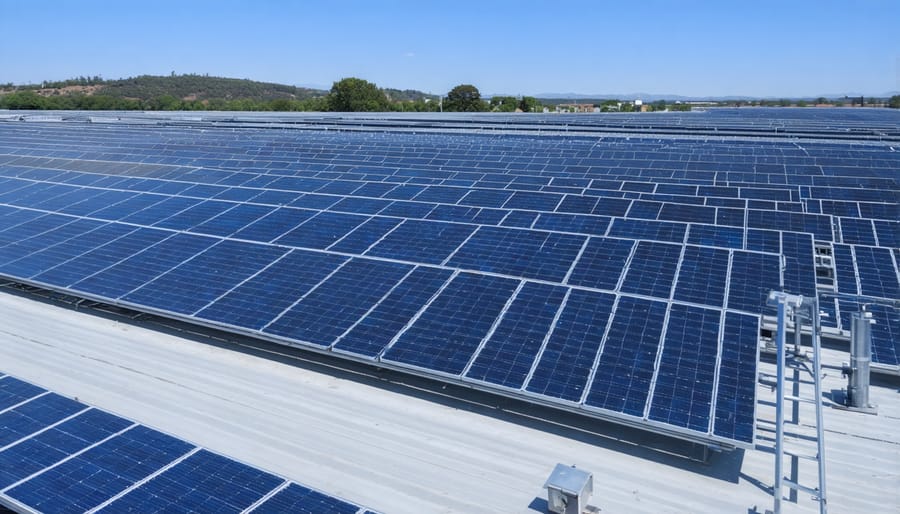
Transportation and logistics management plays a crucial role in global photovoltaic supply chains, significantly impacting both costs and delivery efficiency. Maritime shipping remains the primary mode of transport for bulk PV components, accounting for approximately 80% of international material movement. This includes raw silicon, solar cells, and finished modules traveling between major manufacturing hubs in Asia and end markets worldwide.
Cost optimization in PV logistics requires careful consideration of multiple factors, including container utilization, route planning, and multimodal transport integration. Companies typically employ advanced logistics management systems to track shipments, optimize container loading patterns, and reduce transportation costs, which can represent 5-10% of the total product cost.
Strategic positioning of distribution centers near major ports and rail networks helps minimize last-mile delivery expenses and reduces carbon emissions. Many manufacturers are adopting just-in-time delivery systems, carefully balanced with safety stock requirements to maintain production efficiency while managing inventory costs.
Risk mitigation strategies include diversifying shipping routes, maintaining relationships with multiple logistics providers, and implementing real-time tracking systems. Insurance coverage for international shipments has become increasingly important, particularly given recent supply chain disruptions and rising freight costs.
The trend toward nearshoring is gradually influencing transportation patterns, with some manufacturers establishing regional logistics hubs closer to end markets, potentially reducing both shipping costs and delivery times while improving supply chain resilience.
Risk Management in Global PV Supply Chains
Geopolitical Considerations
The global photovoltaic supply chain operates within a complex web of international relations and trade policies that significantly impact manufacturing decisions and market dynamics. Recent geopolitical tensions have highlighted vulnerabilities in concentrated manufacturing locations, particularly with China’s dominance in key components and raw materials processing.
Trade policies, including tariffs and local content requirements, have emerged as crucial factors influencing supply chain configurations. Many countries have implemented protective measures to support domestic manufacturing, while simultaneously seeking to reduce dependence on single-source suppliers. These policies have led to the redistribution of manufacturing capabilities across multiple regions, including Southeast Asia, India, and North America.
National security considerations have also become increasingly prominent, with governments viewing solar manufacturing capability as strategically important for energy independence. This has resulted in targeted incentives and support programs for domestic production, although these must be balanced against economic efficiency and cost considerations.
The COVID-19 pandemic further emphasized the importance of supply chain resilience, leading to accelerated diversification efforts and renewed focus on regional manufacturing hubs. Companies are now implementing sophisticated risk assessment frameworks that consider political stability, regulatory environments, and diplomatic relations when making offshoring decisions.
Looking forward, successful supply chain strategies will require careful navigation of evolving trade relationships, compliance with varying regulatory frameworks, and adaptation to changing geopolitical dynamics.
Supply Chain Resilience
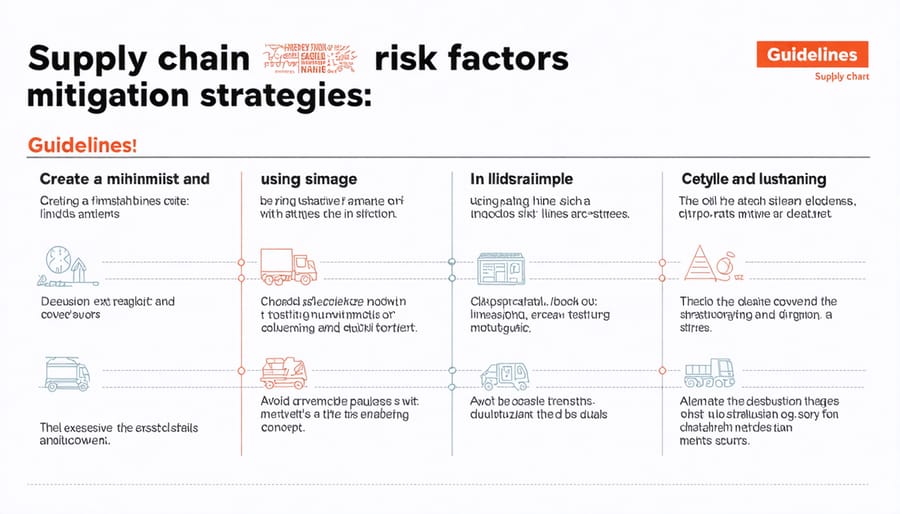
Supply chain resilience in global photovoltaic manufacturing requires a multi-faceted approach that combines strategic planning, risk mitigation, and adaptive management practices. Organizations must develop robust supplier networks across multiple geographical regions to prevent disruptions from localized events or geopolitical tensions.
Key strategies include implementing dual-sourcing policies for critical components, maintaining strategic inventory buffers, and developing strong relationships with multiple suppliers across different regions. Companies are increasingly investing in digital supply chain management systems that provide real-time visibility and predictive analytics to anticipate and respond to potential disruptions.
Regular supplier audits and performance monitoring help ensure quality consistency and compliance with international standards. Organizations should also establish clear communication channels and contingency plans with suppliers, logistics partners, and other stakeholders to enable quick response during crisis situations.
Geographic diversification of manufacturing facilities and suppliers helps reduce dependency on single regions while enabling faster response to local market demands. Companies are also investing in vertical integration strategies, bringing critical component production in-house when feasible.
Risk assessment and mitigation planning should include considerations for natural disasters, political instability, trade restrictions, and transportation disruptions. Insurance coverage, contractual protections, and financial hedging instruments can provide additional layers of security against supply chain risks.
Building resilience requires continuous improvement and adaptation to changing market conditions, technological advances, and emerging risks in the global PV manufacturing landscape.
Quality Control Measures
Quality control in global photovoltaic manufacturing requires a comprehensive system of standards, testing protocols, and monitoring mechanisms across all production facilities. Leading manufacturers implement standardized operating procedures (SOPs) that ensure consistency in product quality regardless of manufacturing location. These procedures typically include regular equipment calibration, material testing, and product inspection at multiple stages of production.
International certification standards, such as ISO 9001 and IEC 61215 for photovoltaic modules, serve as foundational benchmarks for quality management systems. Companies often establish central quality control teams that conduct periodic audits of offshore facilities and provide training to local quality assurance personnel. Advanced monitoring systems, including real-time data collection and analysis, enable headquarters to maintain oversight of production quality across global locations.
Statistical process control (SPC) methods are employed to track manufacturing variations and identify potential issues before they affect product quality. This includes monitoring key performance indicators (KPIs) such as defect rates, yield percentages, and equipment efficiency. Regular supplier audits ensure that raw materials meet specified quality requirements across all manufacturing locations.
Many organizations also implement digital quality management systems that enable real-time sharing of quality data, standardized documentation, and rapid response to quality issues. These systems facilitate communication between global teams and ensure consistent application of quality standards across the supply chain. Regular training programs and knowledge transfer sessions help maintain uniform quality control practices across different cultural and geographical contexts.
Future Trends and Industry Outlook
Technology Integration
Technology integration has revolutionized global supply chain management in the photovoltaic manufacturing sector, fundamentally transforming how companies coordinate their offshore operations. Advanced Enterprise Resource Planning (ERP) systems now enable real-time tracking of components, materials, and finished products across multiple continents, significantly improving inventory management and production scheduling.
Cloud-based collaboration platforms facilitate seamless communication between manufacturing facilities, research centers, and corporate headquarters, enabling rapid decision-making and problem-solving. Internet of Things (IoT) sensors deployed throughout the supply chain provide valuable data on equipment performance, environmental conditions, and quality control metrics, contributing to predictive maintenance and reduced downtime.
Artificial Intelligence and Machine Learning algorithms analyze vast amounts of supply chain data to optimize routing, predict demand patterns, and identify potential disruptions before they impact production. These technological advances have become particularly crucial as solar industry growth projections indicate increasing demand for efficient manufacturing and distribution systems.
Digital twins of manufacturing facilities allow engineers to simulate process improvements and troubleshoot issues remotely, reducing the need for international travel and accelerating problem resolution. Blockchain technology is increasingly being implemented to ensure transparency and traceability in the supply chain, particularly important for maintaining quality standards and meeting regulatory requirements across different jurisdictions.
Sustainability Considerations
Global supply chains in the photovoltaic industry face increasing scrutiny regarding their environmental impact, particularly as demand grows for commercial solar applications worldwide. The carbon footprint associated with long-distance transportation, manufacturing processes, and raw material extraction presents significant environmental challenges that require careful consideration.
Manufacturing facilities in offshore locations often operate under varying environmental standards, potentially leading to increased emissions and resource consumption. The industry must balance cost advantages with environmental responsibility through implementing sustainable practices across the supply chain. This includes adopting cleaner production methods, optimizing logistics routes, and utilizing renewable energy in manufacturing processes.
Key sustainability initiatives focus on reducing packaging waste, implementing circular economy principles, and developing more efficient transportation networks. Companies are increasingly investing in environmental management systems and pursuing certifications that demonstrate their commitment to sustainability. The industry is also exploring innovative solutions such as solar-powered manufacturing facilities and water recycling systems.
To minimize environmental impact, organizations are adopting strategies such as:
– Local sourcing of materials where possible
– Investment in energy-efficient equipment
– Implementation of waste reduction programs
– Development of recyclable packaging solutions
– Optimization of shipping routes and transportation methods
These considerations are becoming increasingly important as environmental regulations tighten globally and stakeholders demand greater transparency in supply chain sustainability practices.
The global photovoltaic supply chain with offshoring has evolved into a complex, interconnected network that continues to shape the future of solar energy manufacturing and distribution. As demonstrated throughout this analysis, the strategic advantages of offshoring – including cost optimization, access to specialized manufacturing capabilities, and market proximity – have fundamentally transformed how PV components are produced and distributed worldwide.
However, recent global events and increasing environmental consciousness have highlighted the importance of building resilient and sustainable supply chains. The industry’s heavy reliance on specific geographic regions for critical components and raw materials presents both opportunities and challenges that require careful consideration.
Looking ahead, several key trends will likely influence the future of PV supply chains. The push for supply chain diversification, driven by geopolitical tensions and risk mitigation strategies, will encourage the development of manufacturing capabilities in new regions. Additionally, technological advancements in automation and Industry 4.0 may reshape the traditional cost advantages of offshore manufacturing.
Sustainability considerations will play an increasingly important role, with manufacturers facing pressure to reduce carbon footprints across their supply chains. This may lead to the emergence of more localized production networks and circular economy initiatives within the PV industry.
For industry stakeholders, success will depend on their ability to balance cost efficiencies with risk management, while adapting to evolving environmental regulations and market demands. Investment in supply chain digitalization, workforce development, and sustainable practices will become crucial for maintaining competitive advantage in the global PV market.
As the industry continues to mature, collaboration between manufacturers, research institutions, and policymakers will be essential for addressing supply chain challenges and ensuring the sustainable growth of the global PV sector.