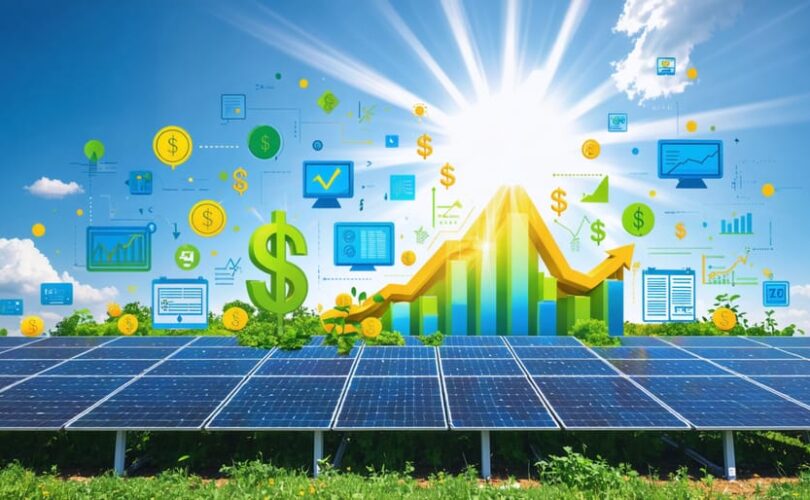
Unlock the full potential of solar energy investments through sophisticated solar power financial models and strategic funding mechanisms. The global transition to renewable energy has created unprecedented opportunities for investors, developers, and organizations to capitalize on solar project financing. With investment tax credits, power purchase agreements, and innovative green bonds driving industry growth, understanding the diverse financing landscape has become crucial for project success.
Recent technological advancements and declining equipment costs have transformed solar installations from speculative ventures into reliable, bankable investments. Financial institutions now recognize solar projects as stable, long-term assets, offering competitive lending terms and specialized financial products. This evolution has opened doors for both utility-scale developments and distributed generation initiatives, supported by robust policy frameworks and increasing market demand.
The convergence of environmental imperatives and economic advantages has positioned solar financing at the forefront of sustainable infrastructure development. Whether through traditional debt financing, equity partnerships, or emerging crowd-funding platforms, the solar sector continues to demonstrate remarkable resilience and growth potential. Understanding these financing mechanisms, along with their associated risks and returns, is essential for stakeholders seeking to navigate the dynamic renewable energy landscape successfully.
Traditional Solar Financing Models
Solar Loans and Leases
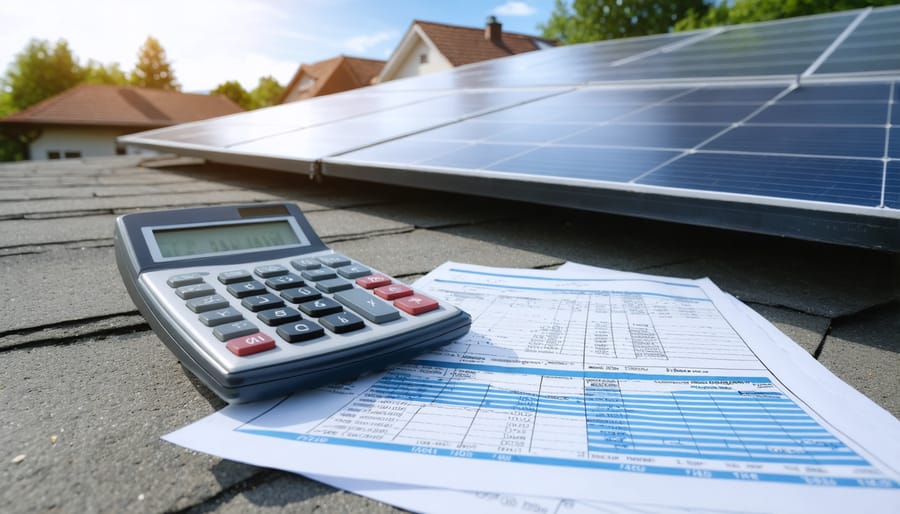
Solar loans and leases represent two primary traditional financing mechanisms for photovoltaic installations. Solar loans function similarly to conventional home improvement loans, allowing property owners to maintain system ownership while spreading costs over time. These loans typically feature fixed interest rates ranging from 3% to 8%, with terms extending from 5 to 20 years, enabling property owners to make informed solar investment decisions based on their financial circumstances.
Solar leases, alternatively, involve third-party ownership structures where investors maintain system ownership while property owners pay fixed monthly payments. This arrangement typically includes maintenance and performance guarantees, making it attractive for those seeking reduced upfront costs and operational responsibilities. Lease terms generally span 20-25 years, with annual escalator clauses ranging from 1-3%.
Both financing methods offer distinct advantages and considerations. Loans provide tax incentives, increase property value, and typically result in higher long-term savings. Leases eliminate maintenance concerns and offer immediate utility bill reduction without significant initial investment. However, they may limit property owners’ ability to claim certain incentives.
Recent innovations in these traditional financing mechanisms include hybrid models combining loan and lease characteristics, performance-based payment structures, and specialized programs for commercial and industrial applications. Financial institutions increasingly offer solar-specific products with competitive terms, reflecting the maturing market and reduced risk perception in the solar sector.
Power Purchase Agreements (PPAs)
Power Purchase Agreements represent a widely adopted financing mechanism that enables organizations to benefit from solar energy without significant upfront capital investment. Under a PPA structure, a developer finances, installs, and maintains the solar system on the customer’s property, while the customer agrees to purchase the generated electricity at a predetermined rate over a specified period, typically 15-25 years.
These agreements offer multiple advantages for both parties involved. The customer receives stable, often lower electricity rates without bearing installation or maintenance responsibilities. Meanwhile, the developer secures a long-term revenue stream and can leverage tax incentives and renewable energy credits.
PPAs commonly include performance guarantees, ensuring the system generates the agreed-upon energy output. The rate structure may be fixed, with predetermined annual escalators, or floating, tied to market electricity prices. Some agreements include purchase options, allowing customers to acquire the system after a specified period.
Key considerations in PPA negotiations include minimum production guarantees, rate escalators, term length, and end-of-term options. Organizations should carefully evaluate their long-term energy needs, financial objectives, and facility requirements before entering into these agreements. Additionally, regulatory requirements and utility policies in different jurisdictions can significantly impact PPA viability and structure.
Understanding local regulations, conducting thorough financial analysis, and engaging experienced legal counsel are essential steps in successful PPA implementation.
Innovative Financing Solutions
Green Bonds and Solar Securities
Green bonds and solar securities represent innovative financial instruments that are transforming the landscape of solar project funding. These investment vehicles allow organizations to tap into the growing market of environmentally conscious investors while securing stable, long-term financing for renewable energy initiatives. The green bond market has experienced remarkable growth, with global issuance exceeding $500 billion in recent years, demonstrating strong investor appetite for sustainable energy projects.
Solar asset-backed securities (ABS) have emerged as particularly attractive instruments, offering investors exposure to diversified portfolios of solar installations with predictable cash flows. These securities are typically backed by revenue streams from power purchase agreements (PPAs) and lease payments, providing real ROI data that investors can analyze.
The standardization of solar securities has improved market liquidity and reduced transaction costs, making them increasingly accessible to institutional investors. Investment-grade ratings from major credit agencies have further enhanced their appeal, while sophisticated risk assessment models help investors evaluate potential returns against market variables.
For project developers, these instruments offer several advantages, including lower cost of capital, longer repayment terms, and the ability to monetize future cash flows. The growing acceptance of green bonds and solar securities has also led to improved documentation standards and reporting frameworks, benefiting both issuers and investors through increased transparency and market efficiency.
Crowdfunding and Community Solar
Crowdfunding and community solar initiatives represent innovative approaches to modern PV project financing, enabling broader participation in renewable energy investments. These collective funding mechanisms allow multiple stakeholders to pool resources and share both the costs and benefits of solar installations.
Community solar programs typically operate through two primary models: ownership-based and subscription-based systems. In ownership-based models, participants purchase solar panels or shares in the installation, receiving direct benefits through energy credits or revenue sharing. Subscription models allow participants to buy power from the shared facility, often at reduced rates compared to conventional utility costs.
Digital platforms have revolutionized solar crowdfunding by connecting investors with project developers. These platforms offer varying investment minimums and return structures, making solar investment accessible to a broader demographic. Successful implementations often feature transparent governance structures, clear performance metrics, and established maintenance protocols.
Key advantages of collective funding approaches include reduced individual financial burden, economies of scale in procurement and installation, and enhanced project feasibility through distributed risk. However, participants should carefully evaluate project parameters, including regulatory compliance, insurance coverage, and long-term maintenance agreements.
For optimal outcomes, community solar initiatives typically require detailed legal frameworks, professional project management, and robust communication systems between stakeholders. These elements ensure equitable distribution of benefits and sustainable operation throughout the project lifecycle.
Blockchain-Based Solar Finance
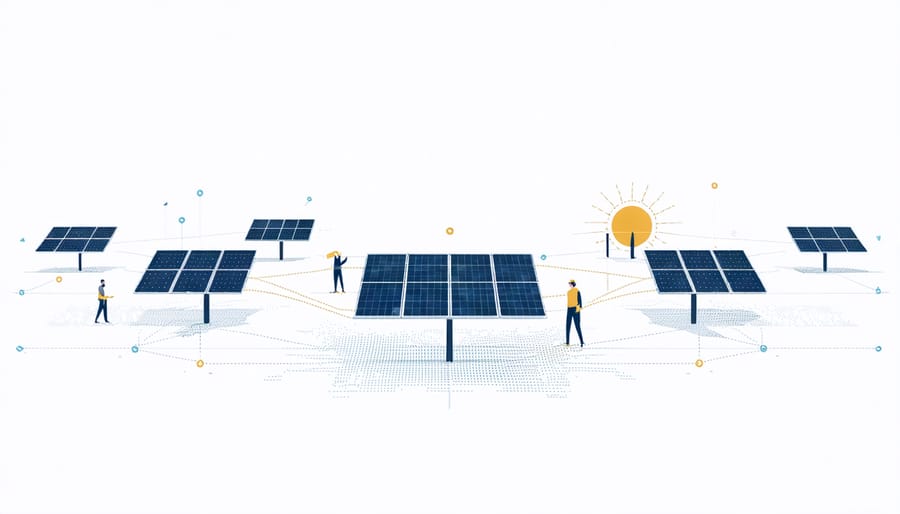
Blockchain technology is revolutionizing solar project financing by introducing transparent, secure, and efficient funding mechanisms. Through smart contracts and distributed ledger systems, blockchain platforms enable direct peer-to-peer investments in solar installations, reducing intermediary costs and streamlining the financing process.
Solar developers can tokenize their projects, allowing investors to purchase fractional ownership through security tokens. This democratizes solar investment opportunities and enables smaller investors to participate in previously inaccessible large-scale projects. The immutable nature of blockchain records ensures transparent tracking of energy production, consumption, and financial returns.
Several innovative platforms have emerged, combining blockchain with solar financing. These systems facilitate automated payment distribution, real-time monitoring of energy generation, and seamless trading of renewable energy certificates. Smart contracts automatically execute predetermined agreements, reducing administrative overhead and ensuring timely disbursement of returns to investors.
Cryptocurrency-based crowdfunding for solar projects has gained traction, offering global accessibility and reduced transaction costs. These platforms typically integrate with established digital wallets and exchanges, providing liquidity options for investors while maintaining regulatory compliance.
However, stakeholders should consider regulatory requirements, technological infrastructure needs, and market volatility when implementing blockchain-based solar financing solutions. The technology’s adoption continues to evolve as regulatory frameworks mature and industry standards develop, making it an increasingly viable option for modern solar project funding.
Government Incentives and Policy Support
Federal Tax Credits and Grants
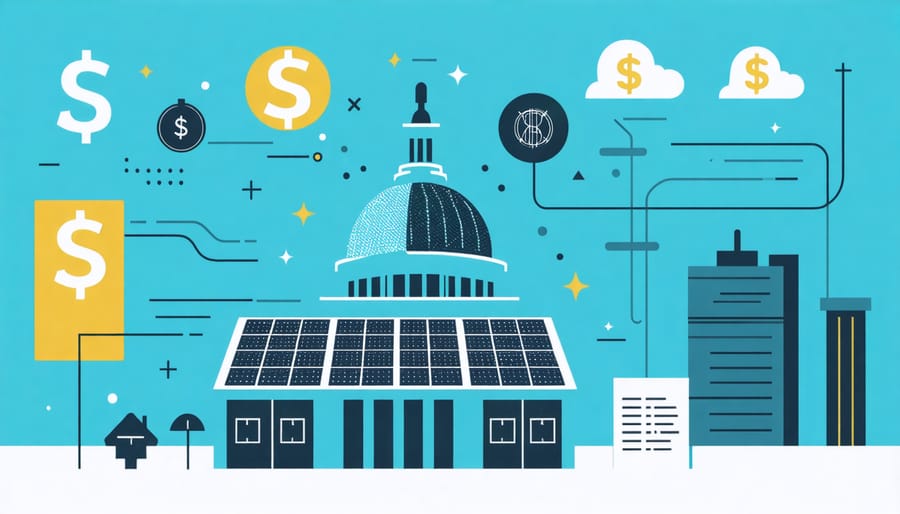
The federal government offers substantial financial incentives to encourage solar project development through tax credits and grant programs. The Investment Tax Credit (ITC) remains the cornerstone of federal solar incentives, allowing project developers to claim up to 30% of the total system costs as a tax credit. This credit applies to both residential and commercial installations, with step-down provisions scheduled for future years.
The Modified Accelerated Cost Recovery System (MACRS) enables businesses to depreciate solar equipment over a five-year period, significantly improving project economics through accelerated tax benefits. Additionally, bonus depreciation provisions may allow for 100% first-year depreciation on qualifying solar equipment installations.
The Department of Energy’s Loan Programs Office provides various grant opportunities and loan guarantees for utility-scale solar projects. The Rural Energy for America Program (REAP) specifically supports agricultural producers and rural small businesses with grants covering up to 25% of project costs and loan guarantees for up to 75% of eligible project costs.
Recent legislative developments have introduced new funding mechanisms, including the Energy Storage Tax Incentive and Deployment Act, which extends ITC benefits to energy storage systems. The federal government also offers specific grants for research and development initiatives through the Solar Energy Technologies Office (SETO), supporting technological advancement and cost reduction in solar deployment.
To maximize these incentives, project developers should maintain detailed documentation of all eligible expenses and consult with tax professionals familiar with renewable energy incentives. Many of these programs have specific application windows and requirements that must be carefully monitored to ensure successful qualification.
State and Local Programs
State and local governments across the United States offer diverse funding mechanisms and incentives for solar project development, often complementing federal programs while addressing specific regional needs and priorities. These programs typically include tax incentives, grants, rebates, and specialized loan products designed to accelerate solar adoption within their jurisdictions.
Property Assessed Clean Energy (PACE) financing represents one of the most innovative local funding mechanisms, allowing property owners to finance solar installations through property tax assessments. This arrangement enables long-term financing while potentially transferring the obligation to subsequent property owners.
Many states maintain dedicated renewable energy funds, sourced from utility bill surcharges or other revenue streams, to support solar projects. These funds often provide matching grants, low-interest loans, or performance-based incentives that can significantly reduce initial investment costs.
Municipal governments frequently partner with local financial institutions to create green banking initiatives, offering preferential lending terms for solar installations. Some jurisdictions have established community solar programs, enabling residents to participate in shared solar projects even when individual rooftop installations aren’t feasible.
Solar renewable energy certificate (SREC) markets, operated at the state level, provide additional revenue streams for project owners. States with renewable portfolio standards often maintain robust SREC markets, though values can vary significantly by jurisdiction.
Regional utilities may offer performance-based incentives, upfront rebates, or specialized rate structures for solar installations. These utility programs, typically regulated by state public utility commissions, can substantially improve project economics and accelerate payback periods.
Before initiating a solar project, developers should thoroughly research available state and local programs, as incentives can significantly impact financial viability and may be time-sensitive or subject to funding caps.
Risk Management Strategies
Insurance Solutions
Insurance solutions play a crucial role in protecting solar project investments and mitigating various risks throughout the project lifecycle. Property and casualty insurance provides coverage for physical damage to solar equipment from natural disasters, theft, or accidents. Performance warranty insurance ensures protection against underperformance of solar panels and equipment, particularly important when manufacturer warranties expire or companies cease operations.
Business interruption insurance compensates for revenue losses during system downtime, while construction all-risk insurance covers potential damages during the installation phase. Professional liability insurance protects against claims arising from design errors or professional negligence in system implementation.
Environmental insurance addresses potential environmental impacts and cleanup costs, while commercial general liability insurance covers third-party claims for property damage or bodily injury. For larger utility-scale projects, specialized solar project insurance packages combine multiple coverage types, offering comprehensive protection at optimized premium rates.
Political risk insurance becomes essential for international solar projects, protecting against government actions, currency inconvertibility, or political violence. Weather-related production insurance helps manage revenue fluctuations caused by unexpected weather patterns affecting solar generation.
Insurance costs typically range from 0.25% to 1% of total project value annually, varying based on location, system size, and risk factors. When structuring insurance coverage, project developers should conduct thorough risk assessments and work with insurers experienced in renewable energy projects. Many insurance providers now offer data-driven pricing models using advanced monitoring systems and performance analytics to optimize coverage and premiums.

Performance Guarantees
Performance guarantees play a crucial role in solar project financing by providing investors and lenders with confidence in the system’s long-term viability. These guarantees typically comprise two main components: equipment warranties and production guarantees.
Equipment warranties, particularly for solar panels and inverters, typically range from 10 to 25 years. Tier-1 manufacturers commonly offer 25-year performance warranties that guarantee panel output will not decrease beyond a specified percentage annually, usually maintaining at least 80% of initial capacity by year 25.
Production guarantees, often provided by Engineering, Procurement, and Construction (EPC) contractors, ensure the system generates a minimum amount of electricity under specified conditions. These guarantees typically include detailed performance metrics, such as the Performance Ratio (PR) and specific yield calculations, which are essential for financial modeling and risk assessment.
Modern monitoring systems enable real-time performance tracking and verification of these guarantees. If production falls below guaranteed levels, compensation mechanisms activate, protecting the project owner’s revenue stream. These mechanisms may include direct monetary compensation or additional equipment installation to meet energy production targets.
Insurance products have evolved to back these guarantees, offering additional security for stakeholders. Performance insurance policies can cover revenue losses from underperforming systems, weather-related impacts, and equipment failures beyond standard warranty coverage.
For optimal protection, project developers should ensure guarantee documentation includes clear performance metrics, measurement methodologies, and remediation procedures. Regular system maintenance and performance verification should align with guarantee requirements to maintain validity and ensure long-term project success.
The landscape of solar project financing continues to evolve, driven by technological advancements and latest solar market trends. Traditional financing methods like power purchase agreements (PPAs) and solar leases remain foundational, while innovative solutions such as green bonds and crowdfunding platforms are gaining traction. The increasing participation of institutional investors and the emergence of specialized solar financing companies have significantly expanded access to capital for projects of all sizes.
Looking ahead, the solar financing sector shows promising growth potential, supported by declining technology costs and supportive policy frameworks. The integration of energy storage solutions and smart grid technologies is creating new opportunities for hybrid financing models. Environmental, Social, and Governance (ESG) considerations are becoming increasingly important in investment decisions, driving greater capital allocation toward solar projects.
Success in solar project financing relies on careful consideration of multiple factors: thorough due diligence, robust risk assessment, and strategic partnership selection. Project developers must stay informed about evolving financing mechanisms, regulatory changes, and market dynamics to optimize their funding strategies. The trend toward standardization of documentation and evaluation processes is expected to streamline future transactions and reduce soft costs.
As the industry matures, we can expect to see more sophisticated financial instruments and creative funding solutions emerge. The continued commitment to renewable energy targets globally, combined with technological innovations and declining costs, positions solar project financing for sustained growth and evolution in the coming years.