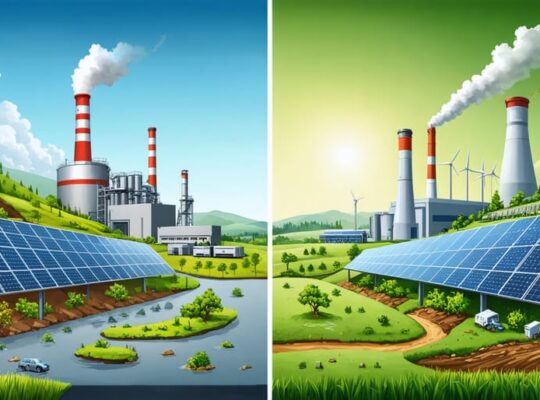
A 5-megawatt solar farm represents a significant milestone in utility-scale renewable energy deployment, capable of powering approximately 1,000 homes while offsetting 5,000 metric tons of carbon dioxide annually. Modern photovoltaic installations of this scale incorporate advanced tracking systems, high-efficiency panels, and sophisticated power management infrastructure to maximize energy yield across diverse geographical locations. As the renewable energy sector evolves, these medium-scale installations serve as crucial proving grounds for next-generation solar technologies, including bifacial modules and smart grid integration capabilities.
The economic viability of 5MW installations has improved dramatically, with project costs declining by over 70% in the past decade while achieving power generation efficiencies exceeding 20%. These facilities typically require 20-25 acres of land and demonstrate how utility-scale solar can balance environmental impact with energy production demands. By incorporating advanced monitoring systems and predictive maintenance protocols, modern 5MW solar farms achieve capacity factors approaching 30% in optimal conditions, setting new benchmarks for renewable energy infrastructure.
Through strategic deployment and innovative design approaches, these installations are reshaping our energy landscape while providing valuable insights for the next generation of solar power facilities.
Advanced PV Materials Revolutionizing Solar Farms
Mono PERC Technology Integration
Mono PERC technology represents a significant advancement in utility-scale solar installations, delivering enhanced power output and improved efficiency for 5-megawatt solar farms. The integration of Passivated Emitter and Rear Cell (PERC) architecture with monocrystalline silicon creates a sophisticated dual-advantage system that captures more sunlight while reducing electron recombination losses.
In 5MW installations, PERC cells incorporate an additional dielectric passivation layer on the rear side, coupled with local contact points that significantly reduce surface recombination. This configuration allows for the capture of light that passes through the cell initially, reflecting it back for a second absorption opportunity. The result is a marked improvement in energy yield, with typical efficiency gains of 0.5% to 1% compared to standard monocrystalline panels.
Performance data from operational 5MW solar farms demonstrates that PERC modules consistently achieve higher energy yields, particularly in high-temperature conditions and low-light situations. The technology’s superior temperature coefficient ensures better performance during peak summer months, while the enhanced low-light response improves generation during early morning and late afternoon hours.
Cost-benefit analyses indicate that despite a marginally higher initial investment, the increased energy generation and improved degradation resistance of PERC modules typically result in a more favorable levelized cost of electricity (LCOE) over the project lifetime.

Emerging Thin-Film Solutions
Recent advancements in emerging solar technologies have revolutionized thin-film photovoltaic solutions for large-scale solar installations. These innovations are particularly relevant for 5-megawatt solar farms, where efficiency and cost-effectiveness are paramount.
Copper Indium Gallium Selenide (CIGS) and Cadmium Telluride (CdTe) thin-film technologies have demonstrated remarkable improvements in conversion efficiency, now reaching up to 23.4% in laboratory conditions. When implemented across a 5MW installation, these advanced materials can reduce the total surface area required by up to 20% compared to traditional crystalline silicon panels.
Perovskite-based thin films represent another promising development, offering potential cost reductions of 30-40% in manufacturing while maintaining competitive efficiency rates. These materials exhibit excellent performance in varying light conditions, making them particularly suitable for regions with inconsistent solar exposure.
Multi-junction thin-film architectures are being deployed in pilot programs across several 5MW installations, showing enhanced energy capture through broader spectrum utilization. These systems integrate multiple thin-film layers, each optimized for different wavelengths of light, resulting in cumulative efficiency gains of 15-20% over single-junction alternatives.
The implementation of these advanced thin-film solutions requires specialized mounting systems and careful consideration of environmental factors, but the benefits in terms of reduced material usage, lower installation costs, and improved energy yield make them increasingly attractive for utility-scale deployments.
Performance Metrics and Efficiency Gains
Energy Yield Optimization
Energy yield optimization in a 5-megawatt solar farm requires a sophisticated understanding of PV module fundamentals combined with advanced monitoring and control systems. Modern solar farms employ multi-faceted optimization strategies to maximize energy production throughout the system’s operational lifetime.
Key optimization techniques include intelligent tracking systems that adjust panel angles to follow the sun’s trajectory, achieving up to 25% higher energy yield compared to fixed-tilt installations. Advanced inverter technologies with maximum power point tracking (MPPT) algorithms ensure optimal voltage and current relationships, maintaining peak performance across varying environmental conditions.
String-level monitoring systems provide real-time performance data, enabling swift identification and resolution of underperforming modules. Sophisticated weather monitoring stations integrate with farm management systems to predict energy yield and adjust operating parameters proactively. These systems typically achieve performance ratios exceeding 80%, significantly higher than earlier generation installations.
Thermal management plays a crucial role in optimization, with advanced cooling systems maintaining optimal operating temperatures. Every degree Celsius above optimal temperature typically results in a 0.5% efficiency loss, making temperature control essential for maximum yield.
Regular cleaning protocols, utilizing automated cleaning systems and hydrophobic coating technologies, prevent soiling losses that can reduce efficiency by up to 15%. Advanced diagnostic tools detect micro-cracks and potential induced degradation (PID) early, enabling preventive maintenance to maintain peak performance.
These optimization strategies, when properly implemented, can increase annual energy production by 15-20% compared to non-optimized systems, significantly improving the farm’s financial returns and environmental impact.
Cost-Benefit Analysis
The implementation of next-generation materials in a 5-megawatt solar farm requires careful economic analysis to justify the initial investment against long-term benefits. Advanced photovoltaic materials, while offering superior efficiency and durability, typically command premium prices ranging from 15% to 30% higher than conventional silicon panels.
Initial cost modeling indicates that a 5MW installation using next-generation materials requires approximately $6.5-7.5 million in capital expenditure, compared to $5-6 million for traditional panels. However, these advanced materials demonstrate a 20-25% higher energy yield per square meter, potentially generating an additional 1,500-1,800 MWh annually.
The enhanced durability of next-generation materials extends the system lifetime to 30+ years, compared to 25 years for conventional panels, while maintaining higher efficiency throughout the operational period. Performance degradation rates are typically 0.3% annually, versus 0.5-0.7% for traditional panels, resulting in better long-term energy production.
Financial projections show that the increased energy yield and extended lifespan can offset the higher initial costs within 7-9 years, depending on local electricity rates and incentive programs. Operations and maintenance costs are reduced by approximately 15% due to better material resilience and self-cleaning properties.
When factoring in current market electricity prices and renewable energy credits, the levelized cost of electricity (LCOE) for next-generation materials averages $0.05-0.06 per kWh, competitive with conventional installations while offering superior performance characteristics. Additional benefits include reduced land requirements due to higher efficiency and potential insurance premium reductions from improved durability ratings.
Installation and Integration Considerations
System Design Optimization
The optimization of a 5-megawatt solar farm requires careful consideration of several key design elements to maximize energy yield and system efficiency. Modern solar farm designs incorporate advanced bifacial panels arranged in east-west configurations, which can increase energy production by up to 5-15% compared to traditional layouts. These configurations optimize ground albedo effects and reduce inter-row shading losses.
Inverter selection and placement play crucial roles in system performance. String inverters distributed throughout the installation offer enhanced monitoring capabilities and reduced DC power losses compared to central inverter solutions. Smart combiner boxes with built-in monitoring capabilities enable rapid fault detection and simplified maintenance procedures.
Cable routing optimization reduces electrical losses while maintaining accessibility for maintenance. Underground cable conduits, while initially more expensive, provide superior protection against environmental factors and reduce long-term maintenance costs. The implementation of smart junction boxes enables remote monitoring and switching capabilities at the string level.
Modern tracking systems utilize artificial intelligence algorithms to optimize tilt angles based on weather conditions and solar position. These systems can increase energy yield by 20-30% compared to fixed-tilt installations. Additionally, advanced weather monitoring stations integrated with the control system help protect the installation during adverse conditions.
Thermal management solutions, including active cooling systems for inverters and transformers, ensure optimal operation in high-temperature conditions. The integration of energy storage systems should be considered during the initial design phase to facilitate future capacity expansion and grid stability improvements.
Maintenance Requirements
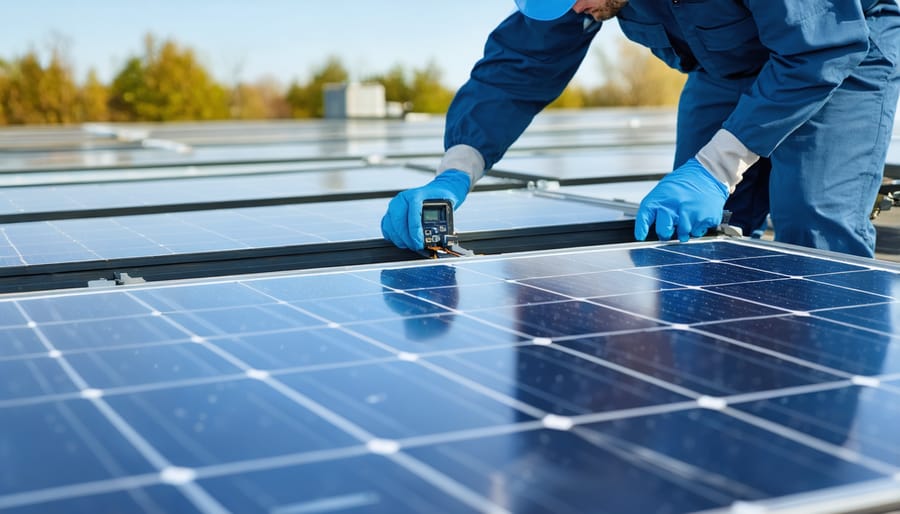
Regular maintenance is crucial for ensuring optimal performance and longevity of a 5-megawatt solar farm utilizing advanced photovoltaic materials. The maintenance schedule typically includes monthly visual inspections of PV modules for physical damage, delamination, or discoloration. Thermal imaging surveys should be conducted quarterly to identify potential hot spots or performance degradations in the advanced semiconductor materials.
Panel cleaning requirements vary based on local environmental conditions, but generally, specialized cleaning protocols must be followed to protect sensitive surface coatings and anti-reflective treatments. Advanced PV materials often feature self-cleaning properties, yet periodic cleaning using deionized water and non-abrasive methods remains essential, particularly in dusty or high-pollution areas.
Electrical maintenance involves quarterly testing of inverters, transformers, and monitoring systems. Advanced monitoring equipment continuously tracks performance metrics, allowing for predictive maintenance and early detection of efficiency losses. Connection points and wiring require annual thermal scanning and torque verification to prevent electrical losses.
Vegetation management must be carefully controlled to prevent shading and maintain proper airflow around the modules. The site’s drainage system needs regular inspection to prevent water accumulation that could affect ground-mounted infrastructure.
Documentation of all maintenance activities, including performance data analysis and material degradation rates, is essential for warranty compliance and optimization of maintenance schedules. Most advanced PV installations require specialized training for maintenance personnel to handle the sophisticated materials and equipment properly.
Future Outlook and Industry Impact
The landscape of utility-scale solar installations is poised for significant transformation as the future of solar technology continues to evolve. Advanced materials like perovskite-silicon tandem cells are showing promise in laboratory settings, with theoretical efficiency ratings exceeding 30% compared to traditional silicon modules’ 20-22%. These improvements could enable 5MW installations to generate substantially more power within the same footprint.
Bifacial modules incorporating transparent backsheets are becoming increasingly prevalent, offering 5-15% additional energy yield through reflected light capture. This technology, combined with advanced tracking systems, could boost overall plant performance without requiring additional land use. Additionally, heterojunction technology (HJT) cells are emerging as strong contenders for utility-scale deployment, offering superior temperature coefficients and enhanced low-light performance.
The integration of smart materials, such as self-cleaning coatings and advanced encapsulants, is expected to extend panel lifespans beyond 30 years while reducing maintenance requirements. These innovations could significantly improve the lifetime value proposition of 5MW installations. Moreover, the development of ultra-thin solar cells using quantum dot technology may revolutionize installation methods, potentially reducing structural requirements and installation costs.
Industry analysts project that these material advancements will drive down the levelized cost of electricity (LCOE) for utility-scale solar by an additional 20-30% over the next decade. This reduction will make 5MW solar farms increasingly competitive with conventional power sources, even in regions with moderate solar resources.
The implementation of these next-generation materials will require careful consideration of supply chain dynamics and manufacturing scalability. However, as production techniques mature and economies of scale improve, these advanced materials are expected to become standard features in utility-scale installations, fundamentally reshaping the economics and performance metrics of solar energy generation.
The integration of advanced photovoltaic materials has fundamentally transformed the development and operation of 5-megawatt solar farms, marking a significant leap forward in utility-scale solar power generation. These innovative materials have demonstrated substantial improvements in energy conversion efficiency, typically achieving 20-25% higher output compared to conventional silicon-based panels. This enhancement translates to more power generation within the same physical footprint, making land use more efficient and economically viable.
The implementation of next-generation PV technologies has also addressed critical challenges in durability and performance stability. Modern solar farms equipped with these materials show remarkable resilience to environmental stressors, with degradation rates reduced to less than 0.5% annually. This improved longevity significantly extends the operational lifespan of solar installations while reducing maintenance requirements and associated costs.
Furthermore, the adoption of advanced PV materials has catalyzed innovations in grid integration and energy storage solutions. Modern 5MW installations now achieve grid parity more readily, offering competitive electricity rates while maintaining reliable power delivery. The combination of enhanced efficiency, durability, and grid compatibility has created a compelling business case for utility-scale solar deployment.
Looking ahead, the continued evolution of PV materials promises even greater advancements in solar farm development. With research institutions and industry leaders collaborating on breakthrough technologies, the future of utility-scale solar power appears increasingly promising, sustainable, and economically advantageous.