As cyber threats against critical infrastructure escalate, the intersection of power grid security and renewable energy systems presents unprecedented challenges. Recent attacks on electrical infrastructure have demonstrated the vulnerability of interconnected power systems, with solar installations becoming increasingly attractive targets for malicious actors. The U.S. Department of Energy reported a 350% increase in cyber incidents targeting grid-connected renewable energy systems between 2019 and 2023, highlighting the urgent need for robust security measures.
Modern power grids, particularly those integrating distributed energy resources like solar PV systems, operate as complex cyber-physical systems where digital controls manage physical power flows. This integration creates multiple attack vectors that could potentially disrupt power delivery, compromise grid stability, or lead to cascading failures across regional networks. The stakes are extraordinarily high – a successful cyber attack could affect millions of consumers, cause billions in economic damage, and potentially compromise national security.
As renewable energy penetration increases and grid digitization accelerates, protecting these critical systems requires a sophisticated, multi-layered approach combining advanced technology, stringent protocols, and continuous vigilance. Understanding these challenges and implementing appropriate security measures has become essential for utilities, solar installers, and energy professionals operating in today’s interconnected power landscape.
The Digital Vulnerability of Modern Solar PV Systems
Common Attack Vectors
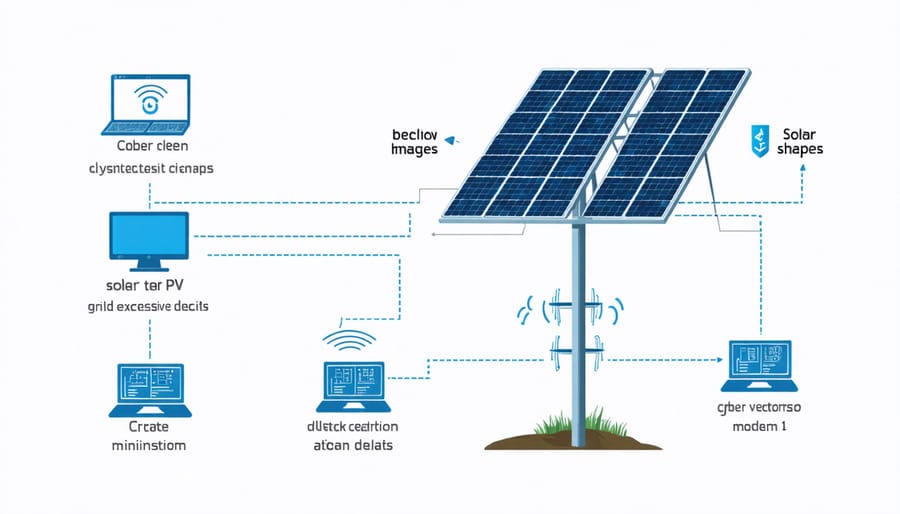
Cyber attackers typically target solar PV systems through several vulnerable points, with grid interconnection systems being particularly susceptible. Common attack vectors include compromised smart inverters, which can be manipulated to destabilize power output and grid stability. Remote monitoring and control systems present another significant vulnerability, as these interfaces often rely on internet connectivity for data transmission and system management.
Communication protocols between solar components and grid infrastructure are frequently targeted through man-in-the-middle attacks, where malicious actors intercept and alter control signals. Firmware updates and maintenance ports create additional entry points, especially when proper authentication mechanisms are absent or outdated.
Supply chain vulnerabilities pose a growing concern, as compromised hardware or software components can introduce backdoors into the system. Social engineering attacks targeting system operators and maintenance personnel remain a persistent threat, potentially granting unauthorized access to critical control systems. Understanding these attack vectors is crucial for implementing effective security measures and maintaining the integrity of solar PV installations.
Real-world Impact Scenarios
The 2015 Ukraine power grid attack stands as a watershed moment in critical infrastructure cybersecurity, where hackers successfully disrupted power distribution to approximately 230,000 customers. This incident demonstrated the real potential for cyber attacks to cause widespread blackouts and cascading infrastructure failures.
More recently, the 2021 Colonial Pipeline ransomware attack highlighted how cyber threats can affect interconnected energy systems, resulting in fuel shortages across multiple U.S. states. In the context of power grids, similar attacks could disable crucial monitoring systems, tamper with voltage controls, or shut down essential safety mechanisms.
Security researchers have identified several concerning scenarios, including attacks that could cause grid instability by manipulating solar inverter settings across multiple installations. A coordinated cyber attack could potentially force numerous solar systems to disconnect simultaneously, creating sudden power imbalances that destabilize the entire grid.
The financial implications of such attacks are substantial, with estimates suggesting that a major cyber attack on the U.S. power grid could cost the economy up to $1 trillion in damages. Beyond immediate power disruptions, cascading effects could impact critical services like healthcare facilities, water treatment plants, and emergency response systems.
Essential Security Protocols for PV Grid Protection
Network Segmentation and Access Control
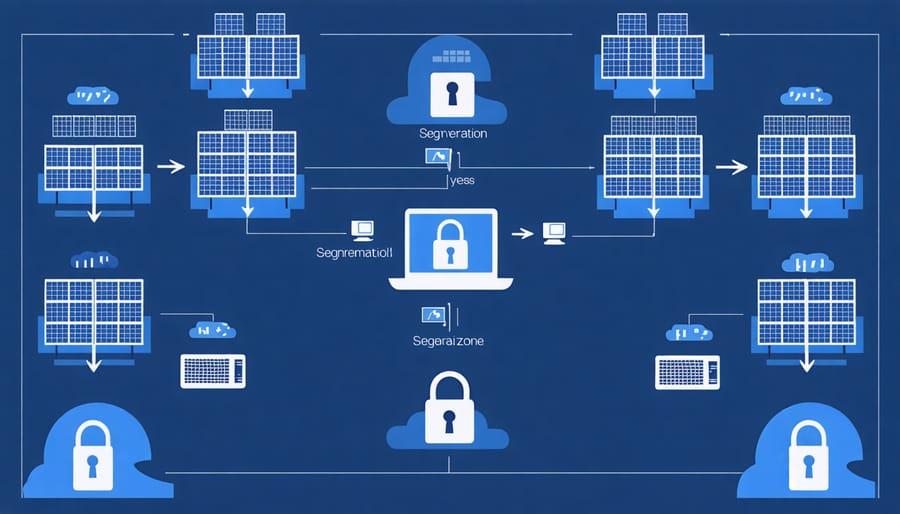
Network segmentation plays a vital role in safeguarding power grid infrastructure by creating distinct security zones that limit potential cyber threats. This approach involves dividing the network into isolated segments, each with specific access controls and security protocols aligned with grid integration performance requirements.
Critical components of effective network segmentation include implementing robust firewalls between zones, establishing demilitarized zones (DMZs) for external communications, and deploying intrusion detection systems at key network boundaries. Access control measures utilize multi-factor authentication, role-based access control (RBAC), and principle of least privilege to ensure only authorized personnel can access specific network segments.
Virtual Local Area Networks (VLANs) separate operational technology (OT) networks from information technology (IT) networks, reducing the risk of cross-contamination between systems. Security information and event management (SIEM) systems monitor network traffic patterns and alert administrators to potential security breaches.
Physical security measures complement network segmentation through access-controlled server rooms, surveillance systems, and secure cable management. Regular security audits and penetration testing help identify vulnerabilities in the segmentation strategy, while continuous monitoring ensures the effectiveness of access controls across all network zones.
Encryption and Authentication Protocols
The security of data transmission within power grid systems relies on robust encryption and authentication protocols to prevent unauthorized access and data breaches. Modern power grids implement multiple layers of encryption, with Advanced Encryption Standard (AES-256) being the predominant choice for securing communications between grid components and control centers.
Authentication mechanisms employ multi-factor authentication (MFA) protocols, requiring operators to provide multiple forms of verification before gaining system access. Digital certificates and Public Key Infrastructure (PKI) ensure secure communication channels between different grid components, while Transport Layer Security (TLS) protocols protect data in transit.
Role-based access control (RBAC) systems restrict user permissions based on job functions and security clearance levels. This granular approach to access management helps maintain the principle of least privilege, ensuring personnel can only access the systems and data necessary for their specific roles.
Secure Shell (SSH) protocols protect remote access connections, while virtual private networks (VPNs) create encrypted tunnels for secure communication between distributed grid locations. Regular key rotation and certificate management practices help maintain the integrity of these security measures.
Time-based One-Time Password (TOTP) systems provide an additional layer of security for critical operations, while secure element hardware modules protect encryption keys and sensitive credentials from physical tampering attempts.
Monitoring and Incident Response
Effective monitoring and incident response are crucial components of power grid cybersecurity. Organizations must implement comprehensive real-time monitoring systems that continuously scan for anomalies, unauthorized access attempts, and potential security breaches. These systems should utilize advanced analytics and machine learning algorithms to detect patterns that might indicate cyber threats.
A well-structured incident response plan includes clearly defined roles, responsibilities, and communication protocols. The plan should follow the NIST Cybersecurity Framework’s five core functions: Identify, Protect, Detect, Respond, and Recover. Response teams must be trained regularly through simulated cyber incidents to ensure quick and effective action during actual emergencies.
Security Information and Event Management (SIEM) systems play a vital role in collecting and analyzing security events across the power grid infrastructure. These systems provide real-time alerts and automated responses to potential threats, helping organizations maintain continuous situational awareness.
Organizations should establish a Security Operations Center (SOC) that operates 24/7 to monitor and respond to security incidents. The SOC team should maintain close coordination with relevant stakeholders, including IT departments, operations teams, and external security agencies.
Regular security assessments and incident response drills help identify gaps in monitoring capabilities and response procedures. Documentation of incidents, responses, and lessons learned supports continuous improvement of security protocols and helps prevent similar incidents in the future.
Regulatory Compliance and Industry Standards
Current Regulatory Framework
The power grid’s cybersecurity framework is governed by several critical regulations and standards, primarily overseen by the North American Electric Reliability Corporation (NERC). The NERC Critical Infrastructure Protection (CIP) standards form the backbone of compliance requirements, establishing mandatory security controls for bulk electric system operators.
Key regulations include NERC CIP-002 through CIP-014, which address various aspects of cybersecurity, from asset identification to incident reporting. These standards require utilities to implement comprehensive security measures, conduct regular vulnerability assessments, and maintain robust access control systems.
The Federal Energy Regulatory Commission (FERC) enforces these standards, imposing significant penalties for non-compliance. Organizations must demonstrate continuous monitoring capabilities, maintain detailed documentation of security procedures, and conduct regular staff training programs.
Additionally, the Fixing America’s Surface Transportation (FAST) Act of 2015 granted the Department of Energy broader authority to address grid security emergencies. This legislation strengthens the government’s ability to respond to cyber threats affecting critical electric infrastructure.
State-level regulations complement federal requirements, with many jurisdictions implementing additional security measures specific to their power distribution networks. Utilities must navigate this complex regulatory landscape while maintaining operational efficiency and grid reliability. Regular audits and assessments ensure ongoing compliance with these evolving security standards.
Industry Best Practices
The power grid cybersecurity landscape demands adherence to robust industry standards and certifications to ensure comprehensive protection. Organizations must align with the NERC CIP (North American Electric Reliability Corporation Critical Infrastructure Protection) standards, which establish baseline requirements for securing critical assets. These standards encompass essential security controls, from access management to incident response protocols.
For grid-ready PV systems, the IEC 62443 framework provides crucial guidelines for industrial automation and control systems security. This international standard ensures consistent security practices across the power infrastructure, particularly important for renewable energy integration.
Key certifications include ISO 27001 for information security management and ISA/IEC 62443 for industrial cybersecurity. Organizations should also implement the NIST Cybersecurity Framework, which offers a flexible approach to managing and reducing cybersecurity risks through five core functions: Identify, Protect, Detect, Respond, and Recover.
Regular security assessments and penetration testing are essential components of maintaining compliance with these standards. Organizations should conduct quarterly vulnerability assessments and annual comprehensive security audits. Additionally, maintaining certification from recognized bodies like the ISA Security Compliance Institute (ISCI) demonstrates commitment to cybersecurity excellence and ensures alignment with evolving industry requirements.
Future-Proofing Your PV Cybersecurity Strategy
Emerging Technologies and Solutions
The power grid’s cybersecurity landscape is rapidly evolving with innovative solutions designed to protect critical infrastructure. Artificial Intelligence (AI) and Machine Learning (ML) systems are leading the charge, offering predictive threat detection and automated response capabilities that can identify and neutralize potential attacks in real-time. These technologies work alongside emerging solar technologies to create robust defense mechanisms.
Blockchain technology is gaining traction as a secure method for managing distributed energy resources and maintaining transaction integrity across the grid. Advanced encryption protocols, specifically designed for industrial control systems, now protect critical communication channels between solar installations and grid operators.
Digital twin technology enables operators to simulate cyber attacks and test security measures in a safe environment before implementation. These virtual replicas help identify vulnerabilities and optimize response strategies without risking actual infrastructure.
Edge computing solutions are being deployed to process security-critical data closer to its source, reducing transmission vulnerabilities and response times. Quantum-resistant cryptography is also being developed to protect against future quantum computing threats.
Zero-trust architecture frameworks are becoming standard practice, requiring continuous verification of all system components and users. This approach, combined with sophisticated identity and access management systems, significantly reduces the risk of unauthorized access to critical grid infrastructure.
Risk Management Strategies
Effective risk management for power grid cybersecurity requires a systematic and proactive approach. Organizations must implement continuous monitoring systems that assess vulnerabilities in real-time while maintaining detailed documentation of security protocols and incident response procedures.
Regular security audits should be conducted at least quarterly, with comprehensive penetration testing performed annually. These assessments should evaluate both technical infrastructure and human factors, as social engineering remains a significant threat vector in power grid security breaches.
Risk mitigation strategies should incorporate multiple layers of defense, including:
– Network segmentation and isolation of critical systems
– Regular firmware and software updates
– Strong access control mechanisms
– Encrypted communications protocols
– Redundant backup systems
– Employee security awareness training
Organizations must develop and maintain incident response plans that detail immediate actions, communication protocols, and recovery procedures. These plans should be regularly updated and tested through tabletop exercises and simulated breach scenarios.
Adaptation to emerging threats requires establishing partnerships with security researchers and information sharing networks. Power grid operators should participate in industry working groups and maintain relationships with relevant government agencies to stay informed about new vulnerabilities and attack methodologies.
Risk assessments should also consider the interconnected nature of modern power systems, evaluating potential cascading effects of security breaches across the grid infrastructure. This includes analyzing dependencies between traditional power systems and renewable energy installations.
The protection of our power grid infrastructure from cyber threats demands continuous vigilance and proactive measures. As demonstrated throughout this discussion, the interconnected nature of modern power systems, including solar PV installations, creates both opportunities and vulnerabilities. Organizations must prioritize comprehensive security frameworks that encompass threat detection, incident response, and regular system updates. The implementation of robust authentication protocols, encrypted communications, and regular security audits remains crucial for maintaining grid resilience. Additionally, compliance with evolving regulatory standards and investment in workforce training are essential components of an effective cybersecurity strategy. By adopting these preventive measures and maintaining awareness of emerging threats, stakeholders can better safeguard critical power infrastructure while ensuring reliable and secure energy delivery for future generations.