# PV Power Plants and the Critical Workforce Development Challenge
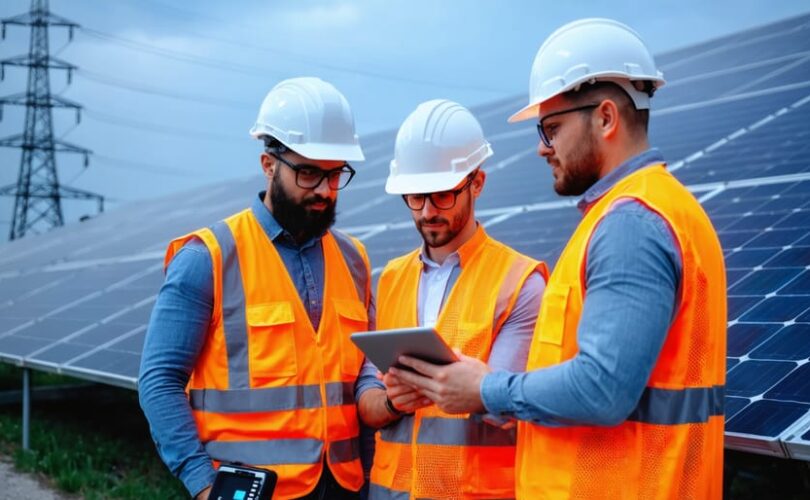
Solar photovoltaic (PV) power plants—utility-scale installations converting sunlight directly into electricity through semiconductor technology—now represent the fastest-growing segment of global energy infrastructure. These facilities, ranging from 1 megawatt community installations to gigawatt-scale solar farms spanning thousands of acres, require specialized technical expertise across engineering, installation, operations, and maintenance disciplines. Yet the solar industry faces a critical workforce shortage: projections indicate a need for over 500,000 new solar professionals by 2035, while current educational pathways produce fewer than half the required graduates annually.
This workforce gap threatens to constrain the renewable energy transition precisely when technological advances and policy incentives have made solar energy economically competitive with fossil fuels. PV power plants operate with 25-30 year lifecycles, demanding sustained expertise in system design, electrical integration, performance monitoring, and preventive maintenance—skills that require structured educational programs and industry-recognized certification pathways.
Effective workforce development policies must bridge three interconnected challenges: creating accessible educational programs that translate theoretical knowledge into practical competencies, establishing industry standards that ensure professional quality across rapidly evolving technologies, and developing career pathways that attract diverse talent to an industry historically lacking representation. Universities, technical colleges, and industry partnerships have emerged as essential vehicles for addressing these needs, offering specialized curricula that combine electrical engineering principles, power electronics, grid integration protocols, and hands-on laboratory experience.
Understanding how PV power plants function—and recognizing the sophisticated skill sets they demand—provides the foundation for developing workforce policies that can sustain solar energy’s exponential growth trajectory while ensuring system reliability, safety, and economic viability.
Understanding PV Power Plants and Their Workforce Requirements
What Defines a PV Power Plant
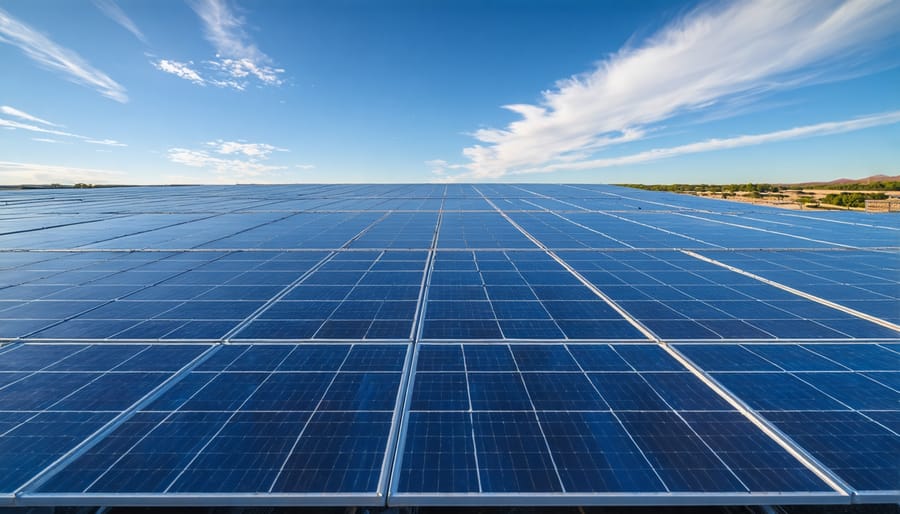
A PV power plant differs fundamentally from residential solar installations in scale, complexity, and purpose. While rooftop systems typically range from 3-10 kilowatts (kW) and serve individual households, utility-scale PV power plants generate anywhere from 1 megawatt (MW) to several hundred MW, supplying electricity to thousands of homes through direct grid integration.
The technical specifications reveal this distinction clearly. PV power plants employ sophisticated tracking systems that follow the sun’s path, increasing energy capture by 25-35% compared to fixed installations. They require medium-voltage transformers, switchgear, and substations to step up electricity from panel-level output to transmission voltages. Advanced monitoring systems track performance across thousands of individual modules, identifying inefficiencies in real-time.
Operational complexity escalates proportionally with scale. Utility-scale facilities demand specialized personnel for maintenance, vegetation management, inverter optimization, and regulatory compliance. Unlike residential systems that might receive annual inspections, power plants require continuous monitoring and predictive maintenance protocols to maximize uptime and return on investment.
Grid integration presents another layer of complexity. Power plants must comply with interconnection standards, provide voltage support, and sometimes incorporate energy storage systems to smooth output variability. They operate under power purchase agreements (PPAs) with utilities, requiring sophisticated forecasting and dispatch coordination that residential systems never encounter. This operational sophistication necessitates a workforce trained in both electrical engineering principles and renewable energy-specific technologies.
Key Professional Roles in PV Power Plant Operations
The successful operation of PV power plants requires a diverse team of specialized professionals, each contributing essential expertise throughout the facility’s lifecycle. **Design engineers** form the technical foundation, responsible for system architecture, electrical configurations, and performance modeling. These professionals must possess strong backgrounds in electrical engineering, solar physics, and computer-aided design software proficiency.
**Project managers** orchestrate complex installations, coordinating multiple stakeholders while managing budgets, timelines, and regulatory compliance. Their role demands both technical comprehension and exceptional organizational capabilities, often requiring certifications in project management alongside renewable energy qualifications.
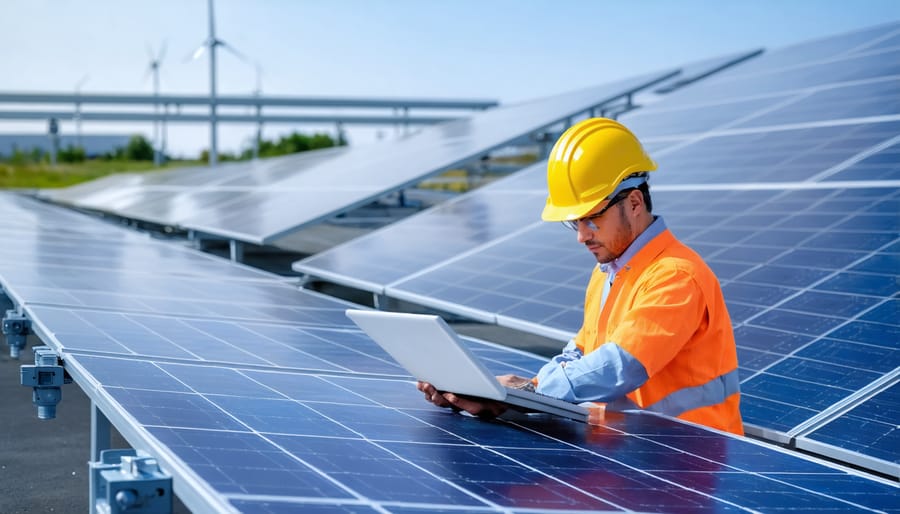
**Operations and maintenance (O&M) technicians** ensure optimal daily performance through preventive maintenance, troubleshooting, and system monitoring. These professionals need hands-on electrical skills, safety certifications, and proficiency with diagnostic equipment and monitoring platforms. Many universities now collaborate with industry partners to provide practical training programs that bridge the gap between theoretical knowledge and field application.
**Grid operators and energy analysts** manage the critical interface between PV generation and electrical networks, requiring expertise in power systems, forecasting algorithms, and grid stability protocols. As variable renewable energy penetration increases, these roles become increasingly sophisticated.
**Data specialists and performance engineers** analyze generation patterns, identify optimization opportunities, and ensure contractual performance guarantees are met. This emerging role combines engineering fundamentals with data science capabilities, reflecting the industry’s technological evolution. Educational programs increasingly incorporate these interdisciplinary skill requirements to prepare graduates for the sector’s expanding career opportunities.
The Growing Skills Gap in Solar PV Infrastructure
Current Workforce Shortages and Projections
The global solar photovoltaic industry faces a significant workforce shortage that threatens to constrain expansion targets. According to the International Renewable Energy Agency (IRENA), the solar sector will need to increase its global workforce from approximately 4.3 million workers in 2021 to an estimated 14 million by 2030 to meet climate commitments and capacity installation goals. This represents a workforce gap of nearly 10 million professionals across technical, engineering, and operational roles.
Regional variations in talent availability reveal distinct challenges. Emerging solar markets in Southeast Asia and Africa experience acute shortages of certified installers and maintenance technicians, while established markets in Europe and North America face impending retirements among experienced professionals without sufficient pipeline development. The United States alone projects a need for 100,000 additional solar workers by 2030, with particular demand for electrical engineers, system designers, and project managers specialized in utility-scale installations.
These projections align with ambitious solar capacity expansion plans globally. China’s commitment to 1,200 GW of solar capacity by 2030, the European Union’s REPowerEU initiative targeting 600 GW, and the United States’ goal of 1,000 GW collectively require unprecedented workforce mobilization. Educational institutions and industry partnerships, including university collaboration programs, have become critical to addressing these shortages through structured training pathways, apprenticeships, and certification programs tailored to modern PV power plant operations and emerging technologies like bifacial modules and energy storage integration.
Impact on Project Timelines and Industry Growth
The photovoltaic industry faces significant challenges as workforce shortages create cascading effects throughout project development cycles. Current data indicates that skilled labor deficits can extend PV power plant construction timelines by 15-30%, directly impacting deployment targets established under national renewable energy policies. These delays compound financial pressures, as projects incur additional carrying costs while developers struggle to secure qualified electricians, engineers, and technicians.
Beyond individual projects, workforce gaps threaten the broader renewable energy transition. The International Renewable Energy Agency estimates that achieving global climate goals requires the solar sector to employ 14 million workers by 2030—nearly triple current levels. Without coordinated workforce development policies, including strategic partnerships between industry and universities to expand educational program offerings, this ambitious scaling remains uncertain. Installation bottlenecks particularly affect utility-scale PV power plants, where specialized skills in high-voltage systems and grid integration are essential yet scarce. Addressing these shortages through comprehensive training initiatives and educational pathways is critical for maintaining momentum toward decarbonization targets and ensuring that renewable energy infrastructure can be deployed at the pace climate science demands.
Essential Workforce Development Policies for PV Power Plants
Government-Led Training Initiatives and Incentives
Government support for solar workforce development operates through multiple channels, each designed to address specific training gaps in the PV power plant sector. Understanding these initiatives helps aspiring professionals access valuable resources while guiding employers toward strategic investment in human capital development.
The Department of Energy’s Solar Energy Technologies Office administers several workforce training programs, including the Solar Training and Education for Professionals (STEP) initiative, which partners with community colleges and technical schools nationwide. These federal and state programs provide direct funding to educational institutions developing photovoltaic curriculum and hands-on training facilities. State-level initiatives complement federal efforts—California’s Clean Energy Workforce Training Program and New York’s Clean Energy Internship Program exemplify regional approaches to building qualified talent pools.
Tax incentives create compelling opportunities for employers investing in workforce development. The Work Opportunity Tax Credit offers substantial deductions for companies hiring and training workers in renewable energy sectors, while apprenticeship tax credits in multiple states offset costs associated with structured training programs. These financial mechanisms align with effective policy frameworks that recognize skilled workforce development as essential infrastructure for solar expansion.
Educational institutions benefit from competitive grant programs administered through both federal agencies and state energy offices. The National Science Foundation’s Advanced Technological Education program specifically funds curriculum development for solar technologies, enabling colleges to establish specialized photovoltaic training laboratories and certification programs that meet industry standards.
Industry Certification and Standardization Programs
Professional certification programs play a crucial role in establishing baseline competencies and standardizing training outcomes for the PV power plant workforce. The North American Board of Certified Energy Practitioners (NABCEP) stands as the premier credentialing organization, offering tiered certifications including the PV Installation Professional, PV Technical Sales, and PV Commissioning and Maintenance certifications. These credentials validate technical proficiency and signal workforce readiness to employers across the solar industry.
Beyond NABCEP, the International Electrotechnical Commission (IEC) has developed global standards for photovoltaic system installation and maintenance through its IEC 62446 series, ensuring consistency in quality assurance procedures worldwide. The Institute for Sustainable Power Quality (ISPQ) provides additional specialized certifications focusing on advanced grid integration and power electronics.
Universities collaborating with certification bodies create pathways where academic coursework aligns with certification requirements, allowing students to earn credentials alongside degrees. This integration reduces barriers to entry while maintaining rigorous standards. Industry-recognized certifications also facilitate workforce mobility across state and national borders, addressing regional labor shortages in rapidly expanding markets. These standardized frameworks ultimately protect consumers, ensure system reliability, and elevate the professional standing of the entire photovoltaic sector.
Collaborative University-Industry Programs
University-industry partnerships have emerged as powerful mechanisms for developing qualified PV power plant professionals. Leading educational institutions now collaborate directly with solar companies to design curricula that address real-world industry needs, ensuring graduates possess job-ready competencies in system design, installation, operations, and maintenance.
Arizona State University’s partnership with major solar developers exemplifies this model, offering students hands-on experience at operational PV facilities while completing their coursework. These programs integrate classroom instruction with practical training, allowing participants to work alongside experienced technicians on actual power plant projects. Similarly, community colleges across California have established advisory boards comprising solar industry representatives who guide program development and identify emerging skill requirements.
Internship programs represent another critical collaboration avenue, providing aspiring professionals with invaluable workplace exposure. Companies like First Solar and NextEra Energy regularly host student interns at their utility-scale facilities, offering mentorship and potential employment pathways. These experiences often lead to permanent positions, addressing workforce shortages while reducing employer training costs.
Research partnerships further strengthen these collaborations, with universities conducting performance optimization studies and reliability assessments at partner facilities. Such initiatives advance both academic knowledge and industry practices, while providing graduate students with thesis opportunities and specialized expertise in photovoltaic technologies that directly translate to career advancement in the expanding solar sector.
Educational Pathways for PV Power Plant Professionals
Technical Training and Certificate Programs
Technical training and certificate programs provide accelerated pathways for individuals seeking immediate entry into the photovoltaic workforce. These programs, typically ranging from several weeks to six months, emphasize practical, hands-on experience essential for PV power plant operations. Participants gain proficiency in solar panel installation techniques, electrical system integration, inverter configuration, and safety protocols compliant with industry standards.
Certificate programs focus on troubleshooting common system malfunctions, performance monitoring, and preventive maintenance procedures critical for maximizing energy output. Many programs incorporate real-world scenarios using actual PV equipment, allowing trainees to develop competencies in module inspection, combiner box wiring, and grounding system verification. Industry-recognized certifications, such as those offered by the North American Board of Certified Energy Practitioners (NABCEP), enhance employment prospects and validate technical expertise.
These short-term programs often partner with solar installation companies and utility-scale project developers, facilitating direct pathways to employment. Training curricula typically cover electrical code requirements, system commissioning, data acquisition systems, and thermal imaging diagnostics. For career changers and technicians from related fields, these intensive programs offer efficient skill development aligned with current industry demands and emerging technologies in large-scale solar infrastructure.

Degree Programs and Advanced Specializations
Formal degree programs provide comprehensive preparation for technical and leadership positions within the photovoltaic industry. Associate degree programs in renewable energy technology typically span two years, covering fundamental electrical principles, solar system design, and installation practices. These programs establish essential competencies for technician-level roles at PV power plants.
Bachelor’s degree programs in electrical engineering with renewable energy concentrations offer advanced preparation for engineering positions. Students study power systems analysis, grid integration, energy storage technologies, and photovoltaic system optimization. Many universities now incorporate specialized coursework in large-scale solar project management, utility-scale system design, and power electronics specifically tailored to PV applications.
Bachelor’s programs in renewable energy engineering integrate mechanical, electrical, and environmental sciences to address the multidisciplinary nature of solar power plant operations. Curricula emphasize energy policy, project economics, and sustainability assessment alongside technical competencies.
Graduate programs provide specialized knowledge for research, development, and senior management roles. Master’s degrees in photovoltaic engineering focus on advanced materials science, grid modernization, and emerging technologies. These programs often include industry partnerships and research collaborations that connect students directly with PV power plant operators, facilitating practical experience and employment pathways. Universities increasingly collaborate with solar industry leaders to ensure curriculum relevance and workforce readiness.
Online Learning Platforms and Accessibility
Online learning platforms have revolutionized photovoltaic education by partnering with universities to deliver accredited courses and certificate programs accessible worldwide. These digital programs eliminate geographical constraints, allowing learners in remote areas to access the same quality instruction as those near major renewable energy hubs. University-backed online curricula cover essential topics including solar system design, grid integration, and PV plant operations, combining theoretical knowledge with virtual simulations and remote laboratory experiences. The flexibility of asynchronous learning enables working professionals to pursue career transitions into the solar sector without interrupting employment, while interactive webinars and discussion forums maintain engagement and peer collaboration. Leading institutions now offer stackable credentials that allow students to progressively build expertise from foundational certificates to advanced degrees, creating multiple entry points for aspiring photovoltaic professionals regardless of their starting educational background or location.
Core Competencies for PV Power Plant Workforce
Technical Skills and Knowledge Areas
Developing proficiency in PV power plant operations requires mastery of several interconnected technical domains. Electrical systems knowledge forms the foundation, encompassing AC/DC power principles, circuit design, electrical safety protocols, and load calculations. Professionals must understand voltage, current, and power relationships specific to large-scale solar installations.
PV module technology represents another critical competency area. This includes comprehension of photovoltaic cell physics, module construction, temperature coefficients, degradation mechanisms, and performance characteristics under varying environmental conditions. Understanding different module types—monocrystalline, polycrystalline, and thin-film technologies—enables informed equipment selection and troubleshooting.
Inverter operation expertise is essential for converting DC power from solar arrays to grid-compatible AC electricity. Technical professionals should grasp maximum power point tracking (MPPT) algorithms, inverter topologies (string, central, and microinverters), efficiency curves, and harmonic distortion management.
Grid integration knowledge encompasses interconnection standards, power quality requirements, voltage regulation, and compliance with utility regulations. Understanding grid codes, anti-islanding protection, and reactive power control ensures safe, reliable plant operation.
Monitoring systems proficiency enables performance optimization through real-time data analysis. Professionals should master SCADA systems, data acquisition platforms, performance ratio calculations, and predictive maintenance protocols. Competency in analyzing production data, identifying underperformance, and implementing corrective measures directly impacts plant profitability and longevity.
Educational programs collaborating with universities increasingly incorporate hands-on laboratory experiences and simulation software to develop these competencies systematically, preparing graduates for immediate workforce integration.

Safety Standards and Regulatory Compliance
Working in utility-scale PV power plants requires comprehensive understanding of safety protocols and regulatory frameworks that protect personnel and ensure operational integrity. The Occupational Safety and Health Administration (OSHA) mandates specific training for solar facility workers, including electrical safety standards, fall protection requirements for elevated installations, and arc flash hazard awareness. Personnel must complete OSHA 10 or 30-hour construction safety courses before entering utility-scale sites.
Beyond federal OSHA requirements, workers need thorough regulatory knowledge encompassing state electrical codes, National Electrical Code (NEC) Article 690 specifications for PV systems, and environmental compliance standards. Many universities now collaborate with industry partners to integrate safety certification programs into renewable energy curricula, ensuring graduates enter the workforce properly prepared.
Critical competencies include lockout/tagout procedures, high-voltage DC system handling, confined space entry protocols, and emergency response training. Aspiring professionals should pursue certifications from recognized bodies like the North American Board of Certified Energy Practitioners (NABCEP), which increasingly emphasizes safety standards alongside technical proficiency. This comprehensive safety foundation protects workers while maintaining the reliability that makes utility-scale solar a cornerstone of sustainable energy infrastructure.
Emerging Trends Shaping Workforce Development Policies
Advanced Technologies and Skill Requirements
Modern PV power plants are rapidly incorporating technological advances that fundamentally reshape workforce requirements. Bifacial solar modules, which capture sunlight from both sides, demand specialized knowledge in optimal installation angles and reflective surface management. Advanced tracking systems that follow the sun’s movement require technicians proficient in mechanical systems, sensors, and automated controls.
Artificial intelligence-based monitoring platforms have transformed plant operations, necessitating personnel skilled in data analytics, predictive maintenance algorithms, and remote diagnostics. These systems detect performance anomalies and optimize energy output, but only when operated by adequately trained professionals. Similarly, integrated energy storage solutions require expertise in battery management systems, grid integration protocols, and safety procedures specific to large-scale storage installations.
This technological evolution creates an urgent need for continuous workforce upskilling. Educational institutions and industry partners must collaborate to develop curriculum addressing these emerging competencies. Training programs should emphasize hands-on experience with cutting-edge equipment, while certification pathways must evolve to validate proficiency in these advanced technologies, ensuring the solar workforce remains capable of managing increasingly sophisticated PV infrastructure.
Diversity and Inclusion in Solar Workforce Policies
Effective solar workforce development policies increasingly prioritize diversity and inclusion to address historical underrepresentation in the renewable energy sector. Industry data reveals significant gender and racial disparities, with women comprising only 28% of solar workers and minorities remaining underrepresented compared to their population proportions. Targeted policies now focus on removing systemic barriers through apprenticeship programs partnering with community colleges, minority-serving institutions, and workforce development boards to create accessible entry points for underserved communities.
Successful initiatives include pre-apprenticeship training that eliminates prerequisites often excluding non-traditional candidates, paid internships reducing financial barriers, and mentorship programs connecting diverse newcomers with established professionals. Universities collaborating with solar companies have developed scholarship programs specifically supporting women and minority students pursuing photovoltaic engineering and technical certifications. These educational program offerings incorporate flexible scheduling, childcare support, and transportation assistance to accommodate diverse life circumstances.
Policy frameworks emphasizing inclusive hiring practices require contractors on publicly funded PV power plant projects to demonstrate workforce diversity commitments. Such requirements, combined with cultural competency training for existing teams, foster equitable workplace environments where diverse talent can advance. By intentionally addressing accessibility barriers and creating supportive pathways, the solar industry builds a workforce reflecting the communities served by renewable energy infrastructure.
The successful expansion of PV power plants hinges critically on robust workforce development policies that align industry demands with educational outcomes. As the solar sector continues its remarkable growth trajectory, bridging the existing skills gap requires collaborative action from government agencies, educational institutions, and industry leaders. Strategic partnerships between universities and solar companies have proven essential in creating curriculum frameworks that address both theoretical knowledge and practical competencies necessary for modern photovoltaic installations.
Educational programs offering specialized training in solar PV technologies, system design, installation procedures, and maintenance protocols provide aspiring professionals with direct pathways into this dynamic field. These initiatives not only equip individuals with technical proficiency but also foster understanding of safety standards, regulatory compliance, and emerging innovations in energy storage and grid integration. Universities collaborating with industry partners ensure students gain hands-on experience with real-world applications, significantly enhancing their employability upon graduation.
The future of solar energy demands a diverse, skilled workforce capable of supporting increasingly sophisticated PV power plant operations. For those considering a career in renewable energy, now represents an opportune moment to pursue formal education and certification in solar photovoltaic technologies. Whether through degree programs, technical certifications, or apprenticeship opportunities, investing in solar PV education positions professionals at the forefront of the clean energy transition. The industry needs innovative problem-solvers, dedicated technicians, and visionary engineers—take the first step today toward building a sustainable career in solar energy.