
Blockchain technology is revolutionizing solar PV manufacturing and supply chain management by establishing unprecedented levels of transparency and trust. As global supply chains become increasingly complex, traditional tracking methods fall short in providing reliable, real-time visibility into product origins, manufacturing processes, and distribution networks. Blockchain’s distributed ledger technology offers an immutable, decentralized solution that enables stakeholders to trace components from raw material sourcing through final assembly and delivery.
This transformation comes at a crucial time when industries face mounting pressure to verify sustainable practices, ensure ethical sourcing, and combat counterfeit products. By implementing blockchain-based supply chain solutions, organizations can create an unbroken chain of custody, automatically verify compliance with environmental standards, and provide customers with authenticated product histories. The technology’s ability to integrate with IoT sensors, smart contracts, and existing enterprise systems makes it a powerful tool for building resilient, transparent supply chains that meet modern sustainability and accountability demands.
The adoption of blockchain in supply chain management represents more than just a technological upgrade—it’s a fundamental shift toward data-driven transparency that benefits manufacturers, distributors, regulators, and end-users alike.
The Critical Need for Transparency in Solar PV Supply Chains
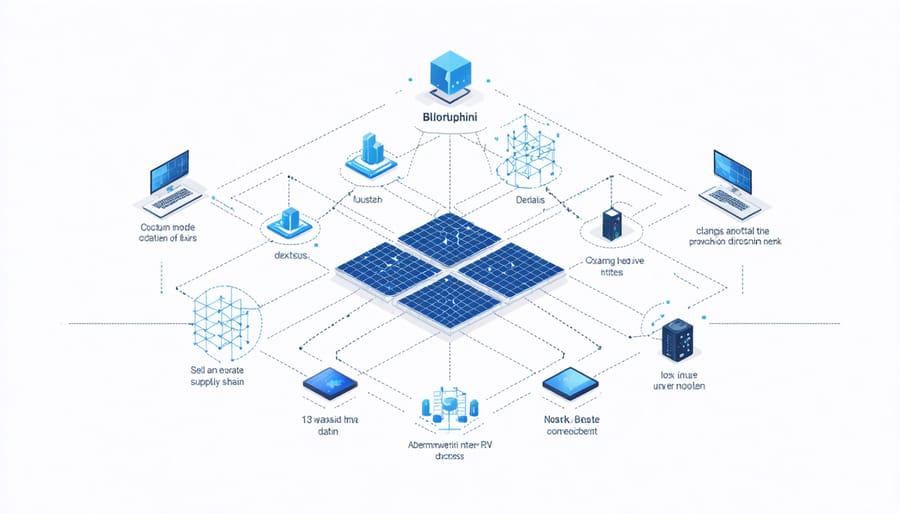
Current Supply Chain Challenges
The solar PV industry currently faces several critical supply chain challenges that impact product quality, cost, and market trust. Material sourcing remains a significant concern, with manufacturers struggling to verify the origin and quality of raw materials, particularly rare earth elements and specialized semiconductors. This lack of transparency creates opportunities for substandard materials to enter the supply chain, potentially compromising the performance and longevity of solar panels.
Quality control presents another pressing challenge, as components often pass through multiple manufacturers and suppliers before reaching their final destination. Without reliable tracking mechanisms, identifying the source of defects or quality issues becomes increasingly difficult, leading to delayed problem resolution and increased warranty claims.
Counterfeiting poses a substantial threat to the industry, with fake or substandard solar panels entering the market under legitimate brand names. These counterfeit products not only damage manufacturer reputations but also undermine consumer confidence in solar technology. Additionally, the complex nature of global supply chains makes it challenging to maintain consistent documentation and verification processes across different jurisdictions and regulatory frameworks.
These challenges highlight the urgent need for more robust supply chain management solutions that can ensure transparency and accountability throughout the entire production process.
Environmental and Social Impact Tracking
Blockchain technology enables real-time tracking of environmental metrics and social responsibility compliance throughout the solar supply chain. By integrating IoT sensors and smart contracts, manufacturers can monitor and verify their carbon footprint, energy consumption, and waste management practices. This transparency is particularly crucial given the growing concerns about the environmental impact of solar manufacturing.
Smart contracts automatically record and validate compliance with environmental standards and fair labor practices. These immutable records provide stakeholders with verifiable data on working conditions, wage compliance, and ethical sourcing of raw materials. Companies can demonstrate their commitment to sustainable practices through automated reporting systems that track emissions reduction targets and resource conservation efforts.
The system also enables verification of recycling programs and end-of-life management for solar components. Stakeholders can trace the journey of recycled materials and ensure proper disposal methods are followed. This comprehensive tracking system helps manufacturers maintain accountability while providing consumers and regulators with transparent access to environmental and social impact data.
Blockchain Implementation in Solar PV Supply Chains
Smart Contracts and Material Traceability
Smart contracts revolutionize supply chain management by automating agreement execution and ensuring transparent material tracking throughout the photovoltaic manufacturing process. These self-executing contracts, stored on the blockchain, automatically trigger actions when predetermined conditions are met, eliminating the need for manual intervention and reducing the risk of errors or manipulation.
In the context of material traceability, smart contracts create an immutable record of each component’s journey from raw material to finished solar panel. When materials arrive at a facility, IoT sensors can automatically verify and record their specifications, quantity, and quality parameters. This data is then permanently stored on the blockchain, creating a verifiable chain of custody.
The system enables real-time tracking of critical materials such as silicon wafers, silver paste, and glass components. Each material batch receives a unique digital identifier, allowing stakeholders to trace its origin, processing steps, and final destination. This level of transparency helps manufacturers identify potential bottlenecks, verify sustainable sourcing practices, and respond quickly to quality issues.
Smart contracts also facilitate automated payments and penalties based on predefined quality metrics and delivery schedules. This ensures that all parties fulfill their obligations while maintaining compliance with industry standards and regulations. The combination of automated contract execution and material tracking creates a robust framework for supply chain accountability and operational efficiency.

Quality Assurance Through Immutable Records
Blockchain technology revolutionizes quality assurance in solar PV supply chains by creating permanent, tamper-proof records of quality control processes and certifications. Each component’s journey through the supply chain is documented with immutable timestamps, test results, and verification data, ensuring that quality standards are consistently maintained and verified.
These digital records capture critical parameters such as manufacturing conditions, material specifications, and performance test results. When a quality inspection occurs, the results are immediately recorded on the blockchain, creating an unalterable chain of evidence that validates the component’s compliance with industry standards. This transparency enables stakeholders to trace any quality issues to their source and implement corrective measures promptly.
The system’s immutability particularly benefits certification processes, as it prevents the circulation of counterfeit certificates or unauthorized modifications to quality documentation. Manufacturers can prove their adherence to international standards, while installers and end-users can verify the authenticity of components before installation.
Real-time access to quality assurance data enables proactive quality management, allowing stakeholders to identify potential issues before they escalate. This capability is especially valuable for solar PV installations, where component quality directly impacts system performance and longevity. The blockchain-based quality assurance system also facilitates regulatory compliance by providing auditable records that demonstrate adherence to industry standards and environmental regulations.
Real-time Supply Chain Monitoring
Blockchain technology has revolutionized supply chain monitoring by enabling unprecedented levels of real-time tracking and verification capabilities. Through the implementation of advanced real-time monitoring systems, stakeholders can track solar PV components from raw material sourcing to final installation with pinpoint accuracy.
The technology utilizes a network of IoT sensors and smart contracts to automatically record and validate each transaction and movement within the supply chain. These sensors capture crucial data points such as location, temperature, handling conditions, and authentication certificates, which are then immutably recorded on the blockchain ledger.
Each component receives a unique digital identifier, allowing manufacturers, distributors, and end-users to access its complete history instantly. This system enables immediate detection of potential issues, such as counterfeit parts or deviation from optimal transport conditions, allowing for swift corrective actions.
The monitoring infrastructure operates through a distributed network of nodes, ensuring data integrity and system reliability. Smart contracts automatically execute predefined actions when specific conditions are met, such as triggering quality control alerts or initiating payment processes. This automation reduces manual oversight requirements while maintaining rigorous tracking standards.
For solar PV manufacturers, this translates to enhanced quality control, reduced risk of counterfeiting, and improved compliance with regulatory requirements. The system’s transparency also facilitates better collaboration between supply chain partners and enables more efficient resource allocation.

Benefits and Implementation Challenges
Cost Reduction and Efficiency Gains
Blockchain implementation in supply chain management delivers substantial cost reductions and efficiency improvements through multiple channels. By automating verification processes and eliminating intermediaries, organizations can reduce administrative overhead by up to 30%. Smart contracts automatically execute predetermined conditions, reducing the time and resources typically spent on manual documentation and verification.
The technology’s distributed nature significantly decreases data reconciliation costs, as all participants work with a single, immutable source of truth. Studies indicate that blockchain adoption can reduce supply chain management costs by 15-25% through decreased transaction fees, reduced fraud, and improved inventory management.
Real-time tracking and transparent documentation enable faster decision-making and more efficient resource allocation. Companies implementing blockchain solutions report average processing time reductions of 35% for supply chain transactions and documentation. The technology also minimizes disputes and associated resolution costs by providing an unalterable record of all transactions and movements.
Additionally, blockchain enables better inventory optimization through accurate demand forecasting and reduced stockouts. Organizations can achieve working capital improvements of 10-15% through better inventory management and reduced safety stock requirements. The elimination of paper-based processes and manual data entry further contributes to operational efficiency, with some companies reporting annual savings of up to $100,000 in documentation costs alone.
These efficiency gains compound throughout the supply chain, creating a network effect that benefits all participants while maintaining the highest standards of data security and integrity.
Integration Challenges and Solutions
While blockchain technology offers significant potential for supply chain transparency, organizations face several key integration challenges during implementation. Technical hurdles include the need for standardized data formats, interoperability between different blockchain platforms, and seamless integration with existing enterprise resource planning (ERP) systems. Many companies struggle with legacy infrastructure that requires substantial modifications to accommodate blockchain solutions.
Organizational challenges present equally significant obstacles. These include resistance to change from stakeholders, the need for extensive employee training, and the complexity of coordinating multiple parties across the supply chain. The cost of implementation and ongoing maintenance can also be substantial, particularly for smaller organizations.
However, several solutions have emerged to address these challenges. Cloud-based blockchain platforms offer more accessible entry points for organizations, reducing initial infrastructure investments. Middleware solutions facilitate integration between blockchain networks and existing systems, while industry consortiums are working to establish common standards and protocols.
Companies can overcome organizational resistance through phased implementation approaches, starting with pilot programs in specific supply chain segments before expanding. Comprehensive training programs and clear communication of benefits help ensure stakeholder buy-in. Additionally, partnering with experienced blockchain service providers can provide technical expertise and support throughout the integration process.
Success in blockchain integration requires a balanced approach that addresses both technical and organizational aspects while maintaining focus on long-term strategic objectives.
Future Outlook and Industry Impact
Emerging Technologies and Integration
Several groundbreaking innovations are revolutionizing how blockchain technology integrates with solar PV supply chains. Smart contracts powered by artificial intelligence are enabling automated verification of component origins and manufacturing processes. These systems work in conjunction with emerging solar technologies to create an unprecedented level of supply chain visibility.
Internet of Things (IoT) sensors are being deployed throughout the manufacturing and distribution process, providing real-time data that’s automatically recorded on the blockchain. This integration allows for immediate verification of environmental conditions, handling procedures, and quality control measures at every stage of production.
Digital twin technology is another promising development, creating virtual representations of physical solar components that maintain complete historical records from manufacture to installation. These digital twins enable stakeholders to track individual components throughout their lifecycle while verifying their authenticity and performance characteristics.
Quantum-resistant cryptography is being incorporated into newer blockchain implementations, ensuring that supply chain data remains secure even as quantum computing capabilities advance. This forward-thinking approach provides long-term security for sensitive manufacturing data and intellectual property.
Cross-chain interoperability protocols are also emerging, allowing different blockchain networks to communicate seamlessly. This advancement enables solar manufacturers, suppliers, and installers using different blockchain platforms to share verified data while maintaining their preferred systems.
Industry Standards and Adoption Trends
The blockchain industry has made significant strides in establishing standards for supply chain transparency, with several key frameworks emerging as frontrunners. The Global Blockchain Supply Chain Consortium (GBSCC) has developed protocols specifically tailored for renewable energy supply chains, while organizations like GS1 and IEEE are working to integrate blockchain standards with existing supply chain management systems.
Recent adoption trends show a marked increase in blockchain implementation across the solar PV industry. Major manufacturers and suppliers are increasingly participating in industry-wide blockchain networks, with an estimated 35% of solar component manufacturers now utilizing some form of blockchain technology for supply chain tracking. This represents a threefold increase from 2019 levels.
Notable standardization efforts include the development of the Solar Supply Chain Protocol (SSCP), which provides a common framework for tracking materials from raw silicon to finished panels. The protocol has gained support from leading industry players and certification bodies, facilitating broader adoption across the sector.
Implementation patterns reveal that companies typically begin with pilot programs focusing on specific components or processes before expanding to full-scale deployment. This measured approach has proven successful in minimizing disruption while maximizing the benefits of blockchain integration. Industry experts project that blockchain adoption in solar supply chains will reach 60% by 2025, driven by increasing demand for transparency and sustainability verification.
Blockchain technology stands poised to revolutionize supply chain transparency in the solar PV industry, offering unprecedented levels of traceability, security, and efficiency. The implementation of distributed ledger systems has demonstrated significant potential in addressing key challenges, from counterfeit component detection to ethical sourcing verification. As the technology matures, we can expect to see broader adoption across the industry, particularly in areas of raw material tracking and quality assurance. The future outlook suggests increased integration with IoT devices, smart contracts, and automated compliance systems, further streamlining supply chain operations. For stakeholders in the solar PV sector, embracing blockchain solutions represents not just a technological upgrade but a strategic imperative for maintaining competitiveness and meeting growing demands for transparency. As regulatory requirements evolve and sustainability becomes increasingly crucial, blockchain-enabled supply chains will likely become the industry standard rather than the exception.