Building-integrated photovoltaics (BIPV) represents a fundamental shift in solar energy deployment, transforming structural building components into electricity-generating assets rather than mounting panels as afterthoughts. This specialized approach replaces traditional building materials—facades, windows, roofing elements, and shading systems—with multifunctional photovoltaic components that simultaneously serve as weather barriers, thermal insulators, and power generators.
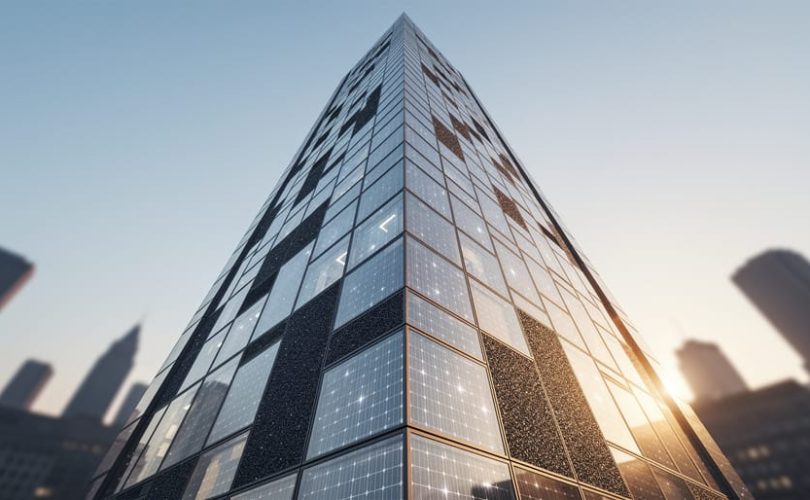
The technical sophistication of BIPV applications extends far beyond conventional rooftop installations. Glass facades incorporate semi-transparent thin-film cells that balance daylight transmission with energy production. Spandrel panels on high-rises integrate crystalline modules into opaque sections between floors. Photovoltaic skylights combine structural glazing requirements with power generation capabilities. Each application demands careful consideration of electrical performance, building codes, structural loads, thermal management, and aesthetic integration.
For professionals entering this specialized field, understanding the interplay between architectural design constraints and photovoltaic performance metrics is essential. Orientation limitations, shading analysis, thermal coefficients, and voltage optimization differ substantially from traditional ground-mount or rooftop systems. Success requires collaboration between electrical engineers, architects, structural engineers, and facade specialists.
The growing demand for net-zero buildings and increasingly stringent energy codes position BIPV as a critical technology for urban development. As installation costs decrease and efficiency improves, specialized BIPV applications are transitioning from premium architectural statements to standard construction practice, requiring a workforce equipped with both photovoltaic expertise and building science knowledge.
Understanding BIPV Technology in Building Envelope Systems
The Building Envelope as Energy Infrastructure
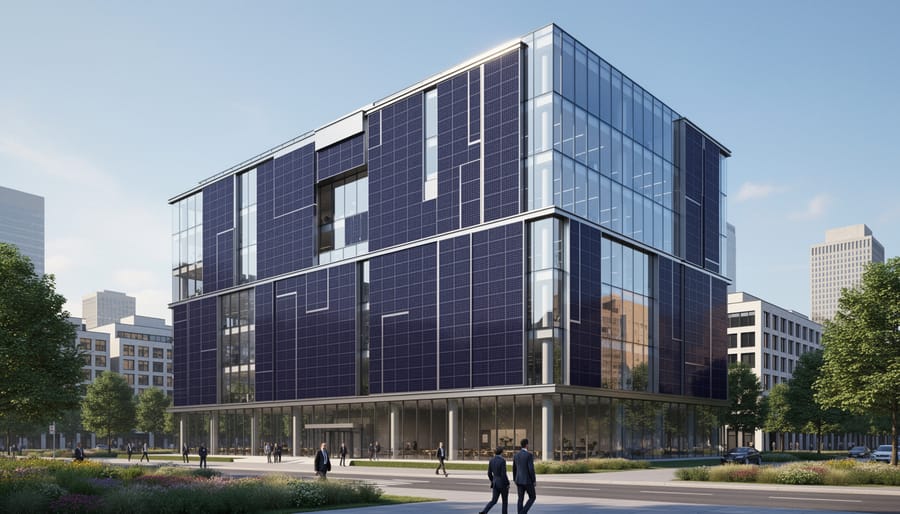
The building envelope—comprising roofs, facades, windows, canopies, and other exterior surfaces—represents a vast, underutilized resource for renewable energy generation. Traditionally designed solely for protection from environmental elements and aesthetic purposes, these surfaces collectively account for thousands of square meters on commercial and residential structures. Building-integrated photovoltaics (BIPV) transforms this passive infrastructure into active energy-generating systems by replacing conventional building materials with multifunctional photovoltaic components.
Unlike traditional rack-mounted solar panels that require additional structural support and occupy valuable space, BIPV modules serve dual purposes: they function as structural or architectural elements while simultaneously generating electricity. This integration eliminates material redundancy and optimizes spatial efficiency. Vertical facades can capture morning and evening sunlight, while roof installations maximize midday exposure. Even glazing systems can incorporate semi-transparent photovoltaic cells that balance natural lighting with power generation.
For professionals entering the renewable energy sector, understanding how to evaluate building envelope surfaces for BIPV potential requires knowledge of orientation, shading analysis, structural capacity, and electrical integration. Universities collaborating with industry leaders increasingly offer specialized courses addressing these technical considerations, preparing the next generation of photovoltaic professionals to maximize the energy infrastructure potential of every building surface.
Key Performance Metrics for Envelope-Integrated Solar
Evaluating envelope-integrated solar systems requires careful consideration of multiple performance dimensions beyond standard photovoltaic metrics. For building envelope applications, efficiency measurements must account for both electrical output and building performance contributions, including thermal insulation, daylighting control, and weather protection capabilities inherent to modern PV technology.
Electrical efficiency for BIPV modules typically ranges from 15% to 22%, though this must be balanced against aesthetic requirements and architectural integration factors. Module performance testing should follow IEC 61853 standards while additionally evaluating degradation rates under building-specific conditions such as elevated operating temperatures common in facade installations.
Aesthetic performance metrics include color uniformity, visual consistency across large installations, and customization capabilities. Industry standards increasingly recognize that appearance consistency directly impacts project acceptance, particularly for prominent facade applications where visual irregularities become immediately apparent.
Structural requirements demand rigorous testing beyond conventional solar panels. BIPV components must meet local building codes for wind loads, seismic resistance, fire ratings, and weather barrier performance. Testing protocols should verify water penetration resistance per ASTM E331 and air infiltration control meeting building envelope standards.
Durability assessments extend to 25-30 year operational lifespans while maintaining both electrical generation and building envelope functions. Accelerated aging tests evaluate UV resistance, thermal cycling performance, and mechanical stress tolerance. For educational institutions and research facilities collaborating with universities, these metrics provide essential data for validating long-term performance predictions and advancing BIPV technology development.
Specialized BIPV Facade Applications
Crystalline Silicon Facade Modules
Crystalline silicon modules represent the most established technology for BIPV facade applications, leveraging decades of proven photovoltaic performance in building-integrated contexts. Monocrystalline modules offer superior efficiency ratings, typically ranging from 19% to 22%, making them ideal for facades with limited surface area where maximum power generation is essential. Their uniform dark appearance provides aesthetic consistency that architects favor for contemporary building designs.
Multi-crystalline alternatives present a cost-effective solution while maintaining respectable efficiency levels between 15% and 18%. The distinctive blue coloration with visible grain patterns creates unique visual characteristics that complement certain architectural styles. Both technologies are available in frameless configurations specifically engineered for vertical facade integration, eliminating traditional aluminum frames to achieve seamless appearance and simplified mounting systems.
Customization options have expanded significantly to meet diverse architectural requirements. Manufacturers now offer various cell spacing configurations, allowing light transmission adjustment from fully opaque to semi-transparent designs. Glass-glass lamination provides enhanced durability and weather resistance compared to conventional glass-backsheet constructions, critical for vertical applications exposed to direct environmental stress.
Size customization enables modules to match standard building dimensions or create bespoke facade patterns. Advanced coating technologies offer color variation options beyond traditional appearances, though efficiency trade-offs require careful consideration. Many universities collaborating with industry partners conduct research on optimizing these customization parameters, contributing valuable data that informs both product development and educational program curricula for emerging photovoltaic professionals.
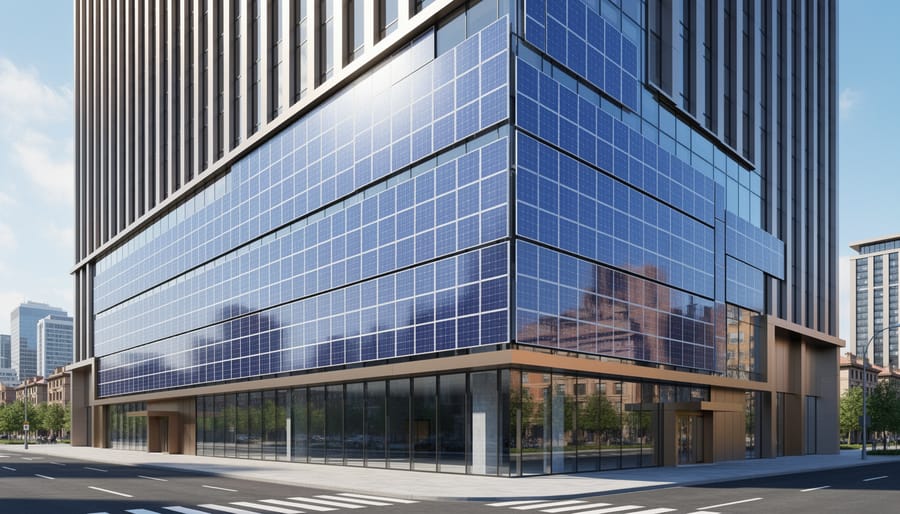
Thin-Film and Semi-Transparent Solutions
Thin-film photovoltaic technologies represent a breakthrough solution for building facades requiring both energy generation and light transmission capabilities. Unlike traditional crystalline silicon panels, thin-film modules utilize layers of photovoltaic material measured in micrometers, enabling semi-transparent applications that maintain visual connectivity between interior and exterior spaces. Amorphous silicon (a-Si), cadmium telluride (CdTe), and copper indium gallium selenide (CIGS) technologies offer varying transparency levels, typically ranging from 10% to 40%, making them ideal for atriums, curtain walls, and architectural glazing systems.
The aesthetic flexibility of thin-film solutions allows architects to customize color, opacity, and pattern configurations while preserving daylighting requirements essential for occupant comfort and building code compliance. These modules integrate seamlessly into existing glazing systems, functioning as both power generators and shading devices that reduce cooling loads. Universities collaborating with industry leaders are advancing research in organic photovoltaics (OPV) and perovskite technologies, promising even greater transparency and design versatility.
When evaluating thin-film options, professionals must consider lower conversion efficiencies compared to crystalline alternatives, typically 7-13%, though performance improvements continue through ongoing development. Solar panel sustainability considerations include reduced material usage and simplified recycling processes inherent to thin-film manufacturing, aligning with circular economy principles increasingly demanded in green building certifications.
Ventilated Facade Systems
Ventilated facade systems represent an advanced BIPV application where photovoltaic modules form the outer layer of a double-skin building envelope. This configuration creates an air cavity between the BIPV modules and the interior wall, enabling natural ventilation that removes heat buildup while simultaneously generating electricity. The thermal buffer zone reduces cooling loads during warm months and can be closed to provide insulation during colder periods.
The dual functionality of these systems delivers measurable performance advantages. Research conducted in partnership with academic institutions demonstrates that ventilated BIPV facades can reduce building energy consumption by 25-40% compared to conventional cladding systems. The air gap typically ranges from 10-20 centimeters, optimized through computational fluid dynamics modeling to maximize both thermal performance and energy yield.
Installation considerations include proper airflow design, structural support for the outer photovoltaic layer, and integration with building management systems. Universities collaborating on BIPV research have developed monitoring protocols that track both electrical generation and thermal performance metrics. These systems prove particularly effective in commercial buildings where facade area exceeds roof space, offering architects substantial design flexibility while meeting stringent energy codes and sustainability targets for modern construction projects.
Advanced Roofing BIPV Integration Systems
Solar Tiles and Shingle Systems
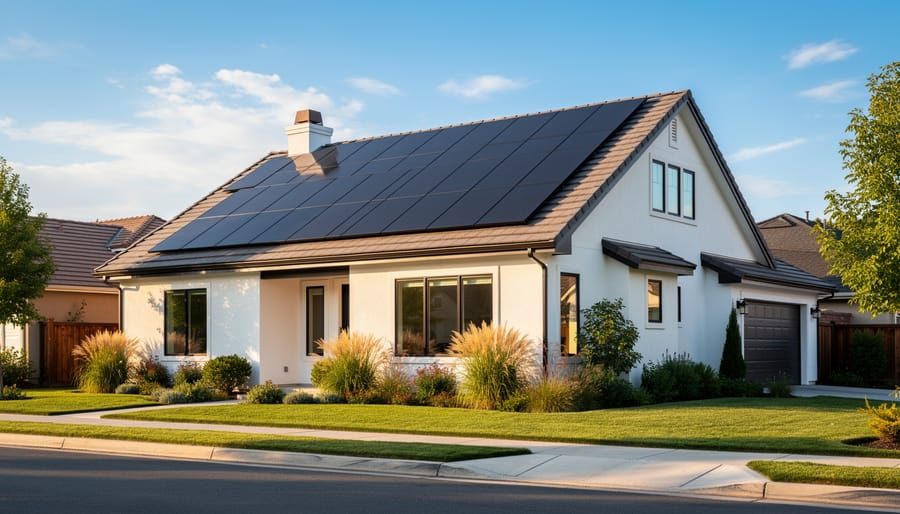
Solar tiles and shingle systems represent one of the most architecturally seamless BIPV solutions available, designed to replace conventional roofing materials while generating electricity. These systems consist of individual photovoltaic units shaped and sized to mimic traditional clay tiles or asphalt shingles, creating a uniform appearance that addresses aesthetic concerns often associated with rack-mounted solar panels.
Installation methods for solar tiles typically follow conventional roofing practices, with units interlocking mechanically and connecting electrically through integrated wiring systems. Most manufacturers design their products to interface with standard roofing accessories, including underlayment, flashing, and ventilation components. This compatibility allows experienced roofing contractors to install these systems with appropriate photovoltaic training, though collaboration between roofing and electrical professionals ensures optimal results.
Performance characteristics vary significantly across product lines. Premium systems achieve efficiencies between 14-20 percent, utilizing monocrystalline silicon cells embedded in tempered glass or advanced polymer substrates. The distributed nature of these installations provides inherent redundancy, as individual tile failures minimally impact overall system output. Thermal performance benefits from natural ventilation channels between tiles and roof decking, reducing heat-related efficiency losses common in conventional panels.
Key technical considerations include electrical configuration, typically employing micro-inverters or module-level power electronics to optimize output across varying roof planes and shading conditions. Weight specifications generally match or fall below traditional roofing materials, typically ranging from 13-16 pounds per square foot, eliminating structural reinforcement requirements for most residential applications.
Standing Seam and Metal Roof Integration
Standing seam metal roofing systems present exceptional opportunities for BIPV integration in commercial and industrial applications. These systems utilize raised seams that create natural channels for seamless photovoltaic module attachment without penetrating the waterproof membrane. BIPV manufacturers have developed specialized thin-film and crystalline silicon panels that clamp directly onto standing seam profiles, maintaining structural integrity while generating renewable energy.
The installation process requires minimal roof modifications, as modules attach using non-penetrating clamps that grip the raised seams. This approach preserves warranty coverage and eliminates potential leak points common with traditional rack-mounted systems. Metal roof BIPV solutions offer superior thermal management due to the air gap between modules and roof surface, enhancing energy production efficiency in warm climates.
Commercial warehouses, manufacturing facilities, and logistics centers with expansive metal roofs represent prime candidates for this technology. The lightweight design of modern BIPV metal roof systems adds minimal structural load, typically 2-4 pounds per square foot, making retrofits feasible without costly reinforcement. Universities collaborating with industry leaders are advancing research in corrosion-resistant attachment systems and optimized module configurations that maximize power density while accommodating thermal expansion. These innovations continue expanding BIPV viability across diverse industrial applications, demonstrating the technology’s adaptability to existing building infrastructure.
Green Roof and BIPV Hybrid Applications
Green roof and BIPV hybrid systems represent an innovative convergence of sustainable building technologies, combining vegetation layers with building-integrated photovoltaics to maximize environmental benefits. These dual-purpose installations leverage the cooling effect of vegetated surfaces to enhance solar panel efficiency, as green roofs can reduce ambient temperatures by 30-40°F compared to conventional roofing. Research conducted through university collaborations demonstrates that the evapotranspiration process from plants helps mitigate the performance degradation typically associated with elevated PV module temperatures. Implementation considerations include structural load capacity assessment, waterproofing membrane compatibility, and optimal spacing between vegetation and solar arrays to prevent shading while maintaining accessibility for maintenance. Advanced hybrid designs incorporate elevated mounting systems that allow plant growth beneath photovoltaic modules, creating synergistic microclimates. Educational programs increasingly address these integrated applications, preparing professionals to design systems that deliver combined stormwater management, biodiversity enhancement, building insulation, and renewable energy generation within a single envelope solution.
Skylight and Canopy BIPV Applications
Semi-Transparent Skylight Integration
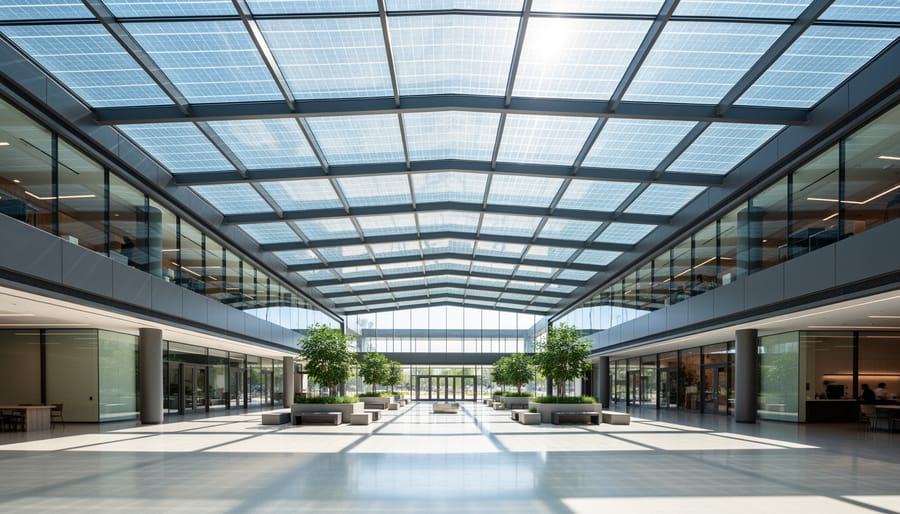
Semi-transparent BIPV modules represent an innovative solution for atrium roofs, skylights, and overhead glazing applications where both power generation and natural light transmission are essential. These specialized photovoltaic panels incorporate spacing between solar cells or utilize thin-film technologies with inherent light-transmitting properties, achieving transparency levels typically ranging from 10% to 40% depending on design specifications.
The technology enables architects to control daylighting levels while simultaneously generating renewable energy, creating dual-purpose building envelope systems. Amorphous silicon thin-film and crystalline silicon modules with spaced cells are the most common configurations for skylight integration. The spacing pattern between cells affects both aesthetic appearance and functional performance, requiring careful consideration of solar heat gain coefficient values and visible light transmission rates.
Building designers must evaluate structural loading requirements, as BIPV skylight systems need to support snow loads, wind forces, and maintenance access while meeting safety glazing standards. Advanced installations incorporate automated shading controls and building management system integration to optimize energy performance. Universities collaborating on BIPV research have demonstrated that properly designed semi-transparent skylight installations can reduce artificial lighting energy consumption by 30-50% while contributing significant photovoltaic power generation throughout daylight hours.
Parking and Entrance Canopy Systems
Parking and entrance canopy systems represent one of the most practical and visually prominent BIPV applications, transforming underutilized spaces into dual-purpose infrastructure that provides shelter while generating clean energy. These structures integrate photovoltaic modules directly into canopy designs, creating covered parking areas, walkways, and building entrances that protect vehicles and pedestrians from weather while contributing to a building’s energy portfolio.
The structural design of canopy BIPV systems requires careful consideration of load-bearing requirements, wind resistance, and optimal solar orientation. Semi-transparent photovoltaic modules are frequently employed in these applications, allowing filtered natural light to reach ground level while maintaining adequate power generation. This approach prevents the completely darkened environment that opaque panels would create, enhancing user comfort and safety in covered areas.
Modern canopy systems incorporate various mounting configurations, from simple post-supported structures to architecturally complex cantilever designs. The elevated installation position typically provides excellent solar exposure without shading concerns, often yielding higher energy production rates than comparable rooftop installations. Many university campuses and corporate facilities have adopted these systems through partnerships with educational institutions, demonstrating their viability as both practical infrastructure and teaching tools for renewable energy programs.
Technical Considerations for Envelope BIPV Design
Orientation, Tilt, and Shading Analysis
Building-integrated photovoltaic systems frequently encounter orientations and tilt angles that deviate from optimal solar exposure conditions. Facades typically operate at vertical or near-vertical angles, while architectural features may face east, west, or even north in certain hemispheres. These configurations can reduce energy output by 20-60% compared to ideally positioned arrays, yet remain viable when balanced against dual-functionality benefits.
Performance optimization requires careful analysis of site-specific factors including latitude, seasonal sun paths, and local climate patterns. Advanced modeling software enables designers to predict generation profiles for various envelope positions, informing system design considerations that maximize return on investment. Shading from adjacent structures, overhangs, and landscape elements demands particular attention through shadow analysis at critical times throughout the year.
Universities collaborating on BIPV research have developed mitigation strategies including module-level power electronics, which minimize losses from partial shading, and selective placement prioritizing unobstructed surfaces. Educational programs emphasize the importance of comprehensive site assessment, teaching professionals to leverage digital tools for accurate performance forecasting while recognizing that architectural integration value often justifies reduced energy yields.
Structural Loading and Weatherproofing
Building envelope integration demands rigorous attention to structural performance and weatherproofing. BIPV systems must withstand wind loads calculated according to local building codes, typically requiring engineering analysis for uplift forces, positive pressures, and suction effects based on building height, location, and exposure category. The structural attachment system must transfer these loads safely to the primary building structure while accommodating thermal expansion and contraction.
Water infiltration prevention requires carefully designed drainage planes, pressure-equalized cavities, and proper flashing details at all panel junctions and penetrations. BIPV modules functioning as the primary weather barrier must meet ASTM E1105 water penetration resistance standards and maintain continuous air barriers compliant with energy codes. Sealant selection and gasket design prove critical for long-term performance, particularly in climate zones experiencing freeze-thaw cycles.
Building code compliance encompasses electrical, structural, and fire safety requirements. Most jurisdictions require BIPV installations to meet International Building Code provisions for exterior wall assemblies, including fire resistance ratings and flame spread classifications. Professional engineers must certify structural adequacy, while electrical inspections verify National Electrical Code conformance. Universities collaborating on BIPV research contribute valuable performance data supporting code development and approval processes.
Electrical Integration and Safety Standards
Electrical integration for BIPV systems requires meticulous planning to ensure safety and code compliance. Wiring configurations must accommodate the distributed nature of building-integrated modules, with junction boxes strategically positioned behind façade elements or within cavity spaces. Inverter placement demands consideration of accessibility for maintenance while maintaining aesthetic continuity—micro-inverters or power optimizers often suit BIPV applications better than centralized string inverters.
Fire safety protocols necessitate rapid shutdown capabilities mandated by electrical codes like NEC Article 690, ensuring photovoltaic circuits can be quickly de-energized during emergencies. Grounding systems must address the dual role of BIPV components as both structural elements and electrical generators, requiring specialized bonding techniques.
Integration with intelligent energy systems enables real-time monitoring of module performance and electrical parameters. Compliance with IEC 61730 standards ensures module safety, while building codes govern structural loading and weatherproofing. Professional installation by certified technicians familiar with both electrical and construction trades remains essential for successful BIPV deployment.
Aesthetic and Architectural Design Flexibility
Modern BIPV technology has evolved significantly beyond purely functional energy generation, now offering architects and designers unprecedented creative freedom. Specialized BIPV products enable seamless integration into building envelopes while maintaining aesthetic coherence with architectural vision. Manufacturers now provide extensive color palettes, ranging from traditional dark blues and blacks to vibrant reds, greens, and even custom hues that match specific design requirements. These colored photovoltaic modules utilize advanced coating technologies and innovative cell manufacturing processes that preserve energy conversion efficiency while delivering desired visual effects.
Customization options extend beyond color selection to include transparency levels, textures, and patterns. Semi-transparent BIPV modules can be engineered with variable light transmission rates, making them ideal for applications requiring both daylighting and energy generation. Designers can specify custom module dimensions, frame configurations, and mounting systems that align with building proportions and structural requirements. Digital printing technologies now allow for incorporating graphics, gradients, or corporate branding directly onto photovoltaic surfaces without significantly compromising performance.
Integration strategies require collaborative planning between architects, engineers, and BIPV specialists during early design phases. Successful projects balance aesthetic aspirations with technical performance metrics, considering factors such as solar orientation, shading analysis, and thermal management. Universities partnering with industry leaders increasingly offer specialized coursework that addresses these multidisciplinary challenges, preparing professionals to navigate the intersection of design and renewable energy technology.
When combined with complementary systems supporting smart building energy performance, BIPV installations contribute to comprehensive sustainability strategies. This holistic approach positions BIPV not merely as an add-on technology but as an integral architectural element that enhances both building functionality and visual appeal while advancing renewable energy adoption across diverse construction typologies.
Economic and Performance Analysis for Specialized Applications
Understanding the economic viability of building-integrated photovoltaic systems for specialized envelope applications requires a comprehensive framework that accounts for both initial costs and long-term value generation. Unlike conventional building materials, BIPV components serve dual functions, which fundamentally alters traditional cost-benefit calculations.
Initial investment analysis must compare BIPV solutions against their conventional counterparts plus separate solar installations. For facade applications, photovoltaic cladding typically costs 150-400 dollars per square meter, compared to high-performance curtain walls at 300-600 dollars per square meter plus rooftop solar at 200-250 dollars per square meter. This comparative approach reveals that BIPV often eliminates redundant material costs while providing aesthetic and functional advantages that traditional combinations cannot match.
Lifecycle economic analysis extends beyond simple payback calculations. Specialized envelope BIPV generates value through multiple channels: energy production offsetting utility costs, reduced heating and cooling loads through strategic shading, eliminated maintenance costs for replaced building materials, and potential revenue from renewable energy certificates or feed-in tariffs. Academic research through university collaborations demonstrates that comprehensive lifecycle assessments spanning 25-30 years consistently show favorable returns when all value streams are properly quantified.
Return on investment for specialized applications varies significantly by building type and location. Commercial buildings with high daytime energy consumption achieve payback periods of 8-15 years for facade systems, while canopy and skylight applications often perform better at 6-12 years due to optimal solar exposure. Educational institutions and government buildings benefit from additional incentives and lower financing costs, improving project economics substantially.
Performance guarantees and warranty structures also influence economic outcomes. Leading manufacturers now offer 25-year performance warranties alongside 10-year product warranties, providing financial security that strengthens investment cases. Educational programs increasingly incorporate economic modeling tools, enabling professionals to conduct sophisticated analyses that account for regional electricity rates, degradation rates, and evolving incentive structures when evaluating specialized BIPV envelope applications.
Educational Pathways for BIPV Professionals
Successfully implementing BIPV systems requires specialized knowledge that extends beyond traditional solar installation expertise. Professionals must understand building envelope physics, architectural integration principles, structural engineering considerations, and advanced photovoltaic technologies. This multidisciplinary skill set demands comprehensive educational pathways that bridge renewable energy science with construction and design disciplines.
Leading universities now offer specialized programs in BIPV technology, combining coursework in sustainable architecture, building-integrated systems, and solar energy engineering. These academic programs provide students with hands-on experience in envelope design, thermal modeling, electrical integration, and performance optimization. Many institutions collaborate directly with industry partners to ensure curriculum relevance and create pathways from classroom to career.
Professional development opportunities have expanded significantly to meet growing industry demand. Certification programs address specific competencies including facade-integrated PV systems, structural load analysis, building code compliance, and installation best practices. These programs serve both emerging professionals entering the field and experienced practitioners seeking to expand their BIPV capabilities.
Aspiring PV professionals benefit from educational frameworks that emphasize practical application alongside theoretical knowledge. Internship programs, industry workshops, and collaborative research projects provide valuable exposure to real-world BIPV challenges. Universities partnering with solar technology companies offer students unique opportunities to engage with cutting-edge developments while contributing to innovative building envelope solutions. This educational ecosystem ensures the next generation of professionals possesses the specialized expertise necessary to advance BIPV adoption and drive sustainable building transformation.
Building-integrated photovoltaics represent a paradigm shift in sustainable architecture, transforming building envelopes from passive barriers into active energy generators. As demonstrated throughout this exploration of specialized applications, BIPV technology has matured beyond conventional implementations to encompass facades, canopies, skylights, and innovative envelope systems that harmonize aesthetic requirements with energy production goals.
The successful deployment of these advanced systems requires comprehensive understanding of both photovoltaic principles and architectural integration challenges. Proper training remains paramount for professionals seeking to implement BIPV solutions effectively. Educational institutions and industry collaborations are increasingly offering specialized programs that address the multidisciplinary nature of this field, preparing engineers, architects, and installers to navigate technical specifications, structural considerations, and regulatory frameworks.
Looking forward, BIPV technology will play an increasingly central role in meeting global sustainability targets and zero-energy building standards. As material science advances and manufacturing costs decline, specialized envelope applications will become more accessible and economically viable. The convergence of improved efficiency, enhanced aesthetics, and favorable economics positions BIPV as an essential component of future construction practices, fundamentally reshaping how we conceptualize and construct the built environment.